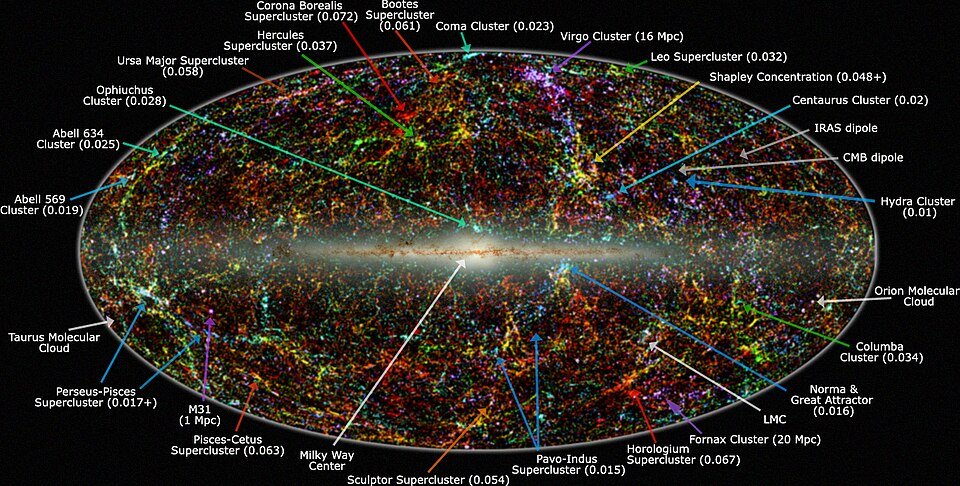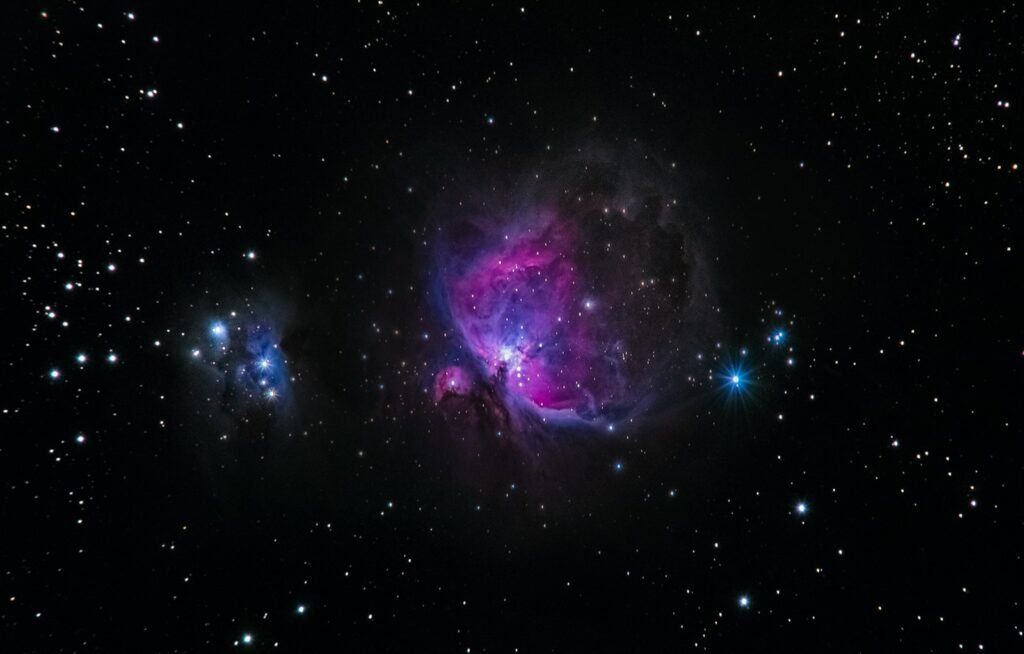

Physics is often sold as the discipline that has everything figured out, from falling apples to orbiting planets to humming power grids. Yet behind the smooth equations lies a messier reality: some of the most basic questions about the universe remain disturbingly open. We do not know what most of the cosmos is made of, why time seems to flow only one way, or whether our universe is just one bubble in a vast unseen multiverse. These are not minor gaps but canyon-sized cracks in our understanding. Exploring them is less about polishing the edges of science and more about rewriting the story of reality from the ground up.
Dark Matter: The Invisible Mass Holding Galaxies Together
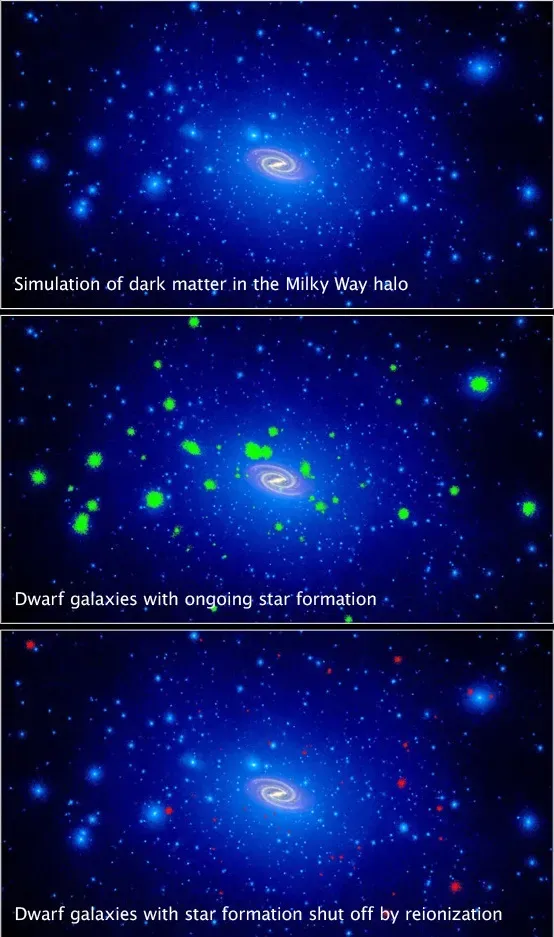
Imagine looking at a spinning carousel and realizing that, by all rights, the horses should be flying off into the night. That is roughly what astronomers saw when they measured how fast stars orbit around galaxies: the visible matter is nowhere near enough to hold everything together. The leading explanation is dark matter, a mysterious, invisible substance that seems to outweigh normal matter by more than five to one, yet has never been directly detected in a laboratory. For decades, massive underground detectors, particle colliders, and astrophysical surveys have been hunting for a dark matter particle, from weakly interacting massive candidates to axions. So far, the result has been a string of null detections and tightening constraints that are forcing physicists back to the drawing board.
The unsettling possibility is that there is no dark matter particle at all, and that gravity itself might need a rewrite at galactic scales. Modified gravity theories, like MOND and its descendants, tweak Newton’s and Einstein’s laws to match what telescopes see without invoking unseen matter. Yet these theories struggle to reproduce the full range of cosmological observations, especially the cosmic microwave background and galaxy clustering. The tension between the dark matter paradigm and modified gravity is not just an academic spat; it shapes billion-dollar experiments and the direction of theoretical physics. Until we can either trap a dark matter particle or build a theory that matches every astronomical test without it, one of the central pillars of modern cosmology will remain disturbingly uncertain.
Dark Energy: Why the Universe Is Racing Apart Faster and Faster
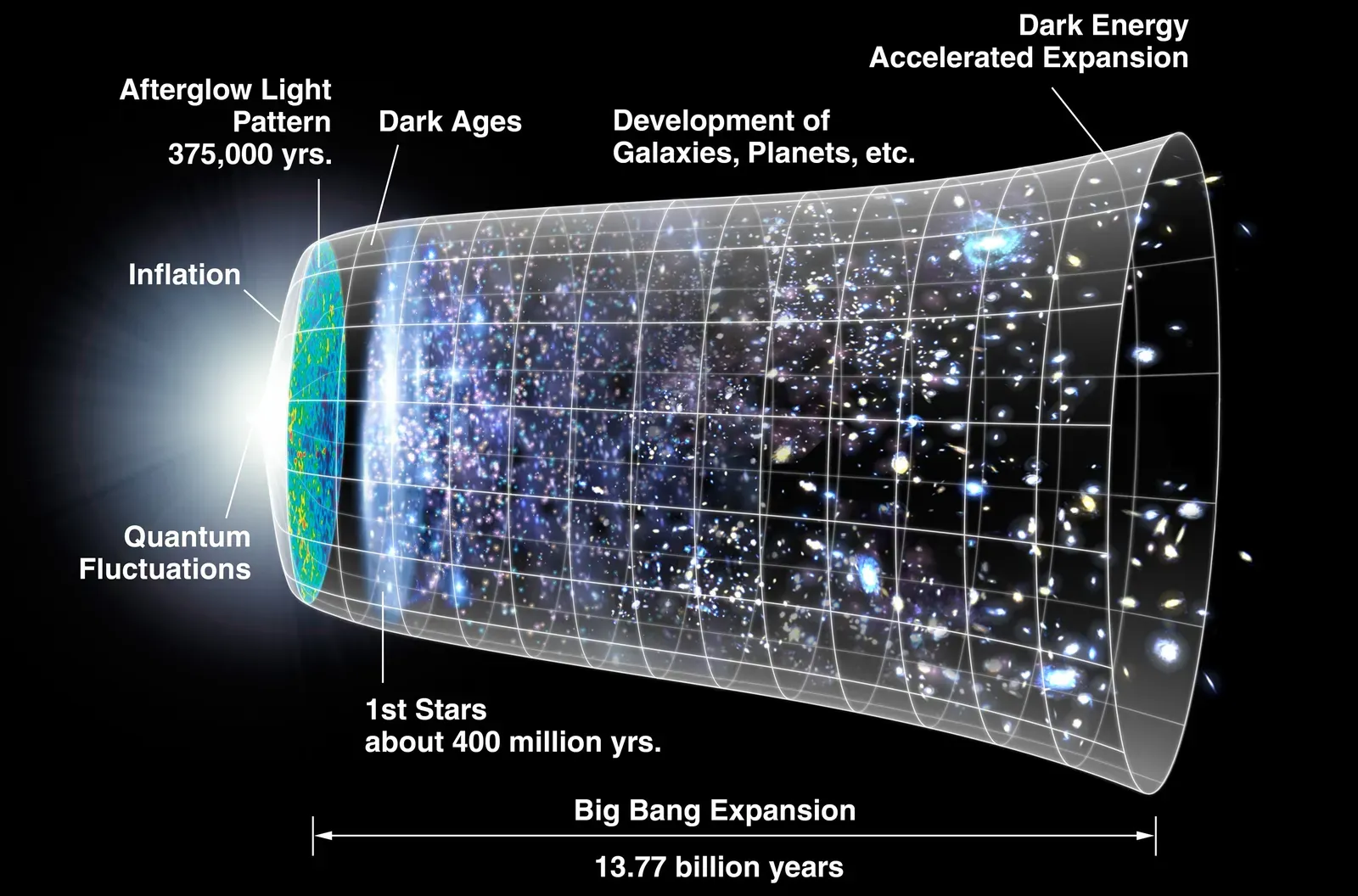
In the late 1990s, astronomers expected to confirm that the universe’s expansion was slowing down under the pull of gravity. Instead, distant supernovae revealed a twist that shocked the field: the expansion is speeding up, as if some unknown energy is pushing space itself apart. This phenomenon, dubbed dark energy, now appears to make up roughly about two thirds of the universe’s total energy budget, yet we have no agreed physical explanation for it. The simplest idea is that it is a cosmological constant, a kind of built-in energy of empty space described by Einstein’s equations. But attempts to connect that simple idea to quantum field theory produce a theoretical value that overshoots the observed one by an almost unimaginable factor, sometimes called the worst prediction .
New telescopes like the Vera C. Rubin Observatory and the Euclid mission are mapping the distribution of galaxies and the subtle bending of light across cosmic time to track how dark energy behaves. If its properties change over time, it might point to new fields or particles that evolve as the universe ages. If it really is a constant, physicists still need to explain why it has the strangely tiny value it does instead of tearing the cosmos apart or crushing it together. This puzzle sits at the crossroads of cosmology, quantum theory, and gravity, making it one of the purest examples of how an astronomical observation can shake the foundations of fundamental physics. Until we grasp dark energy, our picture of the universe’s past and future is, at best, a rough sketch.
Quantum Gravity: Reconciling the Very Large with the Very Small
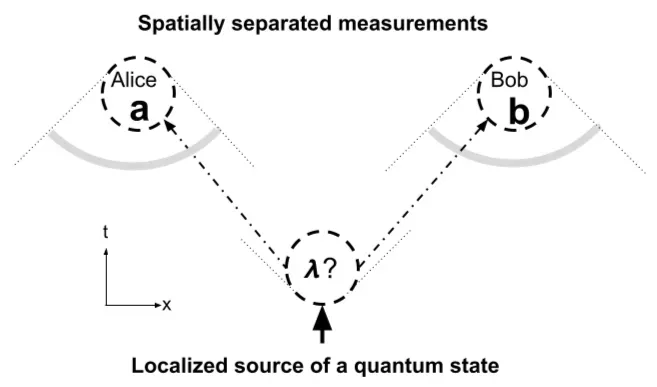
On one side, general relativity describes planets, black holes, and the bending of spacetime with exquisite precision. On the other, quantum mechanics governs atoms, particles, and probabilities and has been confirmed by countless experiments. Put them together in extreme conditions – inside black holes or at the birth of the universe – and both theories start to fail, producing infinities and nonsense. The quest for quantum gravity is an effort to build a single framework where spacetime itself has quantum properties, reconciling these two towering but incompatible pillars. Candidates like string theory and loop quantum gravity have developed elaborate mathematical machinery, but they have struggled to produce clear, testable predictions that experiments can probe.
This disconnect is more than a mathematical irritation; it blocks us from understanding what really happens at the most intense gravitational extremes. What is at the center of a black hole: a singularity of infinite density, or some new quantum state of spacetime that we do not yet have words for? Did the universe emerge from a singular point, or from a bounce, a prior phase, or something stranger still? Gravitational wave astronomy and high-energy cosmic observations are beginning to offer new ways to test quantum gravity ideas indirectly. Still, until a theory passes experimental muster, quantum gravity will remain the ultimate unfinished chapter in the story of physical law.
The Measurement Problem: Does Reality Exist Before We Look?
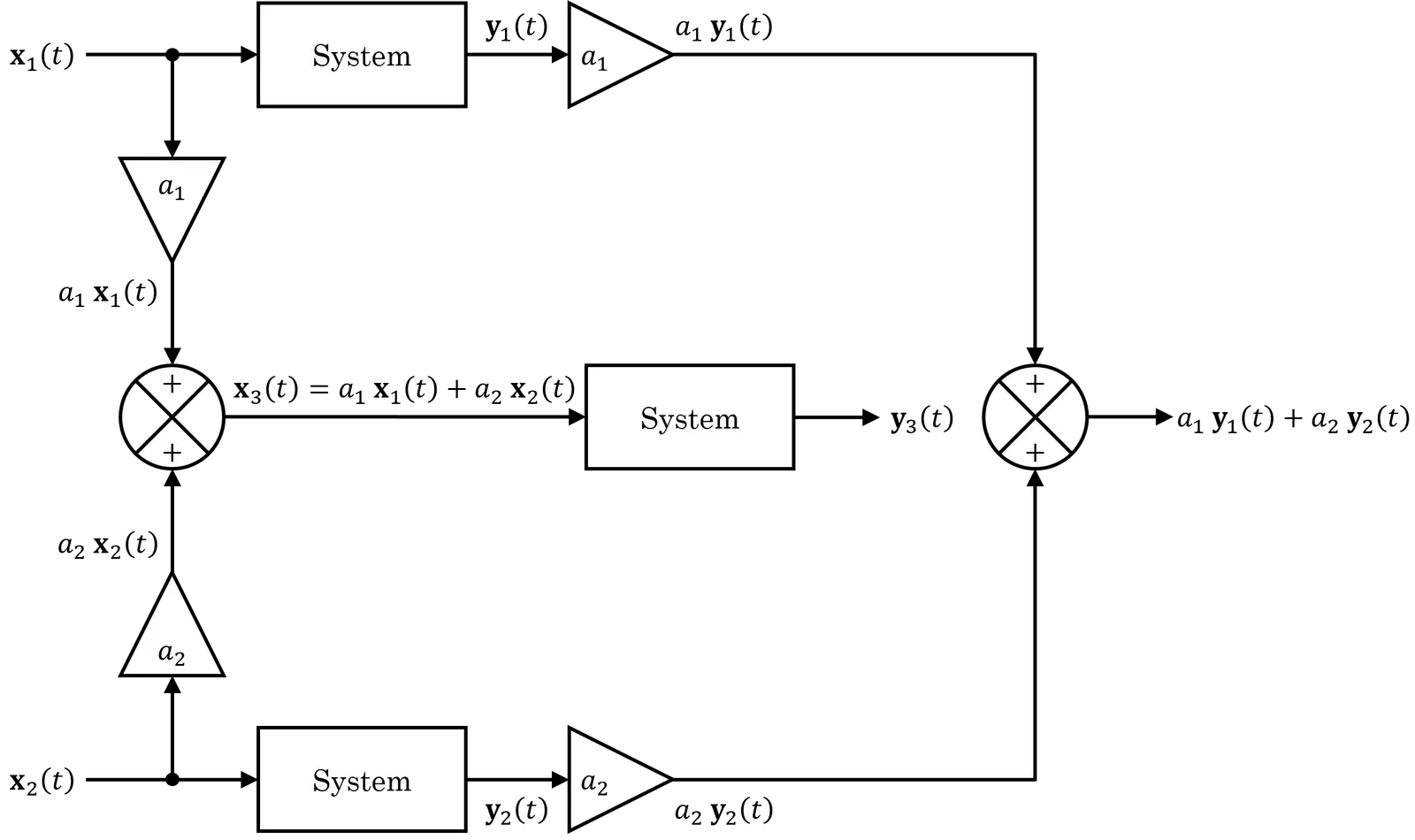
Quantum mechanics tells us that particles can exist in superpositions, occupying multiple states at once, until a measurement forces them to “choose.” But what exactly counts as a measurement, and how does that mysterious collapse actually happen, if it happens at all? This is the heart of the measurement problem, a conceptual wound that physicists have politely worked around for nearly a century while using quantum theory to build lasers, transistors, and MRI scanners. Competing interpretations, from many-worlds to pilot waves to spontaneous collapse models, offer radically different pictures of what is really going on behind the equations. Yet, for the most part, they all predict the same experimental outcomes in everyday situations, leaving the philosophical landscape crowded and unresolved.
Recent advances are starting to push these questions out of the purely philosophical realm. Delicate experiments entangling ever-larger systems, including small mechanical objects and even groups of atoms that behave almost like tiny mirrors, are testing whether quantum weirdness survives at increasing scales. Some proposals suggest that gravity itself might trigger wavefunction collapse, tying the measurement problem directly to quantum gravity. Others explore whether tiny deviations from standard quantum predictions could reveal new physics lurking in the background. For now, though, the unsettling implication remains: in the most straightforward reading of the theory, reality as we experience it crystallizes only when something, or someone, looks.
The Arrow of Time: Why the Past and Future Are Not the Same
At the level of basic equations, many physical laws do not care which way time runs; they work just as well backward as forward. Yet our lived experience could not be more different: we remember the past, not the future, eggs scramble but never spontaneously reassemble, and ice cubes melt instead of un-melting. This asymmetry is often linked to the second law of thermodynamics, which says that entropy, a measure of disorder, tends to increase. But why was the universe in such an extraordinarily low-entropy, ordered state in the first place? That initial condition is not something current physics explains; it simply assumes it, and that feels like dodging the deepest part of the question.
Some cosmologists argue that the arrow of time might emerge from the way gravity clumps matter, producing stars, galaxies, and black holes that drive entropy upward. Others speculate that our universe is part of a larger multiverse where entropy can reset or where time might have different arrows in different regions. A few proposals even suggest that time’s arrow could reverse in some far-future scenario, though such ideas remain highly speculative. What is clear is that explaining why the past is so special is not just a matter of semantics; it cuts to the core of how cosmology and statistical physics fit together. Until we have a principled story for why the universe started in such an improbably ordered state, the flow of time will remain one of physics’ most haunting mysteries.
Fine-Tuning and the Multiverse: Why the Laws of Physics Look Just Right

When physicists calculate how slight changes in the constants of nature would affect the universe, a strange pattern appears: small tweaks often produce a cosmos where stars cannot form, chemistry fails, or life as we know it becomes impossible. The strengths of fundamental forces, the masses of particles, and the energy of empty space all seem to sit in a narrow, life-friendly band. This appearance of fine-tuning has led some researchers to propose that our universe is just one pocket in a vast multiverse, each with different physical parameters. In such a view, we find ourselves in a rare hospitable bubble simply because observers can only arise in such regions. It is a neat way to dodge the question of “why these numbers,” but it raises new issues about what counts as science if other universes are, by definition, unobservable.
Alternative approaches try to explain the constants from deeper principles, dreaming of a future theory that leaves no free knobs to turn. Some versions of string theory suggest a huge landscape of possible vacua, each with its own physical laws, which ironically reinforces the multiverse picture rather than eliminating it. Critics worry that leaning too heavily on anthropic reasoning – invoking our existence to explain the laws – risks turning physics into a selection effect story rather than a predictive science. Supporters counter that multiverse ideas can still leave traces in patterns of cosmic inflation or rare cosmological signatures. For now, the unsettling fact remains: we do not know whether our universe is uniquely determined or one lottery ticket among countless unseen worlds.
Neutrino Mysteries: Ghost Particles That Refuse to Behave
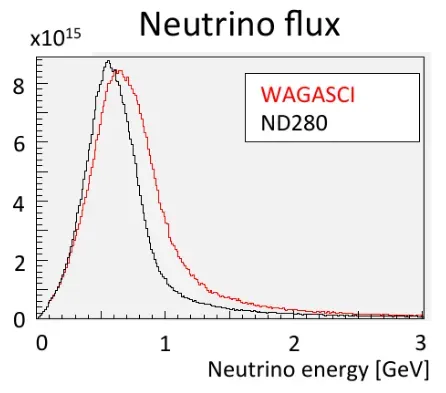
Neutrinos stream through your body by the trillions every second, mostly from the sun, yet almost never interact with anything. Long thought to be massless, they were later discovered to oscillate between different “flavors,” a behavior that implies they must have a small but nonzero mass. That alone forced a rewrite of the supposedly complete Standard Model of particle physics. But deeper questions remain open: Are neutrinos their own antiparticles? Why are their masses so tiny compared with other particles? And could hidden species of “sterile” neutrinos be lurking beyond the known three types?
Huge underground detectors in old mines, Antarctic ice, and submerged tanks of ultra-pure water or liquid argon are chasing these ghosts across vast baselines. Experiments are searching for neutrinoless double beta decay, a rare process that would show neutrinos are their own antiparticles and hint at physics linked to the early universe and the matter–antimatter imbalance. Precision measurements of neutrino mixing angles and mass ordering aim to fill in the last missing pieces of the oscillation puzzle. Yet every time physicists think they have neutrinos cornered, some new anomaly or unexplained data point appears. These reluctant messengers may hold clues to physics far beyond the Standard Model, but coaxing their secrets out is painfully slow work.
Why It Matters: The Hidden Engine Behind Technology and Worldviews
It is tempting to treat these cosmic puzzles as distant curiosities, the kind of thing that belongs on posters in university hallways but not in everyday life. Yet previous “abstract” questions have a habit of turning into the backbone of modern technology. Quantum mechanics, once derided as bizarre philosophical speculation, underpins semiconductors, lasers, GPS, and medical imaging. General relativity, dreamt up to explain the motion of planets and light, is essential to correct the timing of satellites so that your navigation apps actually work. Wrestling with dark matter, quantum gravity, or the arrow of time could similarly birth tools and techniques we cannot yet imagine, from revolutionary sensors to new communication methods.
There is also a deeper cultural impact: the way we answer these questions shapes how we see ourselves in the universe. If we live in a multiverse, our cosmos might be one of countless variations, and ideas about uniqueness and inevitability have to be rethought. If time’s arrow has a fundamental explanation, or if reality depends on observation at the quantum level, then our philosophical assumptions about causality and existence are up for revision. In that sense, the unsolved problems of physics are not just technical details; they are the open chapters in humanity’s shared story about what is real. Ignoring them would be like closing a book before the final, most revealing pages.
The Future Landscape: New Telescopes, Quantum Machines, and Global Efforts

The next few decades will be defined as much by engineering as by equations. Massive telescopes on Earth and in space are coming online to map dark matter through gravitational lensing, probe dark energy via the large-scale structure of the cosmos, and watch black holes in unprecedented detail. Gravitational wave observatories are evolving into global networks and planned space-based detectors, capable of listening to mergers of supermassive black holes and perhaps even echoes of the early universe. On the quantum front, steadily improving quantum computers and simulators are exploring complex quantum systems that classical machines cannot handle, potentially revealing new phases of matter or testing quantum foundations in ways once thought impossible.
These projects are too large and ambitious for any single country to tackle alone, and international collaboration is becoming the norm rather than the exception. That global approach brings its own challenges, from funding battles to data-sharing politics, but it also means the answers, when they come, will be shared human achievements. There is a real possibility that some of the big mysteries – perhaps the nature of dark matter or the behavior of gravity at extreme scales – will see breakthrough progress within a lifetime. Others, like the measurement problem or fine-tuning, may resist clear answers for generations. Either way, the frontier of physics in the mid-twenty-first century will look nothing like the one we see today.
How You Can Engage: From Stargazing to Supporting Fundamental Research
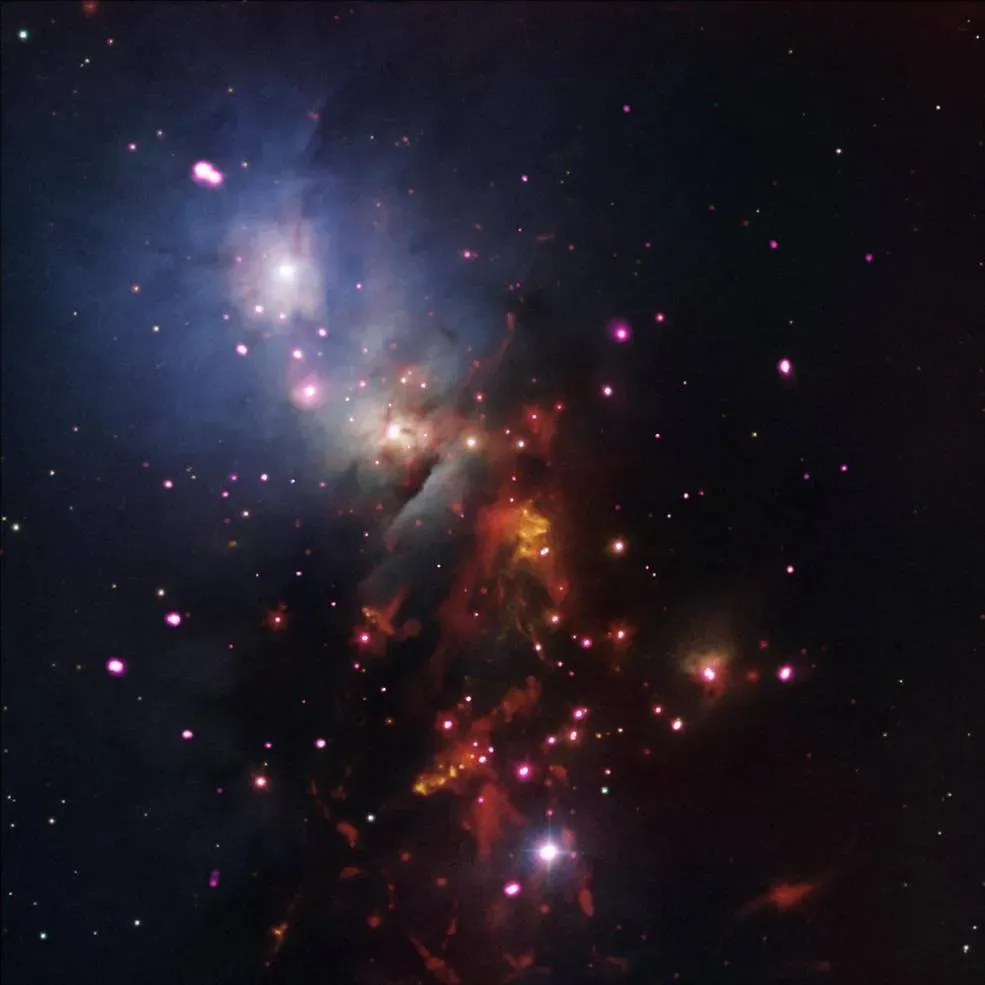
It is easy to assume that solving these grand mysteries is the job of distant experts in lab coats and that the rest of us are just spectators. But public interest and support have always been crucial drivers of big science, from space telescopes to underground detectors. One simple way to engage is to follow missions and experiments through reputable science journalism, public talks, and open data visualizations provided by observatories and labs. Amateur astronomy clubs, citizen science platforms, and outreach events at local universities or science centers offer surprisingly direct ways to connect with cutting-edge work. Even casual stargazing with a basic app that overlays constellations and galaxies can transform the night sky from a backdrop into a live map of unanswered questions.
On a more concrete level, people can support organizations that advocate for scientific funding, education, and open access to research. Encouraging strong science curricula in schools, voting for policies that value research, and challenging misinformation about physics and cosmology in everyday conversations all help build a culture where big questions are worth asking. If you have the means, donating to scholarship funds, public observatories, or science museums can open doors for the next generation of physicists and engineers. The unsolved problems of physics are not just puzzles for specialists; they are shared challenges that reflect how curious, imaginative, and ambitious our species chooses to be. Whether you are reading the latest results, showing a child Saturn’s rings, or simply wondering what dark matter really is, you are already part of the story.
Suhail Ahmed is a passionate digital professional and nature enthusiast with over 8 years of experience in content strategy, SEO, web development, and digital operations. Alongside his freelance journey, Suhail actively contributes to nature and wildlife platforms like Discover Wildlife, where he channels his curiosity for the planet into engaging, educational storytelling.
With a strong background in managing digital ecosystems — from ecommerce stores and WordPress websites to social media and automation — Suhail merges technical precision with creative insight. His content reflects a rare balance: SEO-friendly yet deeply human, data-informed yet emotionally resonant.
Driven by a love for discovery and storytelling, Suhail believes in using digital platforms to amplify causes that matter — especially those protecting Earth’s biodiversity and inspiring sustainable living. Whether he’s managing online projects or crafting wildlife content, his goal remains the same: to inform, inspire, and leave a positive digital footprint.