

It started as just another quiet evening across the northeastern United States. Then, without warning, a brilliant streak of light tore across the sky, sending thousands of people scrambling for their phones, rushing to windows, and flooding social media with a single burning question: what on earth was that?
The event drew attention from Cleveland all the way down the eastern seaboard, capturing the curiosity of casual stargazers and serious scientists alike. There’s something almost primal about watching a fireball cross the sky. It reminds you, in the most visceral way possible, that we share this solar system with a whole lot of fast-moving rock. Let’s dive in.
What Exactly Did People See?
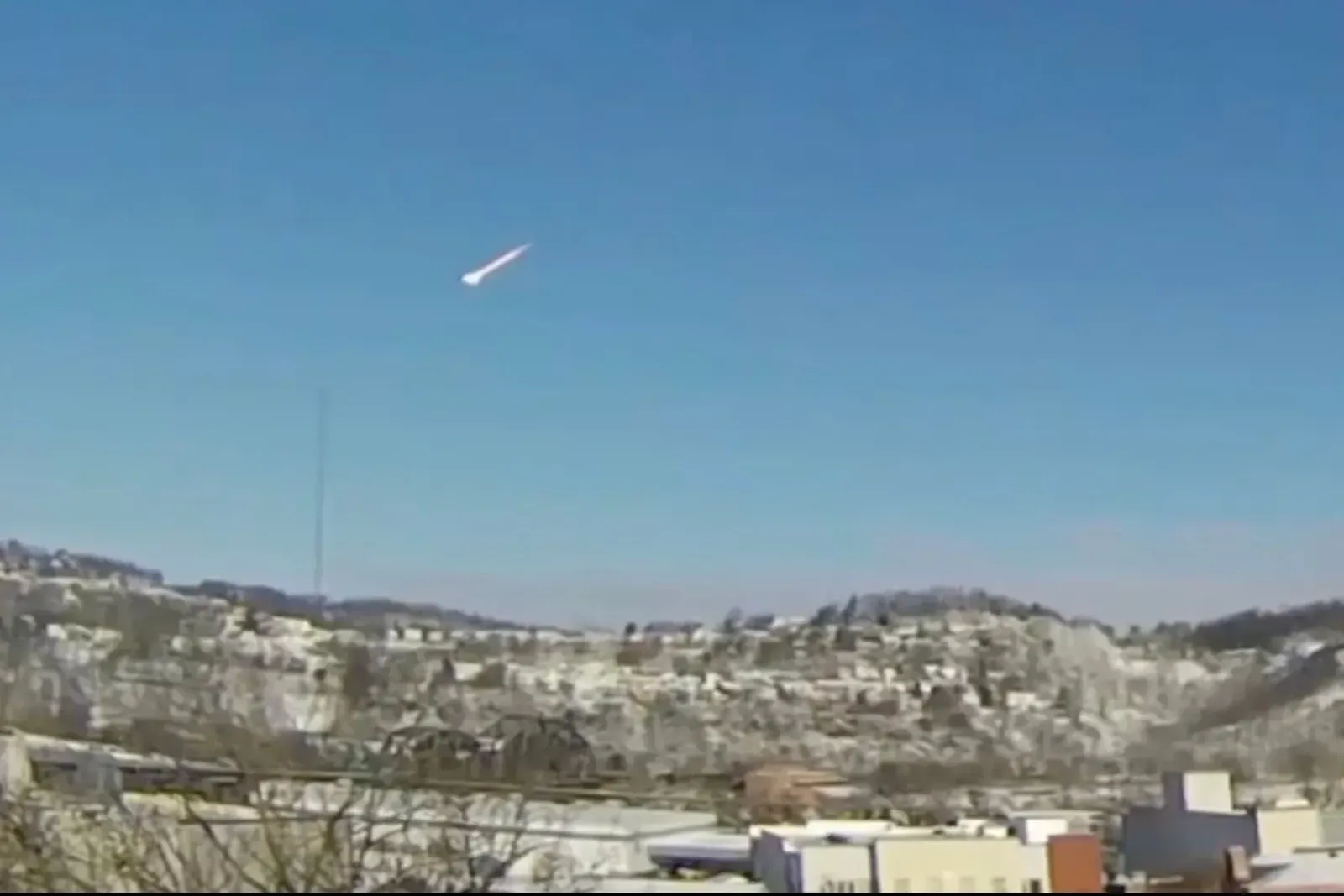
A fireball is technically just a very bright meteor, one that shines with enough intensity to be seen over an enormous geographic area. This one appeared to move rapidly across the sky before breaking apart or burning up in the atmosphere, creating that signature trail of glowing fragments that witnesses find so unforgettable.
Many observers noted a greenish or bluish tint to the light, which is actually a classic signature of certain minerals within the meteoroid burning up at extreme temperatures. It’s a bit like watching a chemistry experiment unfold sixty miles above your head. The colors correspond to elements like magnesium and iron vaporizing on contact with the atmosphere.
How Far Did the Sighting Reach?
Here’s the thing about fireballs: they don’t respect state lines. Reports of this particular event came in from a remarkably wide swath of the country, stretching well beyond Ohio into neighboring states and even further south and east along the Atlantic coast.
The American Meteor Society, which tracks these events through public reports and camera networks, collected sightings from an impressively large region. When a fireball generates that kind of geographic spread, it typically means the object was traveling at high altitude and at tremendous speed, allowing it to light up the sky like a torch visible for hundreds of miles in every direction.
The Science Behind the Spectacle
When a space rock enters Earth’s atmosphere, it doesn’t just fall – it collides with air molecules at speeds that can exceed tens of thousands of miles per hour. That friction creates intense heat, which causes the rock to glow, ablate, and often fragment. The result is that glittering, dramatic trail we call a meteor.
Most meteors are surprisingly small, often no bigger than a pebble or a fist. The fact that something so modest in size can produce a light show visible across multiple states is, when you stop to think about it, genuinely staggering. It’s the speed that does it. Speed transforms an ordinary rock into something that briefly outshines entire city skylines.
Did Anything Actually Hit the Ground?
This is always the question people want answered first. The short answer is: it’s complicated. Most incoming meteoroids burn up completely before reaching the surface. A small fraction survive the fiery descent and land as meteorites, though locating them is a significant challenge even with modern tracking tools.
Scientists and meteor-hunting enthusiasts were actively analyzing trajectory data following this event to determine whether any fragments may have survived atmospheric entry. Doppler radar, which can sometimes detect falling meteorite debris, was among the tools being examined. It’s hard to say for sure at this stage whether anything actually made it to the ground, but the hunt was very much underway.
How Rare Are Events Like This?
Fireballs actually occur more frequently than most people realize. The American Meteor Society receives thousands of fireball reports each year across North America alone. What made this one noteworthy was its exceptional brightness and the sheer number of witnesses across such a wide area.
Events of this visible magnitude, ones capable of generating widespread public reports across multiple states simultaneously, are somewhat less common. They tend to happen a handful of times per year at most for any given region. So while the universe is constantly pelting us with debris, catching a show this vivid is still genuinely special. Consider yourself lucky if you were outside that night.
What This Moment Reminds Us About Our Place in Space
There is something humbling, almost philosophical, about a moment like this. One random rock, drifting through the solar system for perhaps millions of years, happens to intersect with Earth’s path and spends its final seconds as a blazing spectacle witnessed by thousands of people simultaneously living their ordinary lives.
Events like this have a way of cutting through the noise of daily routines. For a moment, strangers in Cleveland, New York, and Pennsylvania all looked up at the same sky and shared the same awe. That’s rare. Scientists will continue studying the trajectory and potential debris field, while the rest of us are left with one of those memories you don’t easily shake – the night the sky, without any warning, suddenly came alive.
Conclusion: The Universe Has a Way of Showing Up Uninvited
Space doesn’t schedule its appearances. That is perhaps what makes events like this so emotionally resonant. No countdown, no announcement – just a sudden blaze of light that reminds every single one of us that Earth is hurtling through a cluttered solar system at all times.
The Cleveland fireball of March 2026 was more than a pretty light show. It was a reminder of how alive and dynamic our cosmic neighborhood really is. The sky above us is never truly empty, and every now and then, it makes sure we know it. What would you have thought if you had been standing outside that night, looking up?