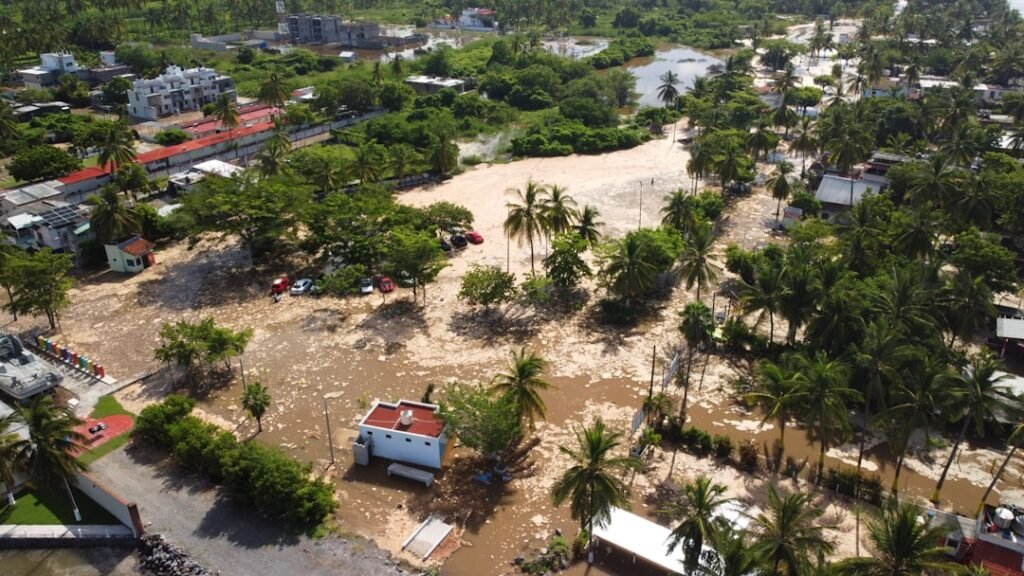

Unrelenting Global Onslaught (Image Credits: Unsplash)
Preliminary figures from the International Disaster Database showed that more than 200 climate-related disasters struck worldwide in 2025, impacting 87.8 million people.[1]
Unrelenting Global Onslaught
Climate events claimed more than 8,000 lives across the planet last year, though experts warned the true toll likely exceeded that mark due to unreported incidents and missing data.[1]
These disasters encompassed a wide range, from flash floods and landslides to severe storms, wildfires, and prolonged droughts. Droughts and associated food insecurity affected the largest share of victims. The year ranked as the third-warmest on record, despite a cooling influence from weak La Niña conditions.[1]
Such widespread devastation underscored the growing ferocity of weather extremes fueled by human activities.
Droughts Grip Regions, Sparking Hunger Crises
Syria endured its worst drought in 36 years, leaving 14.5 million residents without adequate food supplies.[1]
Kenya faced a severe January drought that threatened food for over 2 million people. In Nepal’s Madhesh province, a September dry spell shorted 1.2 million individuals on nourishment. These slow-onset crises often drew less immediate attention than sudden storms but inflicted profound, lingering harm on vulnerable populations.
Storms Unleash Deadly Fury
A rare convergence of two tropical cyclones and a typhoon in late November and early December ravaged Asia, marking the deadliest tropical storm system of 2025. Indonesia recorded 1,109 deaths, while Sri Lanka reported 826 fatalities; hundreds more perished in Pakistan and Thailand.[1]
Earlier, in October, Hurricane Melissa battered the Caribbean with sustained winds of 295 km/h (185 mph), killing at least 127 people in Jamaica, Haiti, Panama, the Dominican Republic, and Cuba. Researchers linked the storm’s enhanced intensity directly to human-caused warming from fossil fuel emissions.[1]
| Region/Event | Deaths | Notes |
|---|---|---|
| Asia cyclones/typhoon convergence | Thousands | Indonesia: 1,109; Sri Lanka: 826 |
| Hurricane Melissa (Caribbean) | 127+ | Winds up to 295 km/h |
Underreported Risks and Urgent Calls for Action
Many disasters, particularly in regions like the Amazon, escaped official records, suggesting the 87.8 million figure represented a conservative estimate.[1]
Fossil fuel emissions hit record highs in 2025, even as renewable energy expanded, exacerbating the cycle of extremes. World Weather Attribution researchers stated, “The events of 2025 make it clear that while we urgently need to transition away from fossil fuels, we also must invest in adaptation measures. Many deaths and other impacts could be prevented with timely action.”[1]
They added, “Events like Hurricane Melissa highlight the limits of preparedness and adaptation: when an intense storm strikes small islands such as Jamaica and other Caribbean nations, even relatively high levels of preparedness cannot prevent extreme losses and damage.”[1]
- Flash floods swept through vulnerable areas.
- Landslides buried communities.
- Severe storms disrupted millions.
- Wildfires scorched landscapes.
- Droughts triggered widespread hunger.
- Over 87.8 million people bore the brunt of more than 200 events.
- Droughts hit hardest in terms of sheer numbers affected.
- Storms caused the highest reported fatalities, with climate change amplifying their power.
As 2026 unfolds, the 2025 toll serves as a stark reminder that mitigation and adaptation must accelerate to shield future generations. What steps do you believe governments should prioritize next? Share your thoughts in the comments.