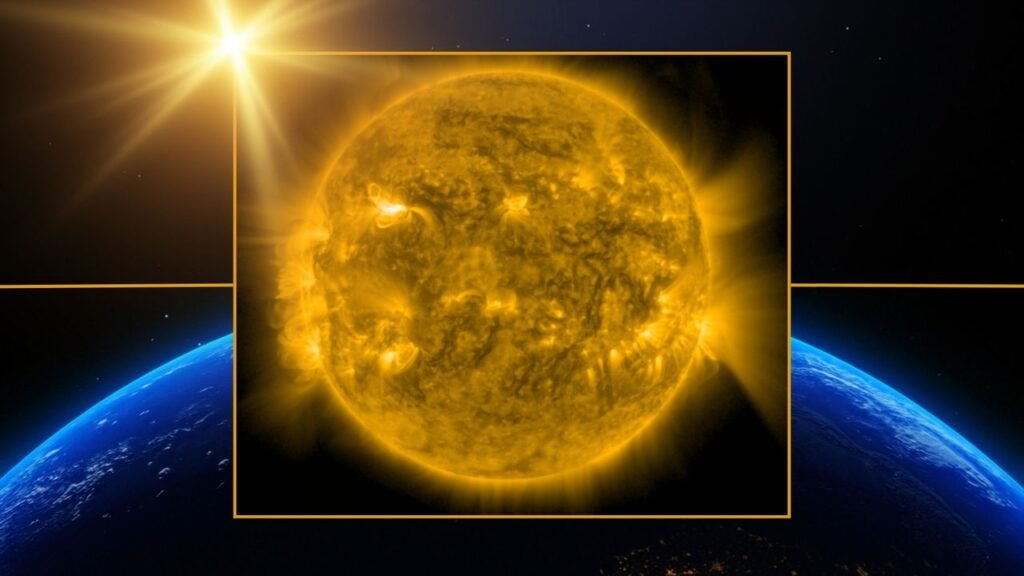

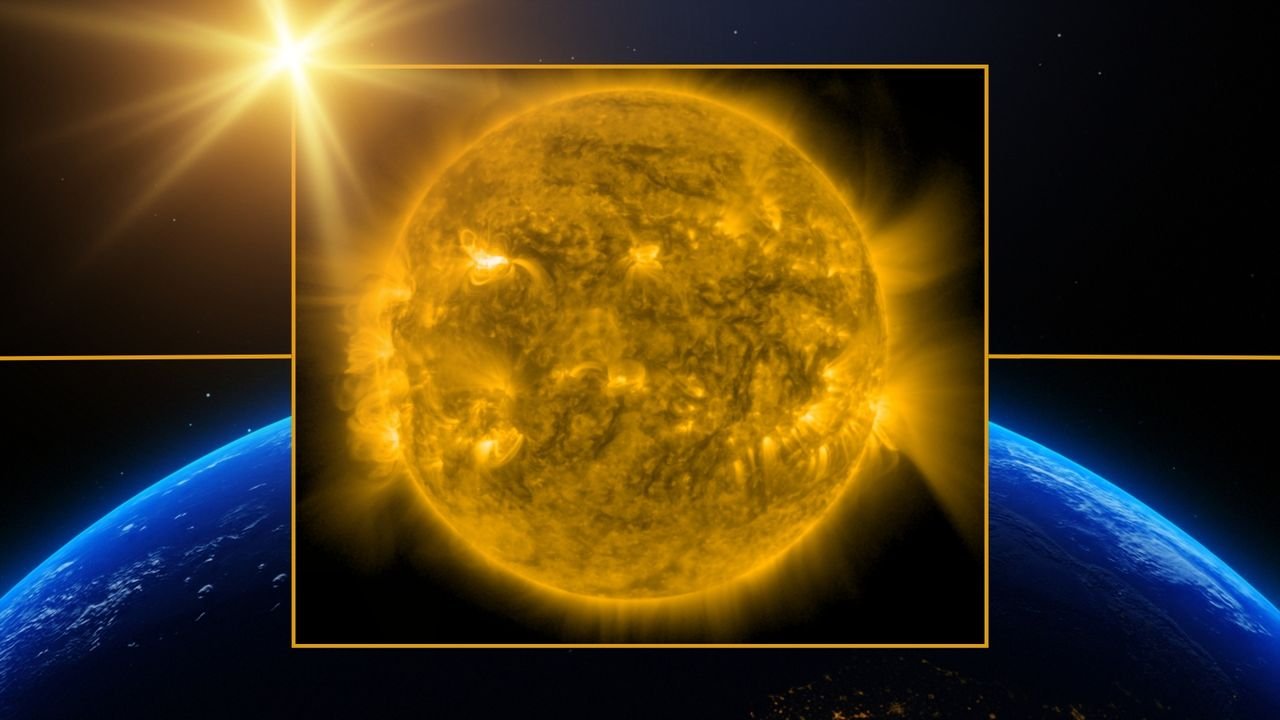
Record-Breaking Flare Activity in a Single Day (Image Credits: Cdn.mos.cms.futurecdn.net)
The sun delivered a stunning display of solar volatility with a rapid succession of powerful eruptions from a newly prominent active region.
Record-Breaking Flare Activity in a Single Day
Sunspot region AR4366 exploded into action, producing at least 18 M-class flares and three X-class flares within 24 hours.[1] Among these stood an intense X8.3 eruption, one of the strongest recent outbursts.[1] This barrage highlighted the region’s magnetic complexity and rapid growth over just a few days.
AR4366 emerged as a highly active area on the solar surface, quickly expanding and generating immense energy releases. Observations from solar monitoring satellites captured the events in vivid detail. The flares peaked in intensity, with X-class events representing the most powerful category on the solar scale.[2]
Mechanics of Solar Flares and Their Power
Solar flares occur when pent-up magnetic energy in sunspots suddenly releases, hurling radiation and particles into space. The classification system runs from A to X, with each step marking a tenfold energy increase; X-class flares pack the most punch. AR4366’s output underscored its potential as a prolific flare producer.
- M-class flares: Moderate strength, capable of minor radio disruptions.
- X-class flares: Extreme power, often triggering widespread communication blackouts and radiation spikes.
- AR4366’s tally: Over 20 significant events, far exceeding typical daily activity.
Recent updates confirmed additional flares like an X1.6 and M1.1, maintaining high alert levels with 75% odds for more M-class and 25% for X-class events.[2]
Earth-Facing Rotation Raises Geospace Concerns
The sun rotates every 27 days, bringing sunspots into view gradually. AR4366 now rotates toward Earth’s side, increasing risks for geoeffective eruptions. Past flares from this region showed no direct coronal mass ejections (CMEs) aimed at our planet, but the positioning changes that outlook.
Experts monitor for CMEs, vast plasma clouds that can spark geomagnetic storms upon arrival. Such storms enhance auroras but disrupt satellites, power grids, and radio signals. With the sunspot nearing center disk, any future blasts hold greater potential for Earth impact.
Solar Cycle 25’s Persistent Peak
Solar Cycle 25 nears its maximum, fueling frequent active regions like AR4366. No spotless days marked 2026 so far, signaling sustained high activity.[3] Thermosphere heating and elevated radio flux readings reflected this vigor.
While impressive, these events remain within expected bounds for the cycle. Observatories like NASA’s Solar Dynamics Observatory tracked developments closely.
Key Takeaways
- AR4366 produced 21+ flares in 24 hours, including X8.3.
- Region rotates toward Earth, heightening CME risks.
- Expect possible auroras and tech disruptions ahead.
Solar watchers anticipate more fireworks from AR4366, reminding us of the sun’s dynamic influence on our technological world. What effects might we see next? Share your thoughts in the comments.