
Solar Activity Ignites Geomagnetic Turbulence (Image Credits: Unsplash)
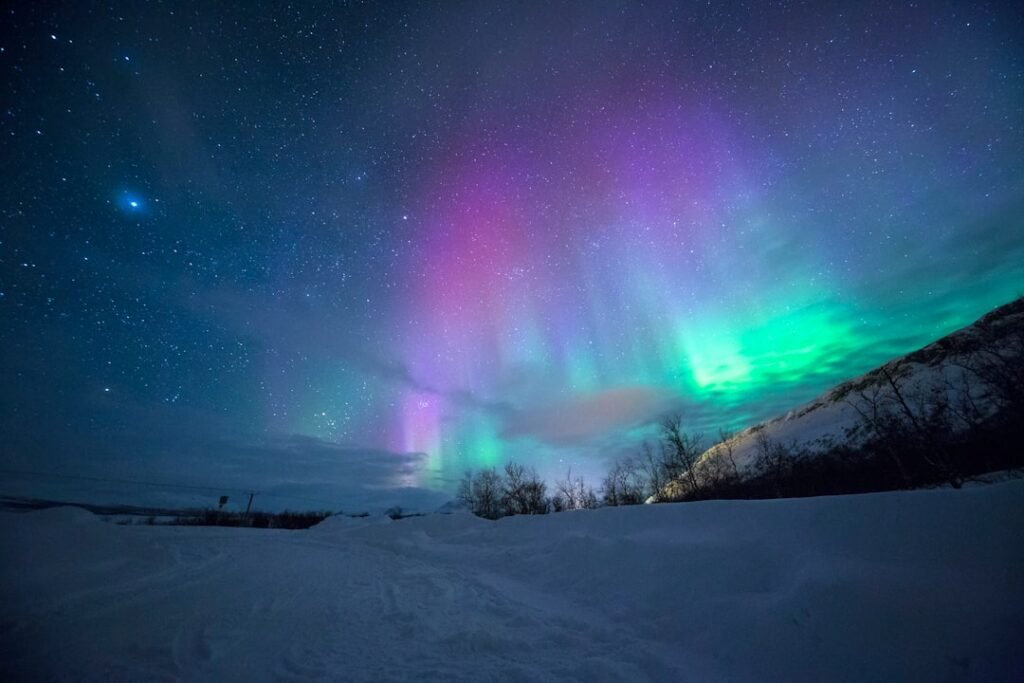
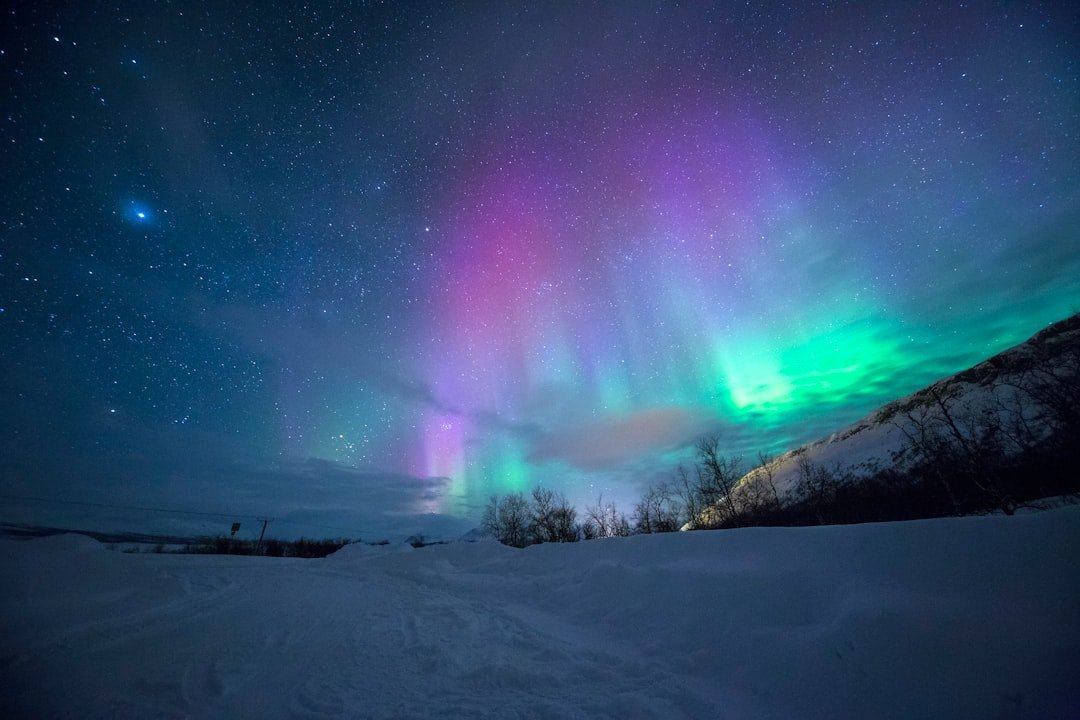
Vibrant auroral displays captivated observers across high latitudes on the night of March 13-14, 2026, as high-speed solar wind from a coronal hole battered Earth’s magnetic field.[1]
Solar Activity Ignites Geomagnetic Turbulence
Solar wind speeds peaked near 700 km/s following the onset of a co-rotating interaction region on March 13, driving unexpected geomagnetic disturbances.[1] This fast-moving stream originated from a large trans-equatorial coronal hole that became geoeffective around March 11-12. The interplanetary magnetic field’s Bz component turned southward, enhancing auroral activity. Conditions escalated to G2 moderate storm levels, with the planetary Kp index reaching 6.[1]
Forecasters noted the storm’s intensity surpassed initial G1 predictions. “Auroras lit up skies at northerly latitudes last night. The expected magnetic turbulence arrived and provoked a stronger geomagnetic storm than anticipated (G2 moderate instead of G1 minor),” reported EarthSky.[1] Sunspot regions like AR4384 and AR4392 produced multiple C-class flares, though no major Earth-directed coronal mass ejections materialized.
Auroras Push Southward in Unexpected Reach
Displays appeared as far south as Nebraska and Wyoming in the United States, thrilling skywatchers far from polar regions.[1] Cameras in Alaska, including the University of Alaska’s Poker Flat Aurora Camera, captured vivid greens and purples early on March 14. High-latitude spots like Anchorage and Reykjavik offered prime views throughout the event.
Community reports highlighted the spectacle’s breadth. Observers in northern Europe, from Edinburgh to Scandinavia, shared sightings of dancing lights. The G2 conditions expanded the auroral oval, making the phenomenon accessible to more locations than typical G1 events.
Recent Flares and CMEs in Focus
Solar flare output remained low to moderate over the preceding week. Active regions generated 16 flares on March 12-13, including an M1.2 from AR4384, alongside numerous C-class events.[1] A filament eruption on March 12 produced a large coronal mass ejection, but models confirmed it would pass ahead and below Earth’s orbit.
- March 13-14: 13 flares, strongest C8.9 from AR4392.
- March 11-12: 8 flares, led by C3.2.
- March 10-11: 6 flares, topped by C4.7.
- Overall chance for M-class flares on March 14: 25%.[1]
Forecast Signals More Auroral Potential
Solar wind speeds held at 650-700 km/s into March 14, supporting unsettled to active conditions with isolated G1 storms likely and G2 possible early.[1] A slight chance exists for a minor glancing blow from the March 12-13 CME late on March 15. High latitudes could see continued displays through the weekend.
| Date | Expected Kp | Storm Potential |
|---|---|---|
| March 14 | 3-4 | G1 likely, G2 possible |
| March 15 | 3-4 | Active, G1 chance |
| March 16 | 2-4 | Unsettled-active |
“As these conditions continue, more auroral displays are possible tonight. Auroras may be visible from Seattle, Minneapolis, Edinburgh, and northern England at times,” according to forecasters.[1]
Key Takeaways
- Solar wind from coronal holes drove G2 storms, peaking at 700 km/s.
- Auroras reached U.S. Midwest; more visible tonight at mid-northern sites.
- Low flare risk persists, no major CME threats imminent.
Earth’s magnetic defenses held firm against this solar onslaught, reminding us of the sun’s dynamic influence on our planet. As conditions evolve, northern sky enthusiasts should scan horizons after dark. What auroras have you captured lately? Share your photos in the comments.