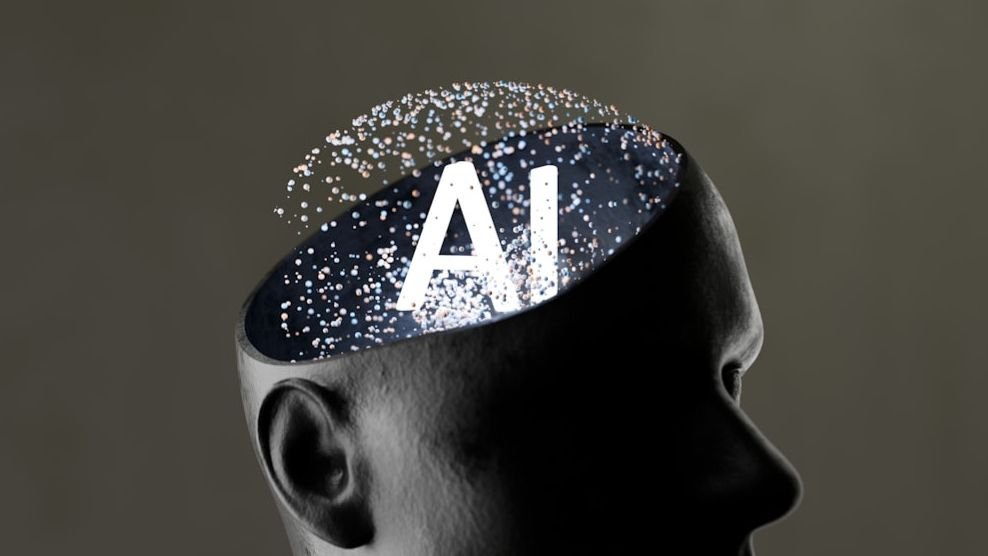

There’s a quiet revolution happening inside offices, universities, and research labs around the world. It doesn’t look like a takeover. It looks like convenience. A suggestion here, an auto-complete there – and suddenly, the question arises: are we still the ones doing the thinking?
Researchers are beginning to sound the alarm, not about robots stealing jobs, but about something far more subtle and honestly more unsettling. The concern is that AI tools, used too heavily and too early, might be quietly hollowing out the very expertise that makes humans valuable in the first place. Let’s dive in.
The Research That Started the Conversation
A study discussed by researchers and covered by Phys.org in early April 2026 raises a striking concern about AI’s long-term impact on human cognitive development and professional expertise. The central argument isn’t that AI is bad – it’s that over-reliance on AI systems could gradually erode the mental muscles people build through struggle, repetition, and failure. Think of it like GPS. Most of us have forgotten how to read a paper map because we never need to anymore. The same principle, researchers suggest, might now be playing out in far more consequential fields.
The worry isn’t hypothetical either. It’s rooted in observable patterns already emerging in workplaces and educational settings where AI tools have become deeply embedded in daily workflows.
What Human Capital Actually Means Here
Human capital is one of those phrases that sounds corporate and cold, but it really just means the accumulated knowledge, skills, and judgment that people develop over time through experience. A doctor who has misdiagnosed a patient, reflected on it, and corrected course has built something irreplaceable. A junior analyst who has wrestled with messy data for hours has developed pattern recognition that no shortcut can replicate.
Here’s the thing – that kind of deep, earned expertise takes time to build. It requires friction. It requires getting things wrong. When AI steps in and smooths over all of that friction before it can teach us anything, we might be producing a generation of highly efficient workers who are, paradoxically, intellectually fragile.
The Dependency Trap Nobody Talks About Enough
Researchers point to what could be called a “dependency trap,” where individuals and organizations become so reliant on AI outputs that they lose the ability to critically evaluate or independently produce work of the same quality. It’s a gradual process, not a sudden collapse – more like a slow muscle atrophy than a dramatic injury. You don’t notice it until you really need that muscle and find it’s simply not there anymore.
This is especially concerning in high-stakes fields like medicine, law, engineering, and scientific research, where the ability to reason from first principles isn’t just a nice-to-have but a genuine matter of public safety. Honestly, it doesn’t take much imagination to see how this could go wrong very quickly.
Early Career Professionals Bear the Greatest Risk
One of the more provocative points raised in this line of research is that early-career professionals and students face the steepest risks. These are the people who haven’t yet built a robust foundation of expertise – they’re still in the phase where struggle is supposed to be the teacher. When AI absorbs that struggle, it also absorbs the learning that would have come from it.
Imagine trying to become a skilled chef by always using a meal kit. You’d get good meals. You wouldn’t become a chef. The analogy isn’t perfect, but it captures something real about how skill formation actually works. Senior professionals with decades of experience can use AI as a powerful tool precisely because they have the judgment to know when it’s wrong. Newcomers often don’t yet have that calibration.
The Organizational Dimension
It’s not just individuals at risk. Organizations themselves can experience a kind of institutional amnesia when too much knowledge becomes outsourced to AI systems rather than embedded in human teams. If the AI goes down, gets updated, or simply produces a subtle error that nobody catches – because nobody remembers how to check – the consequences can ripple widely.
Researchers suggest that companies and institutions need to think seriously about which cognitive tasks should remain stubbornly human, not because AI can’t do them, but because humans need to keep doing them in order to stay sharp. That’s a fundamentally different conversation than the usual “AI will take our jobs” narrative, and I think it’s a far more important one.
Can We Design AI Tools That Preserve Expertise?
There is a more optimistic thread in this research, and it’s worth taking seriously. Some researchers believe the answer isn’t to reject AI but to design and deploy it more thoughtfully, in ways that support learning rather than bypass it. The idea of “desirable difficulty” – building in productive struggle rather than eliminating it – is gaining traction among educators and AI developers alike.
Tools that prompt users to reason through a problem before offering a solution, or that provide scaffolded hints rather than instant answers, could preserve the learning process while still offering assistance. It’s hard to say for sure how widely this approach will be adopted, especially given commercial pressures to make AI as frictionless as possible. Still, the fact that the conversation is happening at all is a meaningful step.
A Question of What We Actually Want From Intelligence
At its core, this debate forces a genuinely philosophical question: what do we value about human intelligence? If we define intelligence purely as getting the right answer efficiently, then AI wins, full stop. If we define it as something richer – the capacity to reason under uncertainty, to exercise ethical judgment, to create meaning – then the stakes of outsourcing it become much higher.
Researchers working on this issue aren’t arguing for a Luddite rejection of powerful tools. They’re arguing for intentionality. They want us to ask, before every interaction with an AI system: is this helping me grow, or is it growing in my place? That’s a small question with enormous implications. The real risk isn’t that AI will make us obsolete. The real risk is that we’ll let it make us intellectually lazy, one convenient shortcut at a time.
Conclusion: The Skill We Can’t Afford to Lose Is Thinking Itself
The conversation emerging from this research is one that society needs to have urgently, and loudly. It isn’t about fear or technophobia. It’s about protecting the very cognitive foundation that makes human contribution meaningful in the first place. Expertise isn’t just a credential. It’s a living, breathing capability that must be exercised to survive.
Let’s be real – convenience is seductive, and nobody is going to voluntarily choose the harder path without a compelling reason. That’s why the institutions designing AI tools, structuring education, and setting workplace norms carry an enormous responsibility right now. The question worth sitting with is this: in a world where AI can do more and more of our thinking, what will happen to us if we let it?
What do you think – are we already too dependent on AI tools, or is this concern overblown? Share your thoughts in the comments.