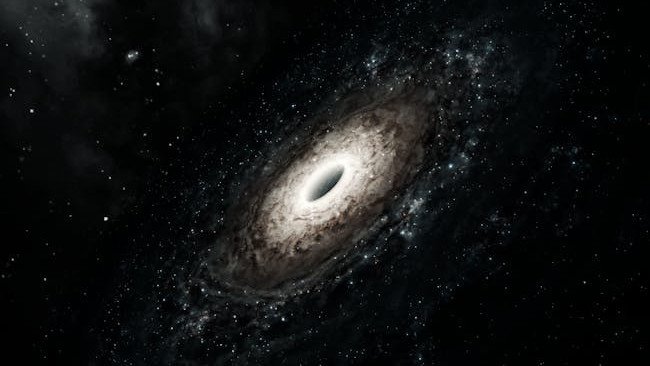


Unpacking the 3-Torus Family (Image Credits: Pixabay)
Astronomers have puzzled over the universe’s true shape for generations, with observations revealing a locally flat expanse that hints at infinity. Yet a fresh examination of Cosmic Microwave Background (CMB) data by the Collaboration for Observations, Models and Predictions of Anomalies and Cosmic Topology (COMPACT) suggests finite, exotic structures remain viable. Researchers now propose the cosmos could fold back on itself, producing illusory repeats akin to reflections in an endless hall of mirrors.[1]
Local Flatness Hides Global Secrets
Telescopes capture a universe that appears remarkably flat on large scales, a discovery that fueled assumptions of endless expansion. However, this flatness describes only the observable portion, leaving the global topology – a measure of how space connects – wide open to speculation. Finite shapes, though counterintuitive, could exist without contradicting measurements if light from distant regions has not yet looped around to us.[1]
Previous analyses dismissed such possibilities, deeming CMB data insufficient for exotic hunts. COMPACT challenged this by revisiting the radiation’s patterns with new rigor. Their work underscores that earlier searches overlooked key configurations, keeping the door ajar for a compact cosmos.[1]
COMPACT’s Rigorous Reexamination
The international COMPACT team published their initial findings in Physical Review Letters, focusing on Euclidean topologies rather than all 18 possible forms. They scrutinized CMB maps for signs of repetition or correlation that would signal a closed universe. Simple flat structures emerged as favored, yet surprises lurked in twisted variants.[1]
“While unambiguous indicators of topology have yet to be detected, we present evidence that prior searches for topology have far from exhausted the potentially significant possibilities. Much more can be done to discover, or constrain, the topology of space,” the researchers stated.[1]
This approach shifted from broad speculation to targeted modeling, prioritizing geometries born from Big Bang dynamics. The effort highlights CMB’s untapped potential as a topological probe, urging cosmologists to refine their tools.
Unpacking the 3-Torus Family
At the heart of the study lies the 3-torus, a donut-like form where space wraps around in three dimensions. Labeled E1, this basic version gets ruled out if its scale fits within the CMB horizon – the distance light has traveled since the Big Bang. More intricate siblings, however, evade detection.[1]
E2 incorporates 180-degree twists, while E3 features 90-degree ones, creating correlated sky views that differ just enough to blend into noise. These extensions produce a twisted loop, where identical regions appear shifted across the heavens. The table below summarizes their status:
| Topology | Description | Status from CMB Data |
|---|---|---|
| E1 | Standard 3-torus | Ruled out within horizon |
| E2 | 180-degree twists | Not excluded |
| E3 | 90-degree twists | Not excluded |
Even beyond these, the study hints at further Euclidean complexities waiting exploration.[1]
Visions of a Reflective Cosmos
In a hall-of-mirrors universe, observers might glimpse the same events at varied cosmic distances, mistaking repeats for distinct galaxies. No such matches have surfaced, likely because the loops exceed light’s 13.8-billion-year journey. This finite geometry resolves infinity’s paradoxes while preserving flatness locally.[1]
Determining topology promises breakthroughs in dark energy, inflation, and the Big Bang’s legacy. COMPACT calls for “topological fingerprints” – subtle CMB signatures – to confirm these shapes observationally. Future missions could hunt these elusive traces, reshaping our cosmic worldview.
Key Takeaways
- CMB data bolsters simple flat topologies but leaves twisted finite ones viable.
- Prior studies underestimated exotic possibilities; more analysis is essential.
- A hall-of-mirrors universe could explain the cosmos without invoking true infinity.
COMPACT’s findings reignite a fundamental quest: Is space truly boundless, or does it circle back in clever folds? This perspective invites cosmologists to probe deeper, potentially unveiling the universe’s hidden architecture. What do you think about a looping cosmos? Tell us in the comments.