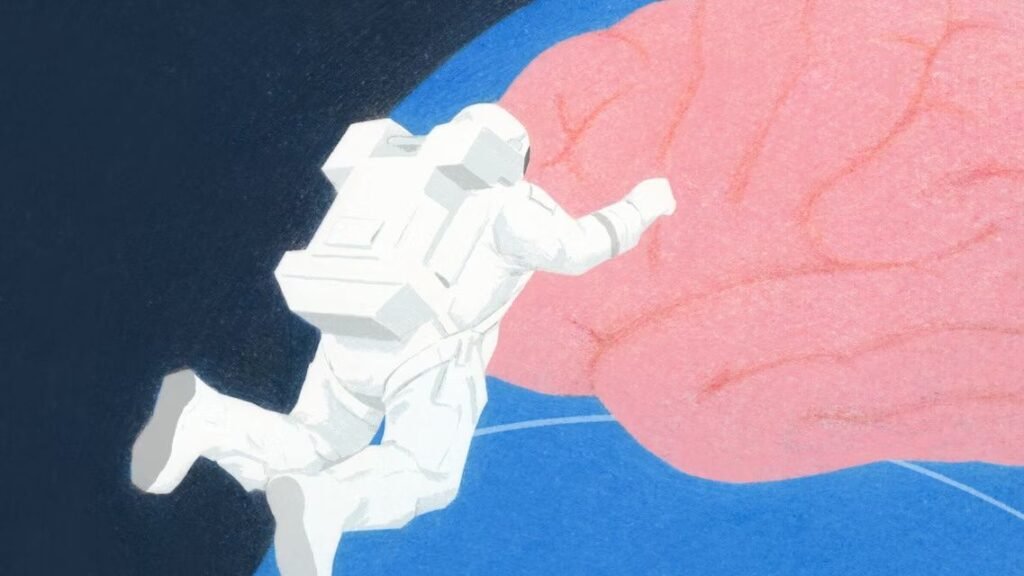

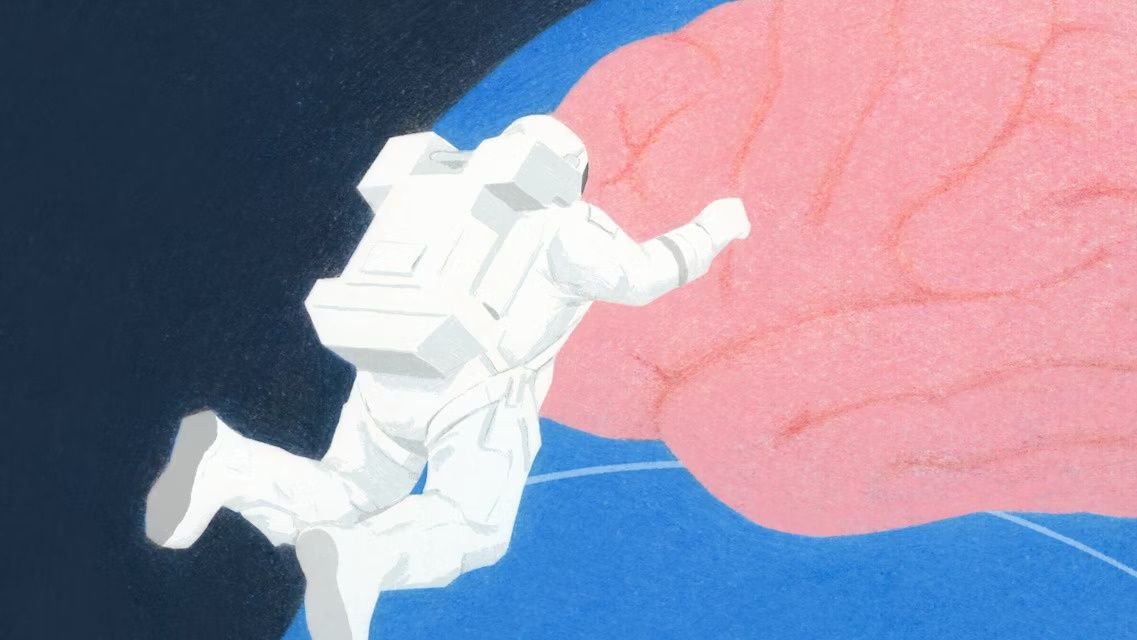
Astronaut Brains Move in Unexpected Ways (Image Credits: Cdn.mos.cms.futurecdn.net)
Extended time in space triggers measurable repositioning and distortion of the brain inside the skull, researchers reported in early 2026.[1][2]
Astronaut Brains Move in Unexpected Ways
Investigators analyzed MRI scans from 26 astronauts before and after missions lasting from weeks to more than a year. They aligned skull positions across scans to isolate brain movements. The organ shifted upward, backward, and rotated slightly backward in pitch relative to its earthly position. Sensory and motor regions experienced the most pronounced displacements.[1]
Global shifts grew larger with mission duration. In those who spent about a year on the International Space Station, the supplementary motor cortex displaced upward by 2.52 millimeters on average. Such distances, though modest, carry significance within the skull’s confined space. Rachael Seidler, a co-author from the University of Florida, noted that these changes proved visible to the eye.[3]
Microgravity Disrupts Fluid Balance
Gravity on Earth maintains equilibrium among the brain, cerebrospinal fluid, and surrounding tissues. Microgravity eliminates this downward pull, sending fluids headward and causing facial puffiness in astronauts. The brain then floats freely, pressed by soft tissues and cranial bones.
Previous research captured average upward positioning post-flight but overlooked regional details. This study segmented the brain into over 100 areas, revealing nonlinear deformations in all directions. Structures on either side shifted toward the midline in symmetrical fashion, a pattern masked in whole-brain averages.[2]
Key Shifts by Brain Region
Researchers quantified changes across mission lengths. Short stays produced subtle effects, while year-long exposures amplified them. The table below summarizes notable displacements:
| Region | Direction | Avg. Shift (mm, 1-Year Mission) |
|---|---|---|
| Supplementary Motor Cortex | Upward | 2.52 |
| Sensory Areas | Upward/Backward | ~2.0-2.5 |
| Motor Regions | Backward | Variable |
| Posterior Insula | Translational | Correlated with balance loss |
Movement and sensation zones dominated the alterations. These patterns emerged consistently across participants.[1]
Recovery Patterns and Behavioral Links
Most deformations reversed within six months on Earth, especially upward movements aided by gravity. Backward shifts lingered longer, as gravitational force acts downward rather than forward. Comparisons with 24 bed-rest participants simulating microgravity showed similarities but key differences, like stronger upward astronaut shifts.
Larger posterior insula translations tied to post-flight balance declines, though no crew reported headaches or cognitive fog. Such links highlight potential sensory disruptions without overt harm. Seidler emphasized that duration drove the changes: “The people who went for a year showed the largest changes.”[3]
Implications for Deep Space Travel
NASA’s Artemis program and Mars ambitions demand countermeasures against these effects. Understanding recovery timelines proves vital, particularly in partial gravity like the Moon or Mars. Small sample sizes, mostly male, call for broader studies on age and gender variations.
Bed-rest analogs aid ground testing but fall short of full replication. Future work must probe long-term risks to ensure astronaut safety.[4]
Key Takeaways
- Brain shifts upward/backward by up to 2.5 mm, scaling with mission length.
- Sensory/motor areas most affected; midline convergence in hemispheres.
- Mostly recovers in 6 months, but balance links emerge.
Spaceflight reshapes the brain in subtle yet profound ways, underscoring microgravity’s toll on human physiology. As missions extend farther, these insights pave the way for protective strategies. What do you think about these brain changes for future explorers? Tell us in the comments.