
Imagine trying to piece together the climate history of an entire civilization using tiny inscriptions on animal bones and turtle shells. That’s exactly what researchers have been doing, and what they found is nothing short of extraordinary. Hidden within these ancient artifacts is a story of drought, floods, and political unrest that echoes uncomfortably into our modern world.
The connection between climate chaos and the fall of powerful societies is not a new theory. But new evidence from China’s oracle bones is making that link harder than ever to ignore. Let’s dive in.
What Are Oracle Bones and Why Do They Matter?
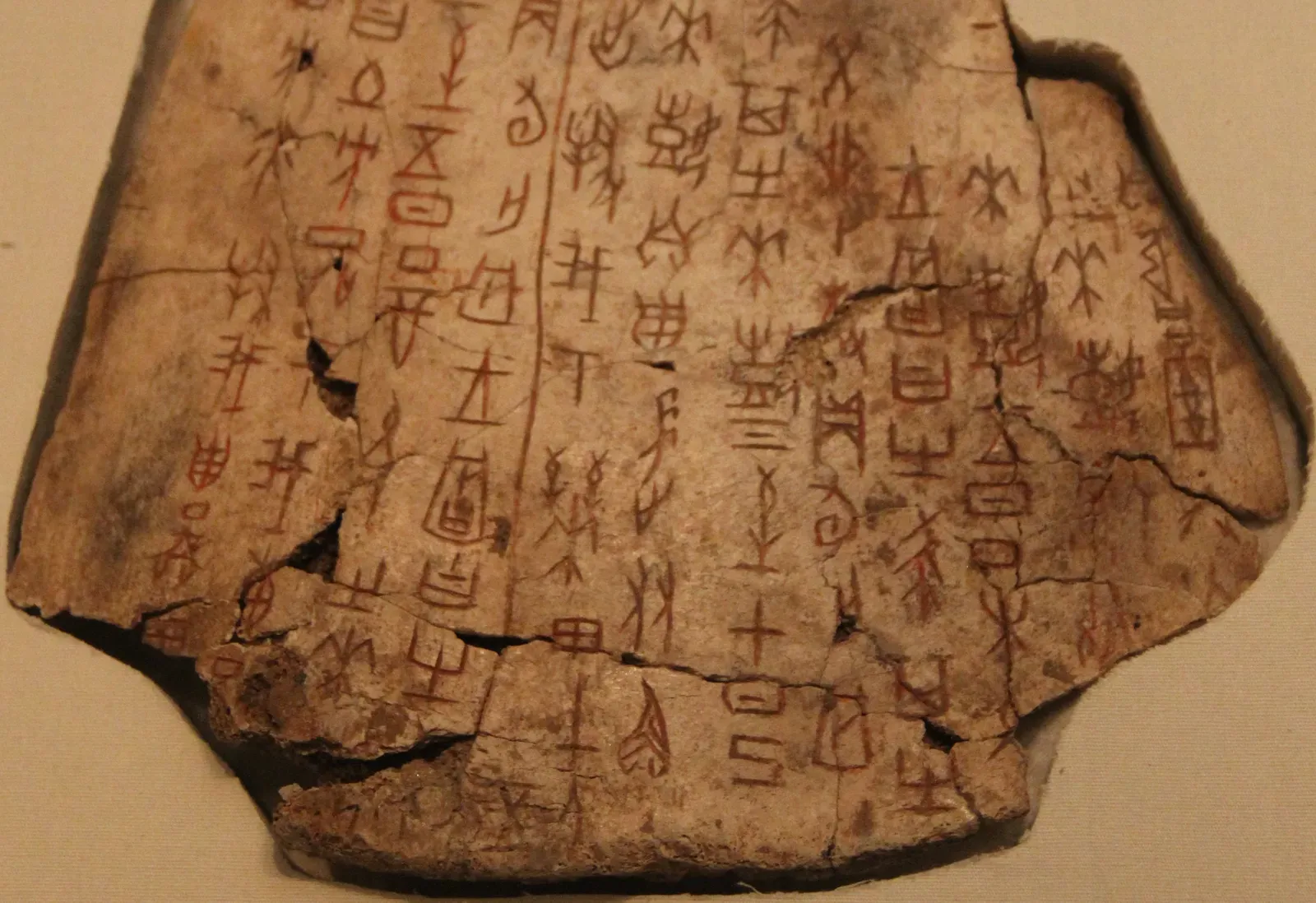
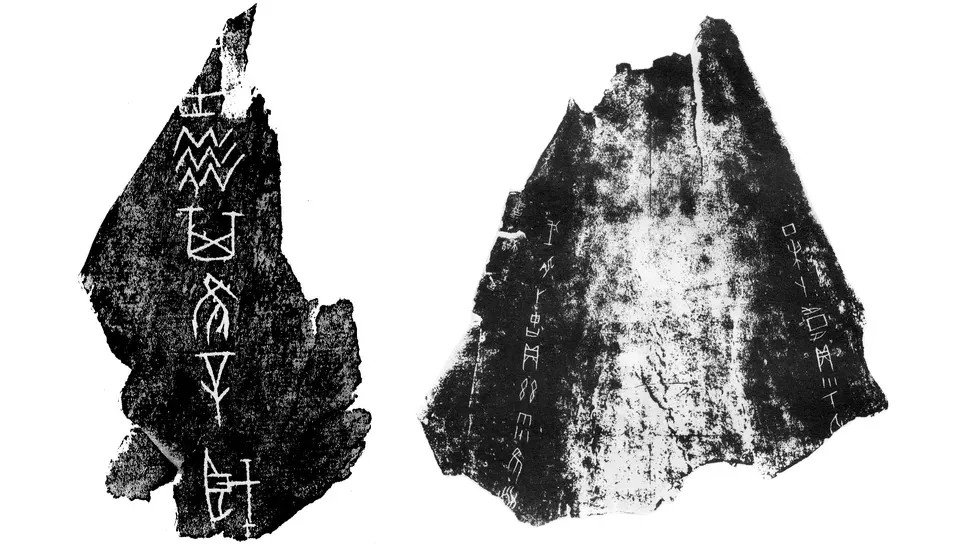
Oracle bones are among the oldest written records in Chinese history, dating back roughly three thousand years to the Shang and Western Zhou dynasties. They were used for divination, where priests would apply heat to bones or shells and interpret the resulting cracks as messages from ancestors or gods. The inscriptions carved into them documented everything from royal decisions to agricultural concerns to, crucially, weather events.
Here’s the thing most people don’t realize: these bones aren’t just spiritual artifacts. They’re essentially ancient climate logbooks. Researchers have begun treating them as a data source, cataloguing references to rainfall, drought, floods, and temperature anomalies with surprising scientific precision.
What makes oracle bones especially valuable is their sheer volume and consistency. Thousands of them have been excavated, many from the Anyang site in Henan Province, giving scientists a surprisingly rich archive to work with. Honestly, it’s remarkable that carvings made by Bronze Age priests are now informing modern climate science.
The Climate Disasters Hidden in the Inscriptions
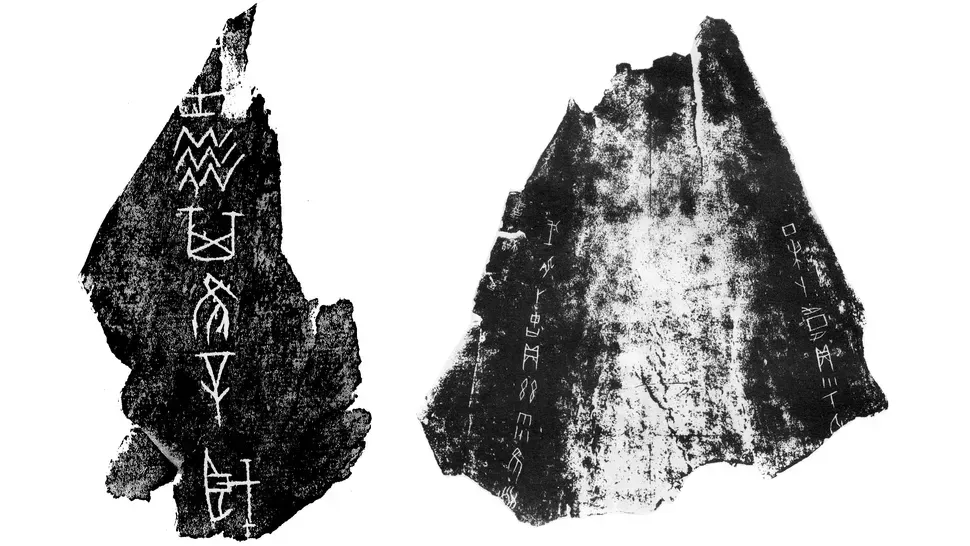
A recent study analyzed oracle bone inscriptions with a focus on environmental references, and the findings were striking. The records show a clustering of extreme weather events during specific periods, including prolonged droughts and catastrophic floods, that align with known moments of political instability in early Chinese history.
The researchers cross-referenced these inscriptions with other paleoclimate proxies, such as ice core data and sediment records, to build a more complete picture. The match was telling. When oracle bones recorded repeated pleas for rain or documented devastating floods, the wider geological record confirmed that something genuinely extreme was happening with the climate at the time.
What stands out most is the pattern. These weren’t isolated bad seasons. The inscriptions suggest cascading climate stress over years or even decades, which would have put enormous strain on food supplies, state authority, and social cohesion. That kind of sustained pressure has toppled empires before, and apparently, it did so here too.
The Fall of the Western Zhou Dynasty and Climate Stress
The Western Zhou dynasty collapsed around 771 BCE, and historians have long debated the causes. Political intrigue, military defeat, and weak leadership are the usual suspects. This new research adds a powerful environmental dimension to that conversation.
Climate data reconstructed from the oracle bone record suggests that the final decades of the Western Zhou were marked by severe drought conditions. Crop failures would have weakened the state’s ability to feed its armies and population, undermining the political legitimacy that Chinese rulers depended on, what was known as the Mandate of Heaven. A ruler who couldn’t ensure good harvests was a ruler whose divine approval was visibly slipping away.
It’s almost poetic in a tragic way. The very rituals recorded on the oracle bones, the desperate prayers for rain and relief from famine, were documenting the slow unraveling of the society that created them. Let’s be real: climate stress didn’t just influence the fall of the Zhou. It may have been the decisive tipping point that transformed political instability into outright collapse.
Oracle Bones as an Unlikely Scientific Tool
Using ancient religious texts as climate proxies is not without its challenges. Researchers had to account for potential biases, such as the possibility that scribes recorded unusual events more frequently than normal ones, skewing the data toward extremes. That’s a legitimate concern and one the study’s authors took seriously.
Still, when the inscriptions are analyzed systematically and compared against independent climate records, the correlations become difficult to dismiss. The oracle bones weren’t written as weather reports, but they functioned as one anyway. That’s a genuinely exciting scientific discovery, the idea that ritual artifacts can double as environmental archives.
This approach is part of a broader trend in archaeology and climate science called historical climatology. Scholars are increasingly mining old texts, whether they’re Chinese oracle bones, European harvest records, or Mesopotamian administrative tablets, to extract climate signals buried within them. It’s slow, painstaking work, but the payoff can be enormous.
What This Tells Us About the Relationship Between Climate and Power
There’s a bigger idea lurking beneath the surface of this research, one that feels uncomfortably relevant today. Complex societies, no matter how powerful or sophisticated, are deeply vulnerable to environmental disruption. The Shang and Zhou dynasties built elaborate bureaucracies, military forces, and cultural institutions. None of it was enough when the rains stopped coming.
Food insecurity breeds social unrest. Social unrest weakens governments. Weakened governments struggle to respond effectively to ongoing crises, which deepens the chaos further. It’s a spiral, and ancient China appears to have been caught in exactly that kind of downward cycle during several key periods. The oracle bone record captures the anxiety of people living through that spiral in real time.
Historians sometimes speak of the “fragility of complexity,” the idea that highly organized societies create interdependencies that make them efficient in good times but brittle under pressure. Climate shocks are precisely the kind of external pressure that can snap those interdependencies apart in ways that are nearly impossible to recover from quickly.
The Broader Archaeological Context in Ancient China
This research doesn’t exist in isolation. It builds on decades of archaeological work at sites like Anyang, where oracle bones were first discovered in large quantities in the late nineteenth century. Those early excavations revealed a civilization far more literate and administratively sophisticated than many had assumed for that era.
More recent work has used everything from pollen samples to river sediment analysis to reconstruct what ancient China’s landscape and climate actually looked like. Paired with the oracle bone inscriptions, these techniques are producing an increasingly detailed portrait of how environment and civilization interacted over millennia. It’s genuinely one of the most exciting frontiers in East Asian archaeology right now.
What’s particularly impressive is the interdisciplinary nature of this kind of research. Climatologists, archaeologists, linguists, and historians are all contributing to a shared project, each bringing tools the others don’t have. That kind of collaboration is what makes breakthroughs like this possible.
Why This Discovery Still Resonates Today
It would be easy to treat this as an interesting historical footnote, an ancient curiosity with no real bearing on the present. I think that would be a serious mistake. The mechanisms that drove societal stress three thousand years ago in China are not fundamentally different from those facing modern civilizations dealing with climate disruption today.
Prolonged drought, agricultural failure, resource competition, and political delegitimization are not problems unique to the Bronze Age. They are problems that appear on the front pages of newspapers right now, in different regions and different forms. The oracle bones are essentially sending a message across three millennia: civilizations that ignore sustained environmental stress do so at their own peril.
The difference, of course, is that we have something the Zhou priests didn’t: the ability to study history and draw lessons from it. Whether we actually do that is, it’s fair to say, still very much an open question.
Conclusion: Ancient Bones, Modern Warnings
There’s something deeply moving about the idea that ancient Chinese priests, scratching prayers onto bones and shells, inadvertently created one of the most detailed climate records of their era. They were trying to communicate with the divine. Thousands of years later, we’re using their words to understand the forces that destroyed their world.
The oracle bone research is a reminder that history is rarely as simple as we like to make it. Empires don’t fall just because of bad kings or military defeats. Sometimes the sky just stops giving rain, and everything built by human hands begins to crumble beneath the pressure of a changing world.
The real question the oracle bones leave us with is a haunting one: if the people of the Western Zhou had understood what was happening to their climate, could they have changed their fate? What do you think? Drop your thoughts in the comments below.