
Every once in a while, science drops a result that makes you sit up a little straighter and think, “Wait… have we been wrong this whole time?” That’s exactly the kind of tremor running through physics right now, as new work on how galaxies move and cluster is nudging at something almost sacred: our understanding of gravity itself.
For more than three centuries, gravity has been the quiet, unquestioned backbone of modern science, from falling apples to orbiting planets to the warping of spacetime. Now, data from distant galaxies and galaxy clusters are hinting that the story might not be as complete as we thought. It’s not that Newton and Einstein were “wrong” in the everyday sense, but that their theories might be only part of a bigger, stranger picture than we ever imagined.
The shocking possibility: Our gravity playbook might be incomplete
Imagine finding out that the rules of chess you’ve used your whole life are mostly right, but a few pieces can secretly move in ways no one told you about. That’s roughly what these new gravity-twisting results are suggesting: the basic rules still work, but not everywhere, and not for everything. On cosmic scales, some measurements of how galaxies cluster and how they accelerate away from each other are showing tiny but persistent mismatches with what standard gravity predicts.
Physicists are especially interested in subtle tensions between different ways of measuring the expansion of the universe and the growth of cosmic structure. When those independent pictures don’t quite line up, something in the underlying theory might be off. It’s like having two different doctors look at your scans and give slightly different diagnoses; one could be wrong, but if both are careful and competent, you also have to wonder if your understanding of the illness is missing a piece.
Newton, Einstein, and why they still work (most of the time)
To be fair, Newton’s and Einstein’s theories are not about to be tossed in the trash. Newton’s law of gravitation still guides spacecraft, satellite launches, and most of the physics you learn in school; for everyday speeds and distances, it’s beautifully accurate. Einstein’s general relativity, which replaced Newton’s gravity with the idea of curved spacetime, has passed every local test that scientists have managed to throw at it, from the bending of light around the sun to the precise timing of GPS systems.
The problem is not that they fail in the solar system or around black holes where we can check them carefully. The cracks show up when we look far out, on the largest scales, at galaxies, clusters of galaxies, and the whole cosmic web. Out there, you need to combine gravity with dark matter, dark energy, and the history of the universe. That’s where the clean elegance of Einstein’s equations starts bumping up against messy, stubborn data that refuses to fit neatly.
Where the universe started whispering: galaxy rotations and cosmic lenses
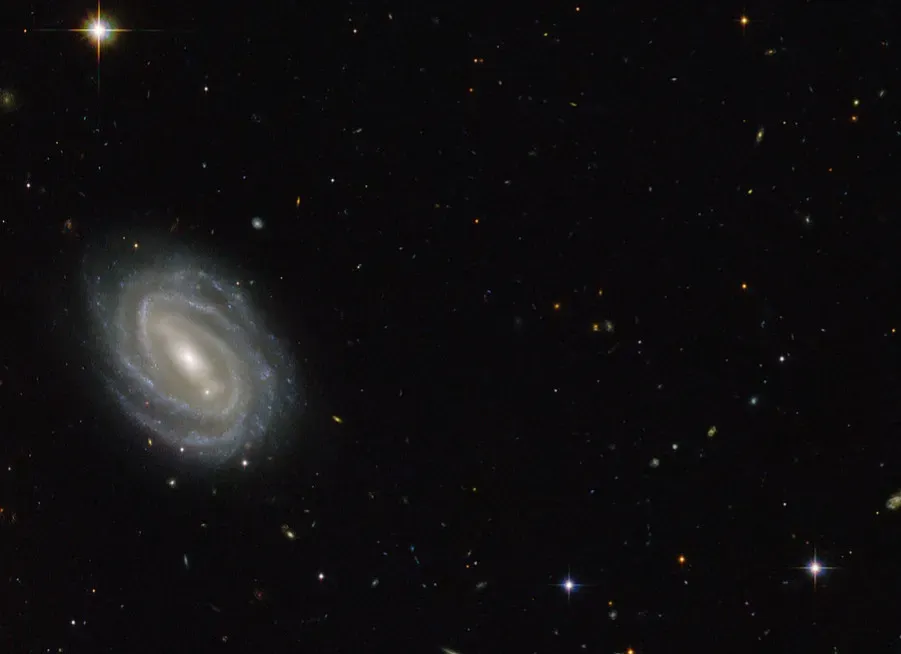
One of the earliest hints that something was off came from how fast galaxies spin. Stars at the outer edges of galaxies move so quickly that, under standard gravity, they should fly off into space like mud flinging off a fast-spinning tire. Instead, they stay put, orbiting as if some invisible glue is holding them in. For decades, the leading answer has been dark matter: a vast, unseen substance that adds extra gravity without emitting light.
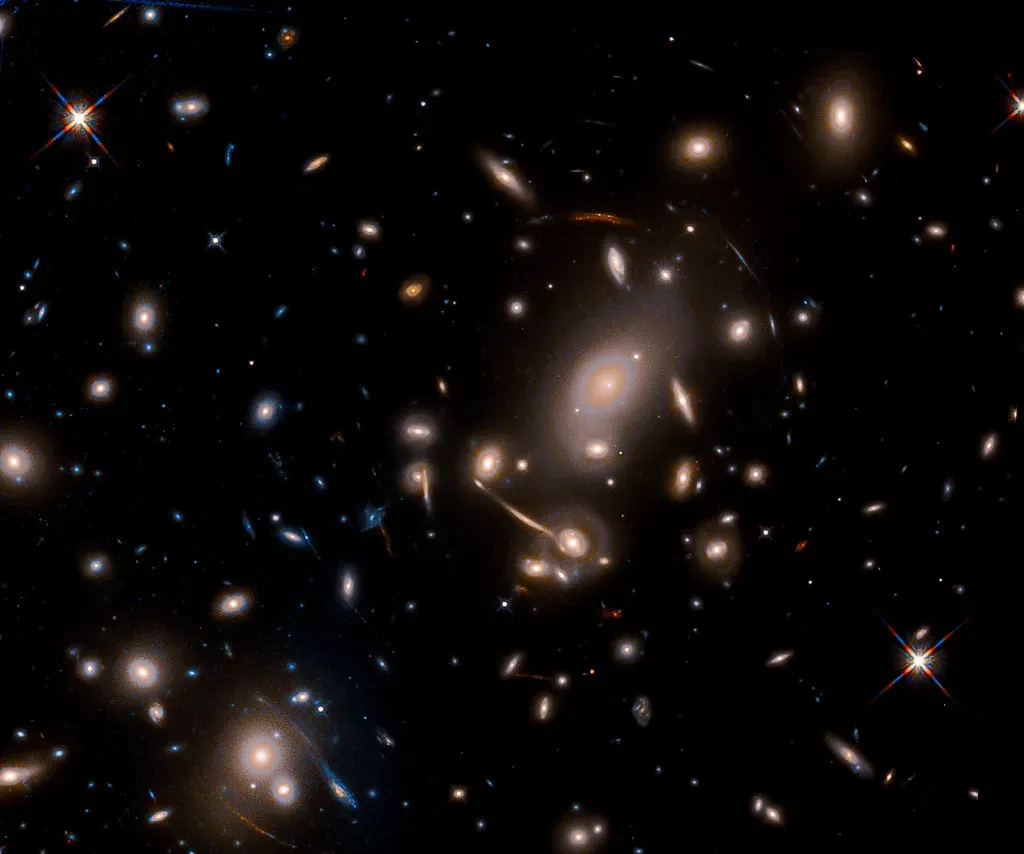
But when astronomers map this invisible component through gravitational lensing – how gravity bends the path of light from distant galaxies – they sometimes find patterns that don’t perfectly match the expectations of the standard dark matter plus Einstein model. These differences are tiny, but they’re consistent enough that some researchers wonder if gravity itself behaves differently in the thin outskirts of galaxies and in the low-acceleration environments of intergalactic space. It’s like noticing that the speed limit signs on lonely country roads don’t seem to match how cars actually move there.
The Hubble tension and the growing-structures problem
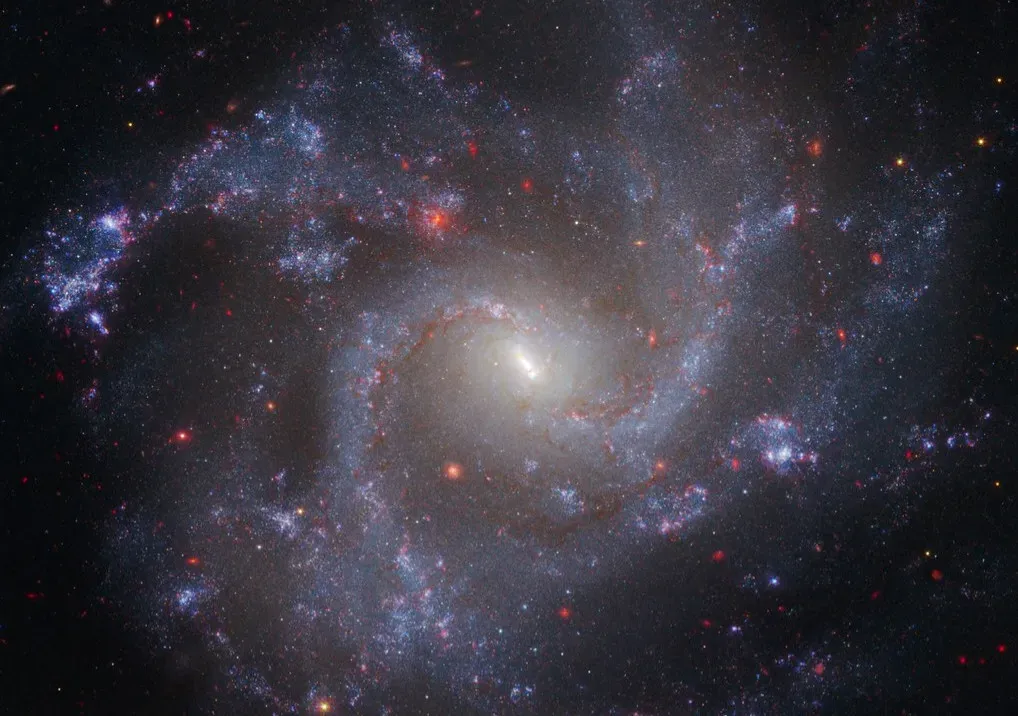
Another thorn in gravity’s side is the so-called Hubble tension, the disagreement between how fast the universe is expanding when measured in different ways. When scientists use the cosmic microwave background – the afterglow of the Big Bang – to infer the expansion rate, they get one value. When they measure it more directly using nearby supernovae and other distance markers, they get a noticeably higher value. The gap is not huge, but it’s far too big to brush off as random noise.
On top of that, surveys that track how galaxies clump and form large-scale structures sometimes suggest that cosmic structures have grown a bit more slowly than the standard gravity plus dark energy model predicts. Put these issues together, and it starts to feel like a pattern. If the universe is a crime scene, these tensions are the stray fibers and fingerprints that don’t quite line up with the main suspect’s alibi.
Modified gravity: tweaking the rules instead of adding new stuff
Faced with these puzzles, there are two main strategies: either we keep Einstein and add more unseen ingredients, or we change the recipe itself. Modified gravity theories try the second approach, adjusting the equations of gravity so that they behave differently at very low accelerations or across enormous distances. Some of these ideas attempt to explain galaxy rotation speeds without invoking dark matter, while others aim to address the Hubble tension and structure growth issues in one unified framework.
These modifications often introduce new fields or interactions that alter how spacetime curves under certain conditions while reducing to Einstein’s familiar form where we’ve already tested it. It’s a delicate balancing act: you can’t mess up the parts we know work, like solar system dynamics and gravitational waves, but you still want enough freedom to match the weird cosmic data. In practice, this can feel a bit like trying to fix a watch with tweezers while blindfolded – you might fix one tiny gear and accidentally nudge another.
New surveys, better data, and why the stakes are so high
The reason this debate has become so intense lately is that the data have gotten dramatically better. Massive projects mapping millions of galaxies, precise measurements of gravitational lensing, and detailed studies of the cosmic microwave background have all boosted the resolution on our cosmic “photo.” When you sharpen a blurry image, you not only see more detail, you also start seeing the flaws more clearly, and that’s exactly what’s happening here.
In the next few years, space telescopes and ground-based observatories will push these measurements even further, especially for weak lensing and large-scale structure. If the tensions stay or even grow stronger, the case for some kind of new physics in gravity will become very hard to ignore. If they mysteriously fade away as data improves, we may discover that we were chasing statistical ghosts. Either way, what’s at stake is huge: our best theory of how the universe holds together could be on the verge of either its strongest confirmation or its most dramatic rewrite in a century.
A personal take: why this feels both unsettling and exhilarating
From a personal perspective, there’s something almost unsettling about watching gravity itself come under scrutiny. I grew up with the story that Newton and Einstein had basically “nailed it,” and everything since was just polishing the edges. Now it feels more like we’ve been living in a beautifully decorated room, only to discover a hidden door in the wall that might open into a whole new wing of the house.
At the same time, this uncertainty is exactly what makes science alive. If everything fit perfectly, there would be nothing left to explore, no reason to build bigger telescopes or invent new theories. Whether modified gravity wins out, dark matter turns out stranger than we thought, or some hybrid answer appears, this moment will likely be remembered as a turning point. In a way, the universe is daring us to admit we don’t fully understand its most basic force and to be brave enough to ask what lies beyond the theories we once thought were complete.
Standing on the edge of a gravitational rethink
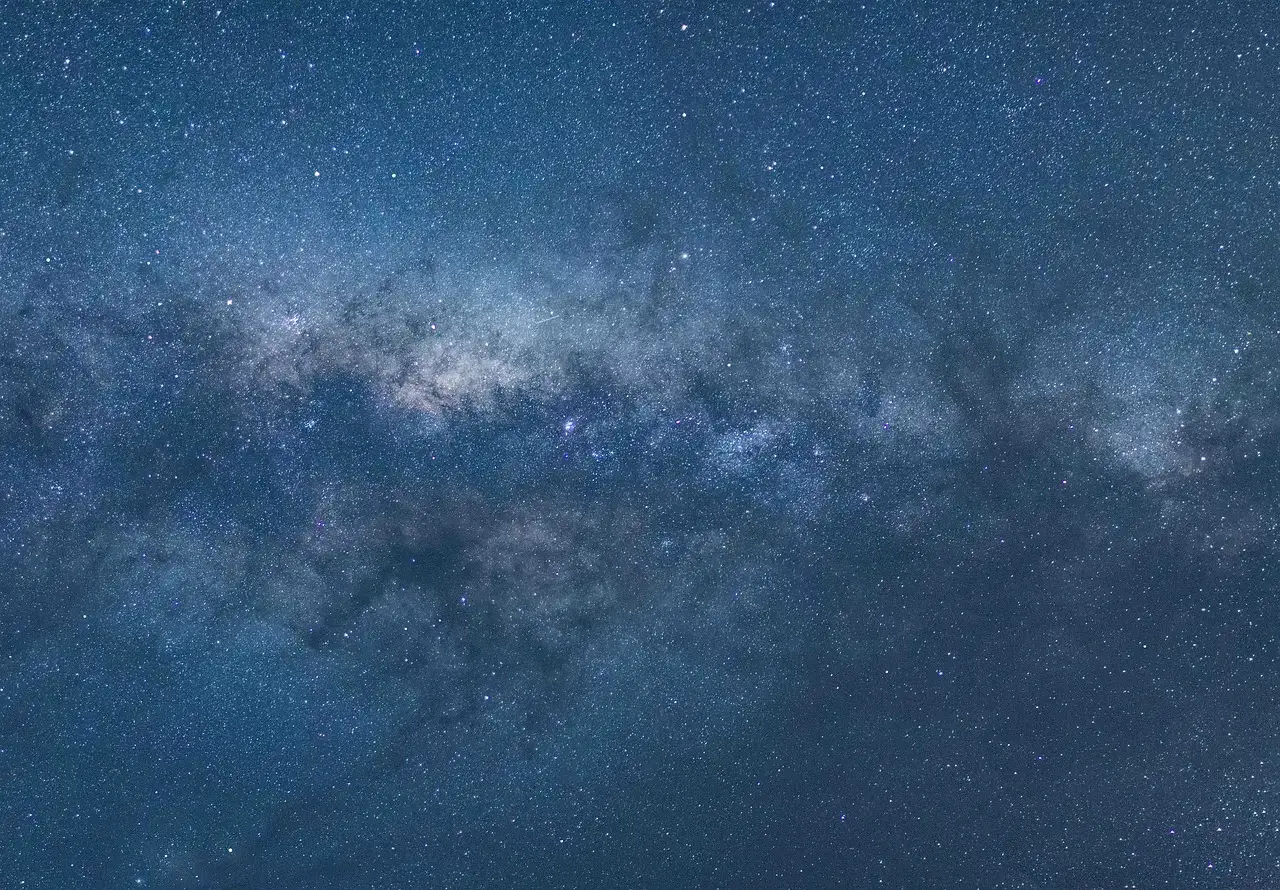
Right now, the safest way to describe the situation is that gravity, as encoded by Newton and Einstein, works astonishingly well in the regimes we’ve thoroughly tested but faces growing questions on the largest cosmic scales. Galaxy rotations, lensing patterns, the Hubble tension, and structure growth all point to something that doesn’t quite add up, whether that is exotic new matter, a shift in how gravity behaves, or a combination of both. No single study has “killed” the old theories, but together they are pushing scientists to consider that the familiar playbook may be only a chapter of a larger story.
As new observations pour in over the coming years, we may find ourselves either tightening our grip on Einstein’s theory or loosening it to make room for a broader framework that contains it as a special case. For now, we are in that rare, electric phase where questions outnumber answers and the most honest thing to say is that gravity might still be hiding some of its deepest secrets. How often do we get to live through a moment where the universe politely suggests we might need to rethink one of our oldest, most trusted ideas?