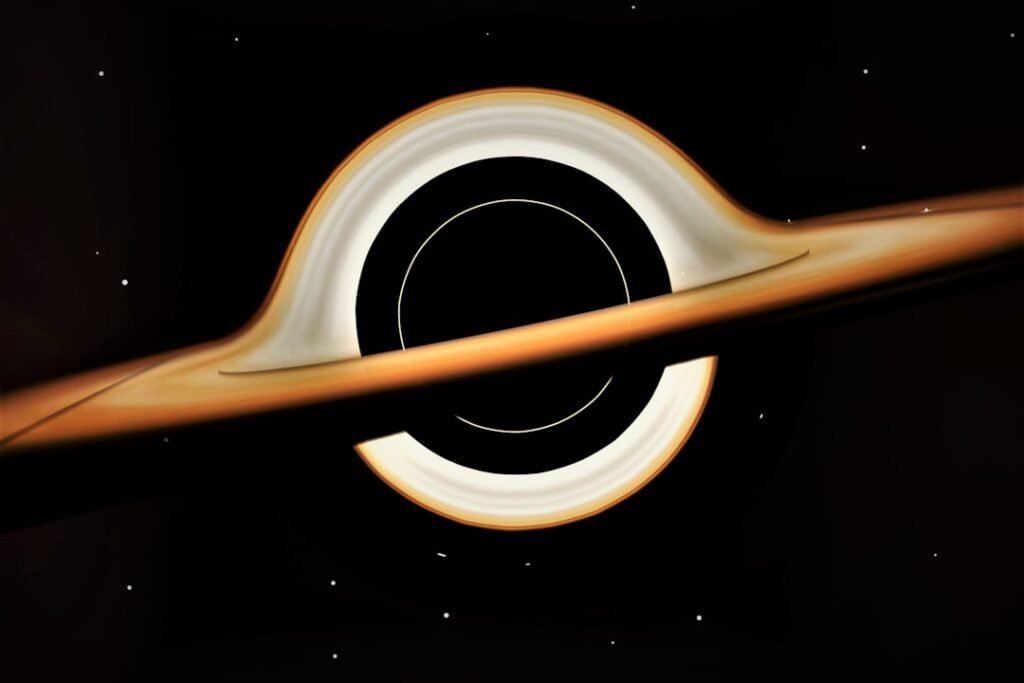

A Voracious Force Reshapes the Cosmos (Image Credits: Unsplash)
Astronomers uncovered evidence that the intense glow from a supermassive black hole can suppress new star formation in galaxies separated by millions of light-years.[1]
A Voracious Force Reshapes the Cosmos
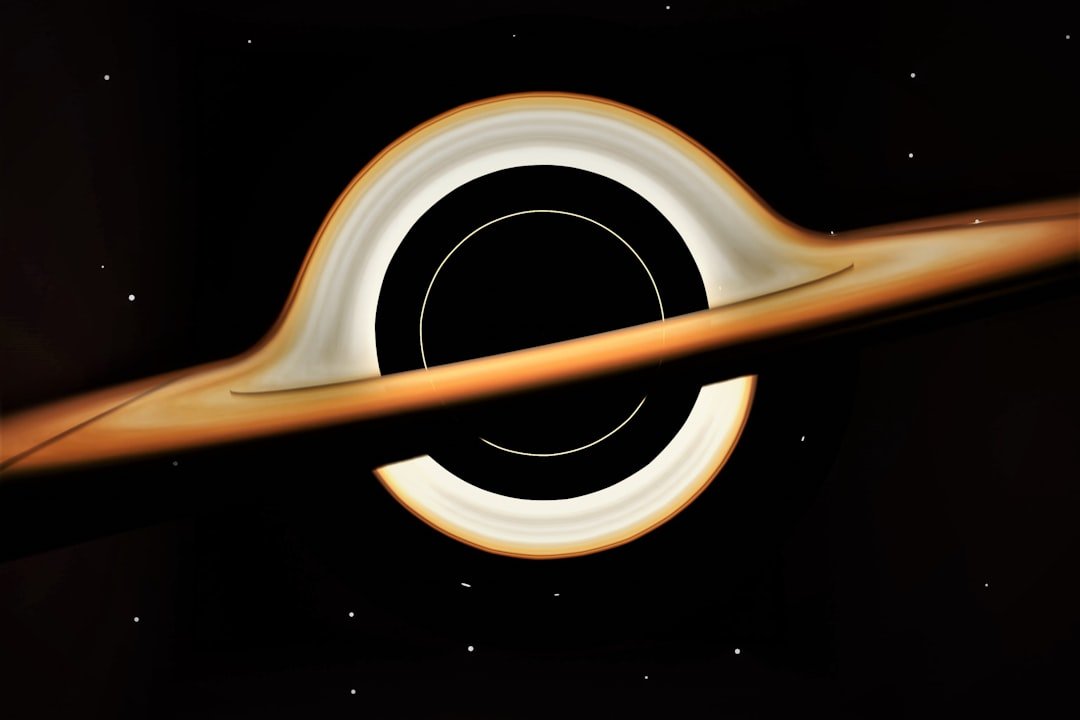
Researchers likened an active supermassive black hole to a cosmic predator that dominates its surroundings. In a striking revelation, the quasar J0100+2802 demonstrated this power by curtailing star growth in nearby galaxies. This black hole, with a mass equivalent to 12 billion suns, unleashed radiation that reached far beyond its host galaxy.
The observations peered back over 13 billion years to a time when the universe was less than one billion years old. Galaxies within a one-million-light-year radius showed clear signs of stunted development. Lead researcher Yongda Zhu from the University of Arizona explained the phenomenon: “An active supermassive black hole is like a hungry predator dominating the ecosystem.”[1]
Traditional models assumed galaxies evolved independently due to their vast separations. Yet this discovery painted a picture of interconnected cosmic neighborhoods.
James Webb Telescope Unlocks Hidden Clues
The James Webb Space Telescope (JWST) proved essential in detecting faint infrared signals stretched by cosmic expansion. Scientists analyzed emissions from ionized oxygen, known as O III, which signals recent star formation activity. Galaxies close to the quasar displayed weaker O III relative to ultraviolet light, pointing to disrupted conditions.
Prior telescopes struggled with these wavelengths, but JWST’s precision resolved a long-standing puzzle. Early surveys around luminous quasars detected fewer galaxies than expected. The team realized those galaxies existed but hid due to suppressed star formation.[1]
Zhu noted, “This discovery would have been impossible with any other telescope.”[1]
Radiation’s Disruptive Power Explained
The quasar’s brilliance stems from matter spiraling into the black hole, generating hundreds of trillions of times the sun’s energy output. This radiation heats interstellar gas clouds and breaks apart molecular hydrogen, the raw material for stars. Without cold, dense clouds, star formation halts – a process termed quenching.
The effect extended intergalactically, affecting gas in separate galaxies. Zhu described it vividly: “The intense heat and radiation split the molecular hydrogen that makes up vast, interstellar gas clouds, quenching its potential to accumulate and turn into new stars.”[1]
- Weaker O III emissions indicate recent star formation suppression.
- Radiative feedback disrupts hydrogen molecules over vast distances.
- Quasar luminosity exceeds trillions of solar outputs.
- Influence radius spans at least one million light-years.
- Early universe redshift z=6.3 captures the phenomenon.
Redefining Galaxy Evolution
This finding challenged isolationist views of galaxy development. Instead, quasars emerged as key regulators in a galactic ecosystem. Supermassive black holes, predicted in the early 1900s, now appeared to shape broader cosmic structures.
The peer-reviewed study appeared in The Astrophysical Journal Letters on December 3, 2025, titled “Quasar Radiative Feedback May Suppress Galaxy Growth on Intergalactic Scales at z = 6.3. Understanding these interactions sheds light on the Milky Way’s own history, which likely endured similar quasar phases.
Key Takeaways
- Quasars quench star formation via radiation across million-light-year scales.
- JWST observations at z=6.3 reveal suppressed O III in nearby galaxies.
- Black holes drive interconnected galaxy evolution in the early universe.
Supermassive black holes wield influence far greater than once imagined, steering the birth of stars across the cosmos. What role do you think these cosmic forces played in our galaxy’s story? Share your thoughts in the comments.