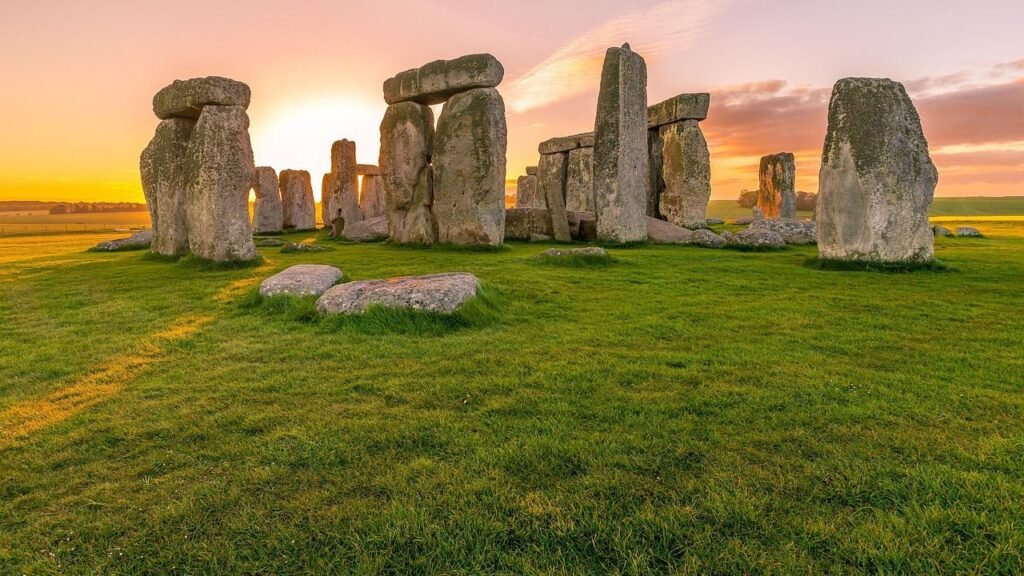

Imagine standing in a wide, wind-swept field in southern England five thousand years ago, gazing upward at a pitch-black sky filled with stars, planets, and a blazing moon. You have no telescope, no notebook, no GPS. Yet you know – with extraordinary precision – exactly when the sun will reach its lowest point on the horizon, exactly when a lunar eclipse is coming, and exactly when to plant your crops to survive another winter. How? You built it. You built Stonehenge.
Stonehenge, along with many other ancient stone circles scattered around Great Britain and Europe, appeared to be not only an ancient observatory but also an astronomical computer. That idea sounds almost fantastical, doesn’t it? A machine made of stone, operated by people who had never written a single word. Yet the evidence keeps piling up, and honestly, the more you dig into it, the more astonishing it gets. Let’s dive in.
A Monument Built With Purpose, Not Accident
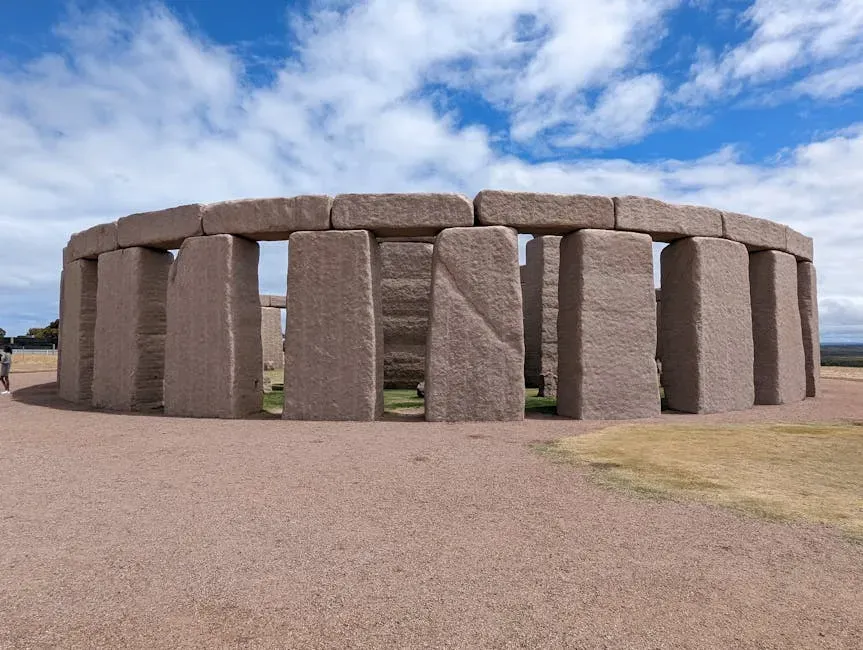
Stonehenge is a prehistoric megalithic structure on Salisbury Plain in Wiltshire, England. It consists of an outer ring of vertical sarsen standing stones, each around 13 feet high, seven feet wide, and weighing around 25 tons, topped by connecting horizontal lintel stones held in place with mortise and tenon joints – a feature unique among contemporary monuments. Think about that for a moment. Mortise and tenon joints. That’s the same precision carpentry technique used in fine furniture, applied to multi-ton slabs of rock.
Stonehenge was built with a specific purpose in mind. It was not erected randomly, and its builders knew well what they were building before laying down the stones. They calculated, measured, and aligned the stones. Therefore, it is unsurprising to learn that Stonehenge’s entire monument layout was positioned in relation to various astronomical events, most importantly, solstices. This was deliberate, purposeful engineering – not Stone Age chaos.
The Sheer Feat of Getting the Stones There
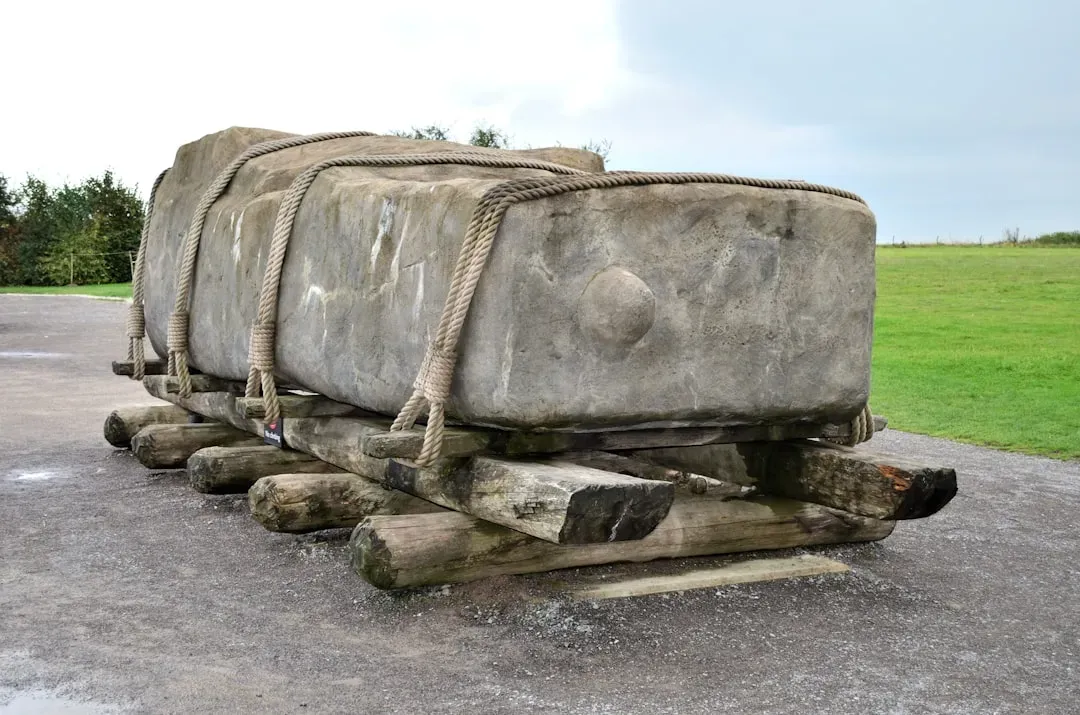
Here’s the thing that really gets under your skin when you start researching Stonehenge. Stonehenge is very unusual in the ancient world for the distances over which its materials were transported to the site, especially those megaliths known as bluestones. Most of these, made from different types of igneous rock, were quarried in southwest Wales – an estimated journey of around 220 miles. That’s roughly the distance from London to Edinburgh. On foot. Dragging multi-ton rocks.
Stonehenge is a masterpiece of engineering, built using only simple tools and technologies, before the arrival of metals and the invention of the wheel. Building the stone circle would have needed hundreds of people to transport, shape, and erect the stones. These builders would have required others to provide them with food, to look after their children, and to supply equipment including hammerstones, ropes, antler picks, and timber. The whole project would have needed careful planning and organisation. We’re talking about what was effectively an ancient construction megaproject – generations of people united by a single, extraordinary vision.
The Solar Alignments That Change Everything
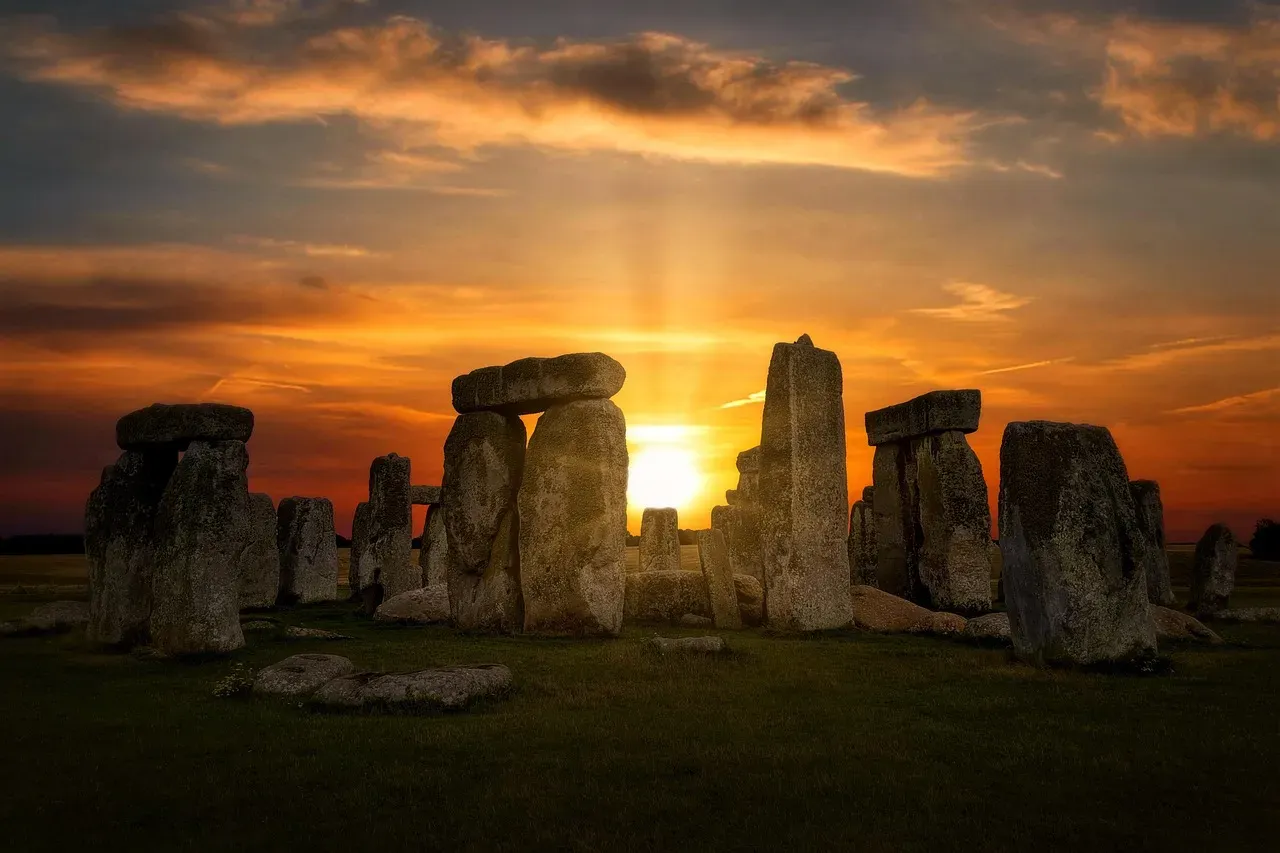
The enormous sarsen stones and smaller bluestones, set up in the centre of the site in about 2500 BC, were precisely arranged to frame two particular events in the year: the sunrise at summer solstice, and the sunset at winter solstice. These are the extreme limits of the sun’s movement; the word solstice is derived from the Latin “sol” (sun) and “sistere” (to stand still). That etymological detail alone tells you how profoundly these moments mattered to ancient people.
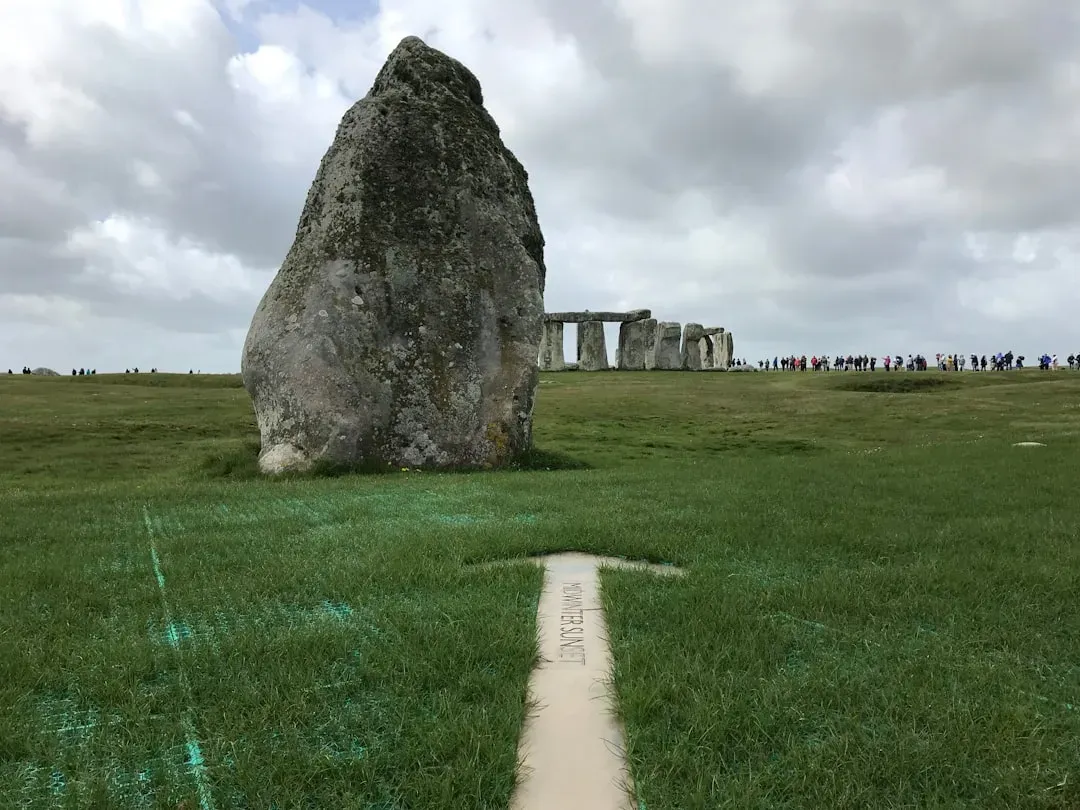
Standing in the centre of the monument on midsummer’s day, the longest day of the year, the sun rises just to the left of the outlying Heel Stone to the northeast, and the first rays of the day shine into the heart of Stonehenge. Archaeological excavations have found a large stone hole to the left of the Heel Stone, and it may have held a partner stone, the two stones framing the sunrise. The long shadow of the Heel Stone, the largest stone on the site, also extends right into the middle of the stone circle. It’s hard not to feel something when you picture that – a beam of golden morning light threading through ancient stone like a needle through the eye of time.
The Moon Was Just as Important as the Sun
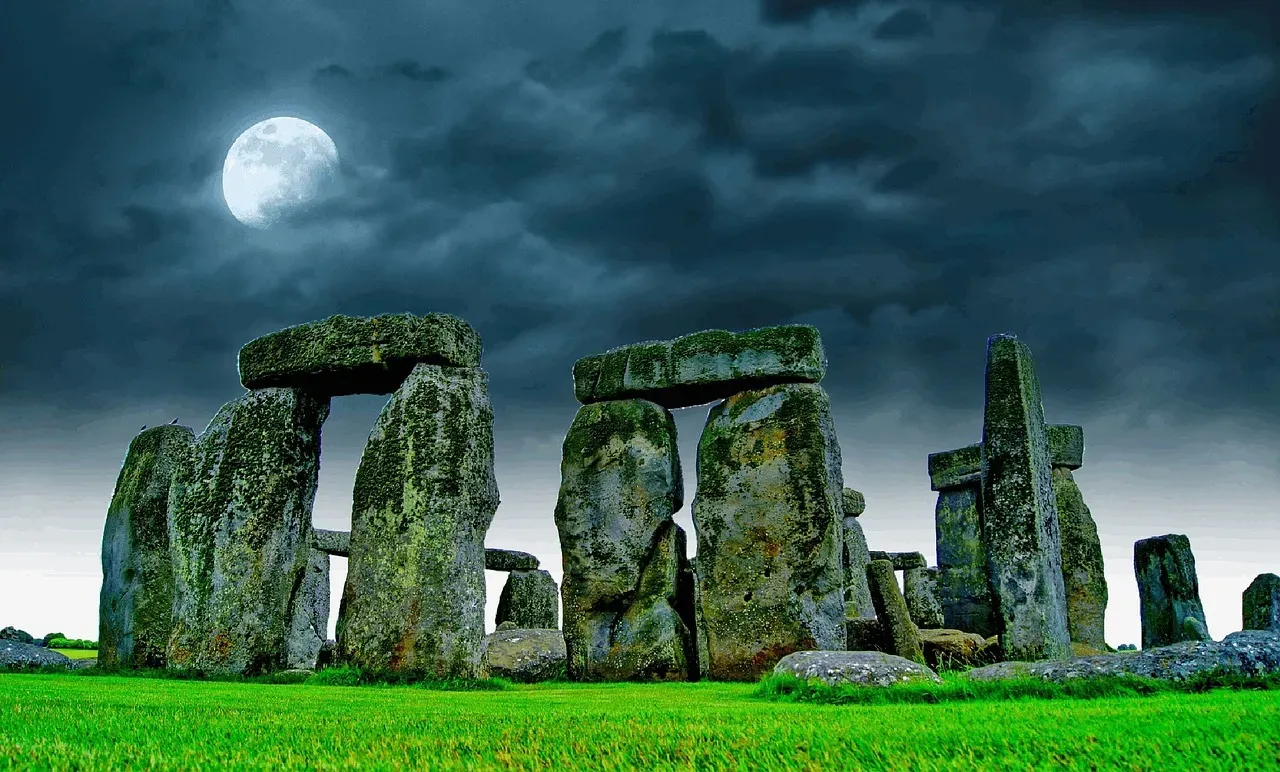
Most people know about Stonehenge and the summer solstice. Far fewer realize the moon was deeply embedded into its design too. There is now an abundance of archaeological evidence that indicates the solar alignment was part of the architectural design of Stonehenge. Around 2500 BC, the people who put up the large stones and dug an avenue into the chalk seemed to want to cement the solstice axis into the architecture. A hypothesis has been around for 60 years that part of Stonehenge also aligns with moonrise and moonset at what is called a major lunar standstill.
Stonehenge’s latitude is unusual in that only at this approximate latitude do the lunar and solar alignments mentioned above occur at right angles to one another. More than 50 km north or south of the latitude of Stonehenge, the station stones could not be set out as a rectangle. Let that sink in. The builders chose this specific latitude – in all of Britain – because it was the one place where both the sun and moon aligned at perfectly perpendicular angles. That is not luck. That’s knowledge.
The Aubrey Holes: Nature’s Eclipse Calculator
The oldest part of the Stonehenge monument was built during the period from 3000 to 2935 BCE. It consists of a circular enclosure that is more than 330 feet in diameter, enclosing 56 pits called the Aubrey Holes, named after John Aubrey, who identified them in 1666. These 56 mysterious pits sat largely unexplained for centuries – until an astronomer decided to run the numbers.
The stones and archways point to the sun and moon as these bodies rise and set during the year, and the symmetry of the structure permits it to be used as a computing device for predicting the year in which eclipses of the sun and moon will take place at a particular season, such as midsummer. The 56 chalk-filled Aubrey holes can be used to predict the year of an eclipse, and the 30 Sarsen archways permit one to count off the actual day of an eclipse. The hour of an eclipse can be determined by watching sunset and moonrise in the appropriate archways; thus, Stonehenge can be used as a sort of vernier. That’s an astonishing claim, and honestly, whether or not you fully accept it, the underlying mathematics are surprisingly compelling.
Gerald Hawkins and the Neolithic Computer Theory
An archaeoastronomy debate was triggered by the 1963 publication of Stonehenge Decoded, by Gerald Hawkins, an American astronomer. Hawkins claimed to observe numerous alignments, both lunar and solar. He argued that Stonehenge could have been used to predict eclipses. Hawkins’ book received wide publicity, in part because he used a computer in his calculations, then a novelty. Think about the irony: a modern computer was used to prove that an ancient structure was itself a kind of computer. That’s almost poetic.
Hawkins described how he had found astronomical alignments among 165 points of Stonehenge associated purely with the Sun and the Moon, and not with any stars or the five naked-eye planets. He discovered that lunar eclipses could be predicted through a system of moving stones around the circle of Aubrey Holes. Controversially, he went on to suggest that Stonehenge was an ancient computer. The archaeological community wasn’t exactly thrilled. I think it’s fair to say that being beaten to the punch by an American astronomer who had barely visited the site didn’t help with the reception in British archaeological circles.
Alexander Thom and the Stone Age Scientists
Alexander Thom claimed that Stonehenge was a sophisticated astronomical observatory. He focused on the precise measurements and alignments of the stone circles. Thom was no enthusiastic amateur. He was a retired professor of engineering who had spent more than two decades carefully measuring stone circles across Britain.
His sky-watching findings showed precision comparable to that of a modern astronomer. It looked like a sober academic study, and suddenly, the archaeological community totally changed its attitude. They took Thom’s work very seriously, and for a number of years, the notion that there were Stone Age Einsteins operating in Britain really took hold. It’s hard to say for sure whether Thom was entirely correct, but even his skeptics admitted that the alignments he documented were extraordinarily precise. The man had done the homework.
Ritual, Power, and the Politics of the Sky
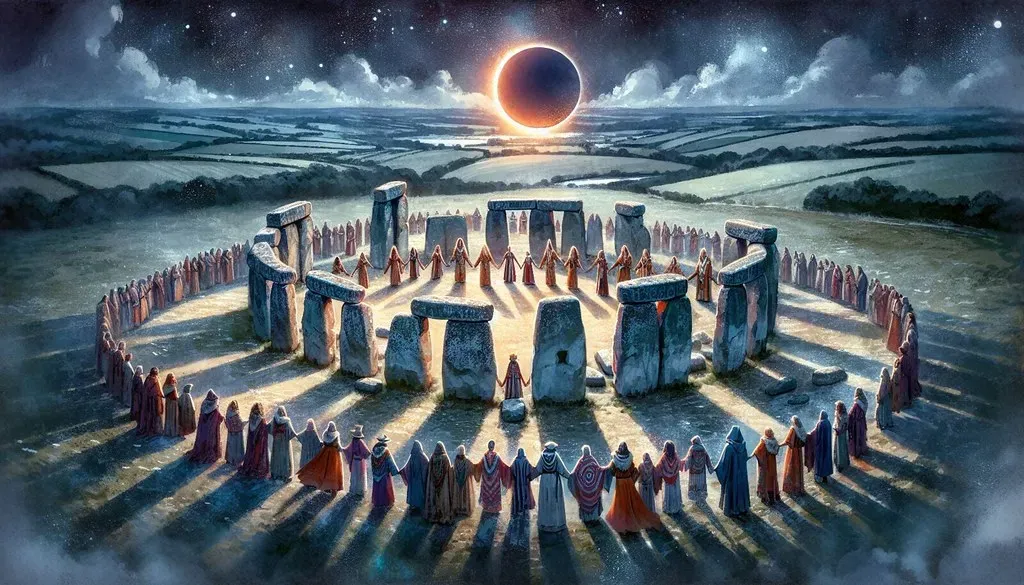
Stonehenge held profound spiritual and cultural significance for the ancient civilization that built it. It served as a sacred space where rituals, ceremonies, and astronomical observations were conducted. The alignment with the solstices and moon cycles allowed its builders to mark significant celestial events and create a ritual calendar. This is where it gets even more fascinating. Stonehenge wasn’t just a scientific instrument – it was also a political tool.
Rather than organizing everyday activities, the Stonehenge calendar would have informed early farmers when to celebrate their harvest festivals or when to please the gods with their presence at key ceremonies. Calendars also provided a way for ancient leaders to solidify and legitimize power within their communities, with several studies indicating that this was the case. Knowledge of the skies wasn’t just wisdom – it was authority. Whoever controlled the calendar controlled the people. That dynamic isn’t so different from the world today, is it?
Stonehenge in a Wider Cosmic Network
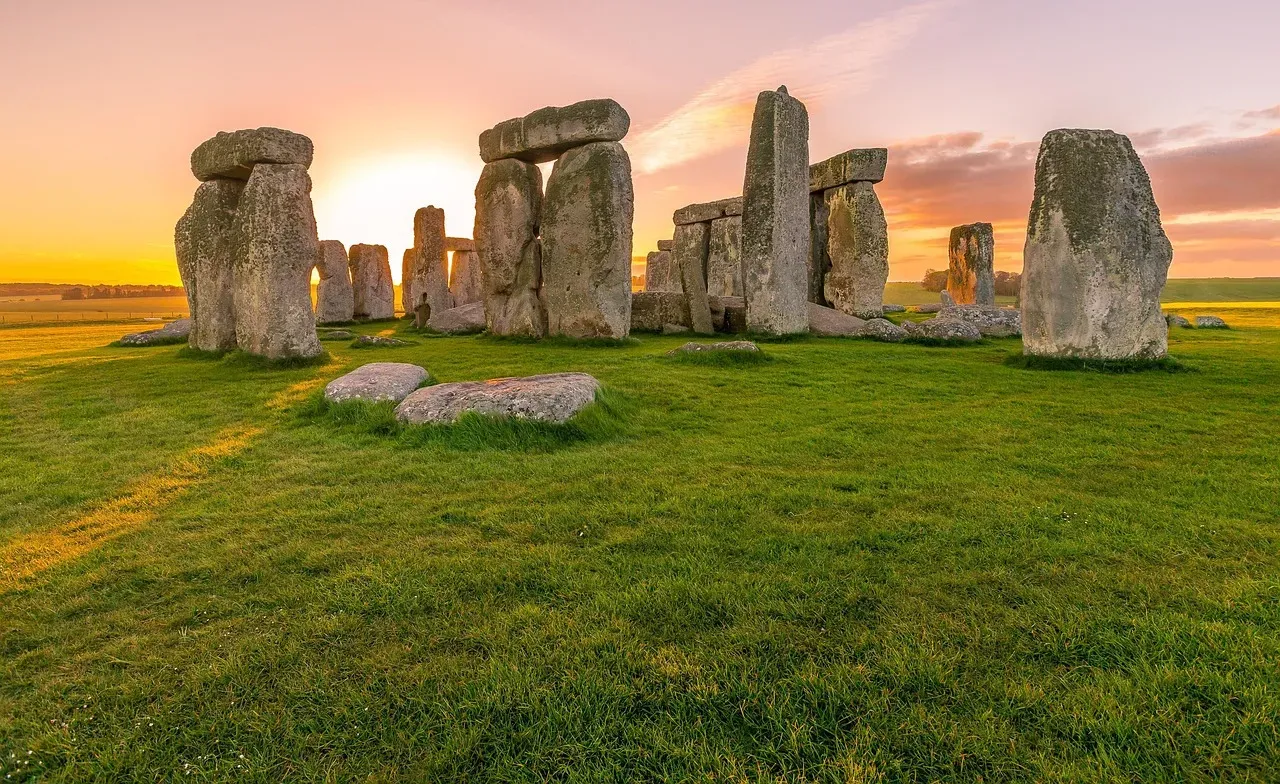
Stonehenge is not alone in its astronomical significance. Across Britain, other stone circles and monuments – like Avebury, Castlerigg, and Callanish – show similar alignments with the sun and moon. Each site offers a unique perspective on how ancient societies viewed the sky. When you zoom out and realize that Stonehenge was part of a broader network of celestial monuments, the whole picture becomes even more remarkable.
Other monuments in the Stonehenge landscape were also built to align with the movements of the sun. Woodhenge, a timber monument near Durrington Walls, was built on the same axis, aligning with the midwinter and midsummer solstices. This wasn’t one obsessive visionary building a stone circle alone. This was a civilization-wide movement of people who looked up at the sky and decided, collectively, to write it in stone. The scale of that ambition – spread across thousands of years and hundreds of miles – is something that still deserves our genuine awe.
Conclusion: Stone, Stars, and the Human Need to Understand
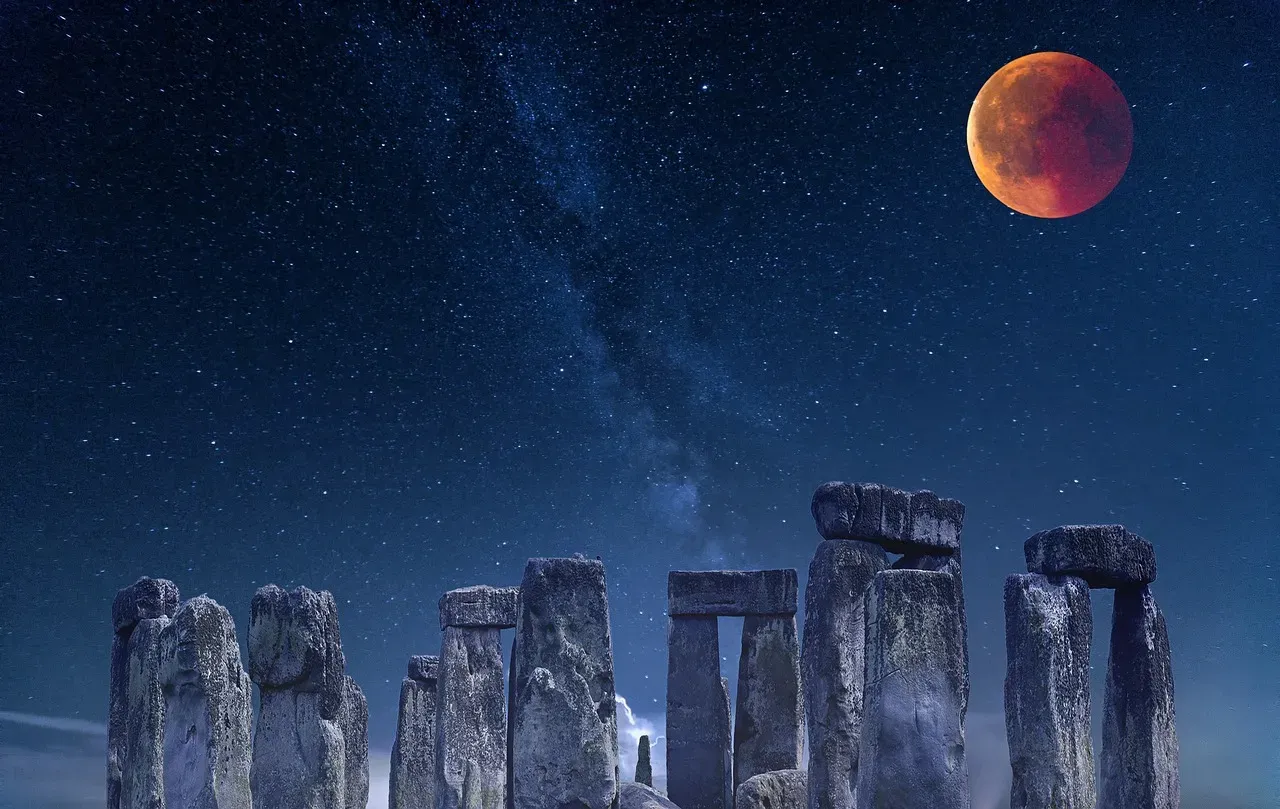
Let’s be real about what Stonehenge truly represents. The astronomical alignments are beyond doubt, but the computer aspects are speculative. That honest nuance matters. Stonehenge may not have been a literal computing machine in the way we imagine today, but it was undeniably a structure built with profound cosmic intelligence – a monument that encoded the rhythms of the sun and moon into stone with a precision that still leaves modern researchers speechless.
Experts have uncovered around 200 complex astronomical alignments within the site. Stonehenge’s massive stones predict, with great accuracy, solstices, eclipses, and other cosmic events that were obviously of great importance to its builders and the generations of people that came after. For people who had no writing, no metal tools, and no wheel, that achievement is staggering. They were gazing at the same stars you see tonight, asking the same questions you ask – and they answered them by building something that has outlasted every empire, every dynasty, and every technology humans have created since.
There’s something quietly humbling about that. The next time you look up at a full moon rising or notice the long shadows of a midsummer evening, consider that your ancestors read those same signals and chose to honor them with five thousand tons of carefully arranged rock. What would you have built?