
Time is one of those things we rarely question until it really matters. From coordinating global communications to syncing GPS satellites, accurate timekeeping underpins nearly every aspect of modern life. But what if the next generation of ultra-precise clocks didn’t rely on atoms at all? Scientists have discovered a way to use spinning crystals to measure time with jaw-dropping accuracy, potentially outperforming the atomic clocks we’ve trusted for decades.
It sounds almost too simple, doesn’t it? Spinning crystals. Yet this breakthrough could reshape how we think about precision measurement. The implications stretch far beyond just telling time more accurately – we’re talking about advances in navigation, quantum computing, and even fundamental physics research.
The Problem with Atomic Clocks
Atomic clocks have been the gold standard for timekeeping since the 1950s. They work by measuring the natural oscillation frequency of atoms, typically cesium or rubidium, which vibrate at incredibly consistent rates. These devices are so precise that the best ones would only lose a second every few hundred million years.
But here’s the thing – atomic clocks are massive, expensive, and energy-hungry. They require complex laser systems and extremely controlled environments to function properly. For applications that need portable or compact timekeeping solutions, atomic clocks simply aren’t practical. That’s where spinning crystals enter the picture.
Enter the Spinning Crystal Revolution
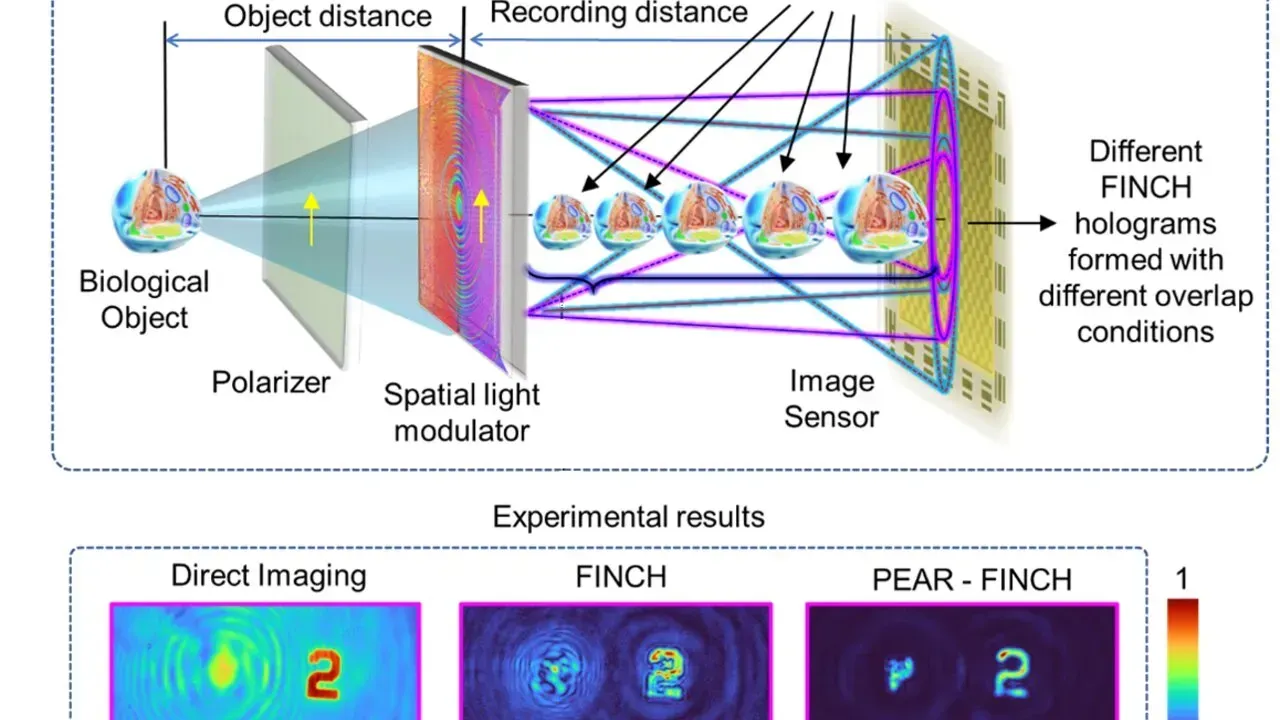
Researchers have developed a technique using rotating synthetic diamonds embedded with nitrogen-vacancy centers. These aren’t your typical jewelry-grade diamonds – they’re specially engineered crystals with atomic-scale defects that exhibit quantum properties. When these crystals spin at precisely controlled rates, they generate measurable quantum effects that can track time with extraordinary precision.
The genius lies in combining mechanical rotation with quantum sensing. As the diamond spins, the nitrogen-vacancy centers experience changes in their quantum states that can be detected with laser light. This creates a highly stable reference frequency that rivals or potentially exceeds what atomic clocks can achieve. And unlike their atomic cousins, these crystal systems could be miniaturized dramatically.
Why Spinning Creates Such Precision
The physics here gets fascinating. When you spin something containing quantum sensors, you’re essentially creating a controlled environment where subtle quantum effects become measurable. The rotation stabilizes certain quantum properties that might otherwise fluctuate unpredictably.
Think of it like a figure skater spinning. As they pull their arms in, they spin faster and more stably. The spinning diamond crystals achieve a similar kind of stability at the quantum level. The centrifugal forces and rotational dynamics actually help isolate the quantum sensors from environmental noise – vibrations, temperature fluctuations, electromagnetic interference – that would normally degrade precision. It’s counterintuitive but brilliant.
Practical Advantages Over Traditional Methods
Let’s be real, the most exciting part isn’t just the science – it’s what these crystals could actually do for us. First, they’re potentially far smaller and more portable than atomic clocks. Imagine GPS satellites with lighter, more efficient timekeeping systems, or autonomous vehicles with onboard precision timing that doesn’t require constant connection to external references.
Energy consumption is another major win. Atomic clocks demand significant power to maintain the laser cooling systems and magnetic shielding required for operation. Spinning crystal systems could operate on a fraction of that power. For space missions or remote installations where every watt counts, this matters enormously. Plus, manufacturing costs could drop substantially once the technology matures.
Challenges Still on the Horizon
Before we get too carried away, there are hurdles to clear. The spinning mechanism itself introduces engineering complications. You need ultra-stable bearings, vibration isolation, and precise rotational control to maintain the necessary accuracy. Any wobble or speed variation could undermine the entire system.
Long-term stability remains an open question too. Atomic clocks have decades of proven performance data. Spinning crystal systems are still in early development stages, and we don’t yet know how they’ll perform over years of continuous operation. Materials degradation, bearing wear, and other mechanical issues could limit their practical lifespan compared to purely electronic atomic systems.
The Future of Timekeeping
Looking ahead, I think we’re witnessing a fundamental shift in precision measurement. The researchers working on this aren’t just tweaking existing technology – they’re introducing an entirely new paradigm that merges mechanics with quantum physics in unexpected ways.
What’s particularly exciting is that this opens doors for hybrid approaches. Maybe future systems will combine spinning crystals for compactness and atomic references for ultimate long-term stability. Or perhaps materials science will advance enough to create even better quantum sensors embedded in different crystal structures. The possibilities feel genuinely open.
Honestly, it’s hard to say for sure which direction this will ultimately take, but the fact that we’re even having this conversation shows how rapidly the field is evolving. Timekeeping has always been about pushing the boundaries of what’s physically measurable. Spinning crystals might just be the next step in that journey – a reminder that sometimes the most revolutionary ideas come from combining old concepts in brilliantly new ways. What do you think? Could these spinning diamonds really replace the atomic giants, or will they find their niche in specialized applications? The clock is ticking on this question, quite literally.