
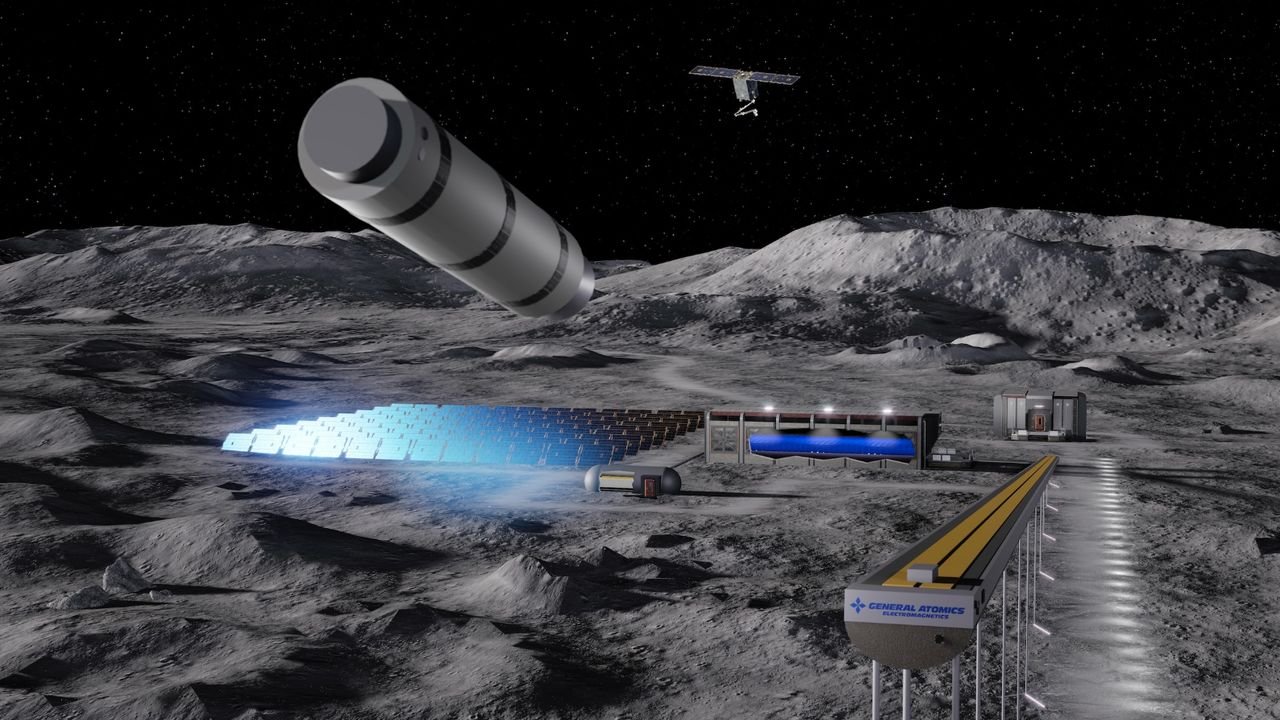
A Vision Shared in Recent Meeting (Image Credits: Cdn.mos.cms.futurecdn.net)
Elon Musk recently outlined a striking proposal for a Moon-based factory to produce AI satellites, complete with an electromagnetic catapult to propel them into orbit.
A Vision Shared in Recent Meeting
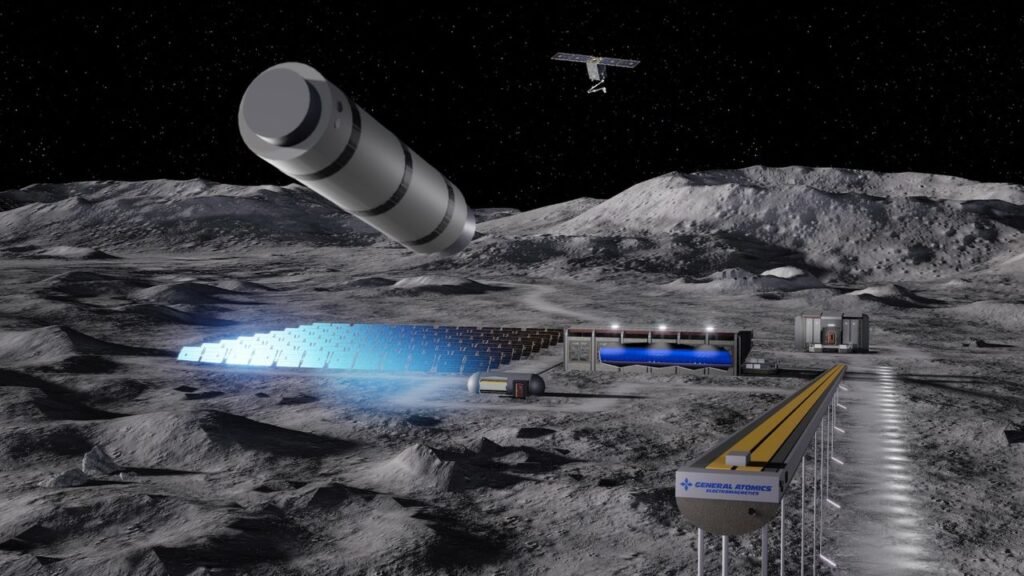
Musk presented the concept during an all-hands gathering with xAI employees, many of whom will transition to SpaceX roles.[1] He described the facility as essential for scaling AI computing power beyond terrestrial limits. The setup would manufacture satellites on the lunar surface and launch them using a device known as a mass driver.
This idea forms part of broader ambitions, including merging xAI efforts with SpaceX to deploy AI data centers in space. Musk emphasized the Moon’s role as a critical step. “You have to go to the moon,” he stated.[1] The plan draws inspiration from science fiction but aligns with practical engineering goals.
The Mass Driver Explained
A mass driver functions as an electromagnetic accelerator, similar to a railgun, that propels payloads along a track using sequential magnetic coils. On the Moon, this system exploits the low gravity and vacuum environment to achieve escape velocity efficiently. Musk called it “a giant catapult.”[1]
The technology traces back to physicist Gerard K. O’Neill, who championed it in 1974 for exporting lunar resources to orbital habitats. O’Neill’s team built prototypes, including Mass Driver I at MIT, which reached 33 g’s acceleration, and later versions at Princeton that refined the design for lunar scales.[2][3] These efforts demonstrated feasibility for industrial-scale launches.
Strategic Advantages of Lunar Operations
The Moon offers unique benefits for such ventures. Its surface holds abundant regolith rich in metals and silicates ideal for in-situ manufacturing. Continuous sunlight on elevated sites provides vast solar energy, far exceeding Earth-based constraints.
Musk highlighted power demands for advanced AI, noting that terawatt-scale operations require off-world infrastructure. Key advantages include:
- Escape velocity of just 2.4 km/s, versus 11.2 km/s from Earth.
- No atmospheric drag, enabling precise trajectories.
- Proximity to Earth for quick satellite deployment to orbit.
- Access to helium-3 and other resources for future fusion power.
These factors position the Moon as a launchpad for deeper space exploration.[4]
Shifting Priorities Toward Lunar Development
SpaceX has adjusted its roadmap, prioritizing a self-sustaining lunar city achievable in under a decade over initial Mars timelines. Musk envisions the mass driver as a centerpiece. “I can’t imagine anything more epic than a mass driver on the moon, and a self-sustaining city on the moon,” he remarked.[4]
This pivot builds momentum from ongoing Starship tests and Artemis collaborations. Prototypes like O’Neill’s pave the way, though scaling to production remains a engineering hurdle.
Key Takeaways
- Musk’s proposal links xAI computing needs to lunar manufacturing and launches.
- Mass drivers, pioneered by O’Neill, enable fuel-free payload delivery from the Moon.
- The plan accelerates toward solar system expansion, starting with a Moon base.
Musk’s lunar mass driver concept bridges decades-old innovation with cutting-edge AI demands, promising a new era of space industry. As prototypes evolve into reality, it could transform how humanity expands beyond Earth. What do you think of this lunar catapult idea? Share in the comments.