
Urgent Timeline Shift Reshapes Mission Plans (Image Credits: Cdn.mos.cms.futurecdn.net)
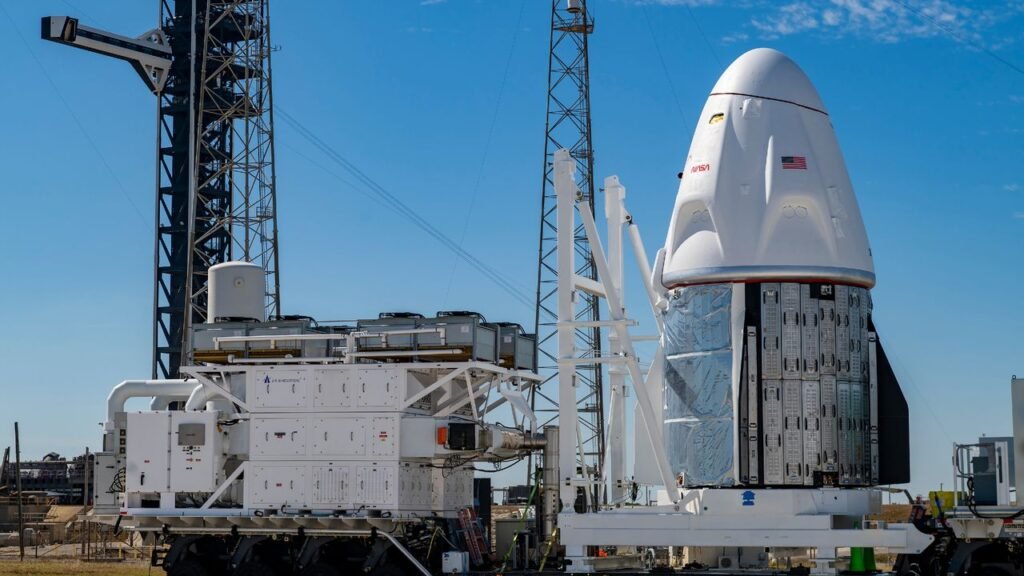
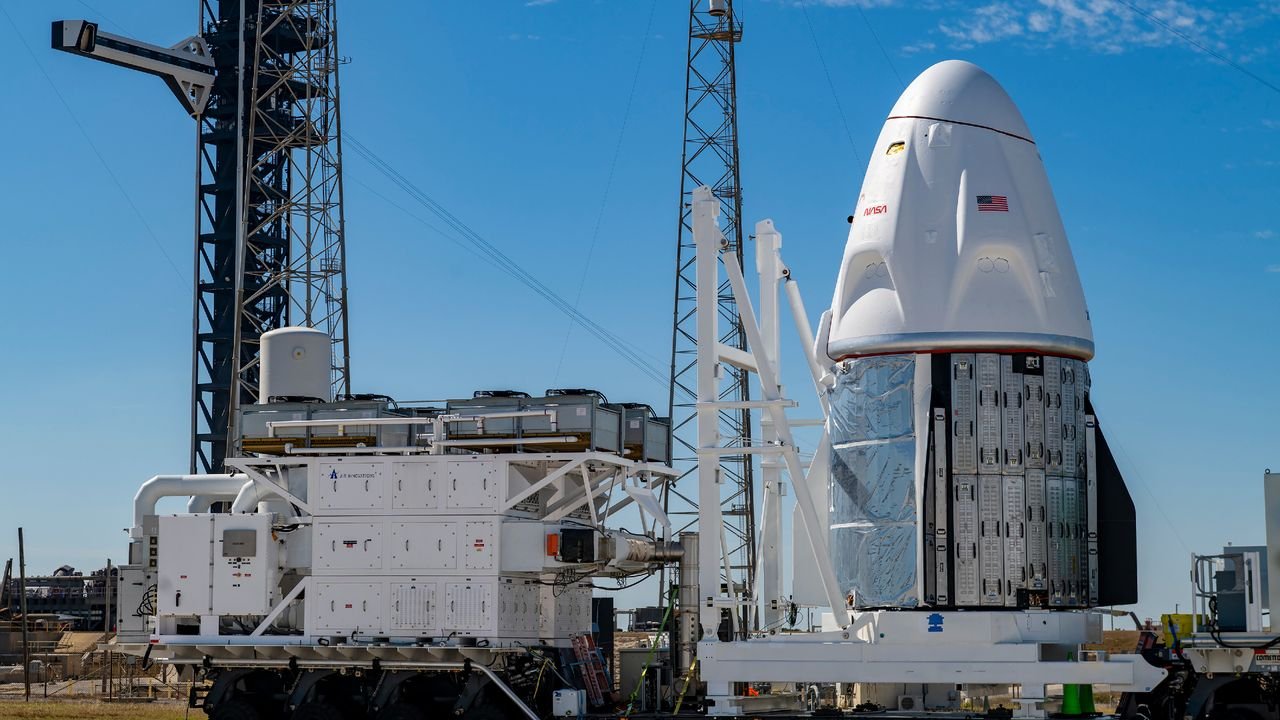
Cape Canaveral Space Force Station, Florida – SpaceX’s Crew Dragon capsule named Freedom arrived at its processing hangar this week, advancing preparations for NASA’s Crew-12 mission to the International Space Station.[1][2]
Urgent Timeline Shift Reshapes Mission Plans
The Crew-12 launch advanced from February 15 to no earlier than February 11 at 6:01 a.m. EST due to a medical evacuation from the prior Crew-11 rotation.[1] This change aims to quickly restore full staffing on the ISS, which currently operates with a reduced crew of three astronauts. Routine maintenance and research efforts have faced constraints as a result. SpaceX teams now process the capsule at Space Launch Complex 40, a shift from previous crewed departures at Kennedy Space Center’s Pad 39A.[1]
A recent Falcon 9 upper stage anomaly prompted a temporary grounding, though its impact on the schedule remains unclear. The capsule, reusable and equipped with autonomous docking capabilities, underwent transport to the site for final outfitting. Engineers focus on life support systems, abort mechanisms, and environmental controls essential for the crew’s safety.[2]
International Crew Steps Up for Extended Stay
NASA selected a diverse team for this 12th operational Commercial Crew Program flight. Commander Jessica Meir brings experience from her prior spaceflight, while pilot Jack Hathaway prepares for his first orbital journey. Mission specialists Sophie Adenot from the European Space Agency and Andrey Fedyaev from Roscosmos complete the quartet, assigned to Expedition 74/75.[2][3]
The group faces a roughly nine-month mission, longer than the standard six months, to support ongoing ISS operations. Adenot’s assignment highlights ESA’s contributions under the Epsilon designation, and Fedyaev returns for his second flight. Their arrival will expand the station’s crew to seven, enabling fuller scientific investigations and technology tests.[1]
- Jessica Meir: NASA commander, second spaceflight
- Jack Hathaway: NASA pilot, rookie astronaut
- Sophie Adenot: ESA specialist, first flight
- Andrey Fedyaev: Roscosmos specialist, second flight
Strategic Move to SLC-40 Marks New Era
SpaceX plans to end crewed Dragon launches from Pad 39A, redirecting focus to SLC-40 for future missions like Crew-13. This adjustment frees the historic Apollo and shuttle pad for other uses. Crew-12 represents a pivotal test of the site’s readiness for human spaceflight.[4]
The Falcon 9 Block 5 booster will propel Freedom skyward, targeting docking at the zenith port of the Harmony module. Preparations include hardware checks and simulations by current ISS residents. Ground crews verify parachute systems for the ocean splashdown return.[5]
Mission Goals and ISS Recovery
Crew-12 supports NASA’s goals for sustained human presence in low-Earth orbit while advancing lunar and Mars preparations. Experiments will cover biomedical research, AI tools, and plasma physics once aboard. The influx restores capacity for maintenance tasks long deferred.[6]
Station flight engineers already reviewed rendezvous procedures and gathered transfer gear. Docking follows launch by about a day. This rotation underscores the Commercial Crew Program’s reliability after 13 astronaut flights.[3]
Key Takeaways
- Dragon Freedom’s arrival signals final countdown for Feb. 11 launch from SLC-40.[1]
- Accelerated schedule addresses ISS staffing shortage post-Crew-11 evacuation.
- Diverse crew enables nine-month mission with broad research scope.
The Crew-12 mission promises to steady ISS operations and pave the way for deeper space ambitions. How will this international effort shape future rotations? Share your thoughts in the comments.