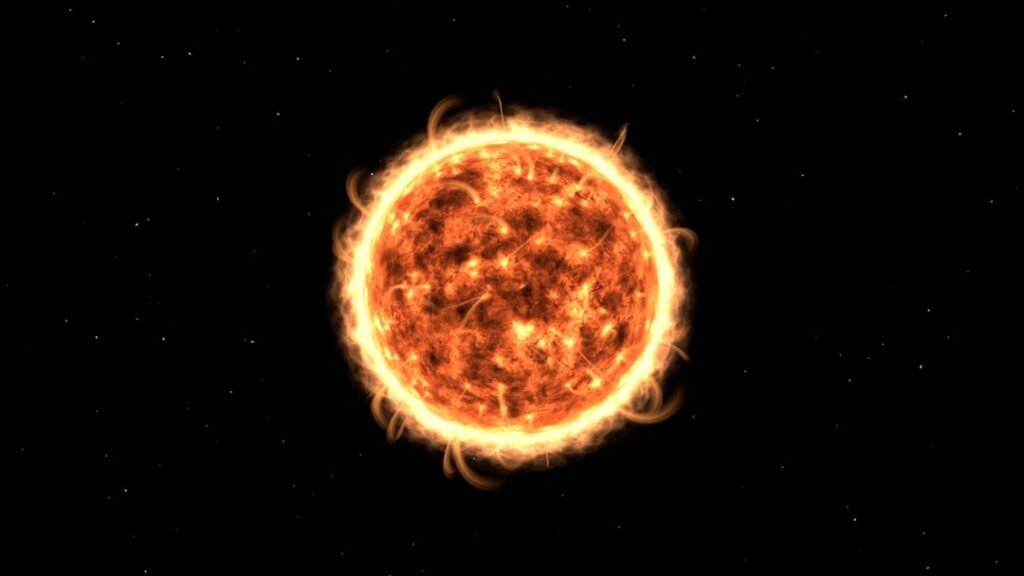


The Hidden Dangers of Solar Eruptions (Image Credits: Unsplash)
Solar eruptions pose growing risks to modern infrastructure, prompting scientists to leverage multiple satellites in tracking these cosmic events from inception to impact.
The Hidden Dangers of Solar Eruptions
Solar storms begin as powerful bursts from the sun’s surface, hurling charged particles and magnetic fields across space at millions of miles per hour. These coronal mass ejections, or CMEs, can disrupt satellite operations, endanger space missions, and trigger blackouts in electrical grids on Earth. In recent years, such events have intensified, coinciding with the sun’s active phase in its 11-year cycle. Researchers noted a significant uptick in these occurrences during 2025, underscoring the urgency for precise monitoring.
Historical incidents highlight the stakes. A major solar storm in 1989 knocked out power across Quebec for hours, while more recent flares have interfered with GPS signals and airline communications. As humanity relies increasingly on space-based assets – from weather satellites to global internet constellations – the need for early warnings has never been greater. Experts emphasize that understanding the speed and trajectory of these ejections could prevent billions in damages annually.
Coordinated Tracking from Multiple Orbiters
A collaborative effort involving spacecraft like those from NASA and NOAA has enabled unprecedented views of solar storm evolution. Positioned at various points between Earth and the sun, these satellites capture data on particle flows and magnetic field shifts in real time. For instance, observations from the Solar and Heliospheric Observatory (SOHO) complemented readings from near-Earth monitors, providing a multi-angle perspective on a recent CME’s path. This approach allowed teams to map the storm’s expansion as it traversed interplanetary space.
The strategy relies on synchronized data streams from diverse vantage points. Instruments aboard these craft detect subtle changes in solar wind speeds and radiation levels, which signal an approaching disturbance. During a tracked event in early January 2026, researchers followed the ejection’s journey over several days, noting how it interacted with the solar wind. Such detailed logs reveal patterns that single spacecraft often miss, enhancing the overall picture of space weather dynamics.
Insights Gaining Momentum for 2026 Forecasts
Analysis of the latest solar storm data points to variations in eruption behavior that challenge existing models. Teams identified how magnetic reconnections in the sun’s corona accelerate particles, leading to faster-than-expected arrivals at Earth. This finding emerged from cross-referencing observations across the fleet, which showed the storm’s core compressing as it neared our planet. Such revelations refine predictive algorithms, potentially extending warning times from hours to days.
With the sun’s activity peaking toward mid-2026, upcoming missions like NOAA’s SWFO-L1 satellite – set for operational status later this month – will bolster these efforts. Early integrations of its data promise even finer resolutions in tracking. Scientists reported that combining historical datasets with fresh inputs could cut forecast errors by up to 30 percent. These advancements arrive at a critical juncture, as solar maximum brings frequent and intense events.
Protecting Technology in an Era of Solar Volatility
Improved space weather forecasts equip operators to shield vulnerable systems. Power companies can preemptively adjust grids, while satellite firms might reposition assets to avoid radiation spikes. Astronauts on the International Space Station benefit from timely alerts to seek shelter during heightened radiation periods. Governments worldwide now prioritize these tools, integrating them into national resilience plans.
Yet challenges persist, including the vast distances involved and the sun’s unpredictable nature. Ongoing research focuses on machine learning to process the influx of satellite data swiftly. International partnerships, such as those between Japan’s space agency and U.S. counterparts, drive this progress forward.
- Satellites monitor solar wind speeds exceeding 1 million miles per hour during storms.
- CMEs can carry energy equivalent to billions of nuclear bombs.
- Forecast improvements may reduce economic losses from disruptions by 20-50 percent.
- Key spacecraft include SOHO for solar imaging and GOES for Earth-orbit vigilance.
- Radiation from storms poses risks to over 5,000 active satellites today.
Key Takeaways
- Multi-spacecraft tracking uncovers how solar storms accelerate and evolve en route to Earth.
- Enhanced forecasts could avert widespread tech failures during solar maximum in 2026.
- Collaboration across agencies ensures comprehensive data for global protection.
As solar activity surges into 2026, these tracking innovations stand as a vital defense against the sun’s fury, reminding us of our fragile tether to space. How prepared is your community for the next big solar event? Share your thoughts in the comments.