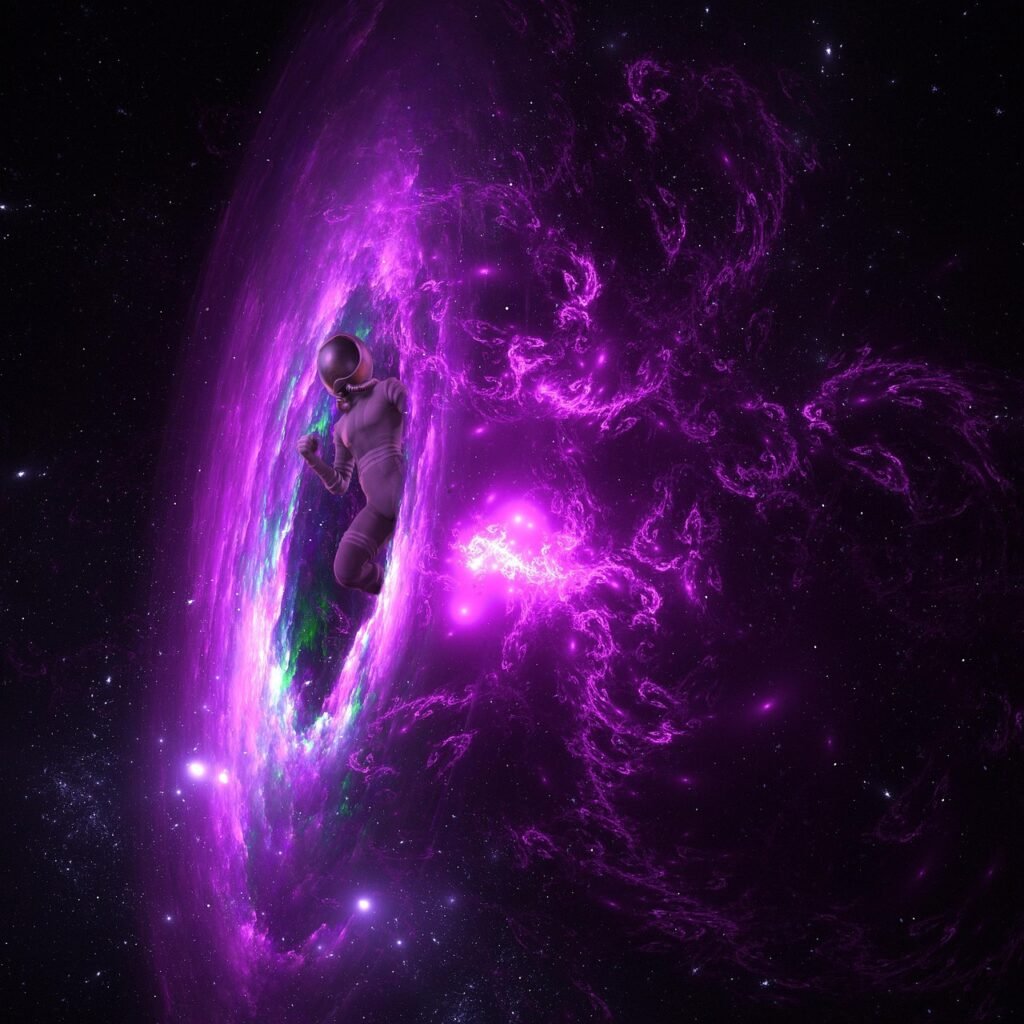

You’ve heard about black holes, those mysterious cosmic vacuum cleaners that swallow everything in their path. They’re terrifying and fascinating at the same time. Yet what if some of these enigmatic objects aren’t just dead ends in the universe but something far more incredible? What if they’re actually doorways to other places or even other universes?
Life on Earth has shown an incredible ability to adapt to the most extreme environments imaginable, from the crushing depths of the ocean floor to the scorching heat of volcanic vents. This resilience mirrors the universe’s own capacity for surprise and wonder. Just as life finds a way in Earth’s harshest corners, the cosmos may harbor pathways through spacetime itself, hidden within the very objects we thought were purely destructive.
The Science Fiction That Became Science Fact
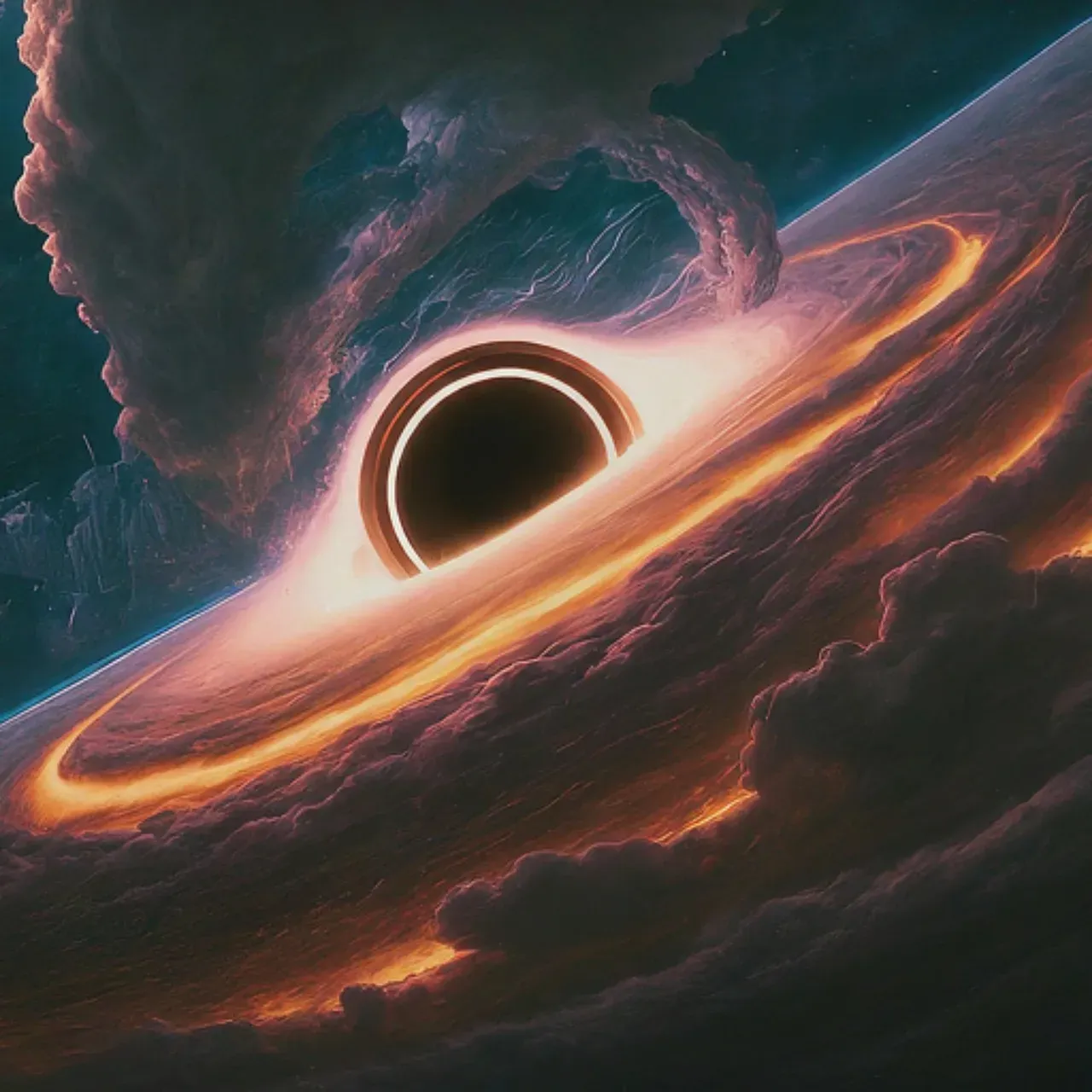
For decades, wormholes seemed like pure fantasy, the stuff of movies and novels. Scientists have theorized that some black holes could be wormholes, and recent studies show that this space-time mimicry could in fact be possible. The mathematics supporting this idea has existed for nearly a century, but only now are researchers finding ways to distinguish these cosmic tunnels from ordinary black holes.
These hypothetical tunnels in spacetime could be masquerading as black holes, as both objects share similar characteristics as a result of existing right on the edge of where known physics breaks down. It’s like discovering that some doors in your house lead to entirely different buildings. The tricky part is figuring out which doors are which when they all look identical from the outside.
When Two Theories Collide at the Event Horizon
Here’s where things get really interesting. Black holes exist in a strange realm where Einstein’s theory of gravity meets quantum mechanics. Albert Einstein’s theory of general relativity predicts that a sufficiently compact mass will form a black hole, but quantum physics suggests something different might happen at their cores.
Physicists hope that understanding the churning region near singularities might help them reconcile gravity and quantum mechanics. Think of it as two languages trying to describe the same thing but using completely different vocabularies. Inside a black hole, both languages should work, yet they often contradict each other. Wormholes might be the Rosetta Stone that helps translate between them.
The Caterpillar That Connects Two Universes
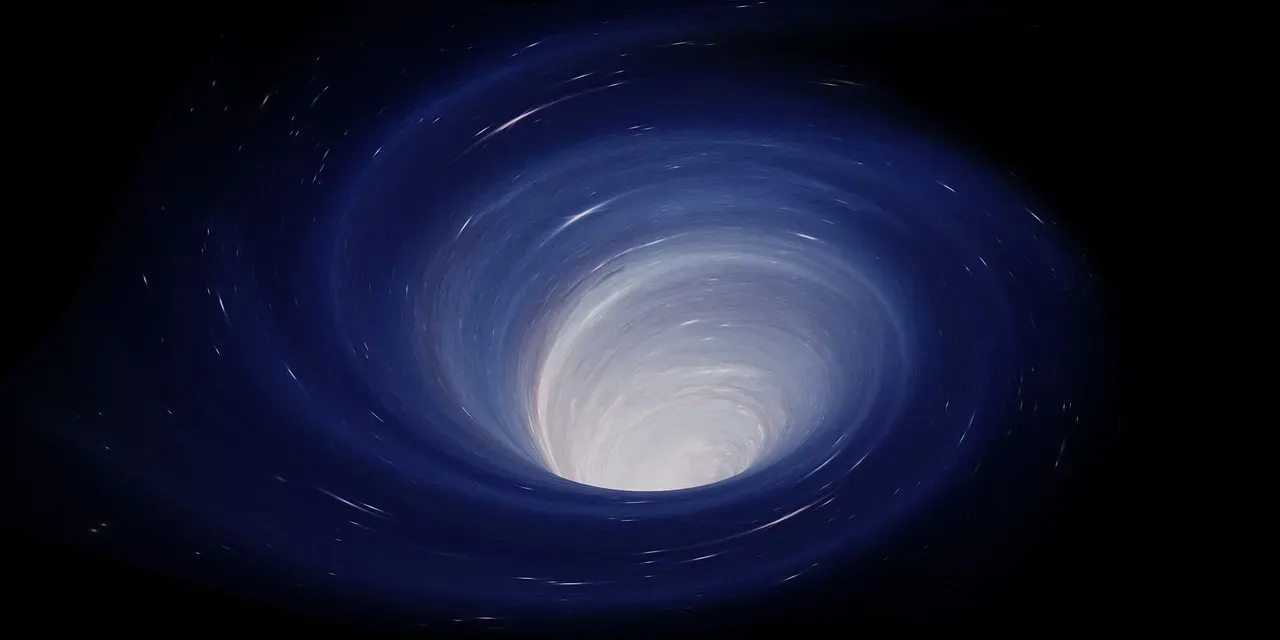
Forget the smooth tunnels you’ve seen in movies. Theoretical modeling indicates that the interior connecting two quantum-entangled black holes forms a long, segmented “Einstein-Rosen caterpillar” rather than a smooth tunnel. Honestly, the name alone makes this discovery memorable.
To keep the system stable during chaos, the wormhole had to be long and bumpy. It’s not the elegant bridge you might imagine. Instead, picture something more like a bumpy country road connecting two cities rather than a sleek highway. Even when quantum entanglement is messy and random, the wormhole remains a predictable, stable tunnel where the classical laws of gravity still hold. That’s surprisingly good news for anyone hoping these structures might one day be useful.
Vibrations That Reveal Hidden Portals
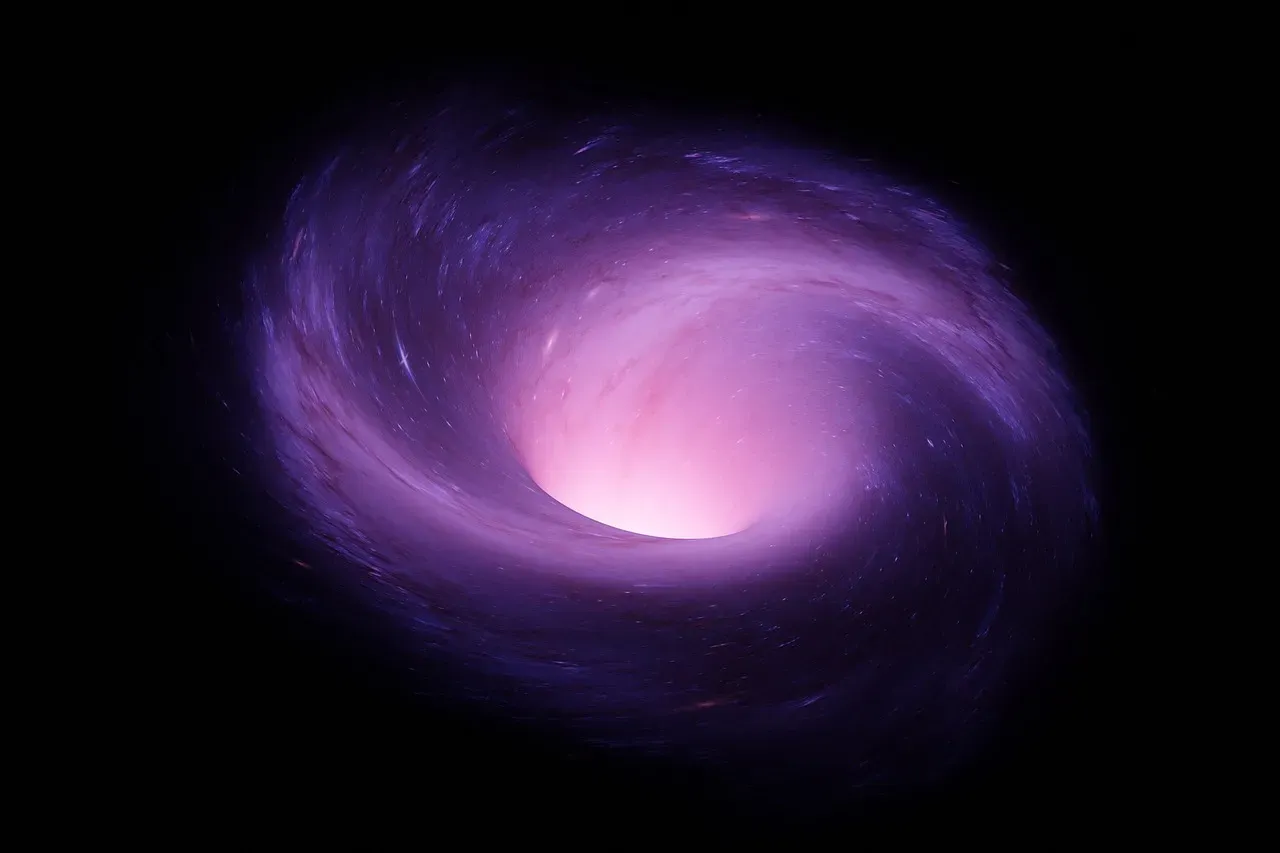
How do you tell if a black hole is actually a wormhole in disguise? A new study has analyzed a certain attribute of Schwarzschild black holes, known as quasi-normal modes. These are basically the way spacetime vibrates when something disturbs a compact object, kind of like how a bell rings when struck.
Analyzing quasi-normal modes reveals that wormholes could mimic black holes in this particular context. Using different approaches, researchers concluded that a wormhole could consistently replicate the QNMs associated with static black holes. The challenge is that the signals are incredibly similar, making it extraordinarily difficult to distinguish one from the other.
The Exotic Matter Problem Nobody Has Solved
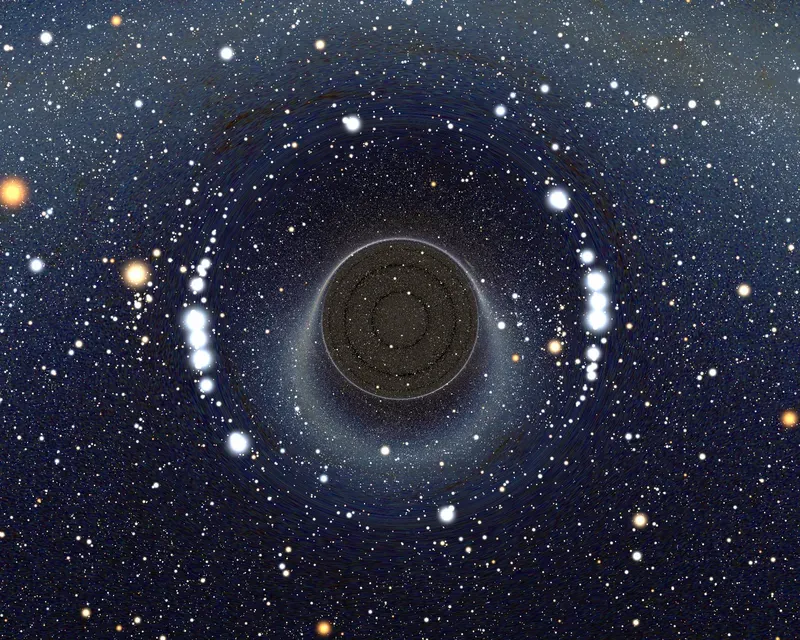
Let’s be real. There’s a massive catch to all this. These sci-fi dreams rest on the fantastical concept of “negative energy,” a cosmic phenomenon that simply doesn’t exist in the classical universe. It’s the ultimate dealbreaker for anyone hoping to build a wormhole in their backyard.
Construction of a traversable wormhole would require the existence of a substance with negative energy, often referred to as “exotic matter”. Scientists have observed tiny amounts of negative energy in quantum experiments like the Casimir effect, but scaling that up to wormhole size is another matter entirely. Many physicists believe that the required negative energy may actually be possible due to the Casimir effect in quantum physics, though we’re nowhere near harnessing it.
Quantum Computers Open Virtual Wormholes
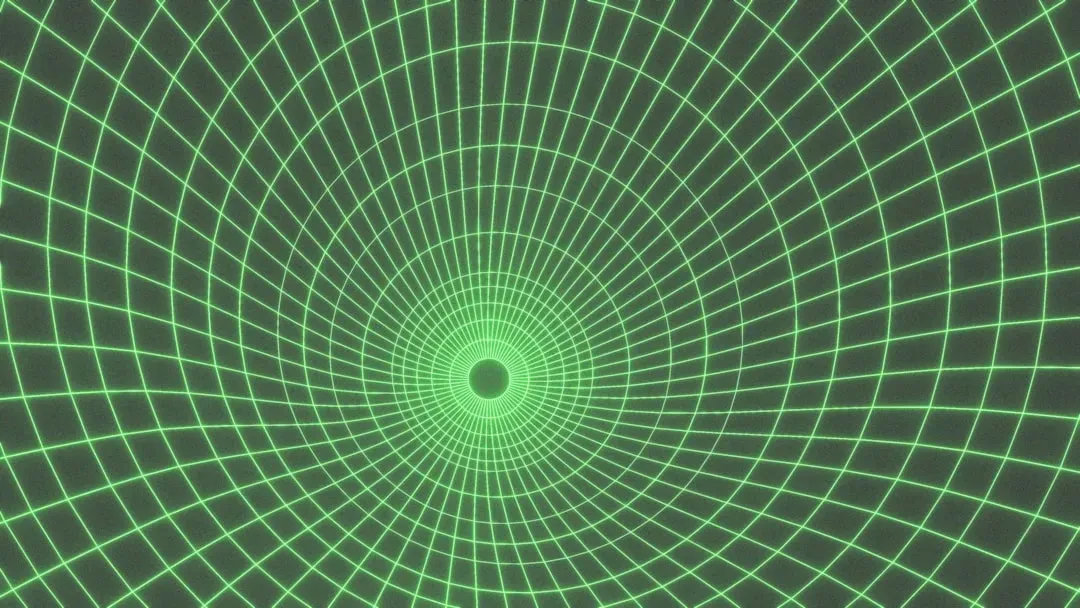
In a genuinely mind-bending development, researchers actually created a kind of wormhole using Google’s quantum computer. Scientists used learning techniques to construct a sparsified SYK model that they experimentally realized with 164 two-qubit gates on a nine-qubit circuit and observed the corresponding traversable wormhole dynamics.
Now, before you get too excited, this wasn’t a physical wormhole you could walk through. Translated from the language of quantum information to spacetime physics via the holographic principle, the experiment let a particle fall into one side of a wormhole and observed it emerging on the other side. It’s more like a simulation than the real thing, but it demonstrates that the mathematics works. Key signatures of a traversable wormhole were only observed when the equivalent of negative energy was applied, which is consistent with how wormholes are expected to behave.
The Einstein-Rosen Bridge Nobody Can Cross
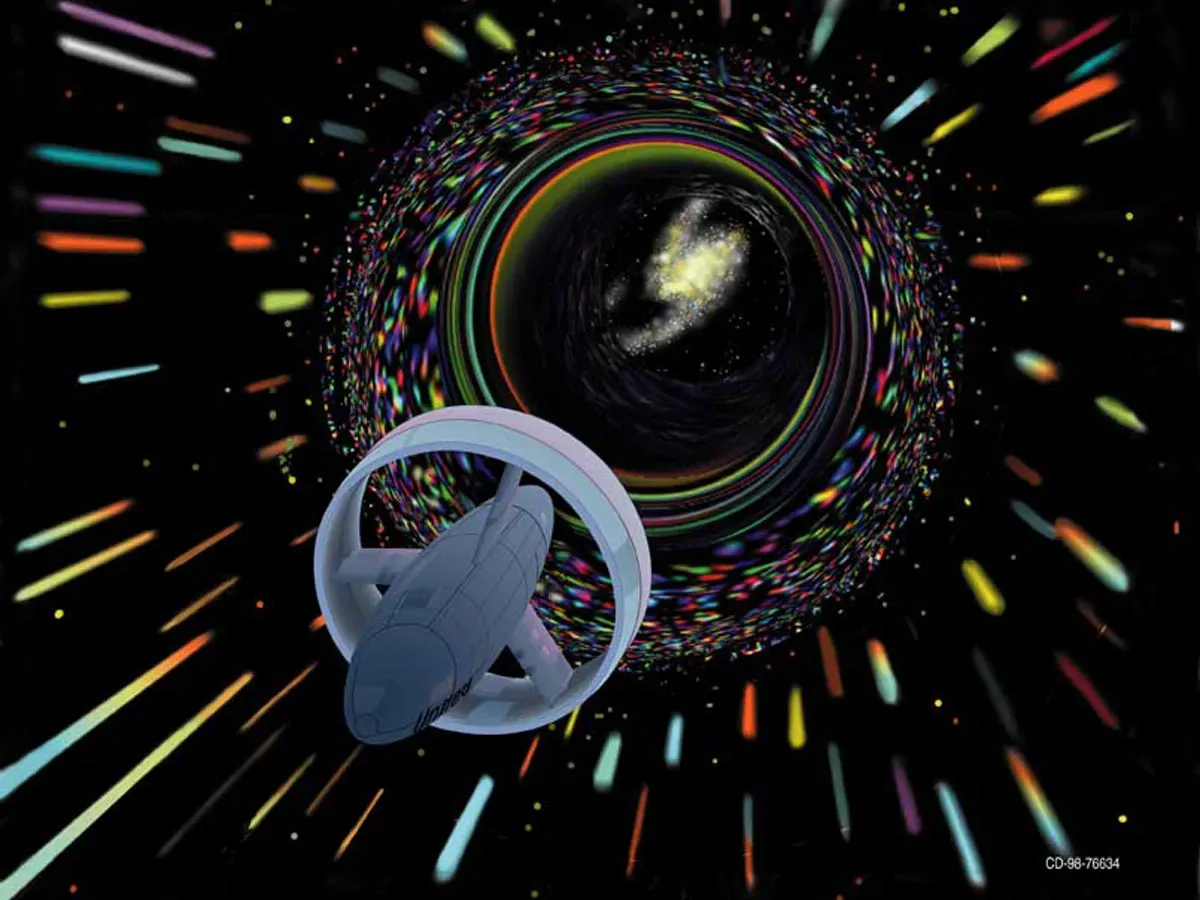
The original wormhole concept came from Einstein and his colleague Nathan Rosen back in 1935. The Einstein-Rosen bridge was discovered by Ludwig Flamm in 1916, and was rediscovered by Albert Einstein and Nathan Rosen, who published their result in 1935. Their version, however, had a critical flaw.
This type of wormhole is unstable if it connects two parts of the same universe, and it will pinch off too quickly for light that falls in from one exterior region to make it to the other exterior region. It’s like a tunnel that collapses the instant you try to enter it. The predicted Einstein-Rosen wormholes would be useless for travel because they collapse quickly. Later researchers worked on ways to prop these bridges open, but all solutions require that pesky exotic matter nobody knows how to make.
What This Means for Our Understanding of Reality
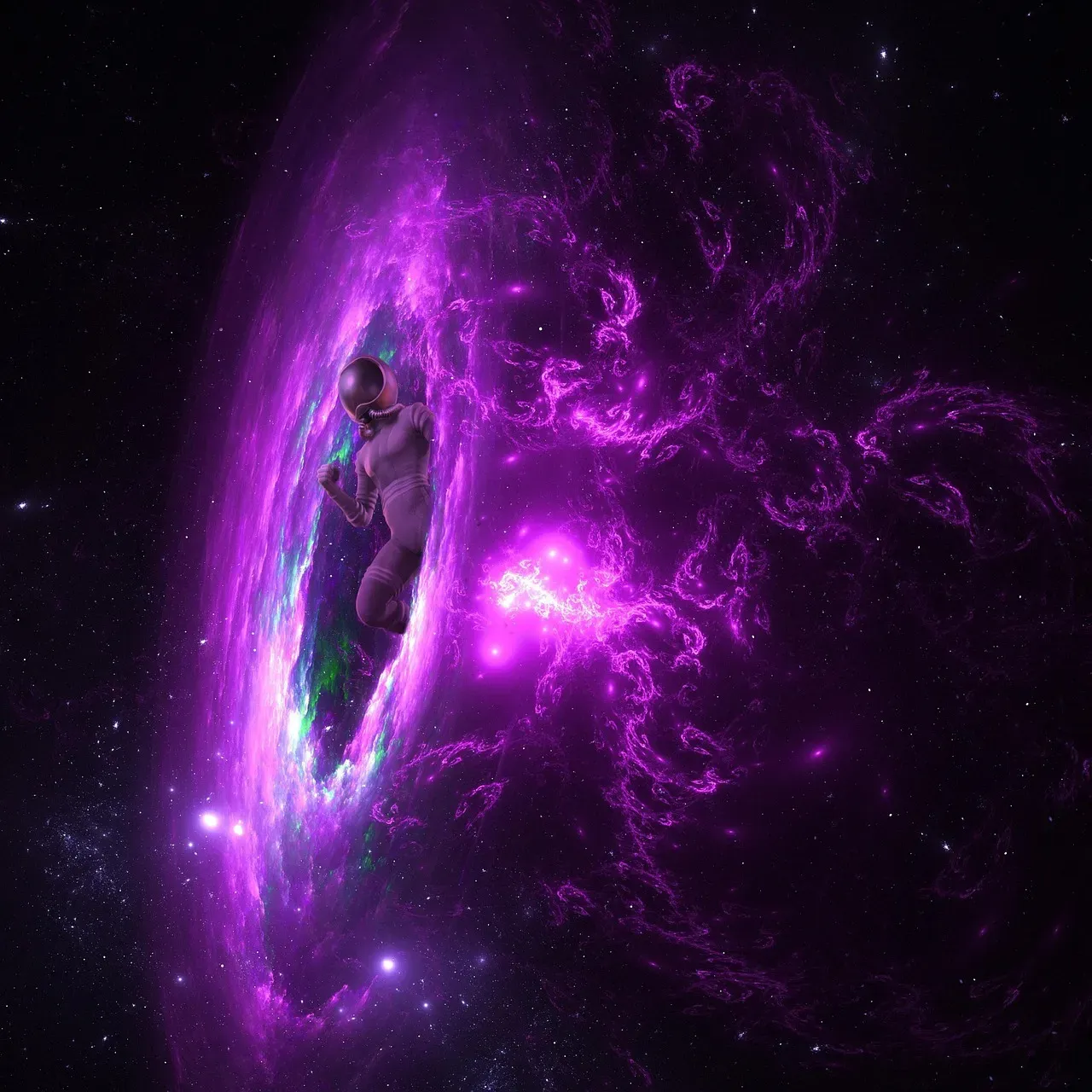
Due to the space-time strangeness required to form a stable wormhole, some scientists have considered whether certain black holes might actually be wormholes in disguise. This elusiveness may be due to their ability to closely mimic the observational properties of black holes. In other words, we might be living in a universe filled with these cosmic shortcuts and not even know it.
According to physicist Ron Gamble, there is a non-zero chance that scientists could find a wormhole. That’s physicist-speak for “it’s possible but don’t hold your breath.” Still, the fact that the mathematics allows for their existence keeps researchers searching. Light emitted from a disk surrounding a traversable wormhole would likely be nearly identical to that of a static black hole, making detection incredibly challenging but not impossible.
The idea that black holes might be portals rather than dead ends transforms our understanding of cosmic architecture. It suggests that the universe is far more interconnected than we ever imagined, with potential pathways threading through the fabric of spacetime itself. Just as life on Earth demonstrates remarkable adaptability, finding ways to thrive in environments once thought uninhabitable, perhaps the universe too contains surprises that challenge our assumptions about what’s possible. Whether we’ll ever prove these portals exist, let alone travel through one, remains an open question. What do you think? Could our universe contain hidden doorways we’ve simply overlooked?
Hi, I’m Andrew, and I come from India. Experienced content specialist with a passion for writing. My forte includes health and wellness, Travel, Animals, and Nature. A nature nomad, I am obsessed with mountains and love high-altitude trekking. I have been on several Himalayan treks in India including the Everest Base Camp in Nepal, a profound experience.