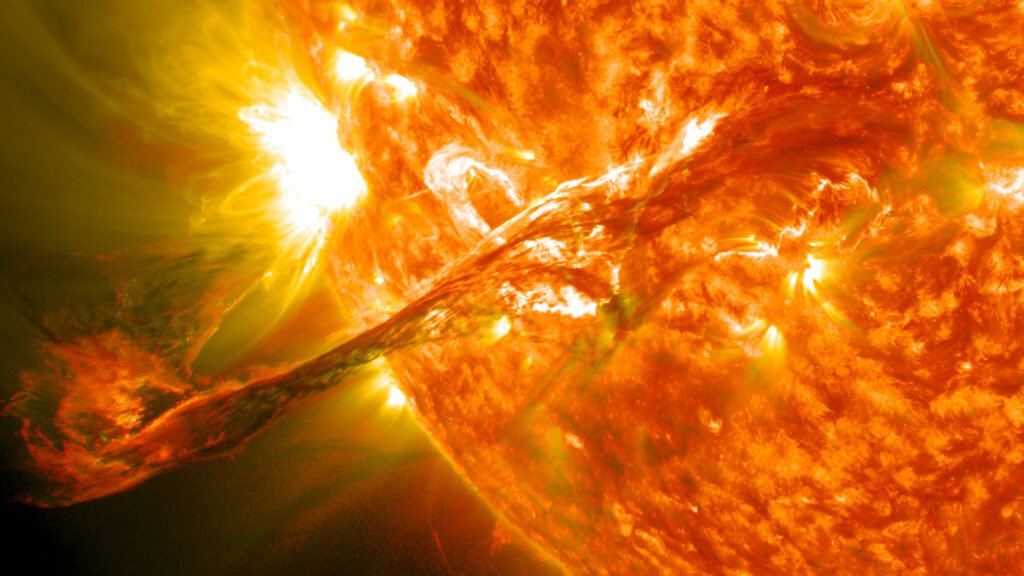

AR4373 Delivers Isolated M-Class Burst (Image Credits: Upload.wikimedia.org)
Solar observers noted moderate activity levels on February 13, 2026, driven by distinct events from two prominent sunspot regions.[1]
AR4373 Delivers Isolated M-Class Burst
Active region AR4373 unleashed an M1.1 flare that briefly elevated solar output to moderate status. This event stood out as isolated amid otherwise subdued conditions. The flare highlighted AR4373’s potential as one of the sun’s larger beta-class regions following recent rotations.[2]
Such M-class eruptions release significant energy, often triggering minor radio blackouts on Earth. Though specifics on this flare’s timing and reach remained limited, it underscored the region’s magnetic complexity. Solar monitors tracked it closely as activity transitioned post other hotspots.
Departing AR4366’s Dramatic Farewell Jet
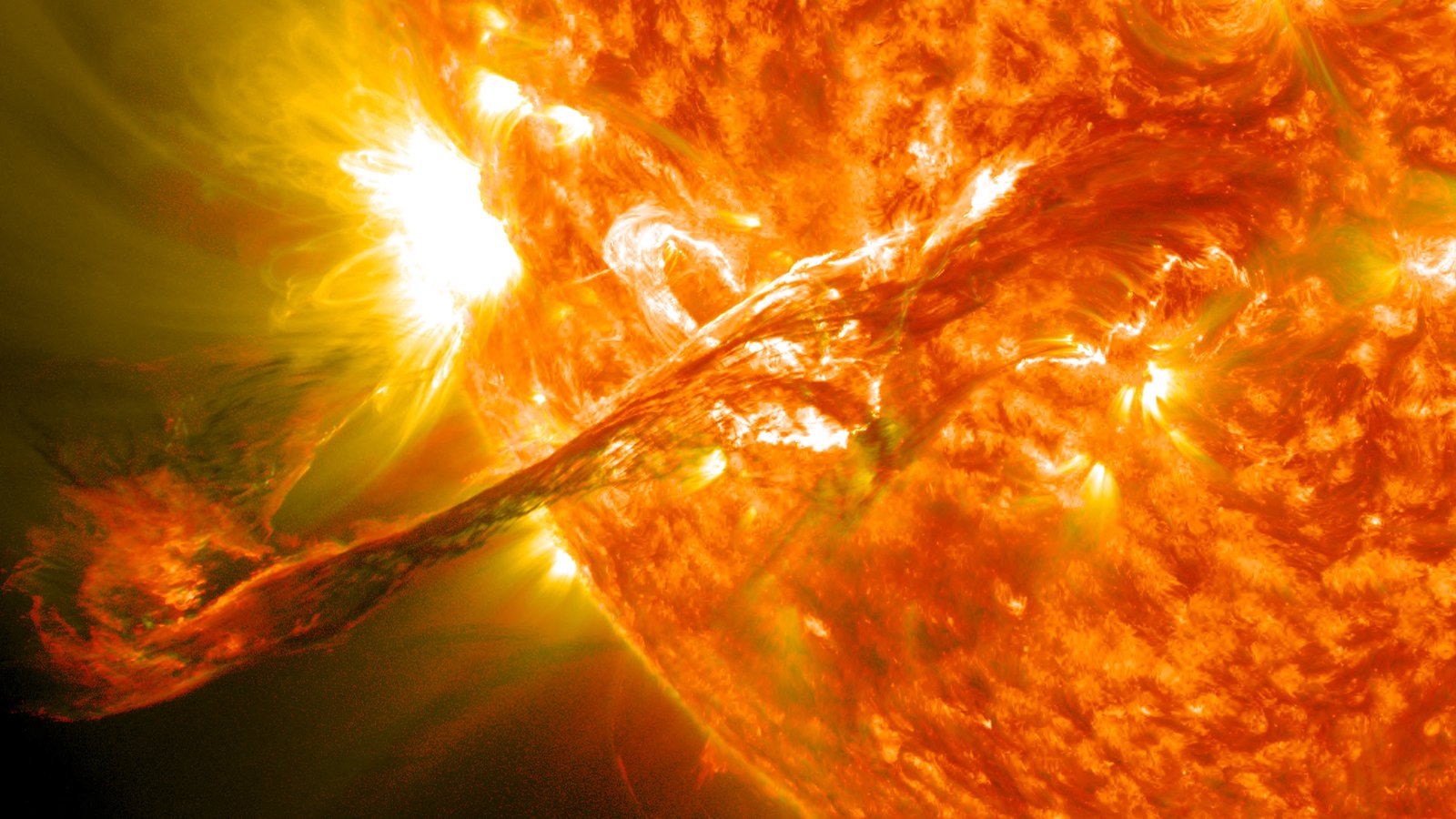
Even as it rotated beyond easy view, AR4366 produced a gorgeous arcing solar jet, captivating skywatchers. This prominence-like structure arced elegantly from the departing sunspot group, a final display from a once-dominant feature.[1]
AR4366 had dominated earlier February with multiple flares, including potent M1.4 events that caused radio disruptions over the Pacific. Classified as beta-gamma-delta, it hosted complex magnetic fields ripe for such ejections. The jet served as a visual reminder of its lingering influence via the Parker spiral pathway.[2]
Solar Regions and Recent Activity Snapshot
The sun featured seven active regions on its Earth-facing disk around this period. AR4373 and AR4374 emerged as frontrunners in size after AR4366’s exit. Earlier, AR4366 alone accounted for numerous flares, pushing daily counts into double digits.
Forecasts reflected the shift: M-class flare odds dropped sharply from 65 percent to 15 percent, with X-class probabilities halving to 10 percent. Geomagnetic conditions stayed quiet to unsettled, influenced by fading high-speed streams.[2]
- AR4366: Produced M1.4 flares on February 11 and 12, triggering R1 radio blackouts.
- AR4373: Beta region, now among the largest, site of the M1.1 event.
- AR4374: Beta class, monitoring for potential escalation.
- Overall flares in prior 24 hours: 12, including two M-class.
- Solar wind: Reduced to low speeds, IMF mostly neutral.
Broader Space Weather Picture
These developments occurred amid Solar Cycle 25’s decline, with January’s sunspot number at 112.6, down from December’s 124. Peak activity had hit 216 in August 2024. No Earth-directed coronal mass ejections accompanied the recent events.
Auroral displays benefited from occasional southward IMF orientation, though major storms stayed absent. Astronauts faced elevated radiation risks from such flares, but terrestrial impacts proved minimal. Observers used NASA SDO imagery to capture the labeled activity at 2 UTC on February 13.[2]
| Region | Class | Key Event |
|---|---|---|
| AR4373 | Beta | M1.1 flare |
| AR4366 | Beta-gamma-delta | Arcing jet |
| AR4374 | Beta | Large size |
Key Takeaways:
- Moderate activity peaked with AR4373’s M1.1 flare.
- AR4366’s jet marked a stunning exit after weeks of flares.
- Declining cycle lowers major event risks short-term.
Solar phenomena like these flares and jets reveal the sun’s restless nature, even as its cycle wanes. They remind us of space weather’s reach, from radio signals to high-latitude lights. What captured your attention in this solar update? Share in the comments.