In the dense canopies of Central and South American rainforests, where time seems to move at nature’s most leisurely pace, lives one of Earth’s most extraordinary creatures. The sloth, with its perpetual smile and unhurried movements, has mastered the art of extreme slow living to such a degree that it occasionally confuses parts of its own body with the very trees it calls home. This isn’t just folklore or internet humor – it’s a fascinating reality that reveals the incredible depths of evolutionary adaptation.
The Evolutionary Marvel of Extreme Slowness

Sloths didn’t become slow by accident – their leisurely lifestyle is the result of millions of years of evolutionary fine-tuning. These remarkable mammals have developed one of nature’s most energy-efficient survival strategies, moving at speeds that would make a snail seem speedy by comparison.
Their metabolic rate operates at just 40-45% of what scientists would expect for a mammal of their size. This biological efficiency allows them to survive on remarkably little food, spending up to 20 hours a day either sleeping or remaining completely motionless. The energy they save through this approach is so significant that they can go an entire week without eating.
What’s truly remarkable is how this slowness has shaped every aspect of their existence. Their slow movements help them avoid detection by predators, while their reduced metabolic needs mean they can thrive in environments where other mammals would struggle to find sufficient nutrition.
The Science Behind Mistaking Arms for Branches
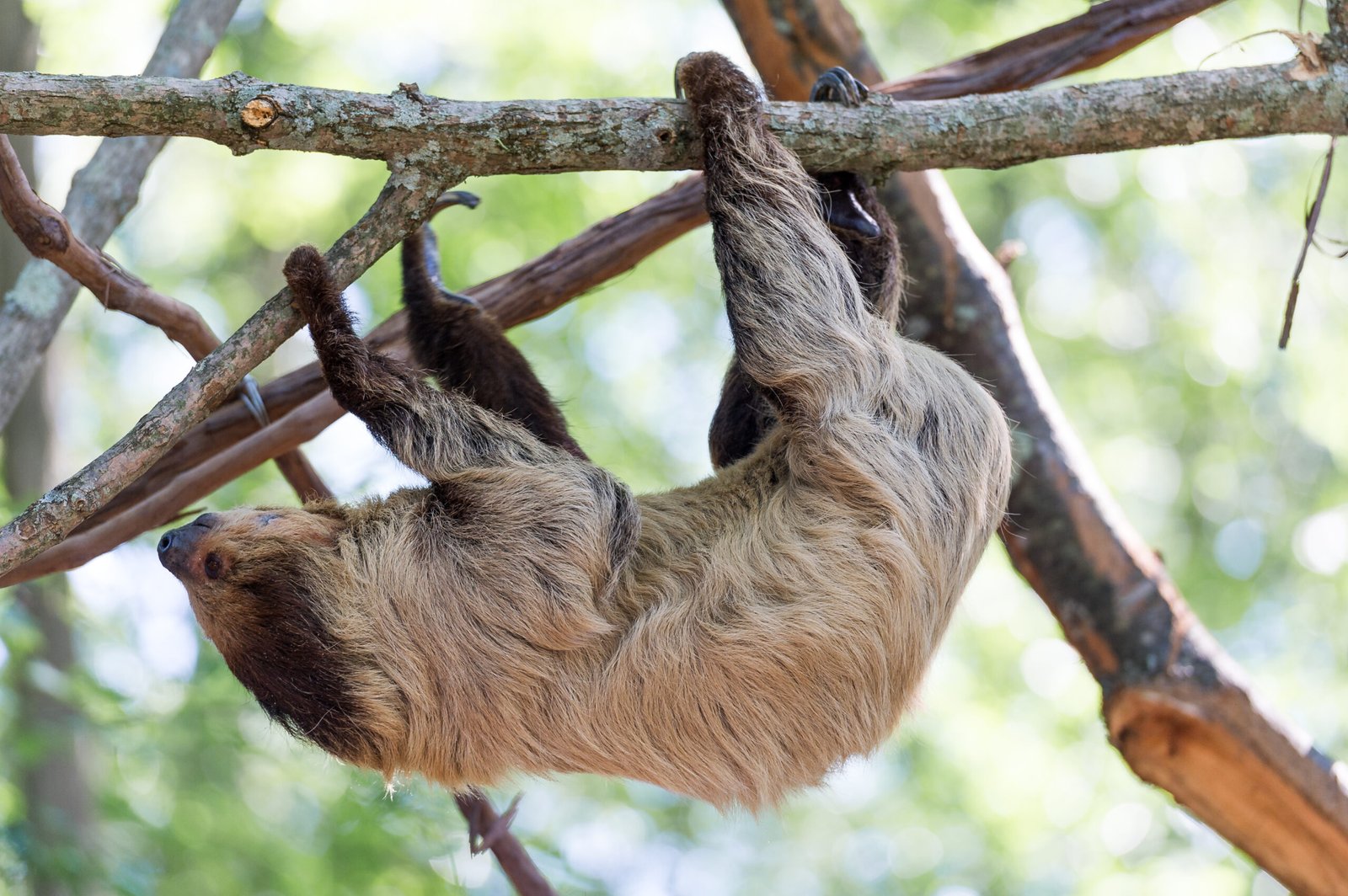
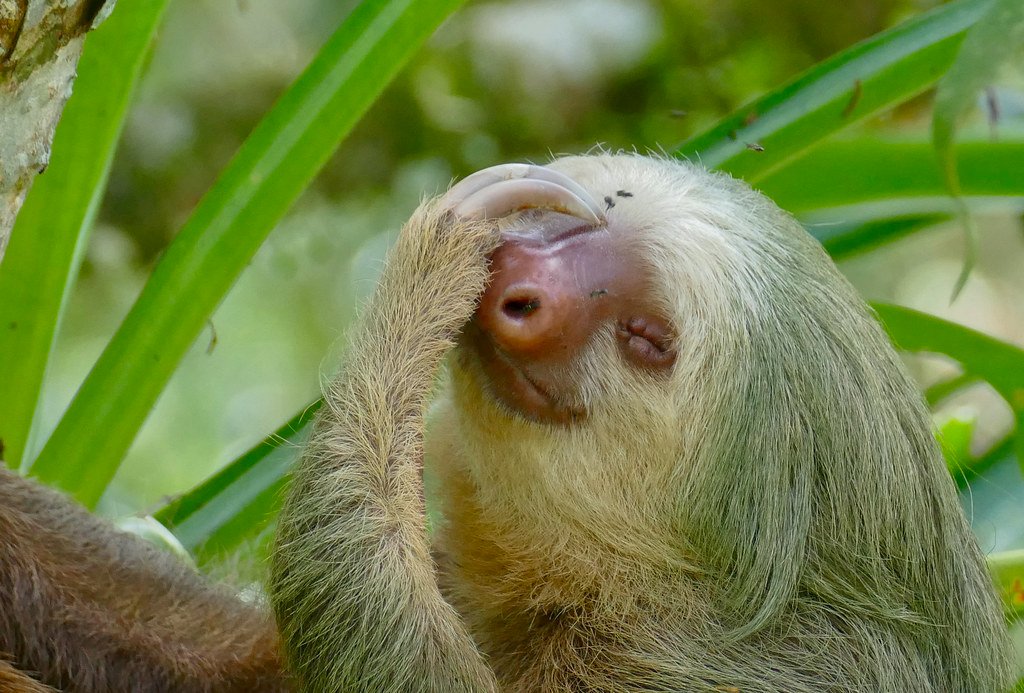
The phenomenon of sloths grabbing their own arms instead of branches isn’t just an amusing quirk – it’s a documented behavior that highlights the extremes of their adapted lifestyle. When moving through the canopy at their characteristic pace, sloths rely heavily on muscle memory and repetitive motion patterns rather than quick visual processing.
Their visual system, while adequate for their needs, isn’t designed for rapid decision-making. Combined with their extremely slow neural processing speed, this creates moments where their proprioceptive awareness (the sense of where their body parts are in space) can become temporarily confused with their environmental perception.
Research has shown that when sloths are moving between branches, especially in low-light conditions or when fatigued, they may reach for what they perceive as a nearby branch, only to grasp their own limb. This behavior occurs most frequently during their weekly descent to defecate, when they’re outside their familiar territory and moving more than usual.
Two Species, Different Speeds of Life

Not all sloths are created equal when it comes to speed – or the lack thereof. The two-toed sloth (Choloepus) and three-toed sloth (Bradypus) represent distinct evolutionary lineages that developed their slow lifestyle independently, a remarkable example of convergent evolution.
Three-toed sloths are the true champions of slowness, moving at an average speed of just 0.003 miles per hour through the trees. Their two-toed cousins are relatively speedy, capable of moving up to four times faster when necessary. This difference becomes particularly apparent during emergency situations, where two-toed sloths can actually achieve what might generously be called a “hurried” pace.
The anatomical differences between these species also influence their likelihood of the arm-branch confusion. Three-toed sloths, with their more rigid movement patterns and slower processing speed, experience this behavior more frequently than their two-toed relatives.
The Metabolic Masterpiece of Minimal Living

To understand how sloths can survive with such an incredibly slow lifestyle, we need to dive into their remarkable metabolic adaptations. Their four-chambered stomach functions like a slow-motion fermentation tank, taking up to 30 days to fully digest a single meal of leaves.
This digestive process is so slow and thorough that it can account for up to 30% of their total body weight at any given time. Their intestinal tract has evolved specialized bacteria that can break down the tough cellulose in leaves, extracting every possible nutrient from their limited diet. This bacterial ecosystem is so crucial that baby sloths actually consume their mother’s feces to acquire the necessary digestive microorganisms.
Their heart rate averages just 40-60 beats per minute, compared to 400+ beats per minute in similarly sized mammals. This cardiac efficiency allows them to maintain basic bodily functions while expending minimal energy, contributing to their overall survival strategy.
The Weekly Bathroom Break That Defies Logic

Perhaps nothing illustrates the extreme nature of sloth behavior better than their weekly defecation ritual. Despite spending 99% of their lives in trees, sloths descend to the forest floor once a week to relieve themselves, a journey that represents one of nature’s most dangerous commutes.
This descent exposes them to ground predators and requires significant energy expenditure – they can lose up to 30% of their body weight during this weekly event. Scientists have long puzzled over why sloths would risk this dangerous journey when they could simply defecate from the trees like many other arboreal animals.
Recent research suggests this behavior may be linked to their symbiotic relationship with moths and algae. The nutrient-rich waste fertilizes specific trees, creating a mobile ecosystem that travels with the sloth. During these ground expeditions, their spatial disorientation can be at its peak, making the arm-branch confusion more likely to occur.
Living Ecosystems in Motion

Sloths aren’t just slow-moving mammals – they’re walking ecosystems that support an incredible diversity of life. Each sloth hosts an average of 950 beetles, along with various species of moths, mites, and other arthropods. Their fur provides the perfect environment for these creatures, creating a miniature jungle on their backs.
The algae that grows in their fur serves multiple purposes: it provides camouflage, offers nutritional supplementation when groomed and consumed, and creates a unique microhabitat for other organisms. This algae can be so abundant that it gives sloths a distinctly greenish tint, helping them blend seamlessly with the canopy.
This living ecosystem is so integrated that some moth species have evolved to complete their entire life cycle within the sloth’s fur. When the sloth descends for its weekly bathroom break, these moths lay their eggs in the fresh waste, continuing a cycle that has persisted for millions of years.
The Physics of Hanging Upside Down

Sloths have mastered the art of defying gravity in ways that would be impossible for most mammals. Their specialized anatomy allows them to hang upside down for hours without the blood pooling issues that would affect other animals. Their organs are actually fused to their rib cage, preventing them from shifting and compressing vital structures.
Their incredibly strong grip is powered by a unique tendon system that automatically locks their claws around branches, requiring no muscular effort to maintain their hold. This adaptation is so effective that sloths have been found still hanging from branches after death, their grip so secure that decomposition begins before they fall.
The downside of this perfect hanging adaptation is that their spatial awareness can become compromised during extended hanging sessions. Blood flow patterns and neural responses adapted for an upside-down lifestyle can occasionally lead to the disorientation that causes them to grab their own limbs instead of new branches.
Climate Change and the Slow Lane
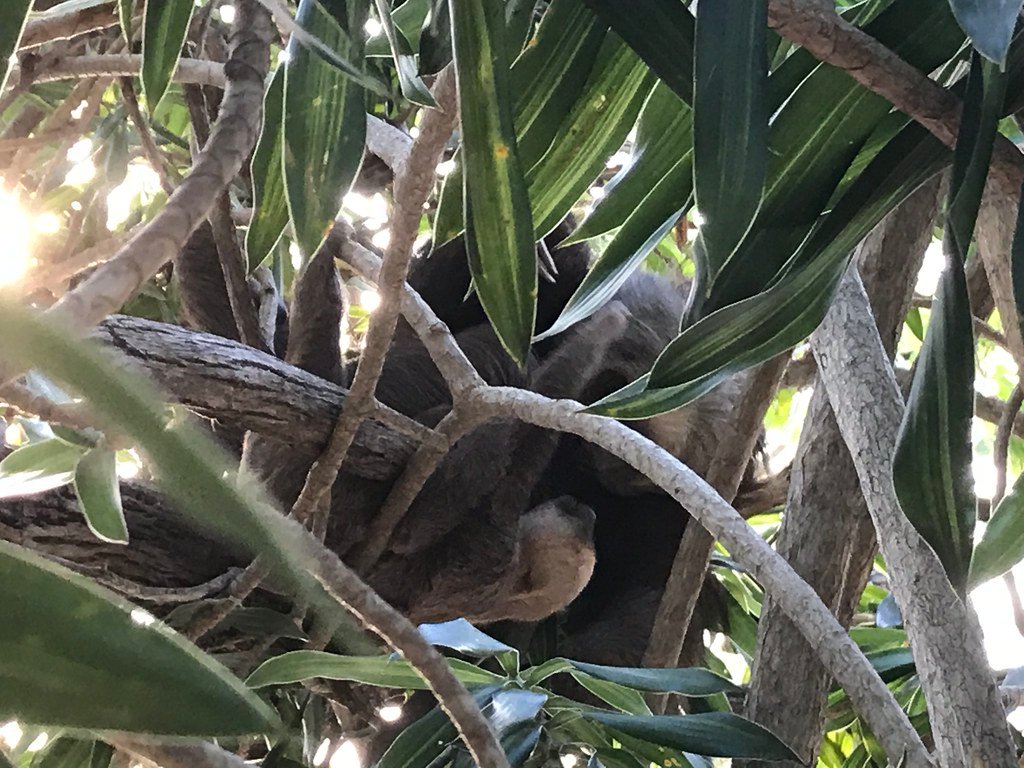
As global temperatures rise and weather patterns shift, sloths face unique challenges that their slow lifestyle makes difficult to address quickly. Their inability to rapidly relocate or adapt to changing conditions puts them at particular risk as their forest habitats experience unprecedented changes.
Rising temperatures affect their already-delicate energy balance, as they struggle to regulate body temperature efficiently. Their slow metabolic rate, while normally an advantage, becomes a liability when rapid physiological adjustments are needed to cope with environmental stress.
Deforestation compounds these challenges by fragmenting their habitat and forcing them to make dangerous ground crossings between forest patches. These unfamiliar journeys increase stress levels and spatial disorientation, potentially making behaviors like mistaking arms for branches more frequent during critical navigation moments.
Predator Evasion Through Strategic Stillness

The sloth’s primary defense mechanism isn’t speed or strength – it’s the art of becoming virtually invisible through absolute stillness. Their slow movements make them nearly undetectable to predators that rely on motion to identify prey, effectively turning their sluggishness into a superpower.
When threatened, sloths can remain so motionless that they appear to be part of the tree itself. Their algae-covered fur provides excellent camouflage, while their ability to maintain the same position for hours at a time allows them to wait out potential threats. This strategy is so effective that researchers sometimes struggle to locate sloths they’ve been tracking for years.
However, this reliance on stillness as protection can sometimes work against them. Extended periods of motionlessness can lead to decreased proprioceptive awareness, contributing to moments of confusion about their body position relative to their environment.
The Surprising Swimming Abilities

Despite their reputation for extreme slowness on land and in trees, sloths are surprisingly competent swimmers. When necessary, they can move through water three times faster than they travel through trees, using a dog-paddle style that’s both efficient and effective.
This aquatic ability becomes crucial during flood seasons when their forest habitats become temporarily submerged. Their hollow fur provides additional buoyancy, while their long arms give them good reach for swimming strokes. Interestingly, their spatial awareness appears to be more acute in water, possibly due to the different sensory feedback provided by aquatic environments.
The contrast between their terrestrial sluggishness and aquatic competence highlights how their nervous system can adapt to different environmental demands. In water, the arm-branch confusion virtually disappears, suggesting that their disorientation may be specifically related to their arboreal lifestyle adaptations.
Ancient Giants and Modern Miniatures
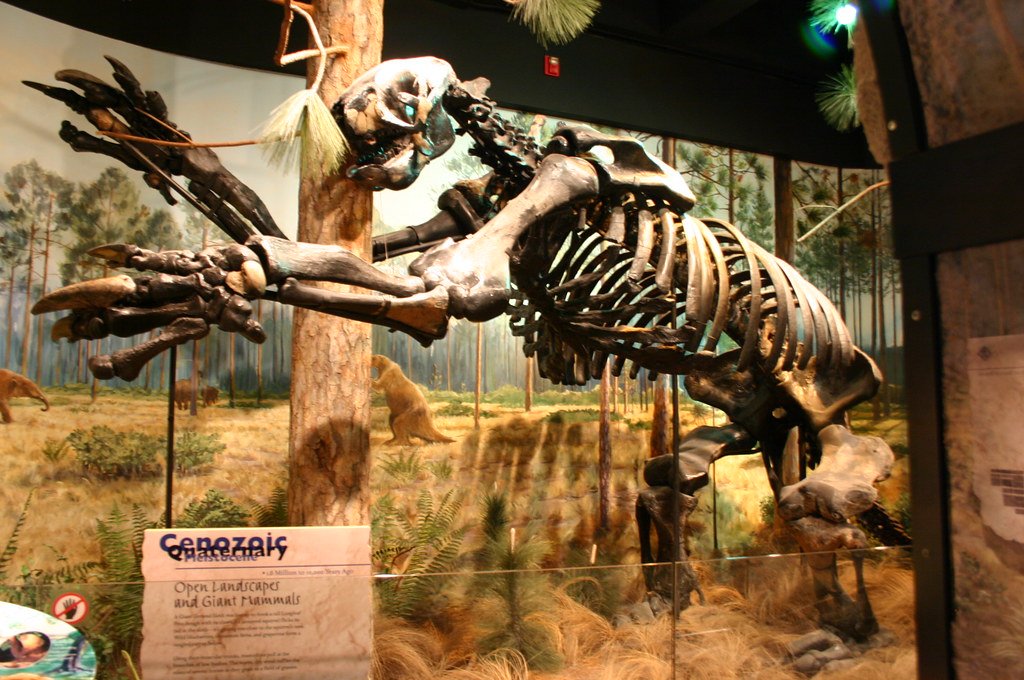
Today’s sloths are tiny descendants of ancient megafauna that once dominated South American landscapes. Ground sloths from the Pleistocene era could reach the size of elephants, weighing up to 4 tons and standing over 12 feet tall. These massive ancestors were anything but slow, capable of rearing up on their hind legs to browse from the highest tree branches.
The evolutionary transition from these giant ground dwellers to today’s small arboreal species represents one of nature’s most dramatic size reductions. Modern sloths typically weigh between 8-17 pounds, a mere fraction of their ancestors’ impressive bulk. This downsizing was likely driven by climate changes and competition from other large mammals.
Interestingly, fossil evidence suggests that even the giant ground sloths may have experienced spatial disorientation, with some specimens found in positions suggesting confusion about their environment. This indicates that the neurological traits leading to arm-branch confusion may be ancient features of sloth lineages.
The Neuroscience of Slow Motion Living

The sloth brain represents a fascinating study in neurological efficiency and minimalism. Their cerebral cortex is remarkably smooth, lacking the complex folding patterns found in most mammals. This simplified brain structure reflects their reduced need for complex information processing and rapid decision-making.
Neural transmission in sloths occurs at significantly slower rates than in other mammals, with some reflexes taking several seconds to complete. This neurological sluggishness extends to their sensory processing, where visual and tactile information is analyzed at a pace that matches their physical movements.
The phenomena of mistaking arms for branches likely occurs during momentary lapses in this already-slow neural processing. When multiple sensory inputs compete for attention, or when fatigue affects their limited cognitive resources, their brain may briefly misinterpret proprioceptive signals as environmental features.
Reproductive Rhythms in Slow Motion
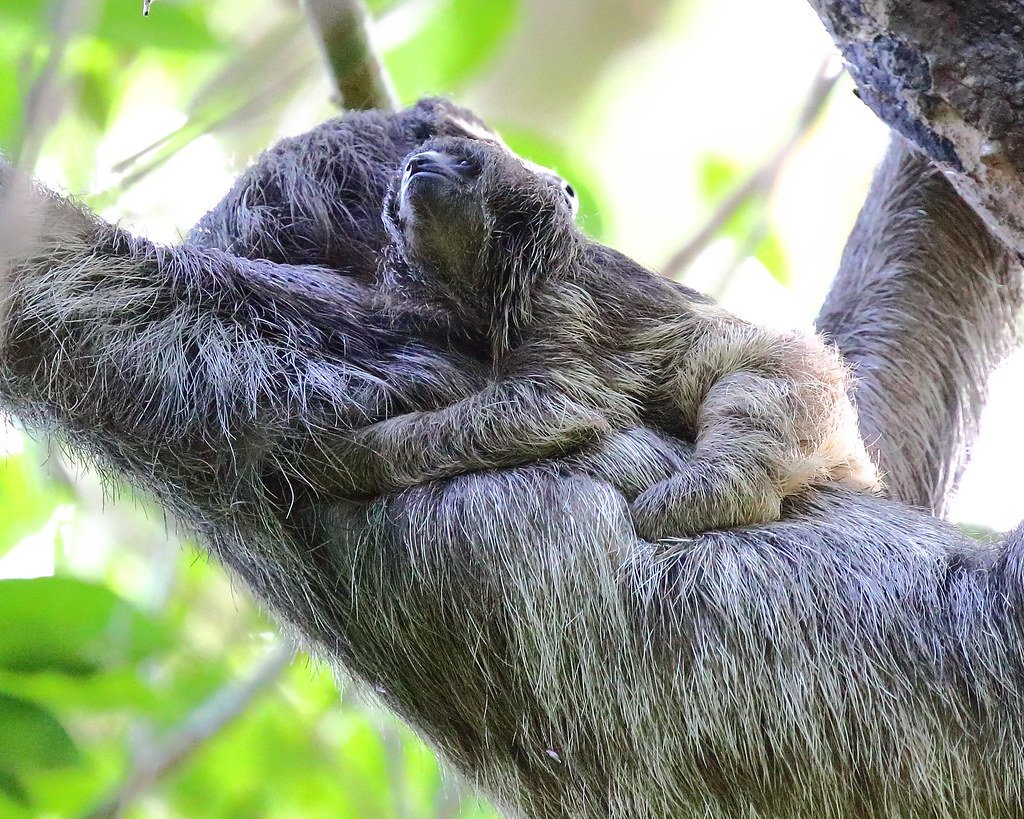
Even reproduction follows the sloth’s commitment to taking things slowly. Their mating process can take up to five hours, with courtship rituals that unfold over several days. Pregnancy lasts approximately six months for three-toed sloths and up to 11 months for two-toed species, among the longest gestation periods for mammals of their size.
Female sloths typically give birth to a single offspring, which clings to its mother for the first 6-10 months of life. During this period, babies learn essential survival skills through observation and imitation, including the complex process of identifying appropriate branches for gripping and movement.
Young sloths are particularly prone to the arm-branch confusion as they develop their spatial awareness skills. Mother sloths have been observed gently repositioning babies who have grabbed their own limbs instead of branches, suggesting this behavior requires learning and practice to overcome.
Conservation Challenges in a Fast-Paced World

Protecting sloths in our rapidly changing world presents unique conservation challenges that reflect their specialized lifestyle needs. Traditional wildlife corridors designed for more mobile species often fail to meet sloth requirements, as they need continuous canopy connections rather than ground-level pathways.
Their slow reproductive rate means that population recovery from threats takes decades rather than years. A single road cutting through sloth habitat can effectively isolate populations for generations, as these animals rarely attempt dangerous ground crossings voluntarily.
Conservation efforts increasingly focus on canopy bridges and corridor restoration that accommodates their arboreal lifestyle. Some innovative programs involve rescue operations where disoriented sloths found on the ground are carefully relocated to appropriate trees, though their spatial confusion often makes these interventions challenging.
The Sloth’s Secret Language

Despite their reputation for silence, sloths actually communicate through a variety of vocalizations that most humans never hear. Their calls are typically very low-frequency sounds that travel well through dense forest canopies, allowing them to locate mates and offspring across considerable distances.
Female sloths produce distinctive calls during mating season that can carry for over a mile through the forest. These calls are so low-pitched that they’re at the edge of human hearing capability, contributing to the perception that sloths are mute creatures. Baby sloths communicate with their mothers through soft chirping sounds that gradually develop into adult vocalizations.
Research suggests that some of their vocalizations may serve as spatial orientation aids, helping them navigate through the canopy using acoustic landmarks. This auditory navigation system might explain why their arm-branch confusion is less frequent in familiar territories where they know the acoustic environment.
Future Research and Sloth Mysteries
Scientists continue to uncover surprising aspects of sloth biology and behavior that challenge our understanding of mammalian adaptation. Recent studies using GPS tracking and accelerometers have revealed that sloths are more active and mobile than previously thought, with some individuals traveling significant distances through the canopy at night.
Advanced imaging techniques are providing new insights into their unique anatomical adaptations, including the discovery of specialized muscle fibers that may contribute to their extraordinary grip strength. Researchers are also investigating whether the algae living in their fur might have pharmaceutical applications, as some species show antimicrobial properties.
The arm-branch confusion behavior remains an active area of research, with scientists working to understand whether this represents a genuine cognitive limitation or simply an occasional side effect of their extreme lifestyle adaptations. New behavioral studies using video analysis are documenting the frequency and contexts of this behavior more precisely than ever before.
Lessons from the Slow Lane
Sloths offer profound lessons about survival strategies that challenge our assumptions about success in nature. In a world that often prioritizes speed and efficiency, these remarkable creatures demonstrate that extreme slowness can be not just viable, but extraordinarily successful as an evolutionary strategy.
Their occasional confusion between body parts and branches serves as a reminder that even the most specialized adaptations come with trade-offs. The very traits that make sloths perfectly suited to their arboreal lifestyle – their slow movements, reduced neural processing speed, and energy-efficient metabolism – also create vulnerabilities that seem almost comically human in their relatability.
Perhaps most importantly, sloths remind us that there are many different ways to thrive in nature. Their success story, written across millions of years of evolution, proves that in the grand theater of life, sometimes the slowest performers steal the show. What other secrets might these unhurried masters of the canopy still be keeping from us?