
The Magic of the Selenelion Phenomenon (Image Credits: Cdn.mos.cms.futurecdn.net)
Eastern North America stands poised for a celestial rarity as a total lunar eclipse unfolds alongside dawn on March 3, 2026.[1][2]
The Magic of the Selenelion Phenomenon
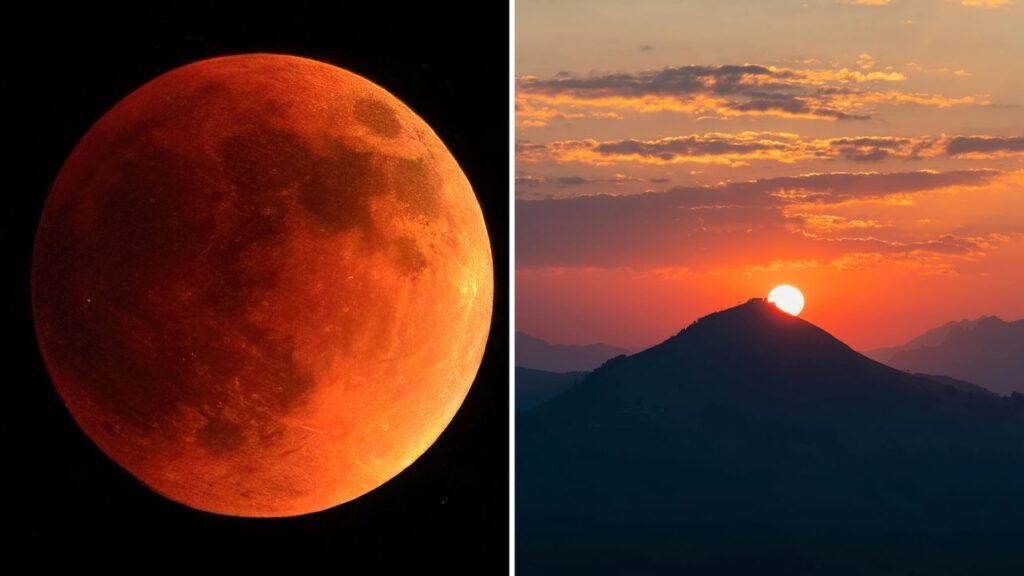
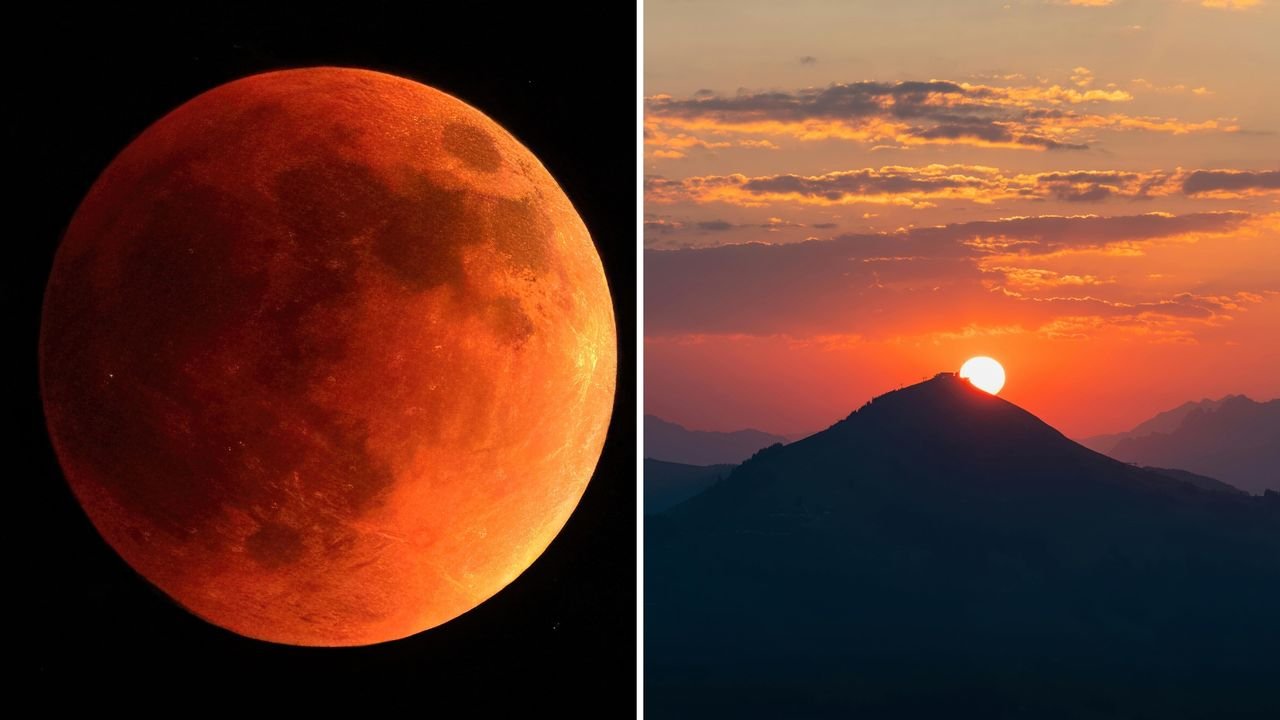
A selenelion occurs when the sun rises in the east while a fully eclipsed moon lingers on the western horizon, defying basic geometry.[1]
This effect stems from Earth’s atmosphere bending light rays, much like a prism. Observers witness both luminaries above the horizon for a fleeting 1 to 3 minutes, creating an otherworldly scene of golden sunrise contrasting a crimson blood moon.[1]
Traditionally deemed impossible due to the sun-Earth-moon alignment during totality, refraction elevates their apparent positions. The moon’s eastward orbital drift extends the window slightly in some areas.[1]
Key Timings for the Total Lunar Eclipse
The eclipse spans March 3 in UTC, with totality lasting 58 minutes and 19 seconds – the only such event in 2026.[3][2]
For the U.S. East Coast, action peaks pre-dawn. Penumbral contacts begin around 3:44 a.m. EST, partial umbral at 4:50 a.m., totality at 6:04 a.m., maximum at 6:15 a.m., and totality ends at 7:03 a.m.[2][4]
| City | Sunrise (EST) | Moonset (EST) | Eclipse Phase at Moonset |
|---|---|---|---|
| Boston | 6:16 a.m. | 6:17 a.m. | Total |
| New York | 6:26 a.m. | 6:28 a.m. | Total |
| Washington, DC | 6:38 a.m. | 6:39 a.m. | Total |
Western regions see earlier phases or post-totality emergence as the moon sets.[1]
Why the Moon Turns Red
During totality, Earth blocks direct sunlight, but atmospheric scattering filters blue wavelengths, leaving red hues from global sunrises and sunsets projected onto the lunar surface.[2][3]
This blood moon glow varies from cherry red to brick-like, depending on airborne dust and aerosols. The moon dims dramatically, resembling a distant ember against twilight skies.[3]
Best Spots and Practical Viewing Guide
Coastal East Coast sites offer prime selenelion views with unobstructed eastern and western horizons. Elevated spots or open plains enhance chances, as low horizons maximize refraction benefits.[1][3]
- Seek clear skies; check local forecasts for cloud cover.
- Arrive early – moon may fade in brightening twilight 10-15 minutes pre-sunrise.
- Use binoculars for detail; naked eyes suffice for the spectacle.
- Avoid city lights; head to rural areas for contrast.
- Scan west-northwest for the dim, reddish disk near moonset.
Photographers should tripod-mount cameras for long exposures. No equipment protects eyes – it’s safe to view directly.[2]
A Celestial Treat Not to Miss
This eclipse caps the first season of 2026, following an annular solar event in Antarctica. The next total lunar eclipse arrives years later, underscoring the selenelion’s scarcity.[3]
- Selenelion lasts 1-3 minutes via atmospheric refraction.
- Totality: 58 minutes; East Coast peak ~6 a.m. EST.
- Best from unobstructed East Coast horizons.
Mark your calendars for this dawn drama – a reminder of nature’s subtle illusions. What viewing spot will you choose? Share in the comments.