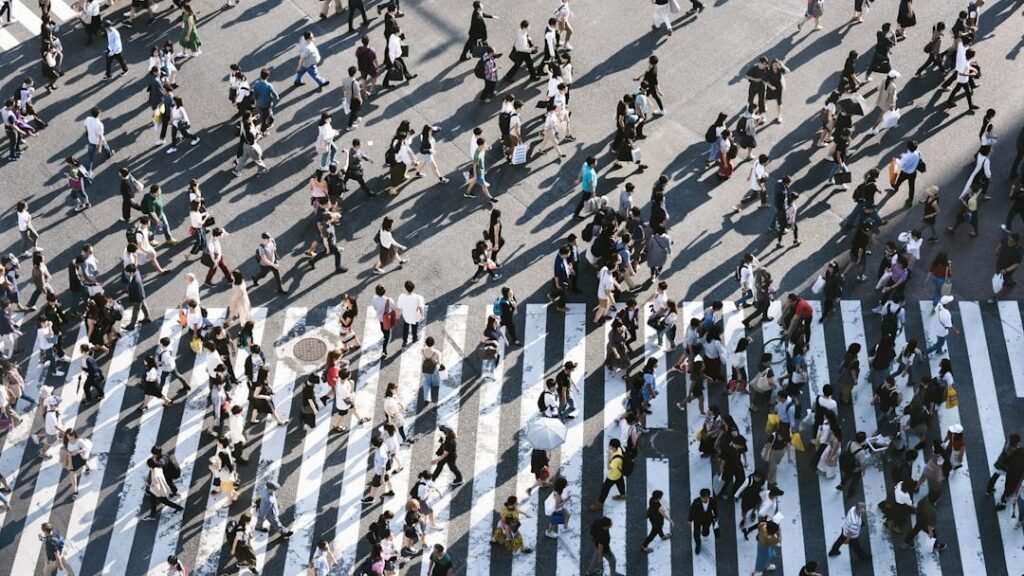

There’s a question that quietly haunts conversations about climate, food, water, and energy – and most people never think to ask it directly. How many human beings can this planet actually hold before things start to break down? Not just physically, but sustainably, equitably, long-term.
It turns out scientists have been wrestling with this very question, and the latest research throws some genuinely surprising figures into the mix. The answers are more nuanced, more alarming, and honestly more fascinating than you might expect. Let’s dive in.
The Question That Changes Everything
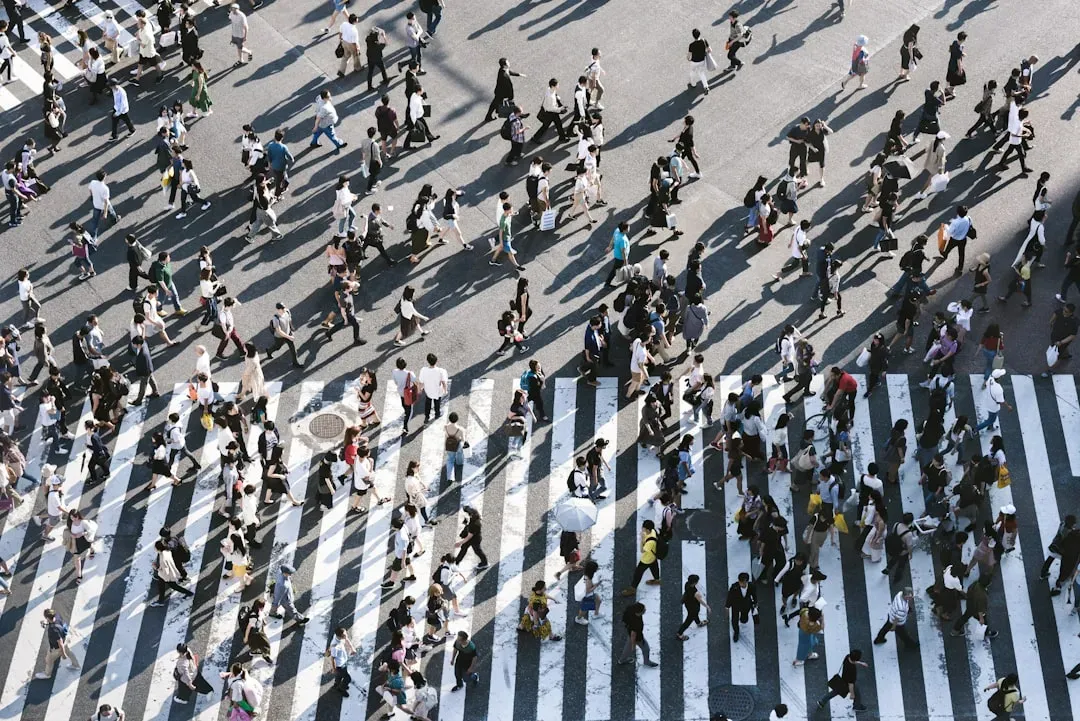
Here’s the thing – asking how many people Earth can support sounds like a simple numbers game. It really isn’t. The answer depends enormously on how those people live, what they eat, how much energy they consume, and which ecosystems we’re willing to sacrifice in the process.
Researchers have revisited this concept with updated data and modeling, and what they found challenges both pessimistic doom-scrollers and the overly optimistic crowd. The current global population sits at roughly eight billion people, and we’re projected to peak somewhere around ten billion by the middle of this century.
The real tension isn’t just about raw headcount. It’s about the lifestyle attached to each person on that count.
What “Carrying Capacity” Actually Means
Scientists use the term “carrying capacity” to describe the maximum population a given environment can sustain indefinitely. Think of it like a bathtub – you can keep filling it, but at some point the water starts spilling over the edges and onto the floor.
For Earth, the “edges” include things like arable land, freshwater availability, atmospheric carbon absorption limits, and biodiversity thresholds. Cross too many of those lines simultaneously, and the system doesn’t just strain. It starts to collapse in ways that are very hard to reverse.
What’s genuinely tricky is that carrying capacity isn’t a fixed number. It shifts depending on technology, policy, and consumption behavior. Honestly, that’s both the most hopeful and the most frustrating part of this whole discussion.
The Role of Consumption in the Equation
Let’s be real – a person living in a high-income country with a large carbon footprint, eating meat daily and flying internationally several times a year, places a dramatically different burden on Earth’s systems than someone living more modestly in a lower-income setting. This isn’t a moral judgment, just physics and ecology.
Some researchers estimate that if everyone on Earth consumed resources at the rate of an average American, the planet could sustainably support somewhere between two and three billion people. That’s less than half the current global population. On the flip side, if global consumption patterns shifted toward lower-impact lifestyles, the numbers get considerably more forgiving.
This is why any serious discussion about population limits has to simultaneously be a discussion about consumption. The two are inseparable, like trying to talk about speed without mentioning distance or time.
Food Systems Are the Defining Bottleneck
Of all the resource constraints scientists study, food production consistently emerges as one of the most critical pressure points. Agriculture already occupies roughly about one third of Earth’s total land surface, and that share keeps expanding as forests are cleared to make room for crops and livestock.
Water is equally alarming. A significant portion of the world’s major aquifers are being drawn down faster than they naturally recharge. This isn’t a distant future problem – in some regions, it’s already happening right now, affecting hundreds of millions of people.
The research suggests that feeding ten billion people is technically possible, but only if food waste is dramatically reduced, meat consumption declines globally, and agricultural technology continues to improve. That’s a lot of “ifs” stacked on top of each other, and I think we’d be foolish to assume they’ll all fall into place on their own.
Climate Change Rewrites the Rules
One of the more sobering insights from recent research is that climate change doesn’t just threaten human comfort – it directly shrinks Earth’s carrying capacity. Rising temperatures reduce agricultural yields in many of the world’s most food-dependent regions. Extreme weather events destroy infrastructure and displace communities. Ocean acidification threatens marine food chains.
In a very real sense, every degree of warming narrows the margin of what Earth can sustain. Scientists describe this as a feedback loop where population pressure accelerates environmental degradation, which in turn reduces the planet’s capacity to support that same population. It’s a spiral that demands urgent attention.
What makes this particularly thorny is that the populations most vulnerable to these effects are often the ones who contributed least to causing them. That moral dimension adds a layer of complexity that pure ecological modeling simply can’t capture.
Technology as a Wild Card
It would be deeply incomplete to talk about population limits without acknowledging the wild card factor of human innovation. Throughout history, we have repeatedly shattered previous estimates of what Earth could support, largely through technological breakthroughs. The Green Revolution of the mid-twentieth century is probably the most famous example, when new agricultural techniques prevented mass famine on a scale that many had considered inevitable.
Vertical farming, lab-grown protein, desalination advances, and next-generation renewable energy all carry the potential to push those carrying capacity numbers higher. It’s hard to say for sure how transformative these technologies will be, or how quickly they’ll scale. But dismissing them entirely would be just as intellectually dishonest as assuming they’ll magically solve everything.
The honest position is somewhere in the middle – cautiously hopeful, but not complacent. Technology buys us time and options, not guarantees.
Where Does That Leave Us?
The emerging scientific consensus seems to land somewhere uncomfortable and important. Earth can support a large human population, potentially even ten billion, but only under specific conditions that require significant changes in how we produce food, consume energy, and manage ecosystems. Without those changes, the pressure on planetary systems becomes increasingly dangerous.
What this research ultimately highlights is that “how many people” is almost the wrong question. The better question is “how many people, living how?” That framing shifts the conversation from fatalistic number-crunching to something far more actionable.
Decisions made in the next few decades about agriculture, energy policy, urban planning, and consumption culture will effectively set the ceiling for what becomes possible. The planet doesn’t issue warnings in advance. It just responds to what we do – or fail to do.
So, given all of this, what do you think our actual priority should be – reducing population growth, or transforming how each of us consumes? Tell us your thoughts in the comments.