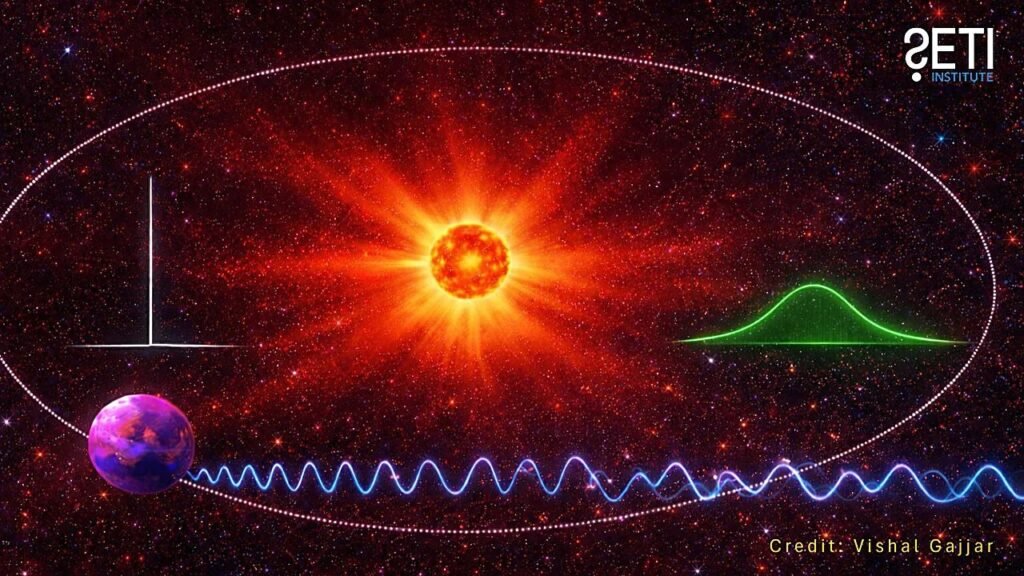

There’s a question that has haunted astronomers and curious minds alike for decades: are we actually alone out here? We’ve been scanning the skies, building bigger telescopes, and listening for signals – yet the silence has been deafening. Most people assume the universe is simply empty of intelligent life. Honestly, that might not be the whole story.
What if the problem isn’t that alien civilizations aren’t broadcasting, but that the cosmos itself is scrambling their transmissions before they ever reach us? New research is shaking up how scientists think about the search for extraterrestrial intelligence, and the implications are genuinely fascinating. Let’s dive in.
The Search for Technosignatures Just Got a Lot More Complicated
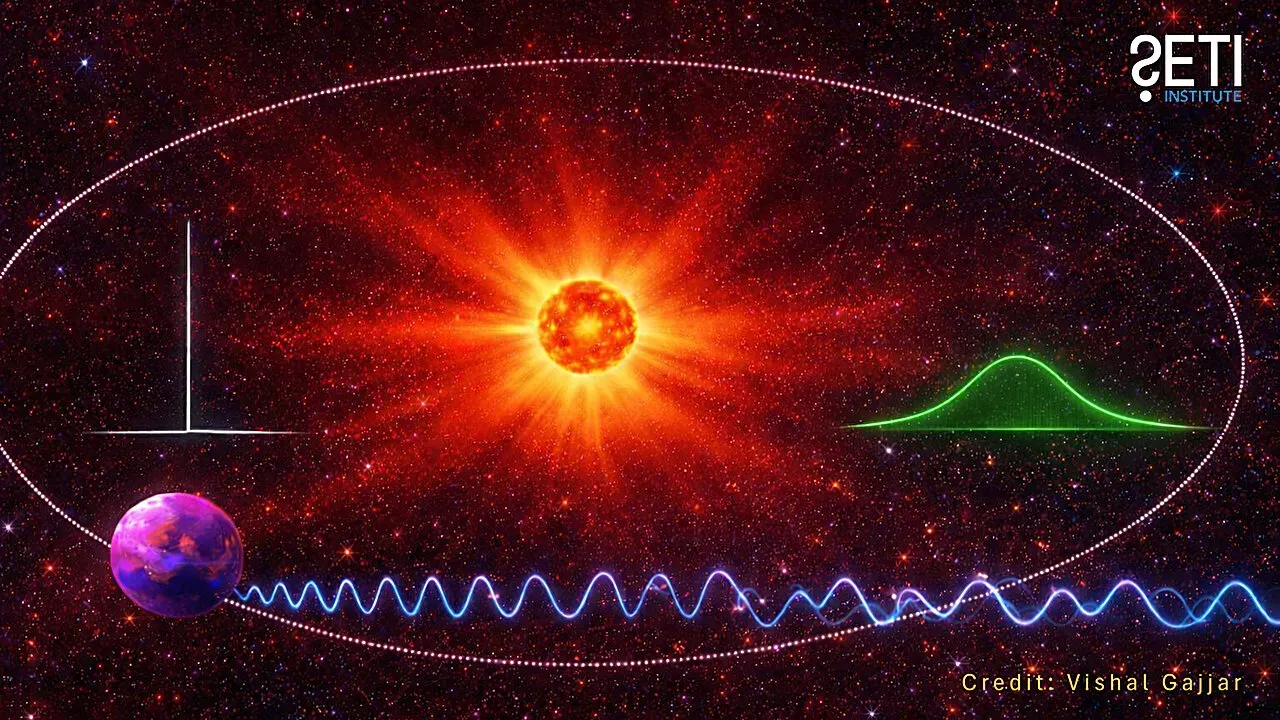
Here’s the thing about searching for alien technology from across the galaxy: it was never going to be easy. Scientists have long focused on what are called “technosignatures,” which are essentially any detectable signs of technology produced by intelligent beings elsewhere in the universe. Think of it like searching for a lighthouse beam across a very turbulent, foggy ocean.
A new study has raised a serious concern about one of the most promising methods in this search. Researchers have found that turbulent plasma in space, the hot ionized gas that fills vast regions between stars and galaxies, can dramatically distort ultra-high-frequency radio signals. That distortion can make genuine alien transmissions nearly unrecognizable by the time they arrive at our detectors here on Earth.
What Plasma Actually Does to a Radio Signal Traveling Across Space
Most people picture space as a clean, empty vacuum. In reality, it’s absolutely full of plasma, swirling and churning across unimaginably vast distances. When a radio signal passes through regions of turbulent plasma, it gets scattered, smeared, and blurred almost the way light distorts when you look through frosted glass or rippling water.
The problem becomes especially serious at ultra-high frequencies. Researchers found that this scattering effect can make signals at those frequencies nearly impossible to detect or interpret, even if they’re being broadcast by an incredibly powerful alien civilization pointing a signal directly at us. It’s a sobering realization, and one that forces the entire field to rethink some of its core assumptions.
Why Ultra-High Frequencies Were Considered So Promising
For years, many researchers considered ultra-high frequency radio bands particularly exciting territory in the technosignature hunt. The reasoning made sense: signals at those frequencies can carry enormous amounts of information and could theoretically travel vast distances while remaining detectable. It seemed like exactly the kind of technology an advanced civilization might use.
The new findings complicate that optimism significantly. Turbulent plasma doesn’t affect all frequencies equally, and ultra-high frequency signals appear to be disproportionately vulnerable to this blurring effect. What arrives at our radio telescopes might be so distorted that even sophisticated analysis software would fail to flag it as anything more interesting than cosmic background noise. That’s a genuinely unsettling possibility.
The Turbulent Plasma Problem Is Bigger Than Most Realized
Let’s be real: plasma turbulence has been on scientists’ radar for a long time. It’s well-studied in astrophysics, particularly in research about pulsars and fast radio bursts. The twist here is that its specific impact on the detectability of potential technosignatures hadn’t been fully worked through until now.
The researchers behind this study modeled how varying levels of plasma turbulence along different lines of sight through the galaxy would affect incoming signals. The results showed that depending on the direction you’re looking and the distance involved, some regions of the sky are far more problematic than others. Entire swaths of the galaxy could be effectively “blacked out” to our current detection methods, not because nothing is there, but because the signal never arrives intact.
Does This Mean We’ve Already Missed Alien Signals?
This is where it gets a little uncomfortable to think about. If plasma turbulence has been blurring or destroying high-frequency technosignatures for as long as we’ve been searching, it’s at least theoretically possible that genuine signals have already washed over our planet and our instruments failed to recognize them. It’s hard to say for sure, but the math doesn’t exactly rule it out.
It’s a bit like trying to hear someone calling your name across a stadium during a rock concert. The sound exists. It’s traveling. You’re technically in range. The environment itself is the thing standing between you and that message. Researchers aren’t claiming alien signals have been missed with certainty, but they are saying we need to account for this interference in a much more rigorous way going forward.
How Scientists Plan to Account for Plasma Interference in Future Searches
The good news is that this research doesn’t just identify the problem, it also points toward solutions. One key recommendation is for scientists to develop more sophisticated models of the plasma distribution along different lines of sight through the Milky Way and beyond. By understanding where the turbulence is densest, future searches can be calibrated far more accurately.
There’s also growing interest in searching at different frequency ranges that are less vulnerable to plasma scattering, or in using signal processing techniques specifically designed to detect and reconstruct blurred transmissions. I think this is genuinely exciting territory. Astronomy has always advanced by identifying the noise in the data and learning to see through it, and this challenge is no different. The tools of tomorrow may finally be sensitive enough to cut through the cosmic static.
What This Means for the Broader Search for Extraterrestrial Intelligence
The implications of this research stretch well beyond the technical details of plasma physics. For the broader SETI community, it represents a necessary recalibration of expectations and methods. The universe is not a neutral medium through which signals travel cleanly. It’s an active, complex environment that shapes and filters everything passing through it.
Honestly, this is one of those findings that makes the search feel simultaneously harder and more interesting. We’re not just looking for a needle in a haystack. We’re looking for a needle in a haystack that has been partially shredded by the time it lands near us. The researchers behind this work deserve real credit for pushing the field to take these physical realities more seriously. Every constraint we understand better is a step closer to finally getting an answer to that ancient, nagging question.
A Universe Full of Static – And Still Worth Listening To
The search for technosignatures has always demanded patience on a cosmic scale. This new research into plasma turbulence adds another layer of difficulty to an already staggering challenge, but it also sharpens the tools scientists will use going forward. Understanding exactly how the interstellar medium distorts signals is, in its own way, a profound form of progress.
There’s something philosophically striking about all this. The very stuff of the universe, the roiling plasma between stars, might be the reason we haven’t heard from anyone yet. Not silence, but scrambled noise. The real question now is whether humanity is clever enough to unscramble it.
What do you think: does this change how hopeful you feel about eventually detecting signs of intelligent life out there? Drop your thoughts in the comments.