
It sounds like the plot of a big-budget Hollywood blockbuster. A massive space rock hurtles toward Earth, humanity panics, and a team of heroic scientists load up a nuclear warhead and blast the threat into oblivion. You’ve seen the movie. You probably thought it was pure fiction. Here’s the thing – it might not be.
Real researchers at some of the most prestigious scientific institutions in the world are seriously exploring whether nuking an asteroid could be our best, and in some scenarios our only, realistic defense against planetary catastrophe. The science behind this idea is far more nuanced, far more exciting, and honestly far more urgent than anything Hollywood has ever shown you. Let’s dive in.
The Threat Is More Real Than You Think
Most of us go about our daily lives without ever glancing at the sky and worrying about what might be falling toward us. But scientists don’t have that luxury. An ongoing NASA sky survey deems the threats credible: there are an estimated 25,000 objects big enough to cause varying degrees of destruction that could approach Earth’s vicinity, and only about one-third of them have been detected and tracked. Let that number sink in for a moment. Roughly two thirds of potentially dangerous space rocks near us are simply lurking out there, unseen.
For asteroids larger than 140 meters across – NASA’s size threshold for objects that could cause grave damage upon impact, capable of wiping out an entire city and potentially killing more than 2 million people – the space agency’s catalogue is estimated to be only about 40 percent complete. When the roughly 10-kilometer-wide Chicxulub asteroid struck the Yucatan peninsula around 66 million years ago, it is believed to have plunged Earth into darkness, sent kilometers-high tsunamis rippling around the globe, and killed three quarters of all life, including wiping out the dinosaurs. So yes, the threat is entirely real. History has already proven that.
Why the Usual Approaches Won’t Always Cut It
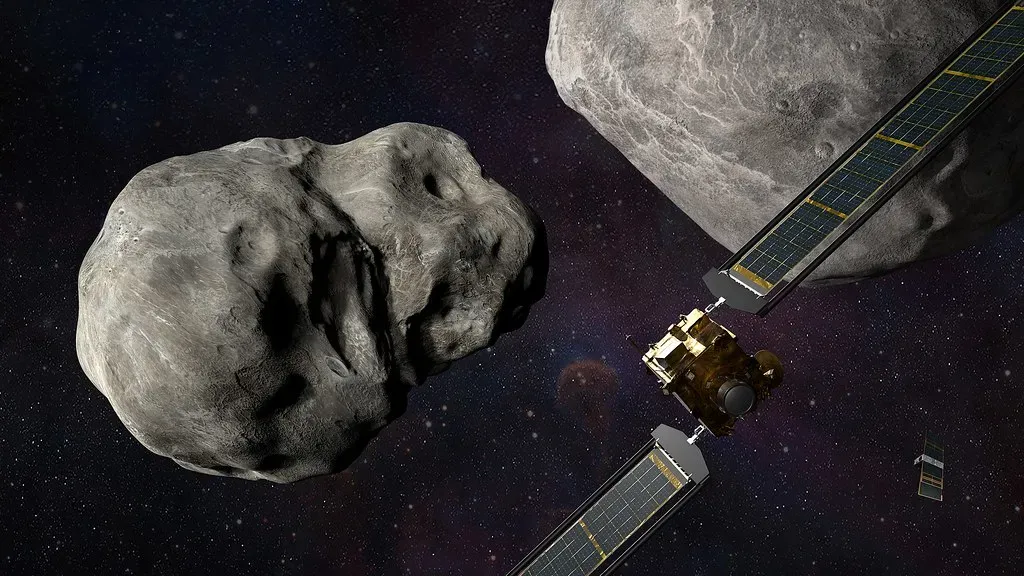
Before you reach for the nuclear option, you have to understand what else is on the table. In 2022, NASA’s Double Asteroid Redirection Test, or DART, demonstrated the feasibility of altering the trajectory of a medium-sized asteroid by crashing a van-sized spacecraft into it. Scientists found the impact changed the orbit of Dimorphos, an approximately 160-meter-wide asteroid. That was genuinely historic. A real spacecraft hit a real asteroid and moved it. Humanity’s first real planetary defense test.
Prior to DART’s impact, Dimorphos orbited Didymos once every 11 hours and 55 minutes. After DART’s impact, that time shortened to 11 hours and 23 minutes, a difference of 32 minutes. Impressive stuff. However, with very large asteroids, even with plenty of advance notice, a kinetic impactor, or even a fleet of kinetic impactors, may not be sufficient to prevent an Earth impact. The bigger, heavier, and faster the incoming rock, the less a spacecraft collision can realistically do.
Enter the Nuclear Option
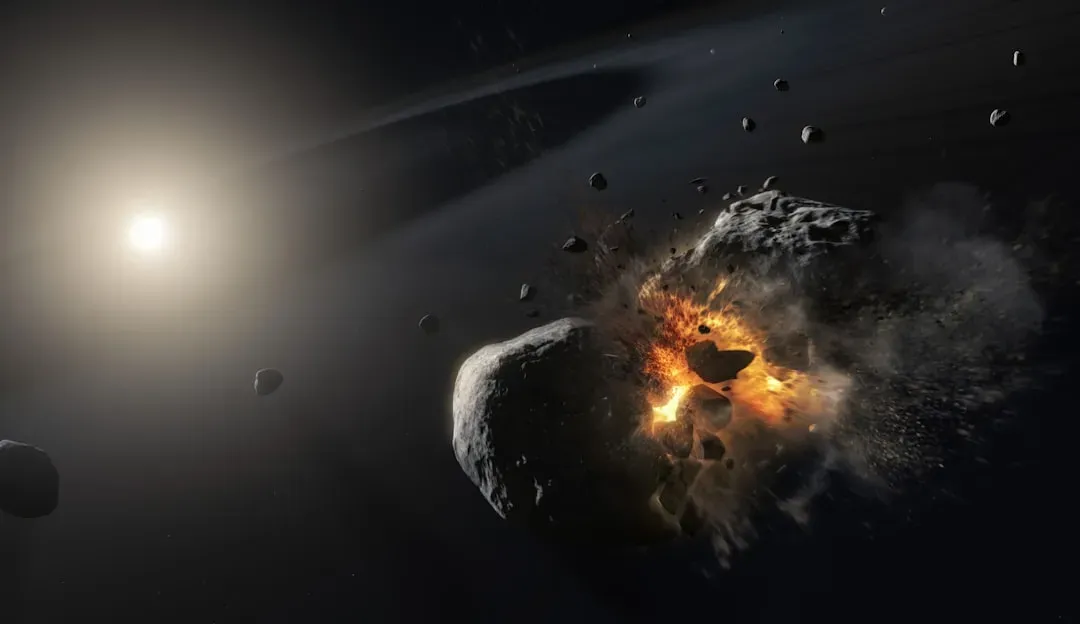
Here is where things get genuinely fascinating. Think of the difference between nudging a parked car with your hand versus hitting it with a freight train. In theory, nuking an asteroid has advantages over a kinetic mission like DART. The biggest is energy – nuclear explosions produce more energy per mass than any other human technology. That energy advantage is enormous, almost incomprehensible. Nothing we have built comes even close.
At Lawrence Livermore National Laboratory, researchers are working on a solution called nuclear deflection. For this strategy, a nuclear explosive device would be triggered near an asteroid, sending it off its orbital path and ablating material from its surface. As one researcher put it, because there is just so much energy in a nuclear explosive device, scientists would be able to apply a much bigger push to the asteroid than they could get from a kinetic impactor. Critically though, the nuke isn’t necessarily meant to explode the asteroid. The goal is more surgical than that.
The “Stand-Off” Strategy – Not Your Movie Version
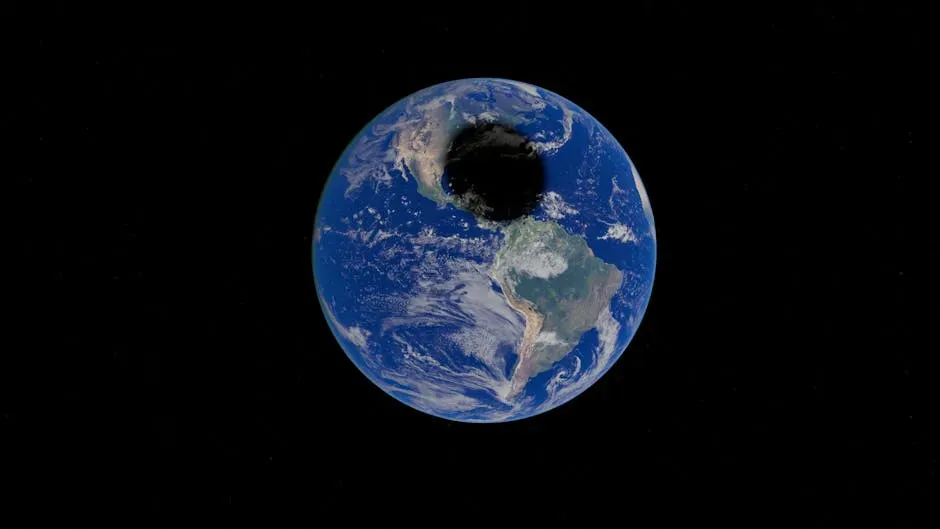
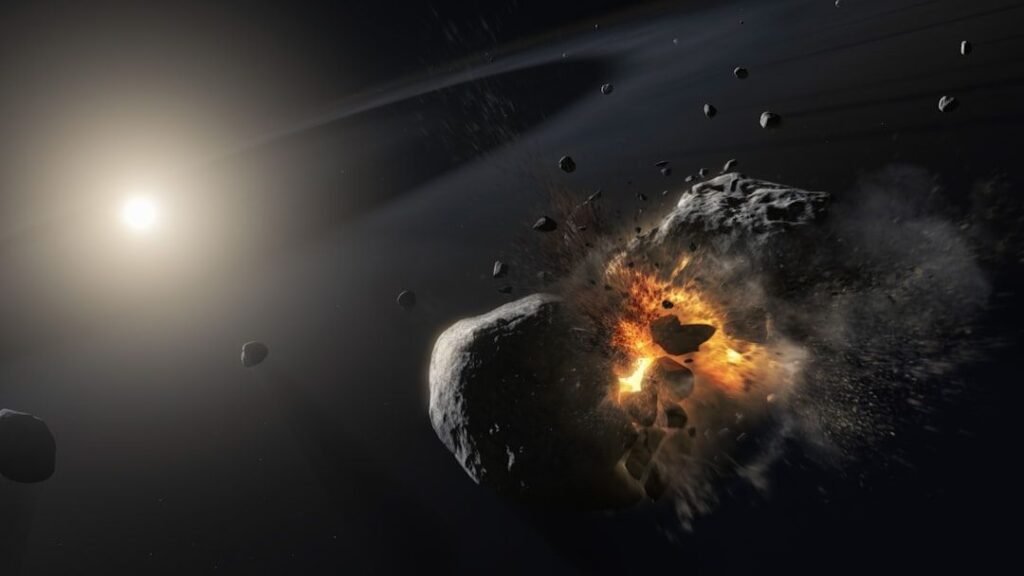
Forget the movie version where someone drills into an asteroid and detonates a bomb from inside. That approach terrifies real scientists for a very good reason. Detonating a nuclear explosive directly on or inside an asteroid runs the risk of fracturing it instead of deflecting it, resulting in many smaller and still deadly meteorites raining down onto Earth. The safer strategy would be a nuclear detonation at some distance away from a threatening asteroid – an approach called a “stand-off nuclear explosion.”
Think of it like this. Imagine you want to redirect a giant boulder rolling toward your house. You don’t smash it with a hammer and risk a shower of sharp shards flying at you. Instead, you set off a controlled blast nearby and let the shockwave do the steering. Such a stand-off blast is theoretically more likely to deflect the asteroid than break it apart. The Sandia team’s computer modeling suggests the nuclear detonation strategy should work at scales far larger than they tested in the lab, calculating that the generated force is powerful enough to successfully deflect an asteroid up to 4.4 kilometers across with a 1-megaton nuclear explosive detonating about 2 kilometers from the space rock’s surface.
The Z Machine and the Lab Experiments That Changed Everything
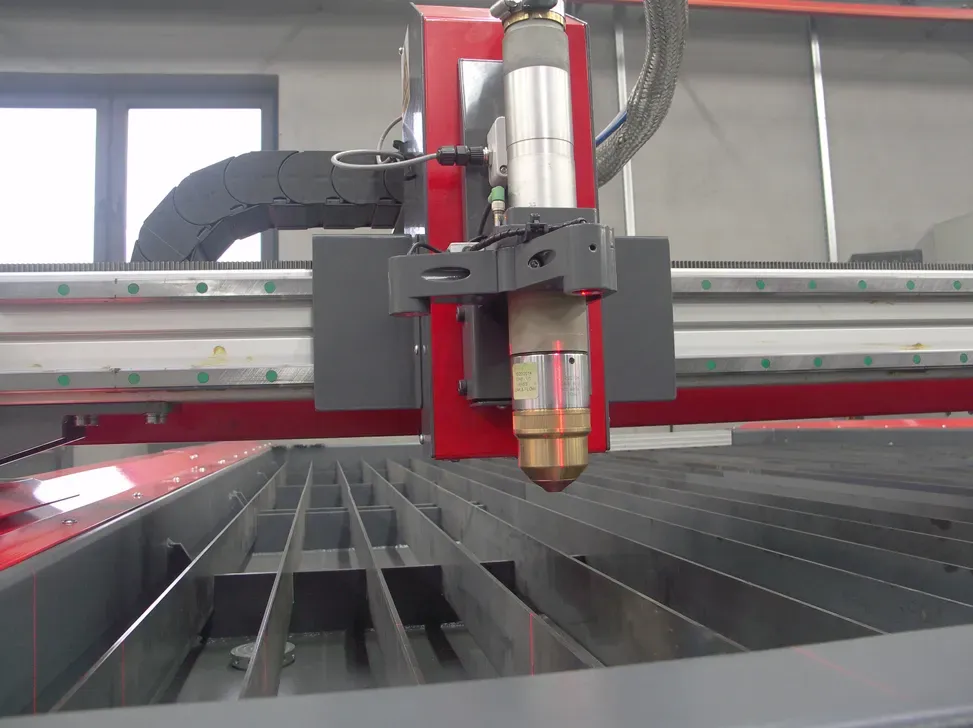
You can’t exactly test a nuclear asteroid deflection in your backyard. So how do scientists actually study this? The answer is brilliantly creative. Physicist Nathan Moore and a team of Sandia scientists developed a method to record how much change in direction, or momentum, would be imparted to mock-asteroid material when subjected to powerful X-ray pulses generated by Sandia’s Z machine. The experiment uses a technique called X-ray scissors, which removes the skewing effect of friction and gravity for a few microseconds.
The team used Sandia’s vast Z machine, which uses magnetic fields to produce high temperatures and powerful X-rays. About 80 trillion watts of electricity flow through the machine at about 100 billionths of a second. That intense electrical surge compresses argon gas into a very hot plasma millions of degrees in temperature, and that emits a bubble of X-rays. Moore says the results show that the technique could be scaled up to much larger asteroids, as big as around 4 kilometers in diameter. In particular, researchers are most interested in the largest asteroids with a short warning time. Short warning time. That phrase is the key. Because the nightmare scenario isn’t a big asteroid you see coming from decades away. It’s the one that suddenly appears on the radar with years, not decades, to respond.
CERN Tested It on a Real Meteorite – and the Results Are Surprising
Just when you thought this story couldn’t get more interesting, researchers took their experiments to CERN. Instead of setting off a warhead in space, a team went to CERN’s HiRadMat facility and used a beam of protons from the Super Proton Synchrotron. They cut a slender cylinder from the iron-nickel Campo del Cielo meteorite and hit it with 27 short, intense pulses of a 440 gigaelectronvolt proton beam, recreating pressures similar to those in a nuclear stand-off explosion near an asteroid. High-speed laser sensors tracked how the metal rang like a bell after each hit, measuring tiny vibrations across the surface in real time.
The results genuinely surprised the scientific community. Previous assumptions had suggested that nuclear explosions would likely break apart a threatening asteroid into smaller, more dangerous fragments. However, the latest findings suggest that, under certain conditions, an asteroid may actually hold its integrity even when subjected to extreme forces, reducing the risk of fragmentation. The new experiment hints that for metal-rich asteroids, planners could use a more powerful device than previous models allowed without shattering the target, because the material can absorb more energy while remaining in one piece. This is a genuinely significant development, and I think it’s one of the most underreported scientific findings in planetary defense in years.
The Obstacles Standing in the Way
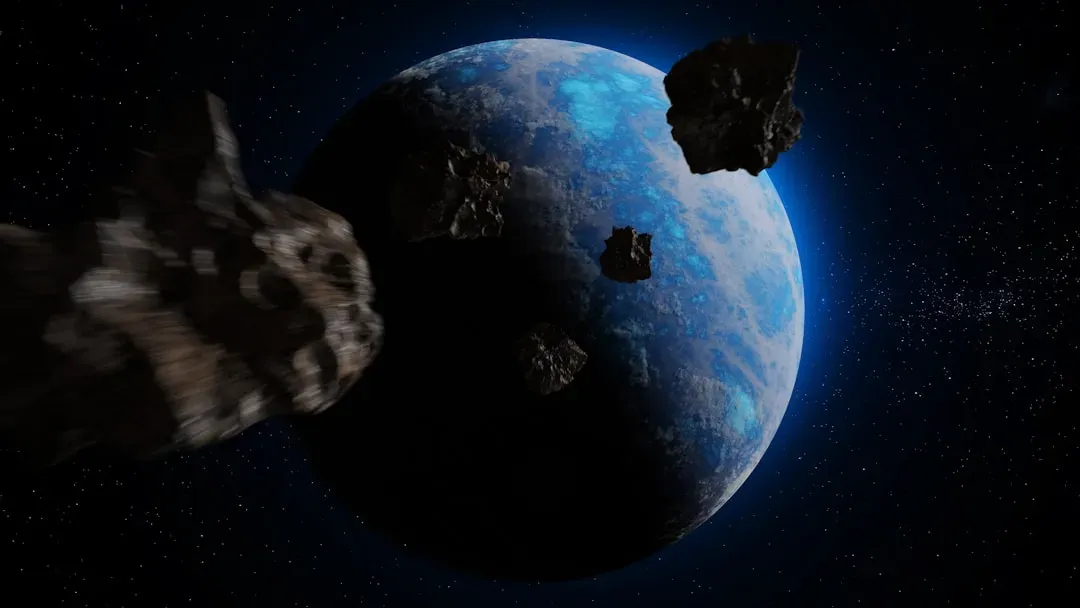
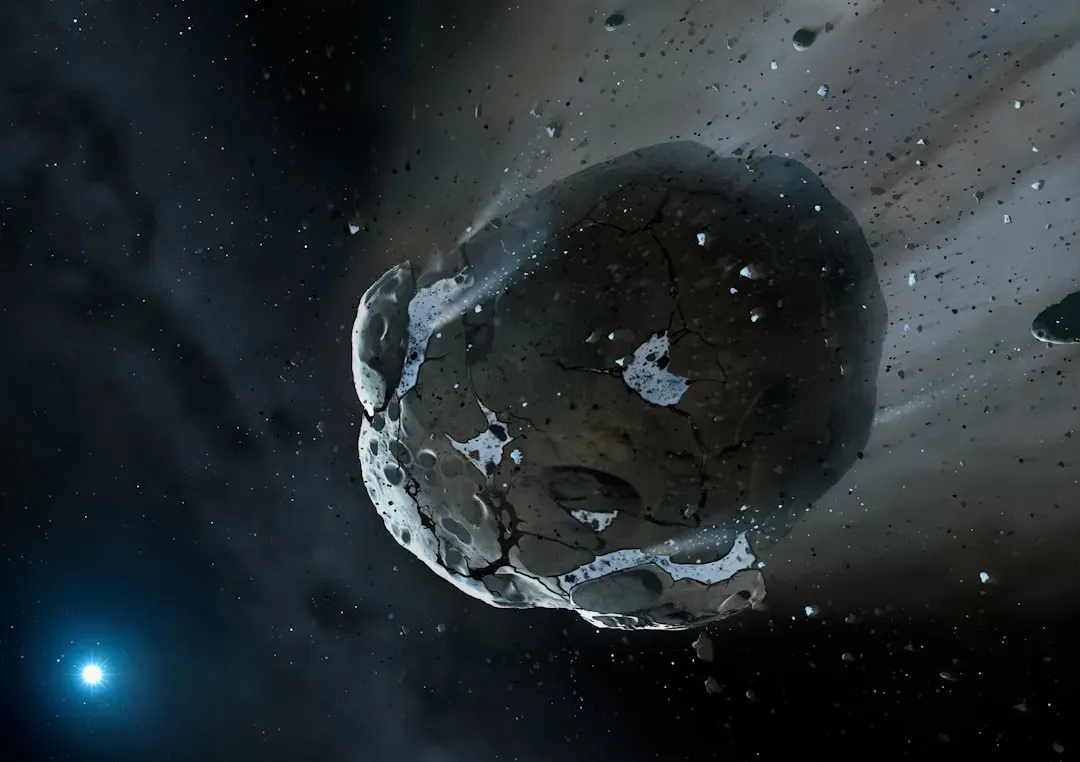
It would be easy to read all of this and think we have a ready-to-deploy solution sitting in a bunker somewhere. We don’t. The challenges are enormous. No two asteroids are alike. Each is mechanically and geologically unique, meaning huge uncertainties remain. A more monolithic asteroid might respond in a straightforward way to a nuclear deflection campaign, whereas a rubble pile asteroid – a weakly bound collection of boulders barely held together by their own gravity – might respond in a chaotic, uncontrollable way.
Then there is the legal problem. Conducting a planetary defense test in space with a nuclear device is unlikely to happen: a malfunctioning launch could spray radioactive material into the atmosphere, and any nation seeking to put nuclear warheads in space for any reason would stoke unprecedented political tensions. As one scientist put it, imagine that you slightly overestimated the energy needed for deflection, and now you have thousands of radioactive fragments falling on Earth. The worst case scenario of using the wrong amount of force is genuinely terrifying. As one research team concluded, disruption can be a very effective planetary defense strategy even for very late interventions, and should be considered an effective backup strategy should preferred methods, which require long warning times, fail.
Conclusion: Humanity’s Last Resort Might Actually Work
The story of asteroid defense is really a story about humanity slowly building the tools to protect itself from something ancient, random, and catastrophic. We’ve gone from pure helplessness – not even knowing most of the rocks flying near us – to conducting real experiments, real space missions, and real nuclear simulations. Behind the scenes, agencies such as NASA and the European Space Agency are building a layered planetary defense system. That includes early warning telescopes, missions like DART and Hera, and policy work in offices such as NASA’s Planetary Defense Coordination Office that quietly think about worst-case scenarios.
Even the recent scare of asteroid 2024 YR4, a space rock that briefly generated real alarm among scientists, showed the system working. Using data from NASA’s James Webb Space Telescope observations collected on February 18 and 26, 2026, experts from NASA’s Center for Near-Earth Object Studies refined the asteroid’s orbit and ruled out a chance of lunar impact on December 22, 2032. With the new data, 2024 YR4 is expected to pass by the lunar surface at a distance of about 13,200 miles. A close shave, yes. But a manageable one. The nuclear option remains, as scientists put it, the bottom of the toolbox. First choice is always to find hazardous objects early and nudge them gently, long before anyone worries about warheads. Still, it is remarkably reassuring to know the warhead option might actually work when everything else can’t.
The universe has been throwing rocks at Earth for 4.5 billion years. For the first time ever, we might finally be able to throw one back. What do you think – does knowing this research exists make you feel safer, or does it raise more questions than it answers?