
Gravity feels like the most reliable thing in the universe. You drop something, it falls. Simple, right? Well, here’s the thing – Earth’s gravitational pull isn’t actually the same everywhere on the planet, and for a long time, scientists couldn’t fully explain why.
The mystery runs deeper than most people realize. There are invisible pockets across Earth’s surface where gravity tugs slightly harder or softer than it should, and the reasons behind these so-called “gravity glitches” have puzzled researchers for decades. Recent findings are finally starting to crack this open in a big way. Let’s dive in.
Earth’s Gravity Has Never Been Perfectly Even
Most of us picture gravity as this smooth, invisible blanket wrapped uniformly around the planet. Honestly, that’s just not the reality. Earth’s gravitational field is lumpy, inconsistent, and surprisingly complex when you look closely enough.
The surface of the planet isn’t a perfect sphere, for one thing. It bulges at the equator and flattens at the poles. On top of that, the density of rock, water, and molten material beneath our feet varies enormously from one location to another, and each variation pulls at gravity like fingers tugging at a sheet.
Scientists have known about these irregularities for years, but mapping and understanding them in fine detail required technology that simply didn’t exist until recently. The picture that’s emerging now is stranger and more fascinating than anyone expected.
Satellites Revealed the Full Scope of the Problem
The real breakthrough came from space, not from the ground. NASA’s GRACE mission, which stands for Gravity Recovery and Climate Experiment, launched a pair of satellites that tracked subtle changes in the distance between them as they orbited Earth. When they passed over a region with stronger gravity, one satellite would accelerate slightly before the other, and that tiny gap told scientists a tremendous amount.
What GRACE revealed was essentially a gravitational map of Earth in extraordinary detail, showing zones where gravity was noticeably stronger or weaker than average. Some of those anomalies were where scientists expected them to be, linked to mountain ranges or ocean trenches.
Others were far more puzzling. Vast regions in places like Hudson Bay in Canada and the Indian Ocean registered gravitational readings that didn’t match the surface features above them. Something deeper was going on.
The Hudson Bay Anomaly Points to a Slow, Ancient Process
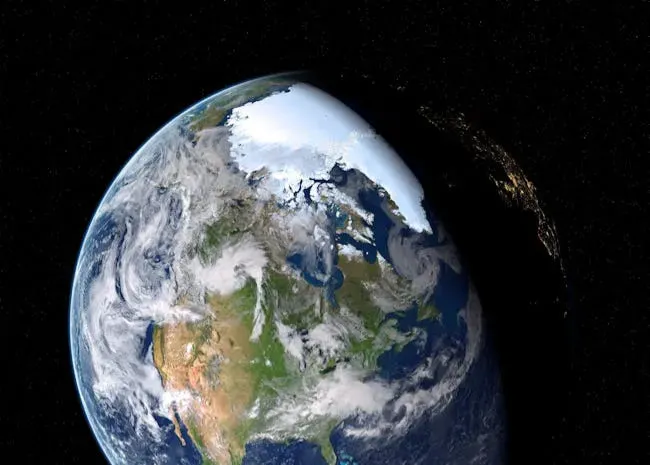
Hudson Bay has one of the most well-known gravitational low spots on Earth, a region where the pull of gravity is measurably weaker than surrounding areas. For years, the leading explanation was glacial isostatic adjustment, which is essentially the ongoing process of the land slowly rebounding after being crushed under enormous ice sheets during the last ice age.
Think of it like pressing your thumb into a foam mattress and then lifting it. The mattress bounces back, but not instantly. The process takes thousands of years.
Even though the last glacial maximum ended roughly twenty thousand years ago, Earth’s mantle is still responding to the removal of that weight. The land in Hudson Bay is still rising, millimeter by millimeter, and the gravitational signature reflects that incomplete rebound. It’s slow, ancient physics playing out in real time beneath our feet, and I find that genuinely mind-bending.
Deep Mantle Convection Is Pulling Gravity in Unexpected Directions
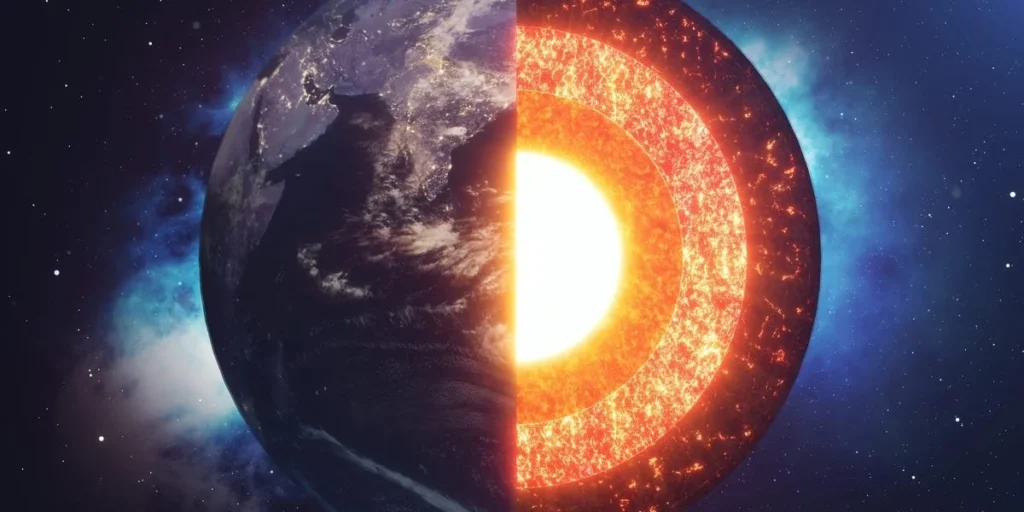
Here’s where the story gets even stranger. Glacial rebound alone doesn’t explain all of the anomalies. Scientists increasingly believe that convection currents deep within Earth’s mantle are playing a major role in shaping gravitational variations across the planet’s surface.
Mantle convection is the slow, churning movement of hot rock hundreds of kilometers below the surface, driven by heat from Earth’s core. It moves at roughly the speed of fingernail growth, but over millions of years it reshapes everything.
In some regions, cooler, denser slabs of ancient oceanic crust have sunk deep into the mantle. These dense zones pull downward with extra gravitational force. In others, upwelling plumes of hotter, less dense material push slightly against the surface from below, creating low-gravity zones above them. It’s a constantly shifting dance happening in slow motion far beneath anyone’s awareness.
The Indian Ocean Anomaly Remains One of Earth’s Great Mysteries
Of all the gravitational oddities on Earth, the Indian Ocean Low stands out as one of the most dramatic. Located in the northern Indian Ocean, this zone features some of the lowest gravitational readings anywhere on the planet. The sea level in this region actually sits lower than it would elsewhere because the gravitational pull drawing water toward it is reduced.
A 2023 study pointed to ancient, now-vanished ocean that once existed beneath what is now the Indian Ocean region. As that old oceanic material sank into the mantle millions of years ago, it may have disrupted mantle convection patterns in ways that are still creating a gravitational depression today.
It’s hard to say for sure exactly how all the pieces connect, but the emerging consensus is that it’s a combination of factors, including ancient subducted plates, hot mantle plumes rising from deep below Africa, and the ongoing movement of tectonic plates. The Indian Ocean Low is basically a geological scar left by processes that began before humans ever walked the Earth.
These Gravity Variations Have Real Consequences for Life on the Surface
You might be thinking this all sounds very abstract, like something that only matters to physicists with expensive equipment. Let’s be real though, these gravitational irregularities have surprisingly practical implications.
Satellite orbits are directly affected by Earth’s uneven gravitational field. Engineers who design missions have to account for these variations when calculating orbital paths, otherwise spacecraft drift off course over time. The GPS system you rely on for navigation is also calibrated to compensate for the fact that time actually passes at slightly different rates in different gravitational environments, something predicted by Einstein’s theory of general relativity.
On a longer timescale, understanding these variations helps scientists track melting ice sheets, monitor groundwater depletion, and study how mass is being redistributed across the planet as the climate changes. Gravity, it turns out, is one of the most sensitive instruments we have for watching Earth change in real time.
New Missions Promise to Sharpen Our Understanding Even Further
The original GRACE satellite mission ended in 2017, but its successor, GRACE-FO (Follow-On), has been delivering data since 2018 and continues to refine the gravitational portrait of Earth with improving precision. Scientists are now tracking seasonal changes in gravity caused by shifting water in rivers, aquifers, and ice caps. The resolution of this data is getting sharper every year.
Looking ahead, researchers are proposing next-generation satellite constellations that could map gravitational changes at even finer scales. The goal isn’t just academic curiosity. Better gravity maps could help predict where tectonic stress is building up, potentially improving earthquake risk models.
There’s also something almost philosophical about all of this. The force we experience every single second of our lives, something so fundamental it feels like a given, is actually a dynamic, shifting, evolving feature of our planet. Earth is alive in ways most people never think about.
Conclusion: Gravity Is More Alive Than We Thought
What started as a subtle inconsistency in satellite measurements has opened a window into some of the deepest and oldest processes shaping our planet. Earth’s uneven gravitational field is a fingerprint of its interior life, its ancient history, and its ongoing transformation.
The idea that the ground beneath us is still recovering from ice that melted twenty thousand years ago is genuinely humbling. The idea that invisible currents of molten rock flowing deep in the mantle are silently influencing the gravitational field above us is something close to poetic.
Gravity isn’t just a background force. It’s a storyteller, and scientists are only just beginning to read the full story it’s telling. Next time you feel your feet on the ground, it might be worth wondering whether the ground is pulling back on you with quite the same force as it does on someone halfway across the world. What do you think about it? Tell us in the comments.