
There is something enormous pulling our galaxy through space, and for decades, astronomers could barely agree on what it was. The Shapley Supercluster, a vast collection of galaxies sitting roughly 650 million light-years away, has quietly been exerting a gravitational influence on the Milky Way for longer than human civilization has existed. Most people have never heard of it.
What recent research is revealing about this structure is genuinely mind-bending. From its sheer scale to its role in our cosmic motion, Shapley is forcing scientists to rethink some foundational assumptions about how the universe is put together. Let’s dive in.
What Exactly Is the Shapley Supercluster
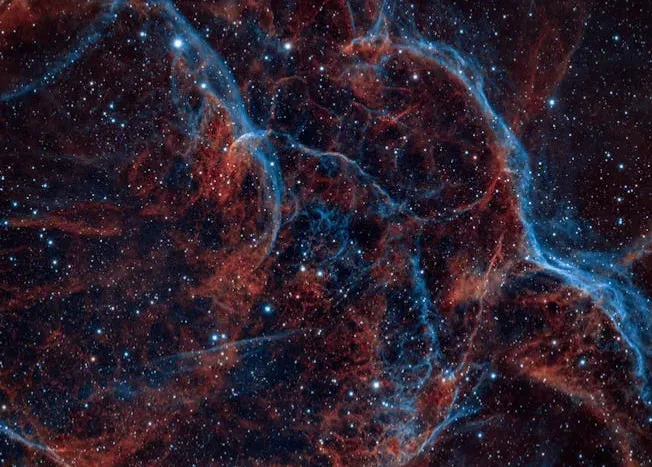
Picture the largest thing you can possibly imagine, then multiply it by something absurd. The Shapley Supercluster is one of the largest known concentrations of matter in the observable universe, containing thousands of individual galaxies bound together across hundreds of millions of light-years. It sits in the direction of the constellation Centaurus, and its mass is so staggering that scientists estimate it contains the equivalent of roughly ten million billion times the mass of our Sun.
It was first identified by American astronomer Harlow Shapley back in 1930, which is honestly remarkable considering how limited observational tools were at the time. For much of the twentieth century, it was treated as an interesting footnote. Now, it’s central to how we understand large-scale cosmic structure and the motion of our own galaxy.
The Discovery That Changed Everything
Here’s the thing about the Shapley Supercluster. For years, scientists knew our galaxy was moving through space at an unusual velocity, roughly about 600 kilometers per second relative to the cosmic microwave background radiation. The dominant explanation pointed to a mysterious gravitational attractor known as the Great Attractor, located much closer to us than Shapley.
New research suggests Shapley plays a far bigger role in that motion than previously understood. It is not just a distant curiosity. It is actively pulling the Milky Way, along with the entire Local Group of galaxies, toward its massive gravitational core. The implications of that single realization cascade through several fields of astronomy simultaneously.
How Scientists Mapped Its True Scale
Mapping a supercluster is nothing like drawing a map of a country or even a continent. Astronomers use redshift surveys, which measure how much light from galaxies has stretched during its journey toward us, to reconstruct the three-dimensional shape of these enormous structures. The Shapley Supercluster spans an estimated 650 million light-years in extent, making it almost impossible to conceptualize in human terms.
Recent mapping efforts have used increasingly sophisticated tools to trace the filaments and voids that define Shapley’s boundaries. Think of it like trying to map the ocean floor while floating on the surface with only sound waves. The data keeps improving, and with each pass, the structure appears even more complex and interconnected than previous models suggested.
Our Motion Through Space and the Role Shapley Plays
Honestly, the idea that our galaxy is being gravitationally tugged by something 650 million light-years away sounds almost too dramatic to be real. Yet the math holds up consistently across independent research teams. The Milky Way is not sitting still. It is moving, and a significant fraction of that movement traces back to Shapley’s gravitational influence.
The tricky part is separating Shapley’s pull from that of the Great Attractor, which lies between us and Shapley at a distance of roughly 250 million light-years. Scientists have spent decades untangling these two overlapping gravitational influences, and the emerging picture suggests Shapley contributes somewhere close to half of our total observed peculiar velocity. That’s a bigger share than most models assumed even a decade ago.
The Cosmic Web Connection
The Shapley Supercluster does not exist in isolation, and that’s an important point that sometimes gets lost in popular coverage. It sits within the larger structure astronomers call the cosmic web, a vast network of galaxy filaments, walls, and voids that spans the entire observable universe. Shapley represents one of the densest nodes in that web within our observable neighborhood.
Understanding Shapley helps scientists understand how matter clusters in the universe more broadly. It’s a little like studying a particularly dense city to understand urban planning patterns everywhere. The rules governing how galaxies clump together, how dark matter distributes itself, and how voids form between structures, all of these questions get sharper answers when researchers study extreme cases like Shapley.
What Dark Matter Has to Do With It
You cannot talk about the Shapley Supercluster without talking about dark matter, even though dark matter itself remains one of science’s most stubborn mysteries. The visible mass of the galaxies in Shapley accounts for only a fraction of the gravitational pull the structure exerts. The vast majority of its mass is dark matter, invisible to every instrument we currently have except through its gravitational effects.
This makes Shapley a kind of natural laboratory for studying dark matter at scale. Scientists can observe how the structure curves the paths of galaxies around it and work backward to estimate how dark matter is distributed within the cluster. I think this is one of the most underappreciated aspects of supercluster research. The biggest structures in the universe might end up teaching us the most about the universe’s most invisible ingredient.
Why This Research Matters for the Future of Cosmology
Upcoming telescope projects are expected to dramatically sharpen our picture of the Shapley Supercluster and its role in cosmic dynamics. The Euclid space telescope, launched by the European Space Agency and currently returning data as of 2026, is specifically designed to map the large-scale structure of the universe with precision that previous instruments could not match. Shapley is a prime target.
What scientists learn here has real consequences for foundational cosmological questions. How did large-scale structure form in the early universe? How does gravity behave across cosmic scales? Is the standard cosmological model missing something important? Shapley does not have all the answers, but it keeps pointing researchers in directions that matter. The universe is clearly larger, more gravitationally complex, and more interconnected than any single theory has cleanly explained so far.
The Shapley Supercluster sits at the intersection of everything cosmologists are trying to figure out right now. From dark matter to galactic motion to the large-scale architecture of the universe, it touches nearly every open question in modern astronomy. What does it say about our place in the cosmos that something 650 million light-years away is quietly shaping the path our galaxy takes through space? What do you think about it? Drop your thoughts in the comments.