
Have you ever wondered why you experience the world the way you do? Not just how your brain processes information, but why it feels like something to be you? You’re looking at a screen right now, reading these words, and there’s a quality to that experience that somehow arises from meat and electricity. Scientists have mapped the brain in stunning detail. They can tell you which neurons fire when you see red, which circuits activate when you feel pain, and even predict some of your decisions before you’re aware of making them. Yet here’s the puzzling part: they still can’t explain the most basic feature of conscious experience itself.
As we enter 2026, researchers find themselves more humble than they left 2024, with better maps and faster processors yet the central question remaining as elusive as ever. The hard problem comes after explaining all the functions of the brain and being left with a puzzle: why is the carrying out of these functions accompanied by experience? Let’s dive into what makes this mystery so stubbornly resistant to scientific investigation, and why it might just change everything we think we know about ourselves.
What Scientists Call the Hard Problem
The hard problem of consciousness explains why and how humans have qualia, phenomenal consciousness, or subjective experience, contrasted with the easy problems of explaining physical systems that discriminate, integrate information, and perform behavioral functions. Think of it this way: when you stub your toe, scientists can describe the nerve signals traveling from your foot to your brain, the processing in various brain regions, and even how that leads to you yelping. That’s what philosophers call an “easy” problem.
The hard problem is the question of why these mechanisms are accompanied by the feeling of pain or why these feelings feel the particular way they do, with facts about neural mechanisms not leading to facts about conscious experience. The truly perplexing bit isn’t that your brain processes the information. It’s why there’s something it’s like to experience that pain at all. Why isn’t all this processing happening in the dark, so to speak, without any felt experience?
The Explanatory Gap That Won’t Close
Here’s where things get really interesting. The gap between experience and the sorts of things dealt with in modern physics is simply too wide to be bridged at present. You can know every physical fact about color wavelengths, photoreceptors in the eye, and neural firing patterns in the visual cortex. Yet that complete physical description somehow leaves out what it’s actually like to see the brilliant crimson of a sunset.
It’s hard to imagine how science could possibly expand its framework to accommodate the redness of red or the awfulness of fingernails on a chalkboard. This isn’t just a temporary gap in our knowledge that better brain scanners will fix. It’s a fundamental puzzle about how objective, third-person scientific descriptions could ever capture first-person subjective experience. Some researchers call this the “explanatory gap,” and despite decades of neuroscience advances, it hasn’t gotten noticeably smaller.
Why Your Qualia Remain Mysterious
Qualia are defined as instances of subjective, conscious experience, with examples including the perceived sensation of pain of a headache, the taste of wine, and the redness of an evening sky. These qualities of experience have some remarkable properties that make them scientifically slippery. They’re entirely private to you. They can’t be communicated directly to anyone else. They’re intrinsic to your experience rather than relational.
Qualia are ineffable and cannot be communicated or apprehended by any means other than direct experience, and all interpersonal comparisons of qualia are systematically impossible. I can never truly know if your experience of blue matches mine or if when you bite into a lemon, you taste what I taste. We use the same words but potentially inhabit utterly different experiential worlds. This privacy isn’t just a practical limitation of current technology. It might be built into the very nature of subjective experience itself.
The Binding Problem Nobody Can Solve

The binding problem is the problem of how objects, background, and abstract or emotional features are combined into a single experience, and it is considered a problem because no complete model exists. Your brain processes color in one region, shape in another, motion somewhere else entirely. Different areas handle sounds, smells, the feeling of your body in space. Yet somehow you don’t experience a chaotic jumble of disconnected sensations.
The human brain is composed of billions of neurons over more than a thousand cubic centimeters, and neural activity unfolds in time over tens of milliseconds, which we nevertheless experience as an integrated phenomenal moment. How does your brain bind all these scattered processes into the unified movie of your conscious experience? Honestly, nobody really knows. Various theories propose temporal synchronization, convergence zones, or electromagnetic fields, but each has significant holes. The unity you experience every waking moment remains scientifically unexplained.
Neural Correlates Don’t Equal Explanations
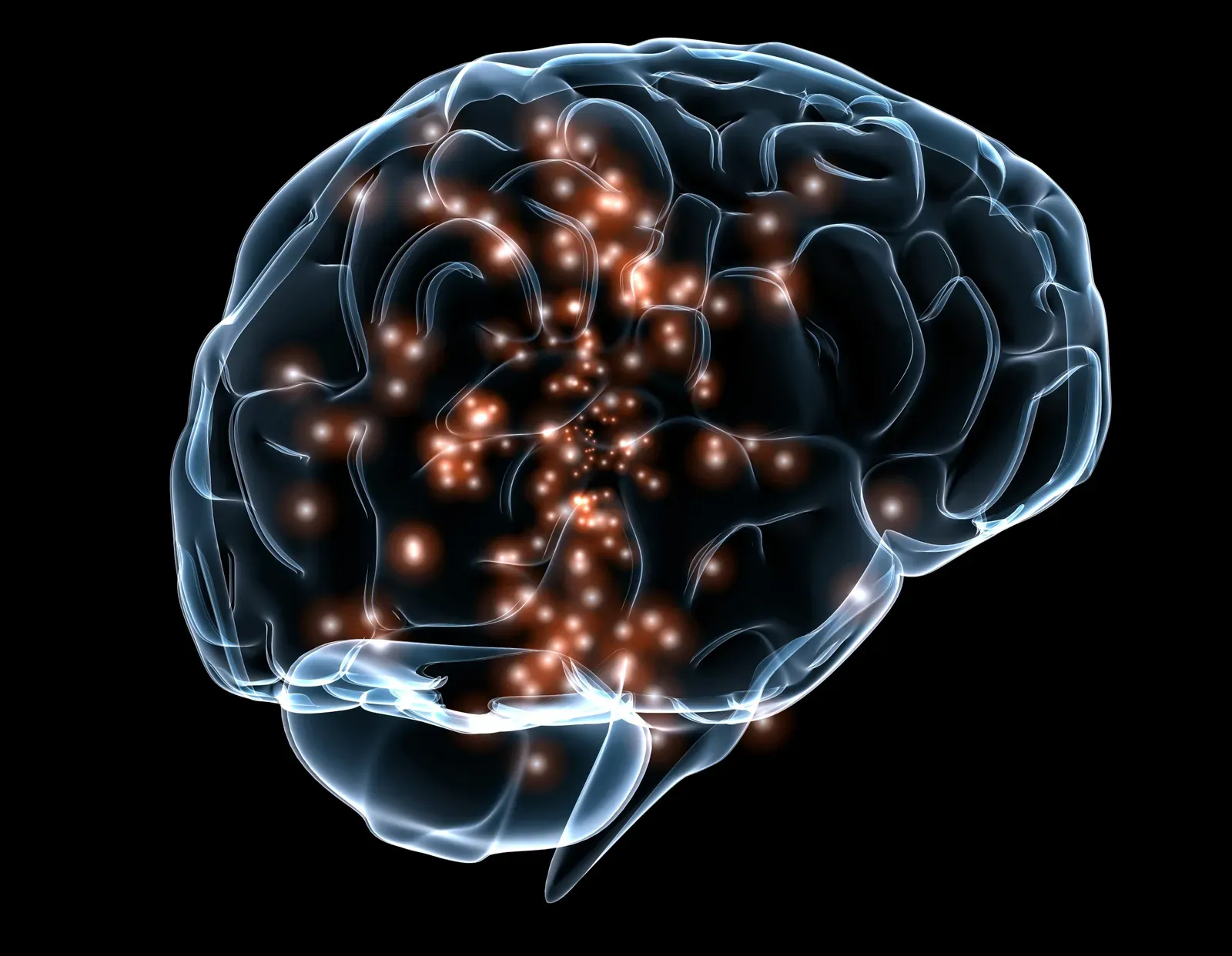
The neural correlates of consciousness are the minimal set of neuronal events and mechanisms observed to occur along with mental states to which they are related, discovered through empirical approaches to find neural changes which correlate with specific experiences. Scientists have gotten pretty good at finding which brain areas light up during conscious experiences. They can identify neural patterns that consistently accompany visual awareness, pain perception, or emotional states.
Understanding the neural correlates of consciousness may be a step toward a causal theory, but discovering and characterizing them does not offer a causal theory that can explain how particular systems experience anything. Finding correlations is like noticing that whenever your car moves, the wheels turn. That’s useful information, sure. However, it doesn’t explain how the engine converts fuel into motion or why movement happens at all rather than nothing happening. The correlations map the territory but don’t crack the code of how brain states become felt experiences.
When Philosophers Imagine Zombies

The philosophical zombie is a complicated mechanism set up to behave exactly like a human being with the same information processing in its brain, but with no consciousness, such that it screams and runs away when stuck with a knife but doesn’t actually feel pain. This thought experiment might sound like science fiction silliness, but it highlights something crucial about the hard problem. Can you imagine a being that’s physically identical to you, atom for atom, behaving exactly as you do, yet experiencing nothing at all inside?
Those on Team Chalmers believe that if all there was to a human being were the mechanistic processes of physical science, we’d all be zombies, and given that we’re not zombies, there must be something more going on in us to explain our consciousness. If such zombies are even conceivable, it suggests consciousness isn’t automatically explained by physical processes alone. Something extra seems required. What that something might be remains the trillion-dollar question that keeps philosophers and neuroscientists arguing in conference halls worldwide.
Quantum Theories and Desperate Measures
A new theory suggests that consciousness might arise from macroscopic interactions between the zero-point field which permeates all space and glutamate, which could help explain why quantum processes can occur within the brain and why we lose consciousness under anesthesia. When conventional neuroscience hits a wall, some researchers turn to quantum mechanics for answers. The logic goes something like this: consciousness is mysterious, quantum mechanics is mysterious, so maybe they’re related.
Stephen Hawking once wrote that Penrose’s argument seemed to be that consciousness is a mystery and quantum gravity is another mystery so they must be related, and until we answer that ever-elusive hard problem, all ideas are on the table. It’s worth being skeptical here. Quantum effects typically wash out at the warm, wet, noisy scales where brain activity happens. Still, the persistence of these theories shows how desperate scientists are to explain consciousness. When you can’t crack a problem with standard tools, you reach for the exotic ones, even if it’s a long shot.
Recent Research Offers Few Answers
Recent findings from 2024-2025 show that consciousness is dissociable from the narrative self, validating predictions that the Hard Problem framework cannot generate. Despite massive research investments, huge datasets, and sophisticated brain imaging, recent years haven’t solved the core mystery. Some researchers now argue the hard problem itself is incoherent or needs reframing. Others double down, insisting we’re asking the right questions but lack the conceptual tools to answer them yet.
We enter 2026 more humble than we left 2024, with confident predictions of a final theory having quieted down, replaced by thoughtful silence. The adversarial collaborations, the competing theories tested head to head, the increasingly precise measurements all add pieces to the puzzle. Yet the central question stubbornly refuses to yield. The latest technology can show us where and when consciousness correlates with brain activity, but not why or how objective physical processes become subjective experience.
Why Some Think We’ll Never Know
New mysterianism proposes that the human mind in its current form will not be able to explain consciousness, with Colin McGinn drawing on Noam Chomsky’s distinction between problems which are solvable and mysteries which human cognitive faculties are unequipped to ever understand. Maybe our brains simply aren’t built to understand themselves at this level. Think about it: asking a brain to fully explain consciousness is like asking your eye to see itself without a mirror.
The brain is a product of evolution and just as animal brains have their limitations, we have ours, with brains that can’t hold a hundred numbers in memory or visualize seven-dimensional space and perhaps can’t intuitively grasp why neural information processing should give rise to subjective experience. Our cognitive toolkit evolved to help us survive and reproduce, not to solve abstract metaphysical puzzles about the nature of experience. Some philosophers and scientists increasingly suspect that consciousness might permanently lie beyond the reach of human understanding. It’s a humbling thought, but it might be true.
What This Means for You and Me
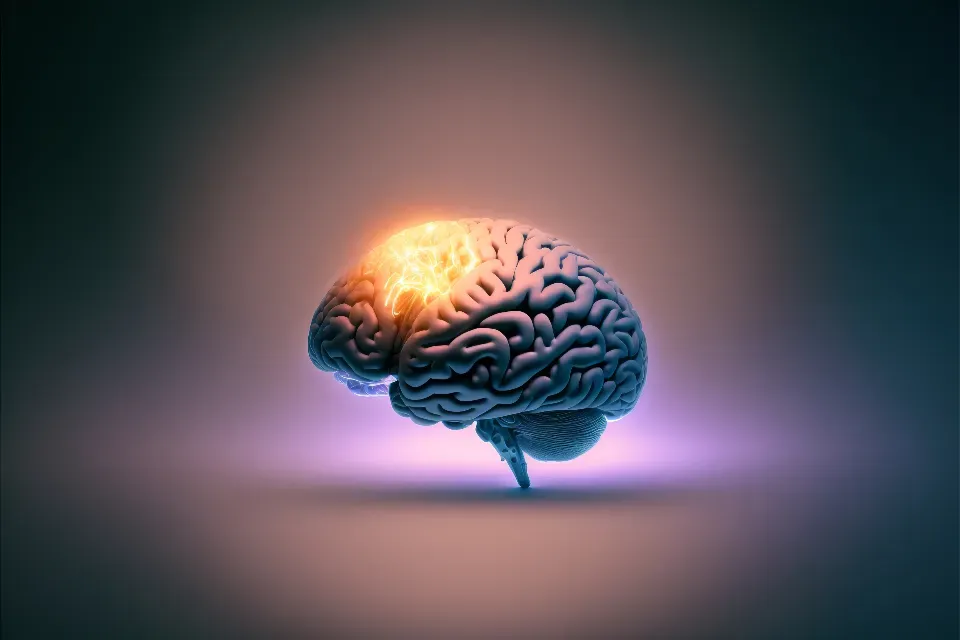
This gap, the space between the neuron and the feeling, is where we live, where art comes from, where faith takes root, where the mystery breathes. The persistence of the hard problem isn’t just an academic curiosity. It touches something essential about what it means to be human. Your inner life, that stream of sensations and feelings and thoughts, remains scientifically mysterious even as we map every neuron and track every spike of activity.
Without human consciousness, researchers would not be studying human consciousness, and the difficulty is that element of the problem is inescapable, which dooms the effort to treat human consciousness as a mere subject of research. There’s something irreducible about being a conscious creature that resists being turned into just another object of scientific study. Your experiences aren’t just facts to be catalogued. They’re the very condition that makes cataloguing anything possible. Science happens within consciousness, not the other way around, which might explain why consciousness keeps slipping through science’s fingers.
The hard problem of consciousness remains unsolved not because scientists aren’t smart enough or don’t have good enough tools. It might be unsolved because it represents a fundamentally different kind of question than science typically tackles. The hard problem is explaining why we experience the world the way we do, and current science has nothing to say about subjective phenomenal experience. As you read this final sentence, you’re experiencing something right now. That experience exists, undeniably real to you, yet science can’t quite explain why it exists at all. Pretty wild, isn’t it?
What do you think about this enduring mystery? Does it change how you think about your own consciousness?