

What if everything you thought you knew about consciousness was only half the story? For decades, scientists have debated what makes you “you” – what transforms raw brain activity into the living, breathing experience of being aware. Most theories point to neurons, chemistry, electrical signals. The usual suspects.
Here’s the thing though. A growing body of research is now pointing to something far more elusive, something you can’t see under a microscope or catch on a standard brain scan. An energy field. One that may be the missing piece in one of the greatest puzzles in all of science. Stay with me, because what comes next genuinely changes how you think about your own mind.
The Idea That’s Turning Neuroscience Upside Down
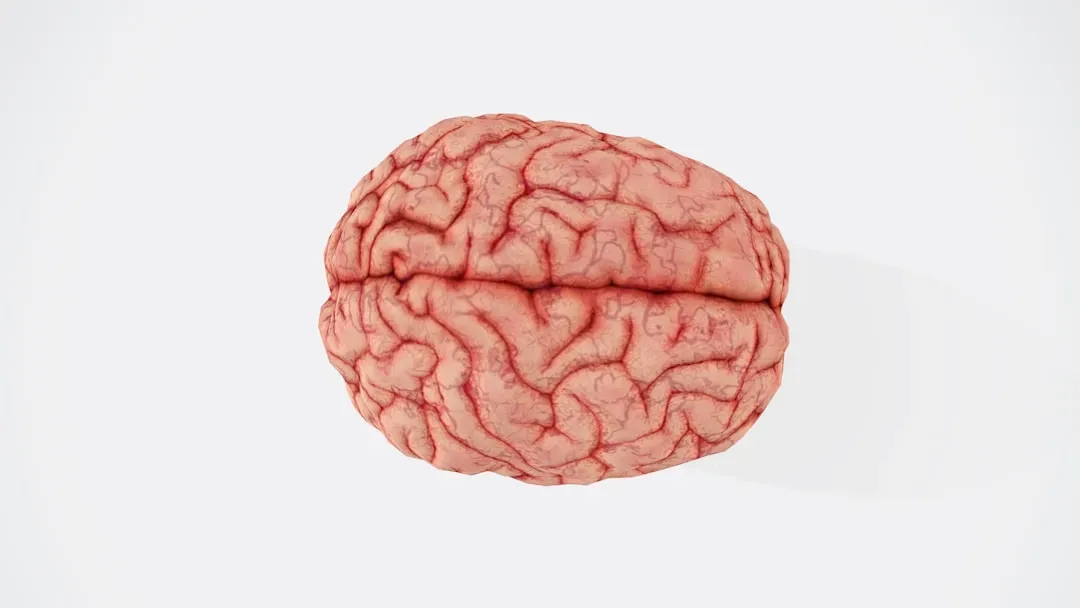
Imagine the brain as an orchestra. You’ve got hundreds of instruments, each playing their own part – neurons firing, chemicals rushing, electrical pulses bouncing around. Now imagine that the music itself, the actual sound that fills the room, is not produced by any single instrument but by the combined vibration in the air. That’s roughly the idea behind what researchers are calling the brain’s electromagnetic field theory of consciousness.
The central claim is striking. Consciousness doesn’t live inside any one neuron or cluster of neurons. Instead, it emerges from the electromagnetic field that all that neural activity collectively generates. This field isn’t just a byproduct. Some scientists now believe it’s the actual seat of conscious experience. It’s a shift in perspective that honestly feels a little mind-bending the first time it lands.
What Exactly Is This Energy Field?
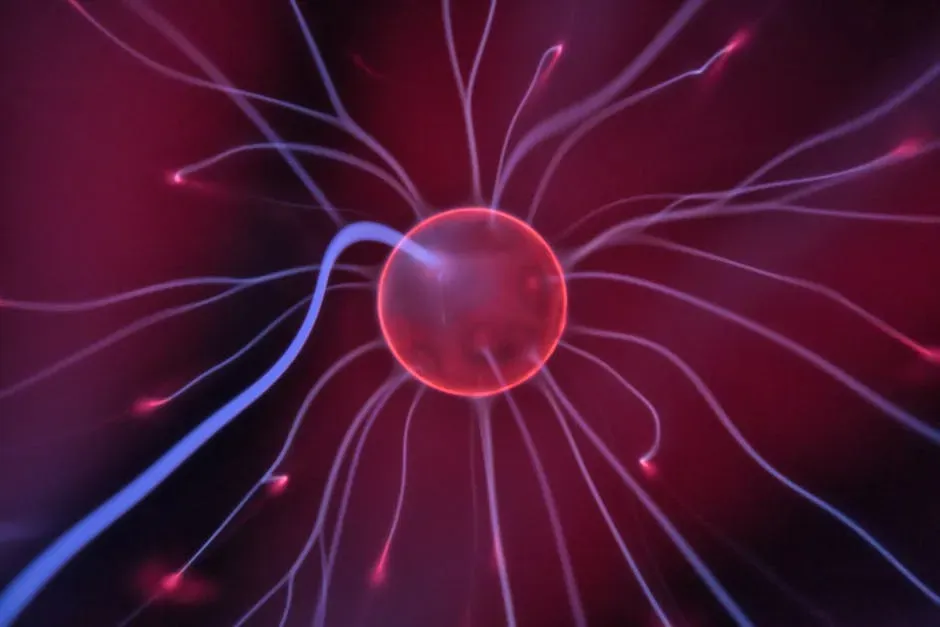
Every time a neuron fires, it generates a tiny electrical signal. When billions of neurons fire in coordinated patterns, those signals combine to create a measurable electromagnetic field around and within the brain. This isn’t science fiction – researchers can detect these fields using tools like electroencephalography, more commonly known as an EEG. What’s new is the argument about what that field actually does.
The traditional view treats the electromagnetic field as a kind of exhaust, a side effect of the real work happening inside the neurons themselves. The newer, more controversial theory flips that completely. Proponents argue the field actively influences neural activity, feeding back into the brain and shaping what you experience, think, and feel. It’s less like exhaust and more like the engine itself, or at the very least, a co-pilot sitting right next to it.
The Science Behind the Theory

The researcher most closely associated with this line of thinking is Johnjoe McFadden, a molecular biologist at the University of Surrey. His “Conscious Electromagnetic Information” theory, often shortened to CEMI theory, proposes that the brain’s electromagnetic field integrates information from across the brain into a unified conscious experience. It attempts to explain something that has baffled philosophers and scientists alike – why our experience feels whole and singular rather than fragmented.
Think about it this way. Right now, you’re reading these words, hearing ambient noise around you, feeling the weight of your own body, maybe noticing the temperature of the room. All of that arrives through completely separate sensory channels. Yet somehow it all feels like one continuous experience. McFadden’s theory suggests the electromagnetic field is what ties it all together, acting like a broadcasting system that unifies scattered signals into the seamless movie of your life.
Why This Challenges the Neuron-First Worldview
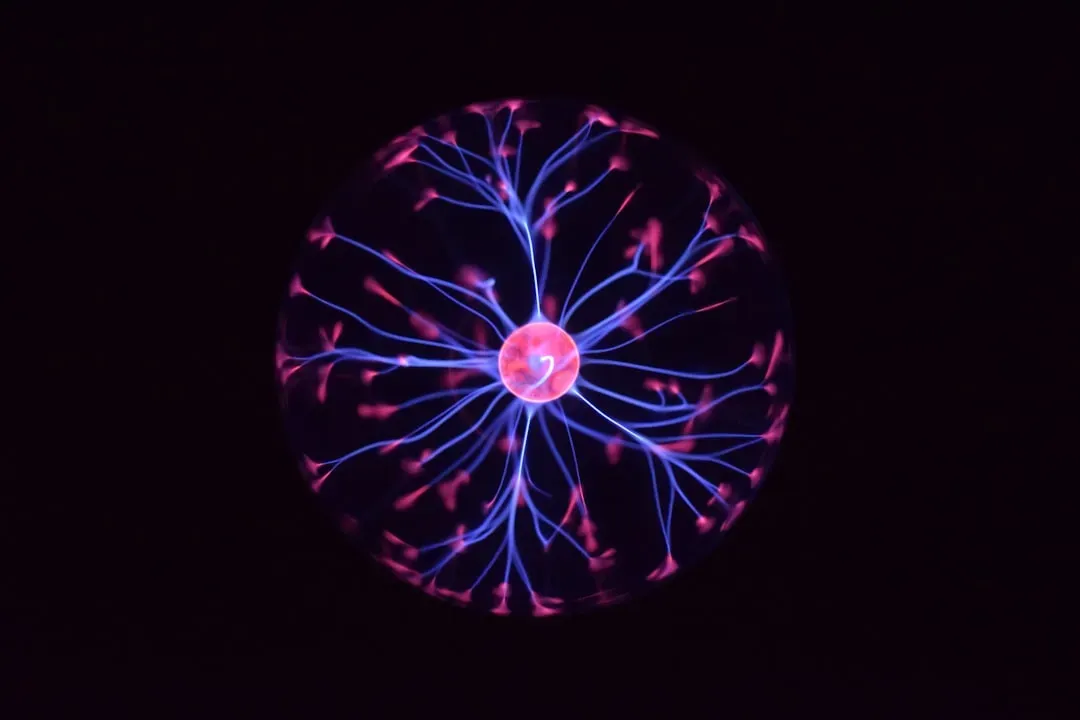
Standard neuroscience treats neurons as the fundamental unit of thought and consciousness. Find the right cluster of neurons, the thinking goes, and you’ve found the source of a memory, emotion, or conscious experience. It’s a tidy framework, and it’s produced enormous breakthroughs over the past century. I’m not dismissing any of that.
However, this framework runs into a serious problem called the “binding problem.” How does the brain stitch together separate pieces of information into a single, unified experience? Neurons communicate point to point, like a telephone network. The electromagnetic field, by contrast, spreads across the entire brain simultaneously, making it a far more elegant candidate for something that needs to be everywhere at once. That’s a genuinely compelling argument, even if it’s still deeply contested.
Consciousness Without the Field – Would It Even Be Possible?

Here is where things get philosophically dizzying. Some researchers exploring this theory suggest that without the electromagnetic field, neural activity alone might not produce conscious experience at all. The neurons could still fire, the brain could still process information, but there would be no “inner light,” no subjective feeling of being alive and aware. It’s the scientific version of the old philosophical zombie thought experiment.
Roughly speaking, it’s hard to say for sure whether anyone could ever definitively prove this experimentally. Consciousness is notoriously difficult to measure. You can observe behavior, you can scan brain activity, but the raw feeling of experience – what philosophers call “qualia” – remains stubbornly invisible to instruments. What this theory does is give scientists a new physical target to investigate, a field rather than just a cell, which is actually a significant methodological step forward.
What Anesthesia and Brain Injuries Tell Us

One compelling source of indirect support for the field theory comes from studying what happens when consciousness disappears. General anesthesia, for instance, doesn’t simply “turn off” neurons. It profoundly disrupts the brain’s electromagnetic coherence – the organized, synchronized patterns of the field – before anything else dramatically changes at the cellular level. That sequence of events is hard to explain if neurons alone are responsible for consciousness.
Similarly, certain brain injuries produce outcomes that don’t map neatly onto neuron loss alone. Patients with significant neuron damage sometimes retain surprisingly intact conscious experience, while others with less obvious cellular damage lose coherent awareness almost entirely. These cases have puzzled clinicians for years. If the electromagnetic field is doing the heavy lifting, some of these contradictions start to make a lot more sense, even if the full picture is still coming into focus.
Where the Research Goes From Here

Let’s be real – this theory is still very much in development, and the scientific community is far from unanimous. There are credible critics who argue the electromagnetic fields generated by the brain are too weak to have the causal power that CEMI theory assigns them. Others point out that proving the field “does” something to consciousness rather than simply correlating with it is an enormous experimental challenge. The skepticism is fair, and honestly, necessary.
Still, the momentum is real. Advances in neuroimaging and electromagnetic measurement tools are giving researchers unprecedented ability to study field dynamics in living brains. Some teams are exploring whether externally applied electromagnetic fields can influence conscious states in predictable ways. The stakes couldn’t be higher. If even a fraction of this theory holds up, it would represent one of the most profound revisions to our understanding of the human mind in modern scientific history. And for a field as stubbornly mysterious as consciousness, that’s not nothing.
A Final Thought Worth Sitting With

There’s something almost poetic about the idea that your consciousness isn’t locked inside a single cell or a precise location in your skull but is instead a field, expansive and dynamic, woven through your entire brain like an invisible presence. Science has a long tradition of discovering that the most important things in nature don’t come from single sources. Light. Gravity. Life itself. All of them emerged from something larger than their parts.
Honestly, I find the electromagnetic field theory of consciousness less unsettling than I do exciting. It doesn’t reduce you to a bundle of firing cells. If anything, it makes the mind feel more remarkable, more irreducible. Whether the theory proves fully correct or not, the questions it raises are ones worth pursuing with everything we’ve got. What do you think – does the idea of consciousness as an energy field change how you see yourself? Drop your thoughts in the comments.