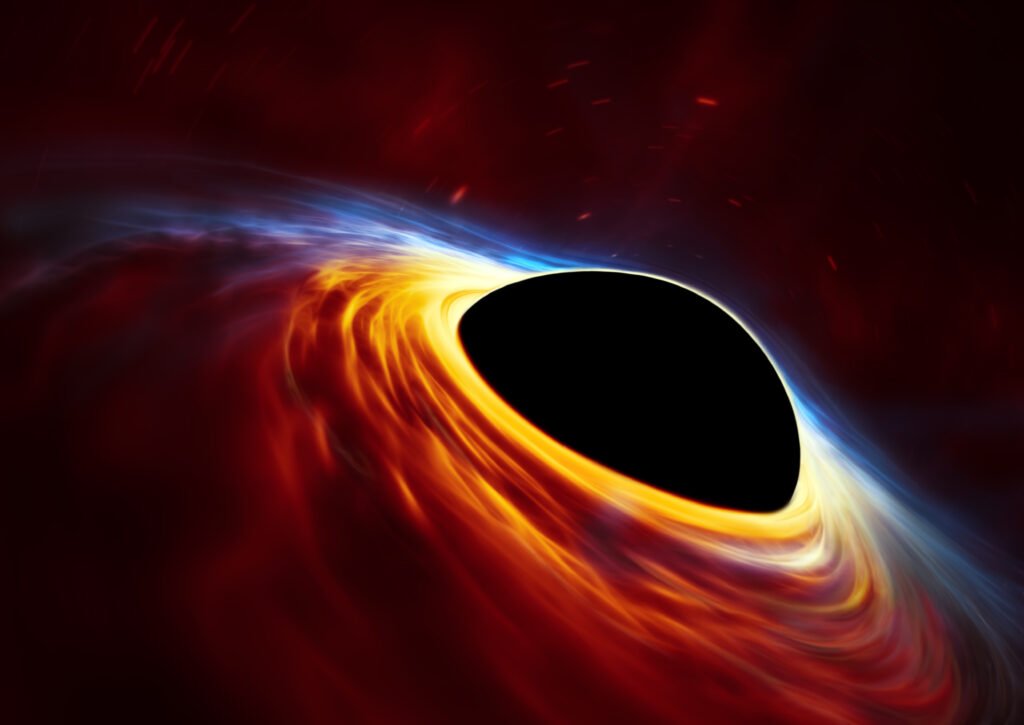

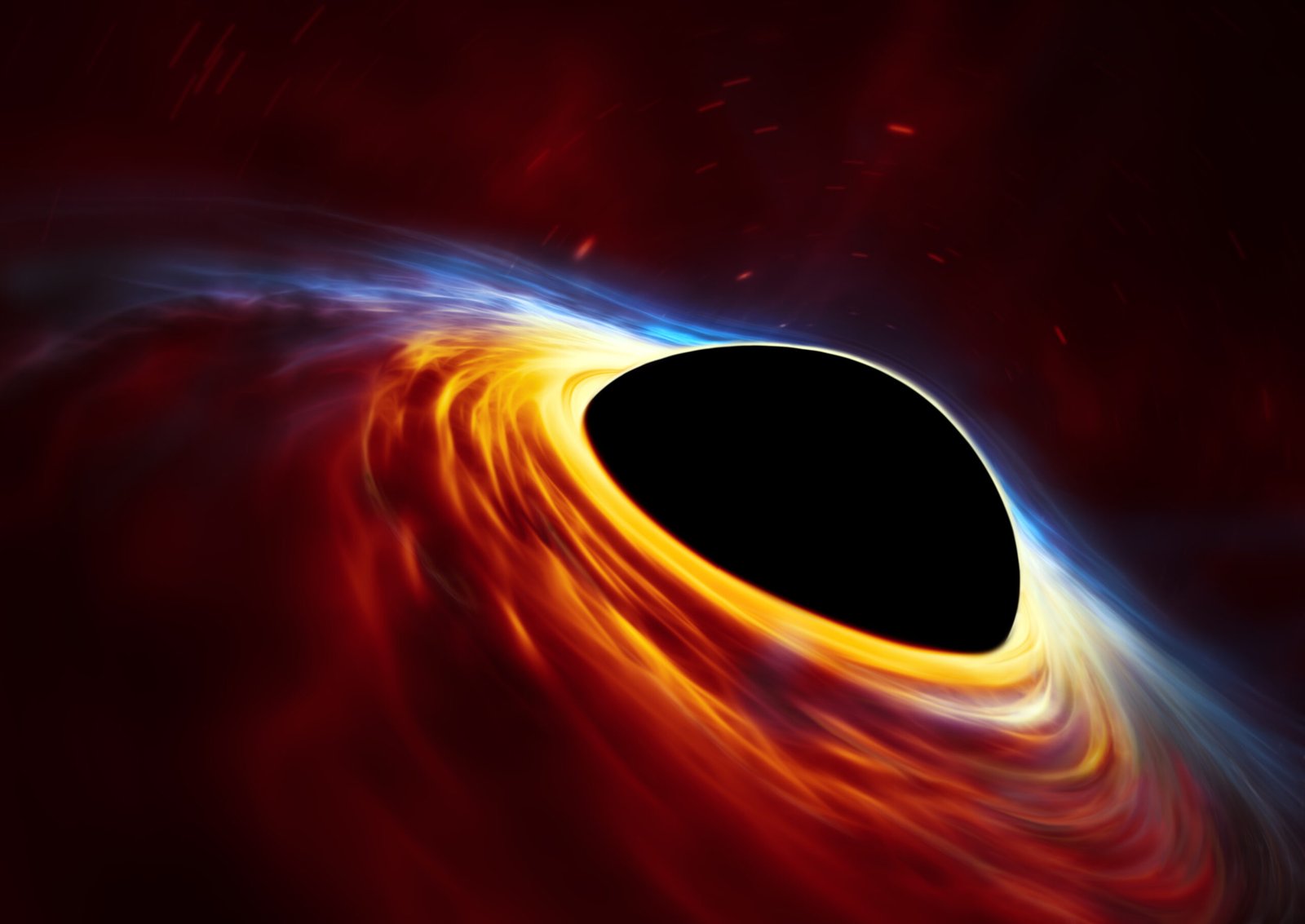
A Particle Beyond Explanation (Image Credits: Upload.wikimedia.org)
The Mediterranean Sea – Detectors buried deep beneath its waters captured an ultra-high-energy neutrino in 2023 that defied known physics.[1][2]
A Particle Beyond Explanation
The KM3NeT experiment registered a neutrino packing around 100 PeV of energy – roughly 100,000 times the record set by the Large Hadron Collider.[1] No conventional astrophysical source could generate such power, leaving scientists puzzled. The particle’s arrival stood alone; the nearby IceCube detector, designed for similar cosmic rays, recorded nothing comparable – not even events one-hundredth as energetic.[2]
Physicists at the University of Massachusetts Amherst seized on this anomaly. Their analysis, published in Physical Review Letters, linked the neutrino to an exotic event: the final burst from a primordial black hole.[1] Such an explosion would release a torrent of particles, cataloging everything from known quarks to hypothetical dark matter candidates.
Primordial Black Holes Enter the Scene
Unlike stellar black holes born from dying stars, primordial black holes formed in the universe’s chaotic infancy after the Big Bang. Stephen Hawking theorized in 1974 that these lightweight relics evaporate slowly through Hawking radiation – quantum effects near the event horizon that chip away at their mass.[3]
As they shrink, primordial black holes heat up exponentially. Lighter ones glow hotter, spewing more particles in a feedback loop that culminates in detonation. “The lighter a black hole is, the hotter it should be and the more particles it will emit,” explained Andrea Thamm, an assistant professor at UMass Amherst and co-author of the study.[1] Current instruments might catch these blasts every decade, offering a glimpse into unseen physics.
The Role of Dark Charge
Standard primordial black hole models predicted frequent explosions, yet observations showed rarity. The UMass team proposed quasi-extremal primordial black holes stabilized by a “dark charge” – a mirrored electromagnetic force featuring a massive “dark electron.”[2]
This twist suppresses early evaporation, aligning explosion rates with sparse detections like the 2023 neutrino. “We think that PBHs with a ‘dark charge’ – what we call quasi-extremal PBHs – are the missing link,” stated Joaquim Iguaz Juan, a postdoctoral researcher at UMass Amherst.[1] The model reconciles KM3NeT’s outlier with IceCube’s quieter log, while hinting at physics beyond the Standard Model.
Key properties of these black holes include:
- Mass far below stellar remnants, potentially asteroid-sized or smaller.
- Evaporation driven by Hawking radiation, accelerating near the end.
- Dark charge that mimics electromagnetism in a hidden sector.
- Explosions revealing unknown particles upon detonation.
- Rarity matching real-world neutrino fluxes.
Dark Matter in the Crosshairs
Galaxy rotations and cosmic microwave background patterns demand dark matter, which constitutes most of the universe’s mass. A swarm of these charged primordial black holes could supply it entirely. “If our hypothesized dark charge is true, then we believe there could be a significant population of primordial black holes… and account for all the missing dark matter in the universe,” Iguaz Juan noted.[1]
The hypothesis ties loose ends: It explains the rogue neutrino, validates Hawking radiation, and positions primordial black holes as dark matter’s architect. Michael Baker, another UMass co-author, called the detection “an incredible event” that opens a new cosmic window.[3]
Key Takeaways
- The 2023 neutrino’s immense energy points to no ordinary source.
- Dark-charged primordial black holes bridge theory and observation.
- They may resolve dark matter’s enigma without new particles.
This breakthrough challenges astronomers to scan for more signatures, potentially rewriting cosmology. Confirmation could crown primordial black holes as the universe’s hidden backbone. What do you think – does this solve the dark matter puzzle? Tell us in the comments.