You’ve probably heard about black holes, those mysterious cosmic giants that devour everything in their path. What you might not know is that physicists just captured something extraordinary. They detected a collision between two black holes with such clarity that it finally confirmed predictions made decades ago by two of history’s greatest minds. This discovery didn’t just happen by chance. It required cutting-edge technology, a bit of luck, and years of patient observation.
The implications go far beyond simply proving old theories right. This breakthrough opens doors to understanding the fundamental nature of reality itself, from the tiniest quantum particles to the fabric of space and time. So let’s dive in and explore what makes this discovery so remarkable.
The Cosmic Collision That Changed Everything
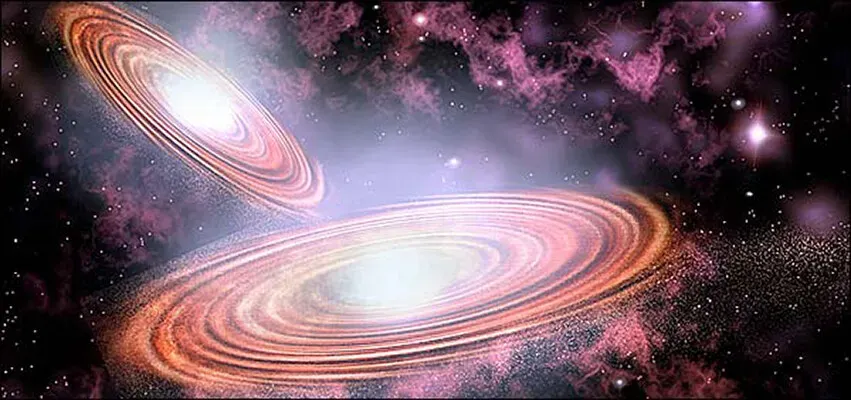
In January 2025, researchers recorded a black hole merger named GW250114 using the Laser Interferometer Gravitational-Wave Observatory (LIGO). The event occurred roughly a billion light-years away, where two black holes spiraled around each other in an almost perfect circle before slamming together. The resulting black hole was around 63 times the mass of the sun and was spinning at 100 revolutions per second.
What makes this particular collision special isn’t just its violence or scale. Thanks to 10 years of technological advances reducing instrumental noise, the GW250114 signal is dramatically clearer than anything scientists had observed before. Think of it like upgrading from a fuzzy radio broadcast to crystal-clear HD audio. Ten milliseconds might sound really short, but instruments are so much better now that this is enough time to really analyze the ringing of the final black hole.
Einstein’s Prediction From Over a Century Ago
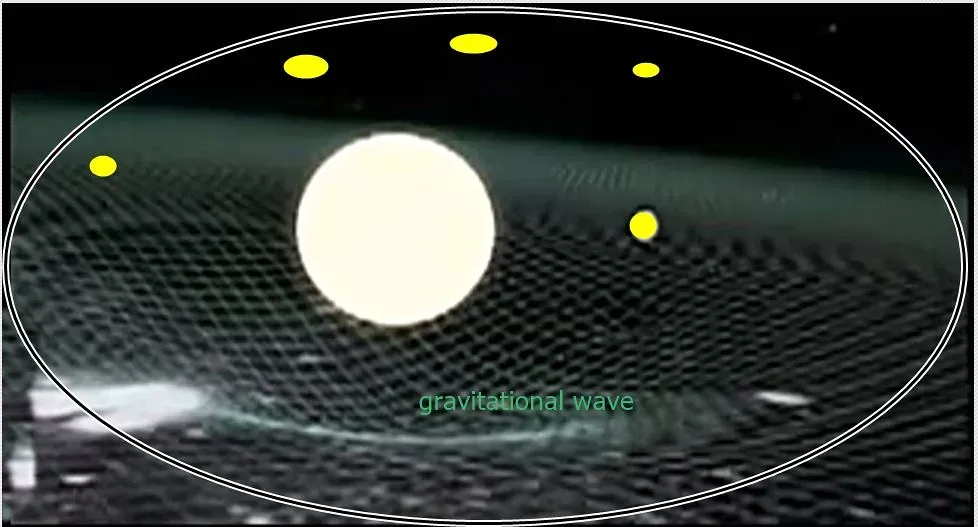
In 1915, Einstein predicted gravitational waves as part of his theory of relativity, describing them as ripples in the fabric of space-time itself. Here’s the fascinating part: Einstein himself didn’t believe we’d ever detect them. Albert Einstein thought gravitational waves would never be detected, and if we told him we are detecting them from colliding black holes every other day, it would have been mind-blowing to him.
The recent observation confirmed something even deeper about Einstein’s work. The gravitational-wave signal showed that the object left over after the collision exactly fits a theoretical construct known as the Kerr metric, which describes a rotating black hole within the bounds of Einstein’s general theory of relativity. This mathematical framework, developed by Roy Kerr in the 1960s, suggests that black holes are remarkably simple objects, defined only by their mass and spin. Nothing else matters.
Hawking’s Area Theorem Finally Gets Its Due
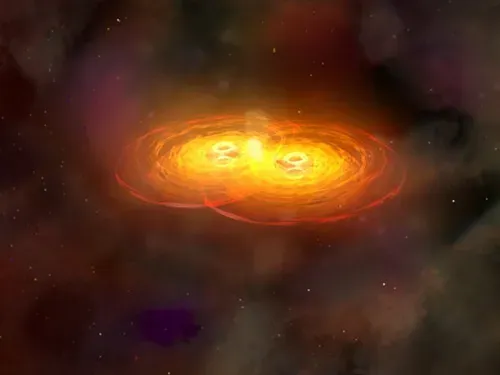
Stephen Hawking proposed a foundational idea called Hawking’s area theorem, which states that the size of a black hole’s event horizon can only ever grow. He introduced this concept back in 1971, yet it remained unverified for decades. The challenge was straightforward but brutal: you needed precise measurements of black holes both before and after they merged.
Following the first black hole merger detection in 2015, Hawking wondered if the merger signature could be used to confirm his theorem, but at the time, no one thought it was possible. Tragically, Hawking died in 2018. With four times better resolution, the new data gives scientists much more confidence that Hawking’s theorem is correct.
Before the merger in the GW250114 event, the combined surface area of the two black holes measured roughly the size of Oregon. Afterward? The newly formed black hole had expanded to approximately the size of California. The horizon never shrank.
Why Event Horizons Behave Like Thermodynamic Systems
Let’s be real, this is where things get weird. The event horizon of a black hole is in some sense a measure of its entropy or disorder, and the laws of thermodynamics say that entropy can only increase, never decrease. You might wonder why something as exotic as a black hole would follow the same rules as your coffee cooling down or ice melting.
In confirming Hawking’s theorem, the results also hint at connections to the second law of thermodynamics. This connection suggests something profound about the universe: gravity, quantum mechanics, and thermodynamics might all be different faces of the same underlying reality. It’s like discovering that three seemingly unrelated puzzle pieces actually fit together perfectly.
The Technology Behind the Discovery
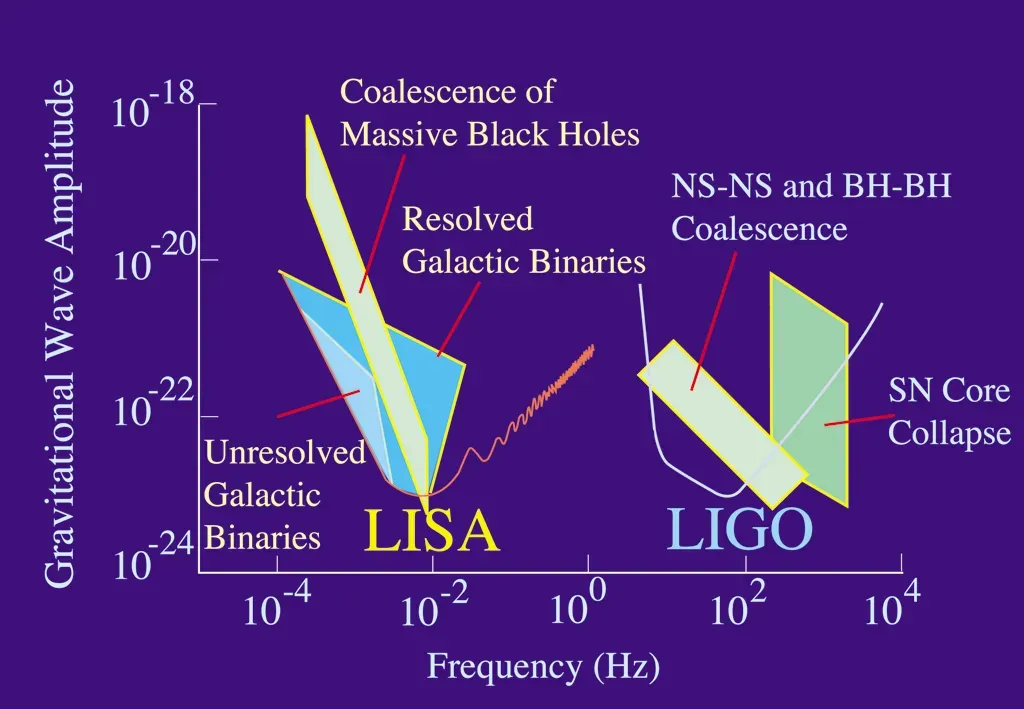
The event became known in January when researchers spotted it with LIGO, a set of two identical instruments located in Livingston, Louisiana, and Hanford, Washington, which detected gravitational waves, faint ripples in space-time produced by the two black holes slamming into each other. These detectors are marvels of engineering. Each one has arms stretching for miles, using lasers to measure distances so tiny that they’re smaller than a fraction of an atom’s width.
Since that first groundbreaking detection in September 2015, the technology has improved dramatically. Researchers have been surprised by how many merging black holes they have seen, with detections now happening roughly every few days instead of once a month. The instruments have become so sensitive that they can pick up vibrations you’d never imagine, from passing trucks to ocean waves crashing on distant shores.
The Ringing of Cosmic Bells
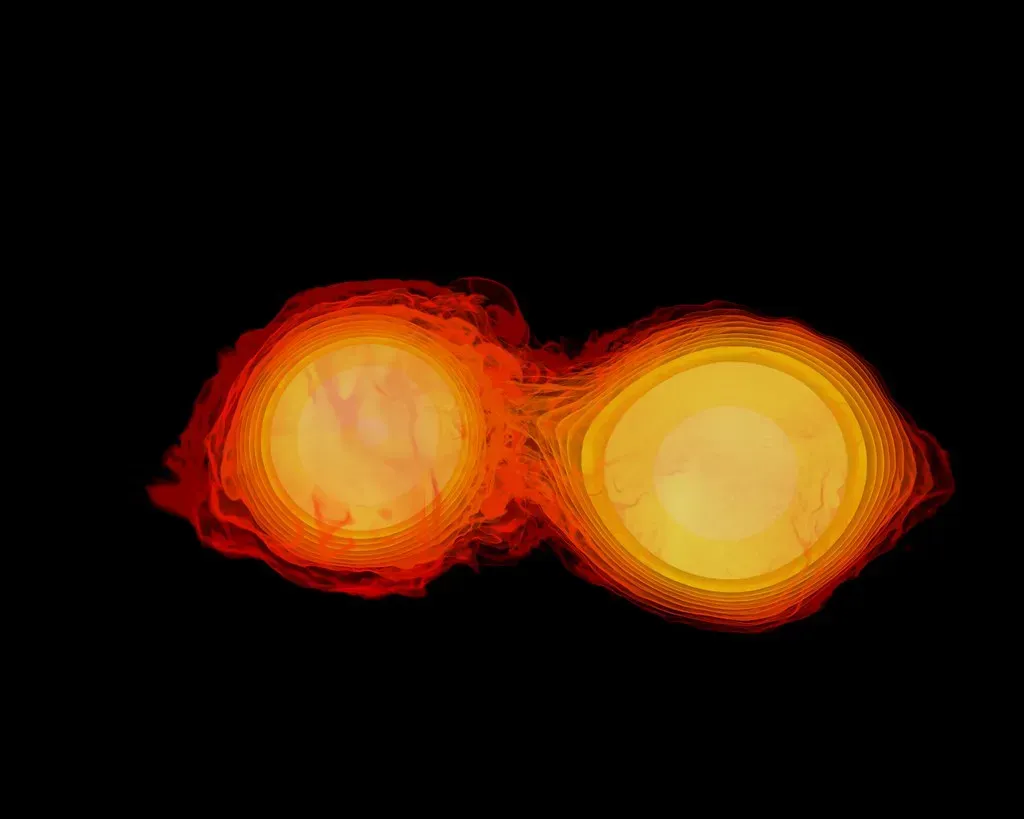
After two black holes merge, something extraordinary happens. The newly formed black hole doesn’t just sit there quietly. Disturbed black holes vibrate in a way that resembles the ringing of a bell, a behavior expected from Albert Einstein’s general theory of relativity. This “ringdown” phase lasts only milliseconds, but it tells scientists everything they need to know about the final object’s properties.
The study achieved precision by examining the pitch and duration of the gravitational waves emitted as the black holes merged, because a black hole’s size and shape influence these waves, in much the same way a musical instrument’s size and shape affect the sound it makes. Imagine tapping different-sized wine glasses and listening to their distinct tones. Black holes do something similar, except they’re ringing across billions of light-years of space.
What This Means for Quantum Gravity
Physicists have struggled for decades to reconcile Einstein’s general relativity with quantum mechanics. These two pillars of modern physics work beautifully in their own domains but seem fundamentally incompatible. Confirming Hawking’s equation could have implications for combining the seemingly incompatible theory of general relativity, which describes gravity, with quantum mechanics, which relates to the subatomic world.
The results hint at deeper connections between gravity, entropy, and quantum theory. Some physicists believe black holes might hold the key to a “theory of everything” that unifies all forces and particles in nature. Each new observation brings us closer to understanding whether such a theory exists and what it might look like. Honestly, we’re witnessing the potential beginning of a revolution in physics.
Looking Toward the Future of Black Hole Science
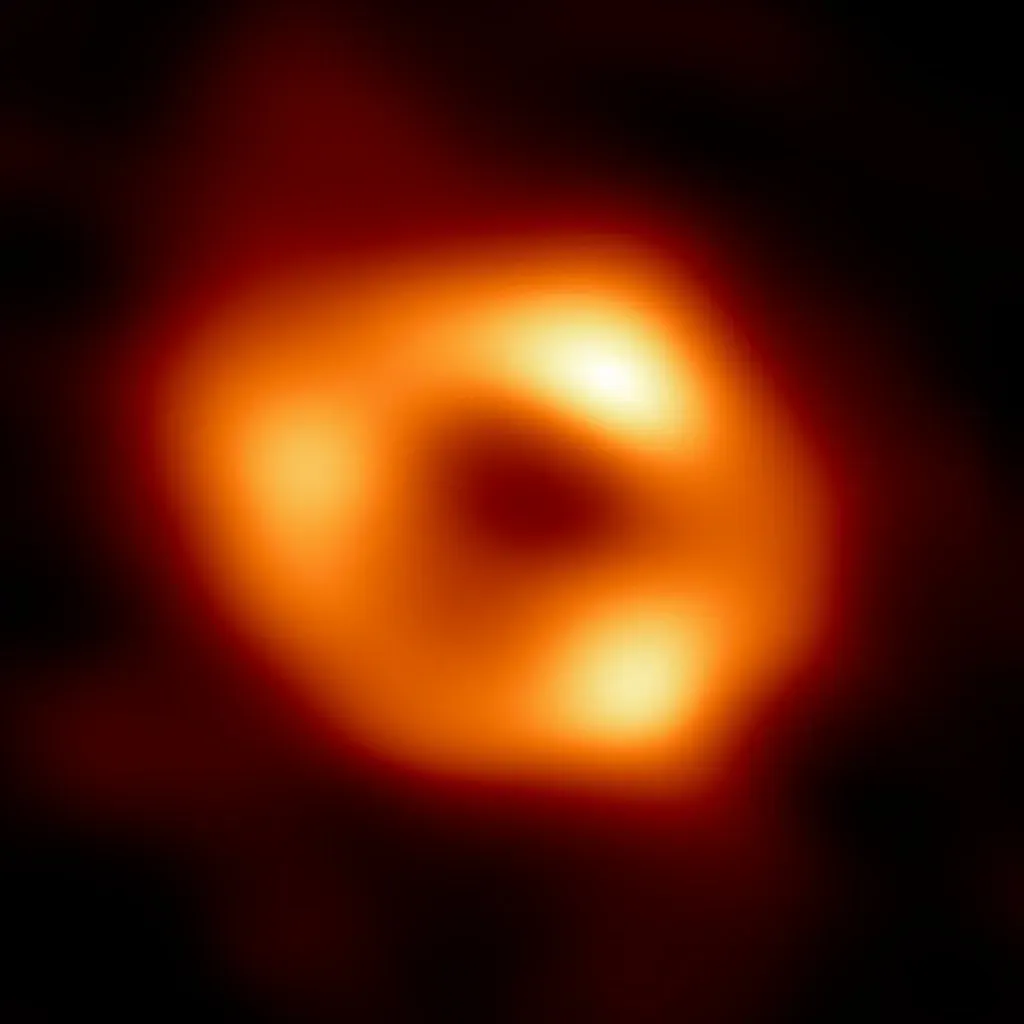
Over the next decade, gravitational wave detectors like LIGO will continue to improve, giving us a sharper view of black holes and their mysteries. Scientists are already planning next-generation observatories that will be even more sensitive, capable of detecting collisions from the earliest moments of the universe. Europe is developing the Einstein Telescope, which would have underground detectors with arms stretching more than six miles long.
Gravitational-wave astronomy has exploded since 2015, capturing hundreds of black hole and neutron star collisions, and with ever-clearer signals, researchers are testing Einstein’s relativity and Hawking’s theorems while planning massive next-generation observatories to explore the dawn of the universe. These future instruments might reveal second-generation black holes, objects born from previous mergers, or even stranger phenomena that current theories haven’t predicted.
A Legacy Confirmed Beyond the Grave
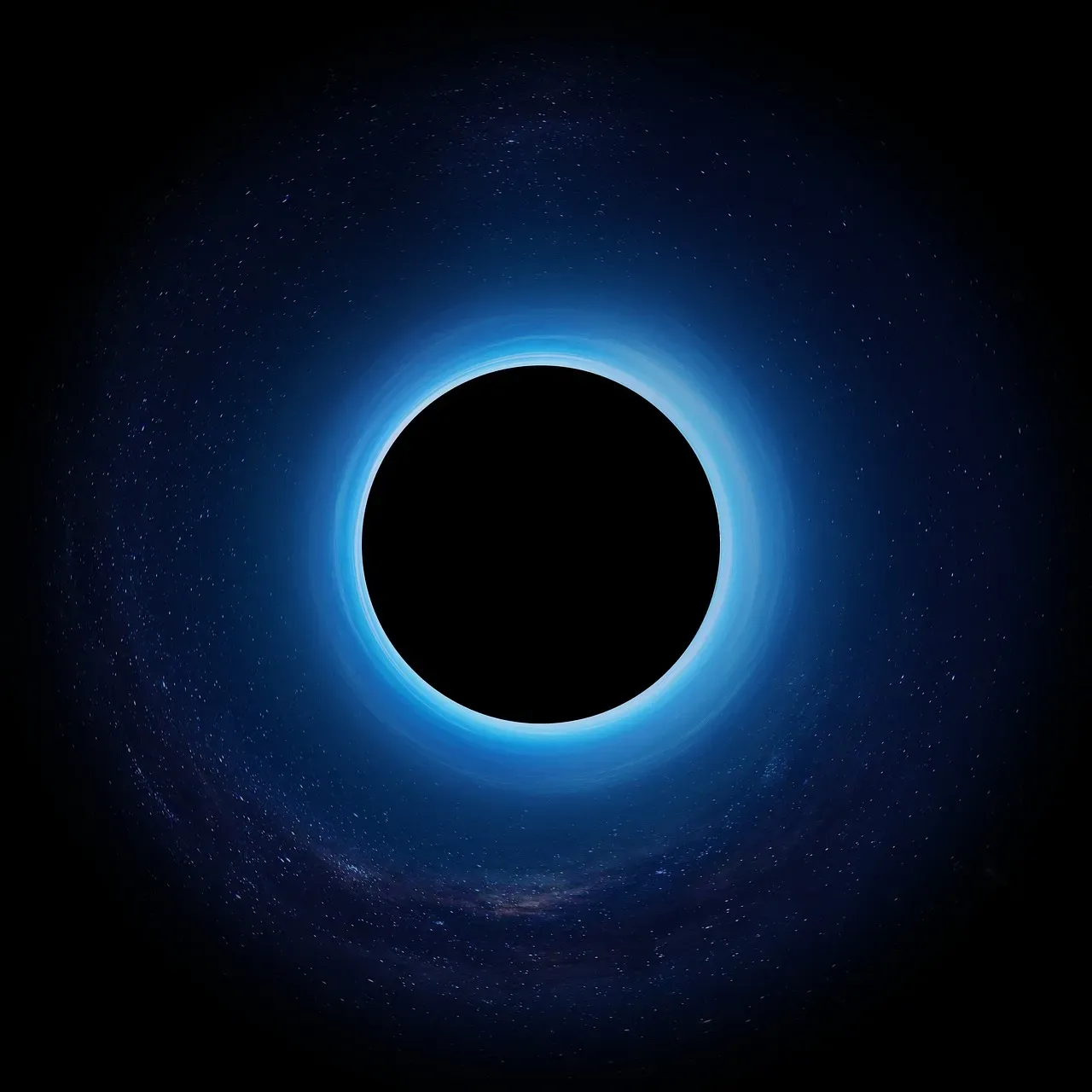
The New York Times noted that if this confirmation had come while Hawking was still alive, it might have contributed to him receiving a Nobel Prize. The Nobel Prize is typically only awarded to living scientists, so Hawking never had the chance to see his most famous prediction validated with such confidence. All of these ideas that people thought up in the 1970s, thinking it was just idle speculation, are now manifested in actual data, and we see these things happening almost exactly as predicted.
Einstein, too, would have been astonished. His equations predicted black holes, gravitational waves, and the warping of space-time, yet he doubted humanity would ever observe these phenomena directly. The fact that we’re now routinely detecting cosmic collisions using technology he couldn’t have imagined represents one of science’s greatest triumphs. These weren’t just lucky guesses. They were insights born from pure mathematical reasoning, confirmed by reality itself.
What’s most remarkable about this discovery isn’t just that it proved two legendary physicists right. It’s that their predictions, made with nothing but paper, pencils, and brilliant minds, have stood the test of time against the most extreme conditions in the universe. Black holes represent places where our everyday understanding of physics completely breaks down, where time slows to a crawl and space curves back on itself. Yet even in these alien environments, the fundamental laws they uncovered still hold true. Did you expect that decades-old mathematics could predict something so perfectly? What other secrets might the universe still be hiding, waiting for the right technology to reveal them?
Hi, I’m Andrew, and I come from India. Experienced content specialist with a passion for writing. My forte includes health and wellness, Travel, Animals, and Nature. A nature nomad, I am obsessed with mountains and love high-altitude trekking. I have been on several Himalayan treks in India including the Everest Base Camp in Nepal, a profound experience.