
Space exploration has always faced one brutally practical problem: once you leave Earth, you’re essentially flying blind when it comes to knowing exactly where you are. GPS only works near our planet, and the further a spacecraft travels, the harder precise positioning becomes. For decades, scientists have relied on ground-based tracking systems that are powerful but slow, limited, and increasingly strained by the growing number of missions heading outward.
Now, researchers have developed something genuinely exciting. A new cosmic positioning system concept uses the universe itself as a navigation grid, drawing on naturally occurring signals from deep space to pinpoint a spacecraft’s location with remarkable precision. It sounds like science fiction, honestly, but the physics behind it is very real. Let’s dive in.
The Core Idea: Using The Universe As A GPS Constellation
Here’s the thing about deep space navigation right now. It depends heavily on Earth-based radio telescopes and tracking stations that send signals out to spacecraft and wait for them to bounce back. The further a probe travels, the longer this round-trip signal takes, which introduces delays and limits real-time accuracy.
The new concept flips that entirely. Instead of relying on Earth, researchers propose using pulsars, which are rapidly spinning neutron stars that emit incredibly regular radio pulses, almost like cosmic clocks, as fixed reference points spread across the galaxy. By measuring the timing of these pulsar signals from a spacecraft’s position, you can triangulate your location in three-dimensional space with extraordinary accuracy.
What Are Pulsars And Why Are They So Useful
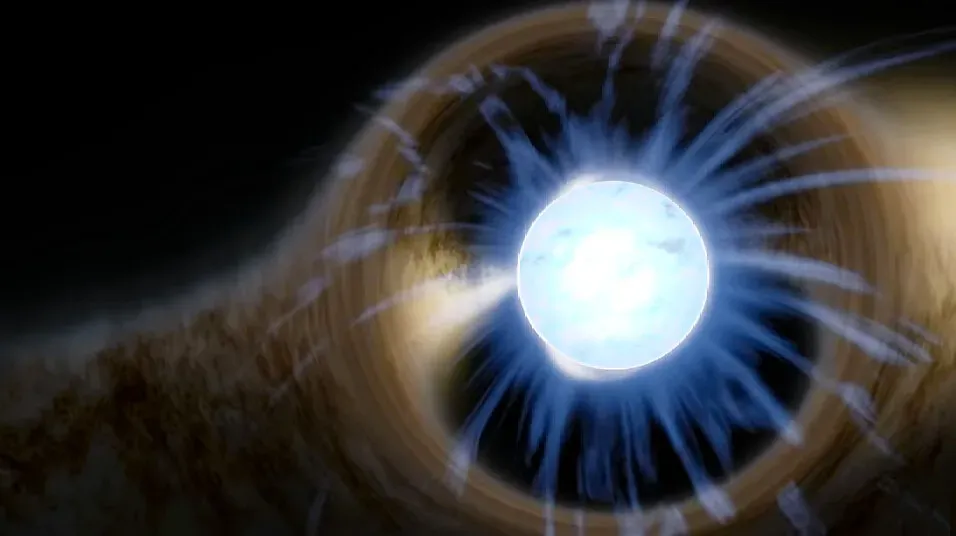
Pulsars are among the most precise natural timekeepers in the known universe. They rotate multiple times per second and emit beams of electromagnetic radiation with a regularity that rivals atomic clocks here on Earth. Some pulsars are so consistent that scientists can predict their pulse timing to within microseconds across spans of years.
That extraordinary consistency is exactly what makes them ideal for navigation. Think of it like having lighthouses scattered across the galaxy, each one blinking at a perfectly known and unique interval. A spacecraft equipped with the right X-ray detector can identify which pulsar it’s receiving signals from, measure the timing precisely, and use multiple pulsars simultaneously to calculate its position in space. It’s elegant in a way that honestly makes you wonder why this wasn’t fully developed sooner.
The Role Of X-Ray Detectors In Making This Work
Traditional radio-based pulsar detection requires enormous dish antennas, the kind that simply cannot fit on a spacecraft heading to the outer solar system. That’s been one of the biggest practical obstacles to this approach for years. However, pulsars also emit X-ray pulses, and X-ray detectors can be made compact enough to actually travel aboard a spacecraft.
NASA has already demonstrated a working prototype of exactly this kind of system. The Neutron Star Interior Composition Explorer, known as NICER, is currently aboard the International Space Station and has successfully demonstrated X-ray pulsar navigation. The research builds on those results to explore how this technology could be extended and refined specifically for deep solar system and interstellar missions, where the distances involved are so vast that conventional methods start to genuinely struggle.
Precision Levels That Actually Matter For Real Missions
You might be wondering just how accurate this pulsar-based positioning system actually is. Early demonstrations with NICER have achieved positional accuracy to within a few kilometers, which is already impressive given the distances involved. Researchers working on the cosmic positioning concept believe that with refinements to detectors and algorithms, accuracy could eventually reach levels competitive with or even superior to current ground-based methods for deep space missions.
For context, navigating a probe to a precise orbit around a distant moon, or targeting a small asteroid billions of kilometers from Earth, requires extraordinary positional accuracy at every stage of the journey. A few kilometers of error at the beginning of a trajectory can translate to thousands of kilometers of error at the destination. Getting this precision right autonomously, without constant corrections from Earth, is not just technically interesting. It’s mission-critical.
Autonomy Is The Real Game-Changer Here
Let’s be real about what makes this concept genuinely revolutionary. It’s not just about navigation accuracy. It’s about independence. Right now, deep space probes depend on a relatively small number of ground-based tracking facilities, primarily the NASA Deep Space Network, to know where they are and to receive navigation corrections. As humanity plans more ambitious missions, that network is becoming a bottleneck.
A spacecraft that can determine its own position autonomously, using signals freely available across the galaxy, changes the entire operational model for deep space exploration. It means a probe can make its own navigation adjustments in real time, without waiting hours or sometimes days for a signal to travel back and forth between Earth and the spacecraft. For future crewed missions to Mars or beyond, this kind of onboard autonomy isn’t a luxury. It’s a necessity.
How The Outer Solar System Becomes More Reachable
The outer solar system, from Jupiter outward through the icy realms of Uranus, Neptune, and the Kuiper Belt, represents some of the least explored territory in our cosmic neighborhood. Part of the reason is sheer logistical difficulty. At those distances, communication delays stretch to hours, and navigational precision becomes exponentially harder to maintain using conventional methods.
Cosmic positioning using pulsars could make missions to these regions significantly more practical. A probe bound for the ice giants or even a target in the Kuiper Belt could navigate independently and accurately, reducing reliance on Earth-based corrections and allowing for more complex, responsive mission profiles. It’s hard to say for sure exactly when this technology will be mature enough for full operational deployment, but the foundational science is clearly advancing faster than many expected.
What Comes Next For This Technology
The research represents a meaningful step forward, but there’s still a considerable path between concept demonstration and a fully operational cosmic positioning system aboard production spacecraft. Detector sensitivity needs to improve. Navigation algorithms need to be tested across a broader range of pulsar sources and spacecraft trajectories. The integration of pulsar positioning with existing inertial navigation systems aboard spacecraft also needs careful engineering work.
Still, the trajectory of progress here is genuinely encouraging. Multiple space agencies and research groups around the world are actively pursuing X-ray pulsar navigation as a serious candidate for next-generation deep space missions. The underlying physics is sound, the early demonstrations have been promising, and the demand for better autonomous navigation is only growing as humanity sets its sights further and further from home. I think we’re watching the early chapters of something that future generations of astronauts and mission controllers will consider completely standard.
A Universe That Guides Its Own Explorers
There’s something almost poetic about using the universe’s own ancient structures to find your way through it. Pulsars formed from the violent deaths of massive stars, ticking away for millions of years before human civilization even existed, and now we’re proposing to use them as navigation beacons for our tiny probes venturing into the dark.
Cosmic positioning isn’t just a technical solution to an engineering problem. It represents a philosophical shift in how we relate to space exploration. Rather than dragging a long technological tether back to Earth for every decision and correction, future spacecraft may carry within them the ability to orient themselves using the galaxy itself. That’s not a small thing. Honestly, it might be one of the more profound navigational ideas we’ve had since we first looked up and started trying to read the stars.
The question worth sitting with is this: if spacecraft can one day navigate the outer solar system entirely on their own, using tools the cosmos itself provides, what does that mean for where we might actually go? What do you think? Drop your thoughts in the comments.