
From Thousands to a Focused Few: The Making of the Catalog (Image Credits: Unsplash)
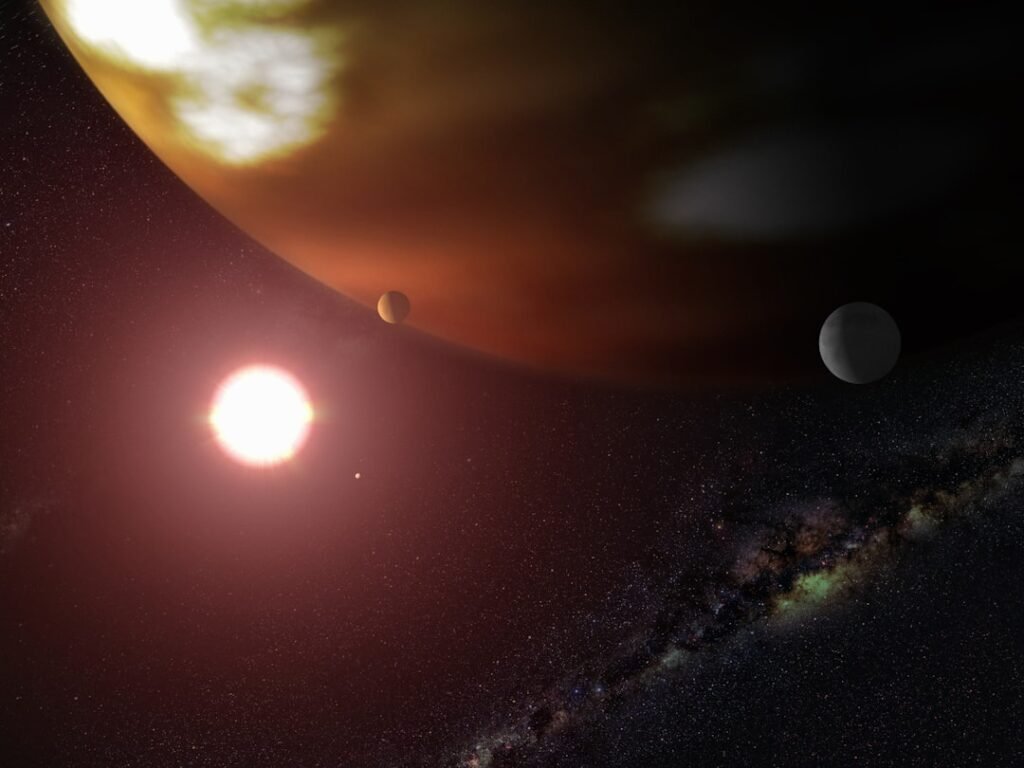
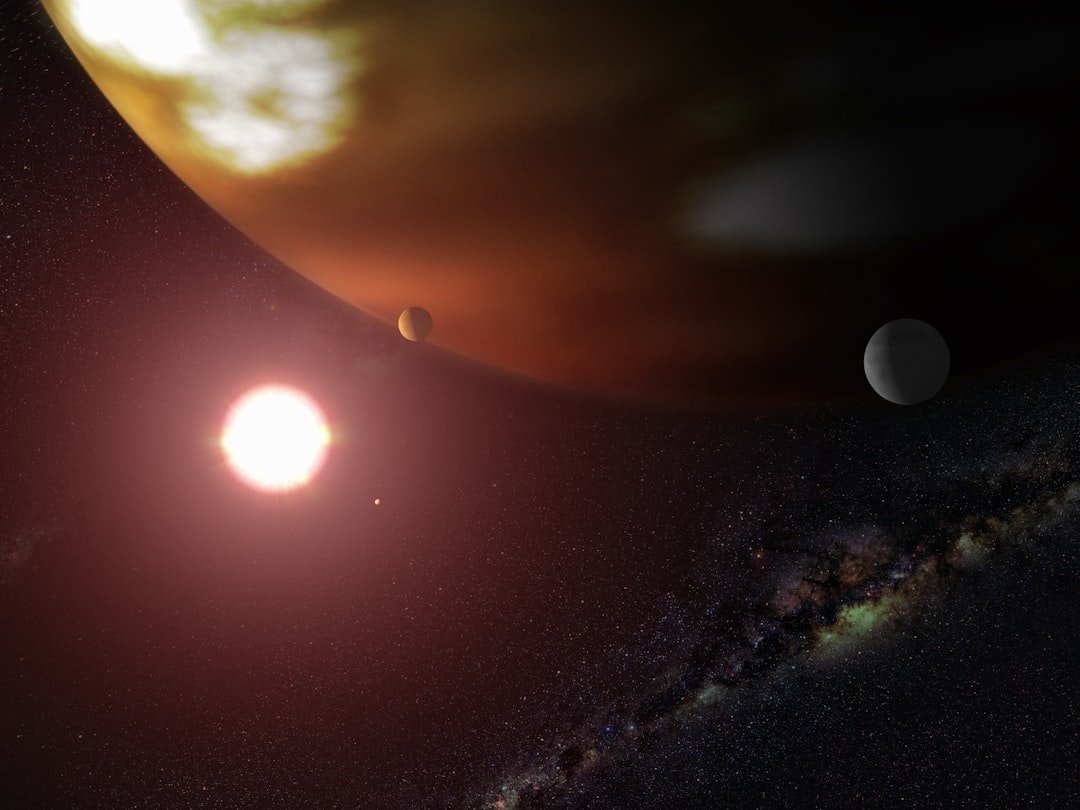
Researchers at Cornell University’s Carl Sagan Institute recently unveiled a catalog of 45 rocky exoplanets positioned in the habitable zones of their stars. This selection, drawn from over 6,000 confirmed exoplanets, highlights worlds where conditions might allow liquid water on the surface – a crucial factor for life as we know it.[1][2] The effort, published in Monthly Notices of the Royal Astronomical Society, provides astronomers with prioritized targets for future telescope observations.[3]
From Thousands to a Focused Few: The Making of the Catalog
Professor Lisa Kaltenegger led a team of undergraduate students in sifting through vast datasets from the European Space Agency’s Gaia mission and NASA’s Exoplanet Archive. They focused on rocky planets orbiting within the habitable zone, the orbital region where temperatures could support liquid water rather than ice or vapor. This zone varies by star type but generally avoids extremes of heat or cold.[1]
The catalog also includes 24 additional candidates in a stricter three-dimensional habitable zone, accounting for more conservative heat tolerances. Standout features emerged quickly: some planets receive stellar energy remarkably similar to Earth’s from the sun. Kaltenegger noted that the work draws inspiration from science fiction, like the film Project Hail Mary, where interstellar travel targets life-bearing worlds.[2]
Prime Candidates Resembling Earth
Among the 45, ten planets stand out for their Earth-like irradiation levels. Transiting worlds, where planets pass in front of their stars, include TRAPPIST-1 e, TOI-715 b, Kepler-1652 b, Kepler-442 b, and Kepler-1544 b. These allow detailed atmospheric studies as starlight filters through their gases.
Planets detected via stellar wobbles – Proxima Centauri b, GJ 1061 d, GJ 1002 b, and Wolf 1069 b – offer complementary insights. Proxima Centauri b, just 4.2 light-years away, remains one of the nearest potential habitats. The TRAPPIST-1 system, 40 light-years distant, features multiple promising worlds: d, e, f, and g. LHS 1140 b, at 48 light-years, also draws attention for its potential to retain an atmosphere.[3]
- TRAPPIST-1 e: Orbits a cool red dwarf; prime JWST target.
- TOI-715 b: Earth-sized, receives balanced stellar flux.
- Proxima Centauri b: Closest exoplanet candidate.
- Kepler-442 b: Stable orbit in habitable zone.
- LHS 1140 b: Super-Earth with possible water world traits.
Pushing the Edges of Habitability
The researchers deliberately included planets at the habitable zone’s inner and outer boundaries to test theoretical limits. Inner-edge candidates like K2-239 d, TOI-700 e, K2-3 d, Wolf 1061 c, and GJ 1061 c receive intense stellar radiation, akin to Venus. Outer-edge worlds such as TRAPPIST-1 g, Kepler-441 b, and GJ 102 face frigid conditions, similar to Mars.
High-eccentricity orbits add complexity, as these planets swing between hot and cold extremes. Such worlds probe whether habitability requires a steady position or can endure fluctuations while retaining surface water. Co-author Abigail Bohl explained, “We know Earth is habitable, while Venus and Mars are not. We can use our Solar System as a reference to search for exoplanets that receive stellar energy between what Venus and Mars get.”[1]
| Boundary Type | Example Planets | Key Test |
|---|---|---|
| Inner Edge | K2-239 d, TOI-700 e | Maximum tolerable heat |
| Outer Edge | TRAPPIST-1 g, Kepler-441 b | Minimum viable temperature |
| High Eccentricity | Various listed | Orbital flux resilience |
Guiding the Next Generation of Observations
Team member Gillis Lowry emphasized the catalog’s practical value: “While it’s hard to say what makes something more likely to have life, identifying where to look is the first key step – so the goal of our project was to say ‘here are the best targets for observation’.” Lucas Lawrence added that the list enables efficient searches and reveals new planetary details.[2]
Telescopes like the James Webb Space Telescope already target TRAPPIST-1 e and TOI-715 b, orbiting dim red dwarfs that ease Earth-sized planet detection. Future instruments – the Nancy Grace Roman Space Telescope in 2027, Extremely Large Telescope in 2029, Habitable Worlds Observatory in the 2040s, and LIFE mission – will scrutinize atmospheres for biosignatures. Confirming atmospheres remains essential, as they determine if these worlds hold liquid water.
Key Takeaways
- 45 rocky exoplanets prioritized from 6,000+ known, focusing on habitable zones.
- Top targets like TRAPPIST-1 e and Proxima Centauri b mimic Earth’s energy input.
- Edge cases and eccentric orbits will refine habitability models via upcoming telescopes.
This catalog marks a pivotal refinement in the search for life beyond Earth, channeling resources toward the most viable prospects. As observations intensify, these worlds could redefine our understanding of cosmic habitability. What do you think about these prime targets? Share your thoughts in the comments.