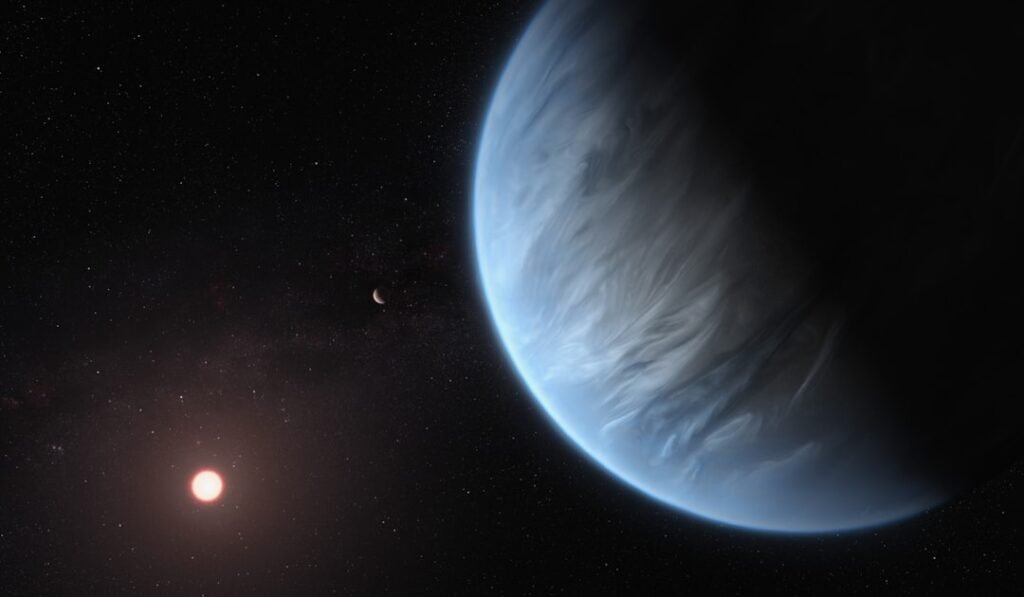

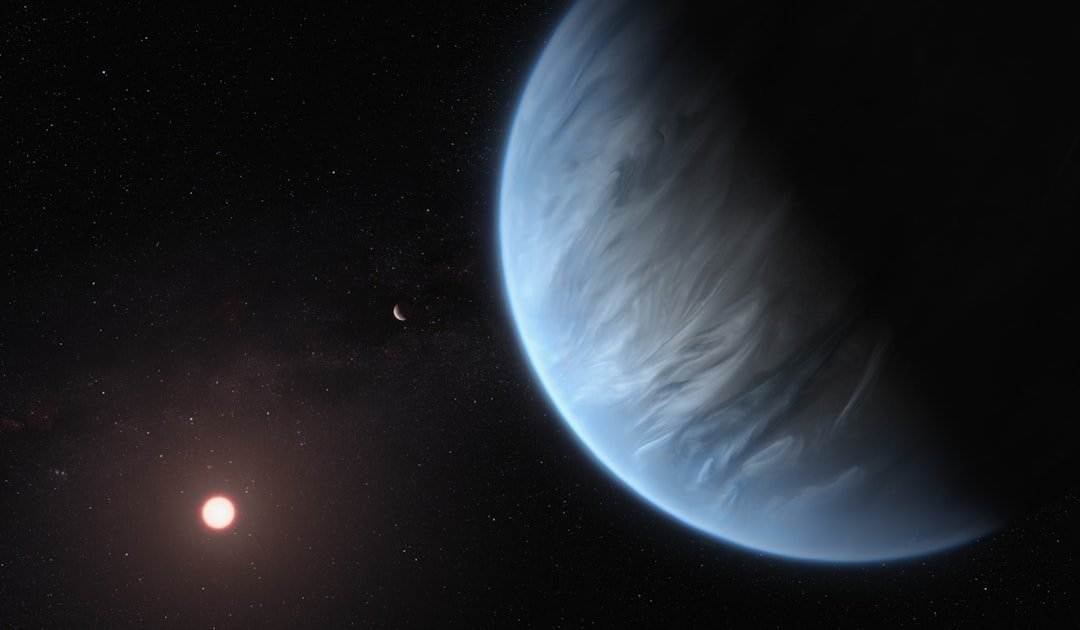
Quiet Star Reveals Bustling Planetary Family (Image Credits: Unsplash)
Astronomers have identified a multi-planet setup around the red dwarf star GJ 887, located just 10.7 light-years from Earth, marking it as a key target in the quest for nearby worlds that might sustain life.[1]
Quiet Star Reveals Bustling Planetary Family
Researchers announced the confirmation of four planets orbiting GJ 887, a relatively inactive M-type dwarf star that stands out among its flaring counterparts.[1]
This system builds on earlier findings from 2020, when two inner planets were first detected. New observations doubled that count and pinpointed a world in the habitable zone. The star’s low magnetic activity helped astronomers separate planetary signals from stellar noise, such as spots on its surface.
M dwarfs like GJ 887 dominate the galaxy’s stellar population. Their small size and faint output allow planets to complete orbits quickly, aiding detection efforts. At 10.7 light-years distant, this system ranks among the closest to our Sun.
Planet Profiles: From Scorchers to Potential Water Worlds
The confirmed planets vary widely in size and distance from their host star. Here’s a breakdown:
- GJ 887 b: A super-Earth with about four times Earth’s mass, orbiting every nine days – far too hot for habitability.
- GJ 887 c: Larger still at eight Earth masses, with a 21-day orbit, also baked by stellar proximity.
- GJ 887 d: Minimum mass around six Earth masses, circling every 51 days in the habitable zone where liquid water could exist.
- GJ 887 e: Roughly Earth-sized, locked in a tight 4.4-day orbit.
A fifth signal suggests GJ 887 f, half an Earth mass with a 2.2-day period, though it awaits full confirmation.[1]
GJ 887 d earned a spot in the Habitable Worlds Catalog due to its position and mass. Only about 70 of more than 5,000 known exoplanets meet such criteria.
Precision Measurements Unlock the Secrets
The team relied on radial velocity techniques, tracking subtle wobbles in the star’s motion via Doppler shifts in its light. Instruments like HARPS at La Silla Observatory and ESPRESSO on the Very Large Telescope in Chile provided the necessary precision.
Over 100 HARPS measurements and a dozen from ESPRESSO refined planetary masses and orbits. Recent stellar activity revealed a 39-day rotation period, crucial for filtering false signals. The findings appeared on arXiv and were accepted by Astronomy & Astrophysics.[1]
Why This Matters for the Search for Life
GJ 887 d now holds the title of second-closest confirmed habitable-zone planet, trailing only Proxima Centauri b. Its proximity positions it ideally for upcoming missions.
Future telescopes, including NASA’s Habitable Worlds Observatory in the 2040s, could image atmospheres for biosignatures. The system’s brightness and stability enhance its appeal. For more details, see the full report at Astronomy.com.
| Planet | Min. Mass (Earths) | Orbital Period (days) | Habitable? |
|---|---|---|---|
| b | 4 | 9 | No |
| c | 8 | 21 | No |
| d | 6 | 51 | Yes |
| e | 1 | 4.4 | No |
Key Takeaways
- GJ 887 d orbits in the habitable zone of a star just 10.7 light-years away.
- Radial velocity confirmed four planets, building on 2020 data.
- Prime target for future atmosphere studies and life detection.
This discovery underscores how nearby M dwarfs continue to yield insights into planetary diversity. As technology advances, GJ 887 could reveal whether Earth-like conditions thrive beyond our solar system. What implications do you see for the search for extraterrestrial life? Share your thoughts in the comments.