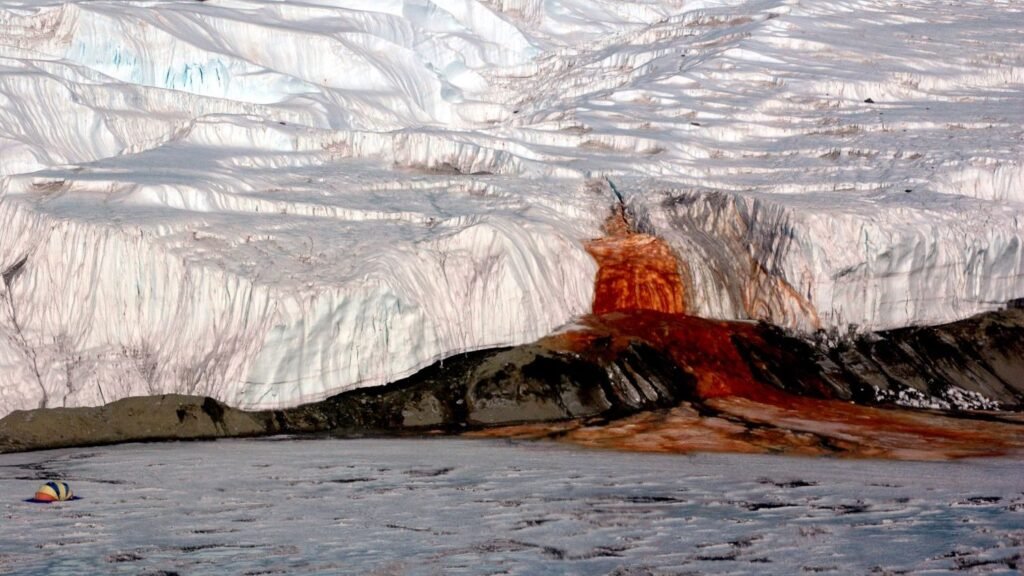

Imagine standing on the edge of one of the most remote, frozen places on Earth, staring at what looks unmistakably like a waterfall of blood pouring out of a glacier. No wound. No beast. Just white ice, absolute silence, and a deep, vivid crimson stream cutting across the landscape like something out of a horror film. It is the kind of thing that makes you question your own eyes.
Blood Falls in Antarctica has mystified scientists for a century. Explorers, geologists, and microbiologists have come and gone, each leaving with more questions than answers. The mystery runs deeper than just the color. It touches on ancient life, buried oceans, and even the search for living organisms on other planets. So buckle up, because the full story is genuinely one of the most fascinating things science has uncovered in recent years. Let’s dive in.
A Discovery That Shocked the First Explorers
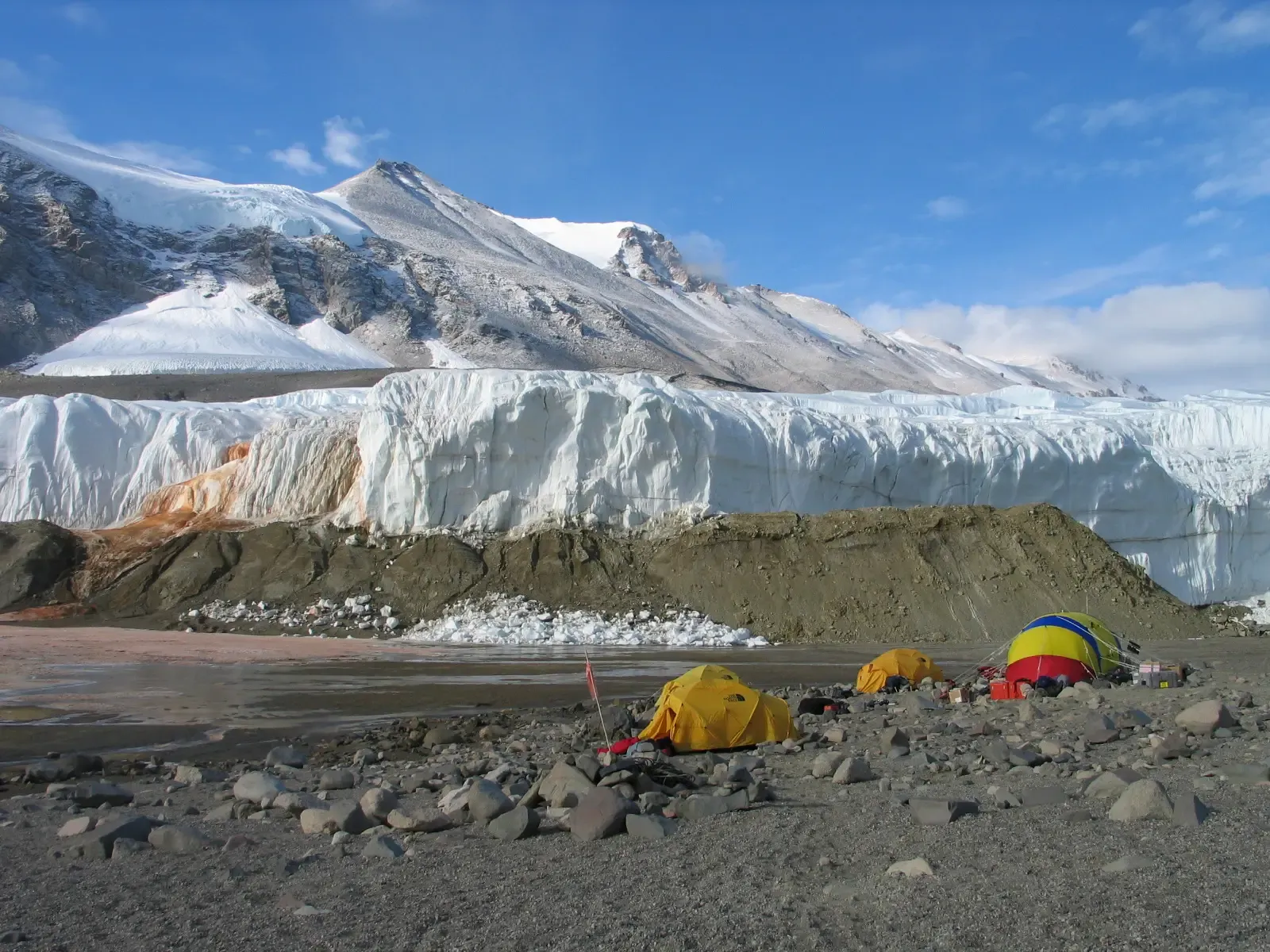
During the infamous Terra Nova Expedition to Antarctica in 1911, British geologist Thomas Griffith Taylor made a mysterious discovery at the rocky base of the glacier that now bears his name: a waterfall of what appeared to be blood. You can only imagine what went through his mind standing there in the frozen wilderness, staring at that sight.
The reddish deposit was found by Taylor, who first explored the valley that now bears his name. The Antarctica pioneers initially attributed the red color to red algae. It was an understandable first guess. Red algae exist in cold environments, and the color matches. Honestly, if you saw it back then with no modern lab equipment, you would probably think the same thing.
Where Exactly Does Blood Falls Come From?
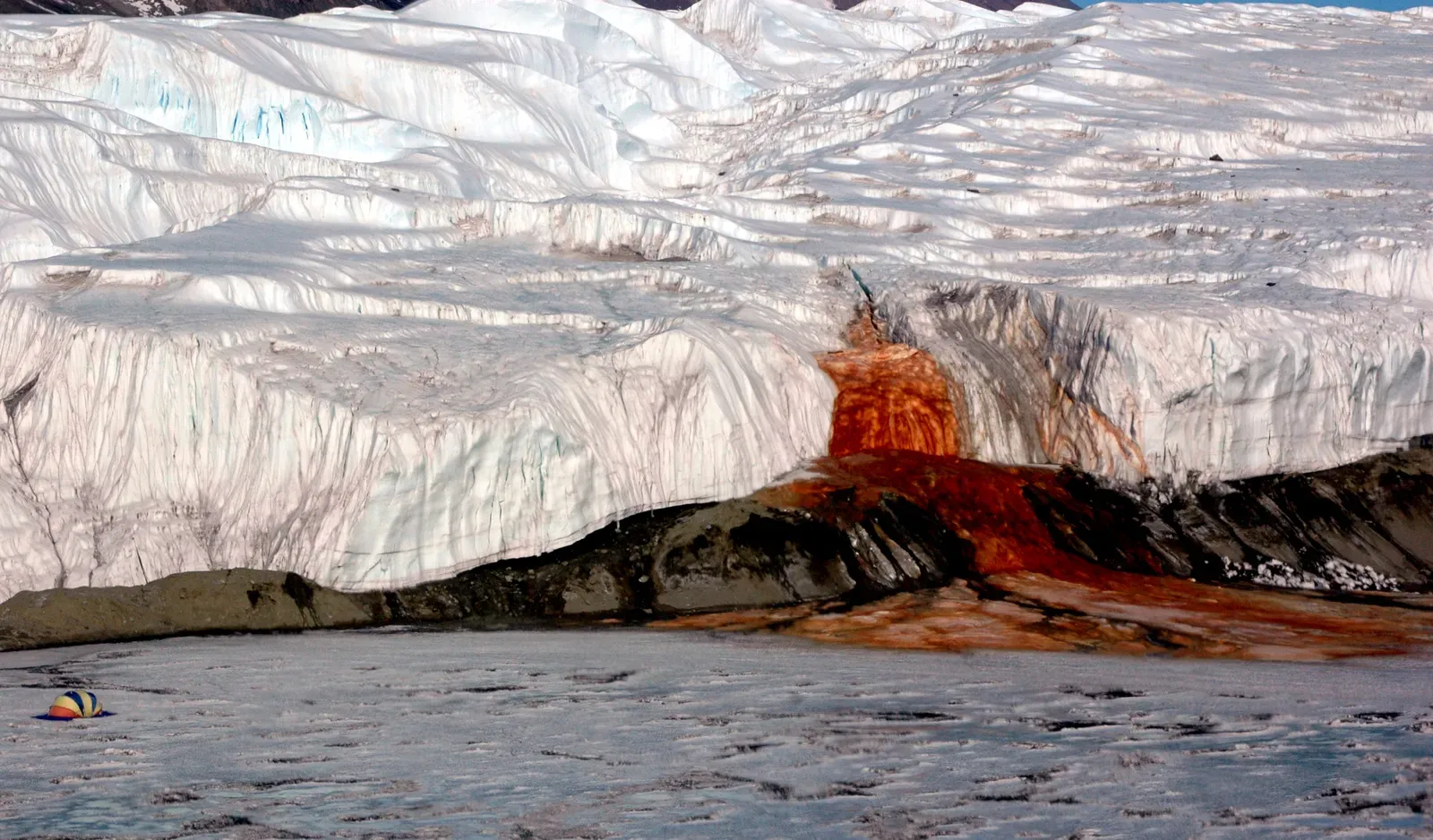
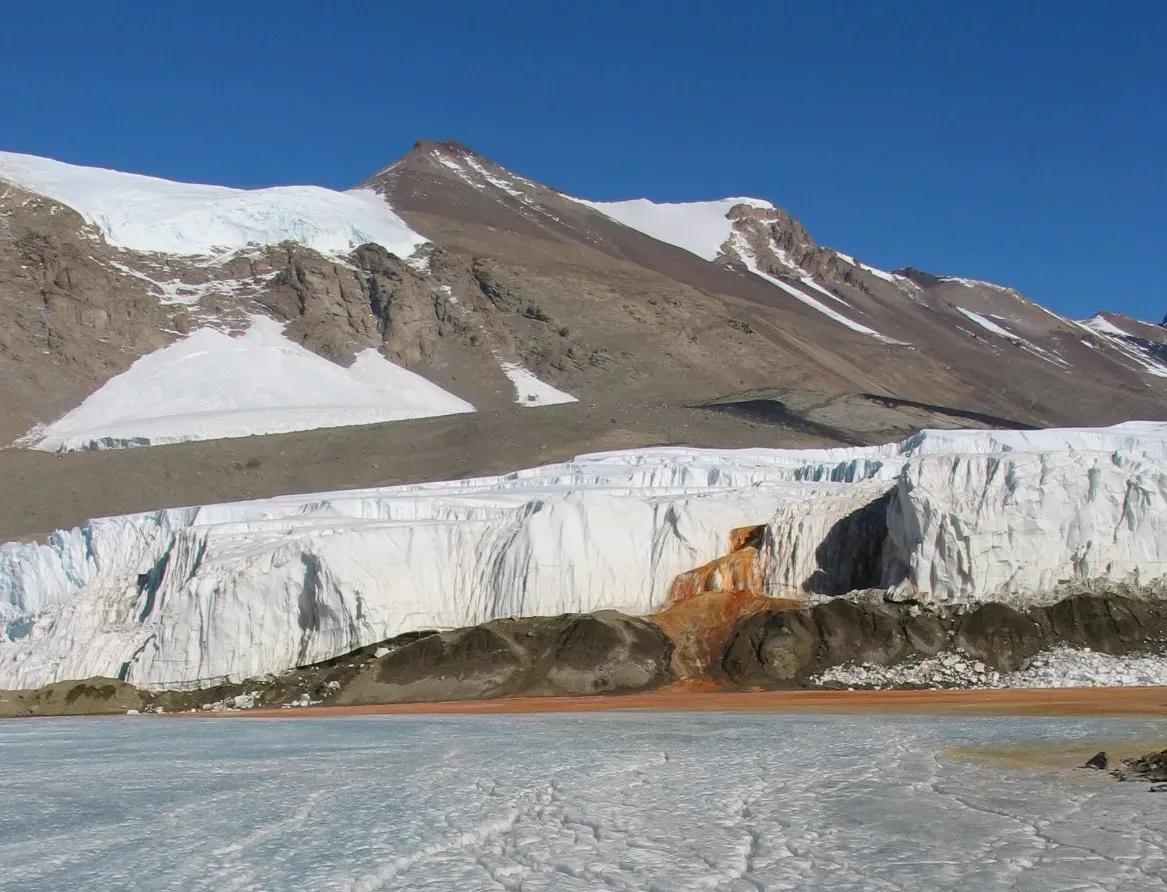
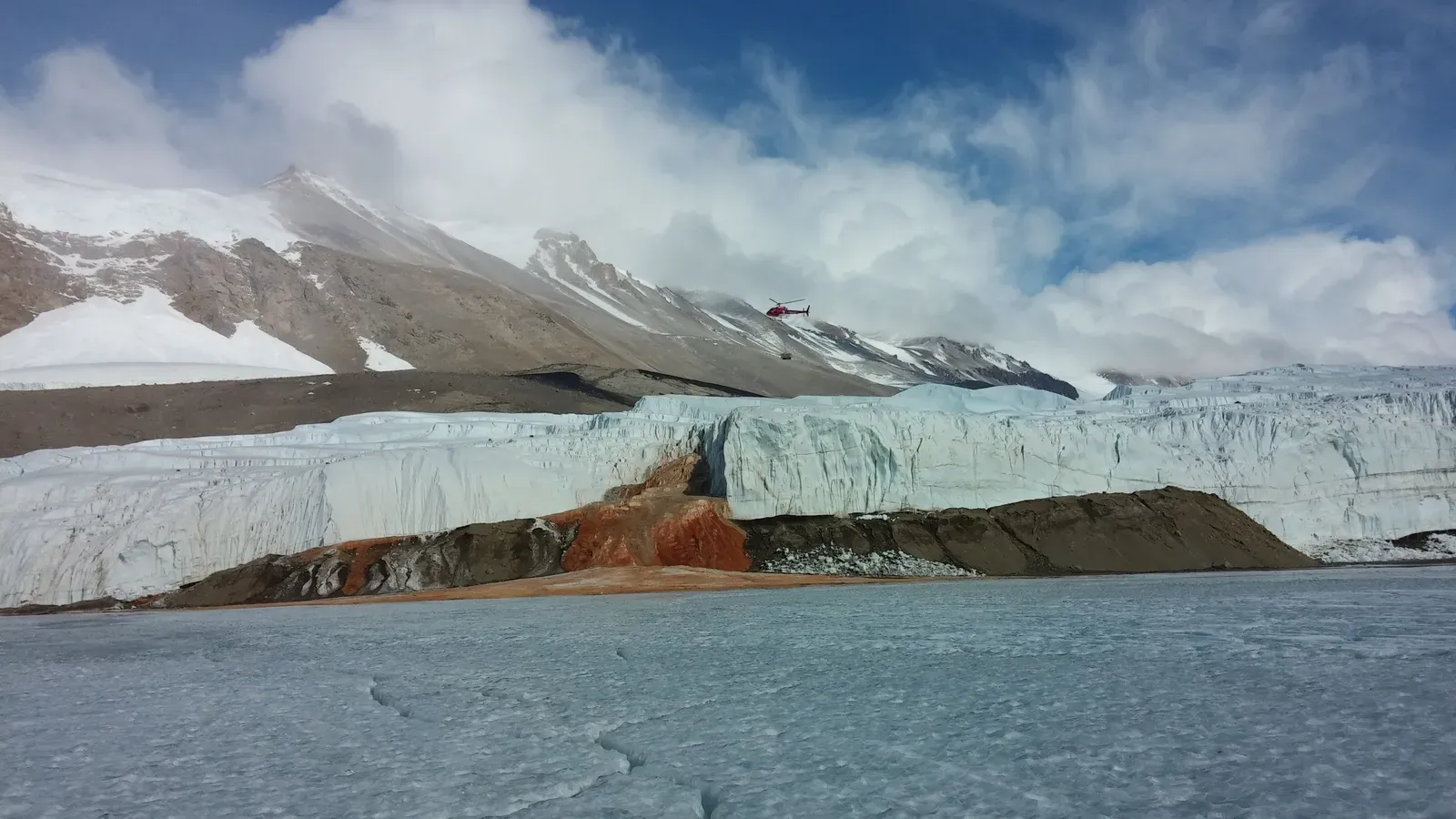
Blood Falls is an outflow of an iron oxide-tainted plume of saltwater, flowing from the tongue of Taylor Glacier onto the ice-covered surface of West Lake Bonney in the Taylor Valley of the McMurdo Dry Valleys in Victoria Land, East Antarctica. That description alone tells you this is no ordinary waterfall.
The saltwater source is a subglacial pool of unknown size overlain by about 400 metres, or roughly 1,300 feet, of ice, several kilometers from its tiny outlet at Blood Falls. Think about that for a moment. You are essentially looking at water that has been sealed beneath an enormous slab of ice, traveling through the dark for kilometers, before it finally punches its way out into the open. The source lies beneath the thick ice of the Taylor Glacier, where an ancient, isolated subglacial lake harbors highly saline water saturated with iron and other minerals. Over thousands of years, this brine has been sealed off from the surface, confined within the glacier’s interior. The extreme cold, combined with the high salinity, prevents the water from freezing, maintaining a liquid state even at frigid temperatures well below the normal freezing point.
The Real Reason It Runs Blood Red
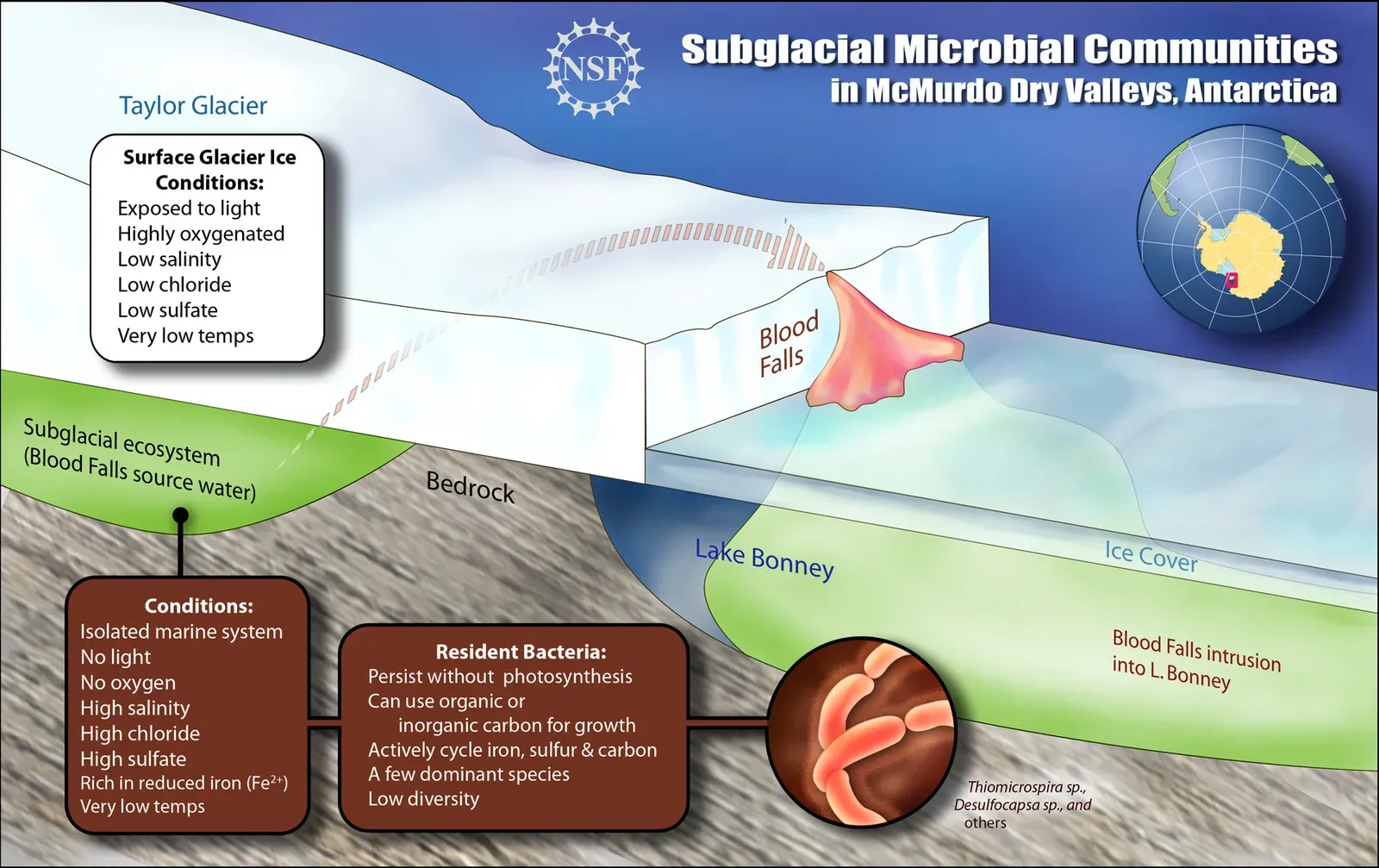
Here is the thing. The liquid coming out of Blood Falls is not actually red when it is underground. The liquid oozing from the crevasse at Blood Falls is actually clear. The blood-red color comes from iron in the liquid that oxidizes at the surface. It is basically the same process that turns iron nails orange with rust, just happening in real time on an epic scale.
As this iron-rich brine surfaces and meets the oxygen-rich atmosphere, the ferrous iron swiftly oxidizes into ferric iron, which has a deep red color. This chemical reaction transforms what could be a stark, colorless flow into a striking display of crimson, almost like a splash of blood staining the ice below. The clearest explanation for the falls’ crimson hue arrived in 2023, following a study published in Frontiers in Astronomy and Space Sciences. Using high-resolution transmission electron microscopy at Johns Hopkins University, research scientist Ken Livi and a team of experts examined samples of the iron-rich brine and discovered something previous mineralogical tests had missed: amorphous iron nanospheres.
The Nanosphere Breakthrough That Changed Everything
The nature of the nanospheres went undetected not only because they are minuscule, but also because previous research teams believed that some sort of mineral was causing the “bloody” water, and the real culprit, the nanospheres, are not minerals. It is a classic case of looking for the answer in the wrong category entirely.
These nanospheres are chemically diverse, containing silicon, calcium, aluminum, and sodium, and are highly reactive. While the brine remains clear within the oxygen-free reservoir deep under the ice, the nanospheres oxidize instantly upon contact with the Antarctic air. It is almost like watching a magic trick in slow motion once you understand the chemistry. The water is perfectly clear down below, then the moment it hits air, it transforms into something that looks genuinely alarming. Livi is confident that the team has solved the Blood Falls mystery but says its research has uncovered another issue that now needs to be addressed.
Ancient Microbes Living in the Dark Below
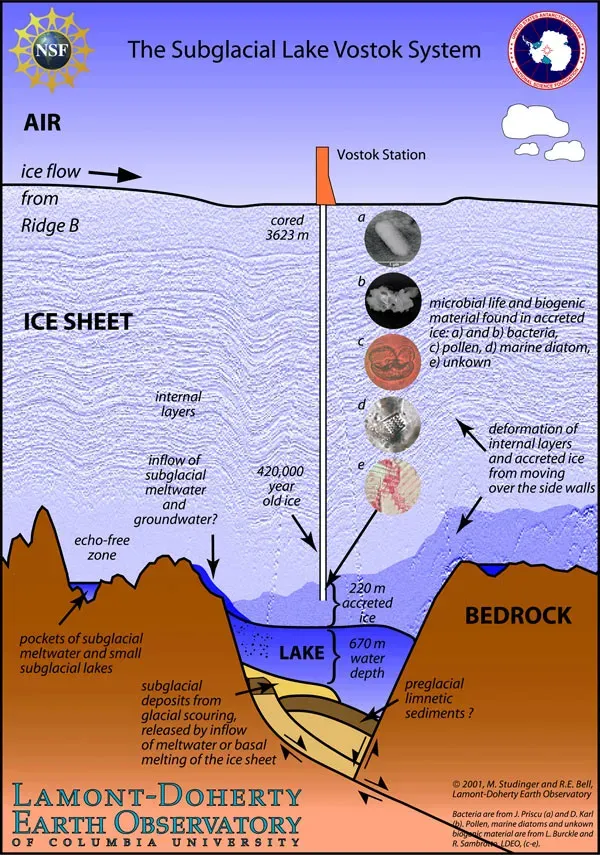
Perhaps the most jaw-dropping part of the whole Blood Falls story is not the color at all. It is what is alive down there. Ancient bacteria living in the deep, subglacial pool that serves as Blood Falls’ source do some quirky chemistry. Bacteria trapped roughly 1.5 million years ago in a dark, anoxic pond 400 meters below the glacier use the abundant sulfate present as an energy source.
Evidence suggests the particles form in a chemical environment shaped by ancient microbes living beneath the glacier in total darkness, extreme cold, and very low oxygen. These microorganisms survive in hypersaline water trapped beneath the ice, using iron and sulfur compounds instead of sunlight to fuel their metabolism. The subglacial system may have remained isolated for hundreds of thousands of years, allowing life to adapt to conditions that would be lethal almost anywhere else on the planet. Water samples from Blood Falls contained at least 17 different types of microbes, and almost no oxygen. Seventeen types of life, thriving in what sounds like the definition of a dead zone. Let’s be real, that is extraordinary.
What Blood Falls Means for the Search for Life on Mars
Scientists studying Blood Falls often point to its relevance for astrobiology, especially the search for life on Mars. Conditions beneath Taylor Glacier, including low temperatures, high salinity, minimal oxygen, and long-term isolation, share similarities with environments scientists think might exist below the Martian surface. If microbial life can persist under Antarctic ice, similar survival strategies could, in theory, exist elsewhere in the solar system.
Researchers, including teams working with NASA, often use Blood Falls as an analog for potential extraterrestrial habitats, particularly subsurface brines on Mars or icy moons like Europa. There is something wonderfully humbling about that. A strange red waterfall at the bottom of the world, once dismissed as a curiosity, is now helping scientists imagine where else in the universe life might quietly persist. Research teams are now focused on deploying autonomous stations and drone surveys to monitor the subglacial lake systems continuously, aiming to predict the eruption cycles of Blood Falls. The integration of satellite imagery and machine learning models seeks to identify early signs of subglacial activity, enhancing our understanding of ice sheet stability.
Conclusion
Blood Falls is one of those rare phenomena that keeps rewarding anyone willing to look deeper. What started as a seemingly unexplainable stain of crimson on Antarctic ice turned out to be a window into a hidden world of ancient brine, bizarre microbial life, and chemistry that operates on a million-year timescale. It is geological storytelling at its most dramatic.
The fact that it took over a century of science, from early algae theories to cutting-edge nanosphere analysis and radar imaging, to fully piece together this story is a reminder of how genuinely complex our planet still is. There are layers beneath layers, and every breakthrough tends to expose a new question waiting underneath. Blood Falls remains visually striking, but its real significance lies beneath the surface. It tells a story not just of oxidized iron, but of life adapting in ways scientists are still learning to recognize, on Earth, and potentially far beyond it.
So the next time you think science has figured everything out, remember: there is a waterfall in Antarctica that looked like blood for over a hundred years, and we are still uncovering what it is truly trying to tell us. What do you think – could the discovery of living microbes beneath Antarctica change the way you think about life on other planets? Drop your thoughts in the comments.