
The Expanding Universe Meets Local Gravity (Image Credits: Unsplash)
The universe continues to expand, carrying distant galaxies farther apart, yet astronomers observe galaxies merging in dramatic collisions.[1]
The Expanding Universe Meets Local Gravity
Astronomers long noted that the universe expands such that every galaxy recedes from every other, a phenomenon rooted in the Big Bang’s aftermath. This motion follows a pattern where farther objects move away faster. However, this rule applies broadly to vast distances.[1]
Gravity intervenes on smaller scales. It pulls objects together with a force that strengthens over shorter distances. Within galaxy groups, this attraction often overpowers expansion. Structures like clusters remain intact as gravity binds them.[1]
Scales Where Forces Compete
Consider the Milky Way and the distant NGC 3370, separated by nearly 100 million light-years. Here, gravitational pull weakens dramatically, allowing expansion to dominate. The galaxies drift apart despite any faint tug.[1]
In contrast, closer neighbors tell a different story. The Local Group, spanning a few million light-years, holds about 50 galaxies under mutual gravity. Expansion loses influence here, enabling orbits and encounters.[1]
| Distance Scale | Dominant Force | Outcome |
|---|---|---|
| Local Group (~few million ly) | Gravity | Bound structures, mergers possible |
| Clusters to superclusters | Gravity | Stable groups resisting expansion |
| Beyond (~100M ly+) | Expansion | Galaxies recede |
Milky Way and Andromeda: A Collision Course
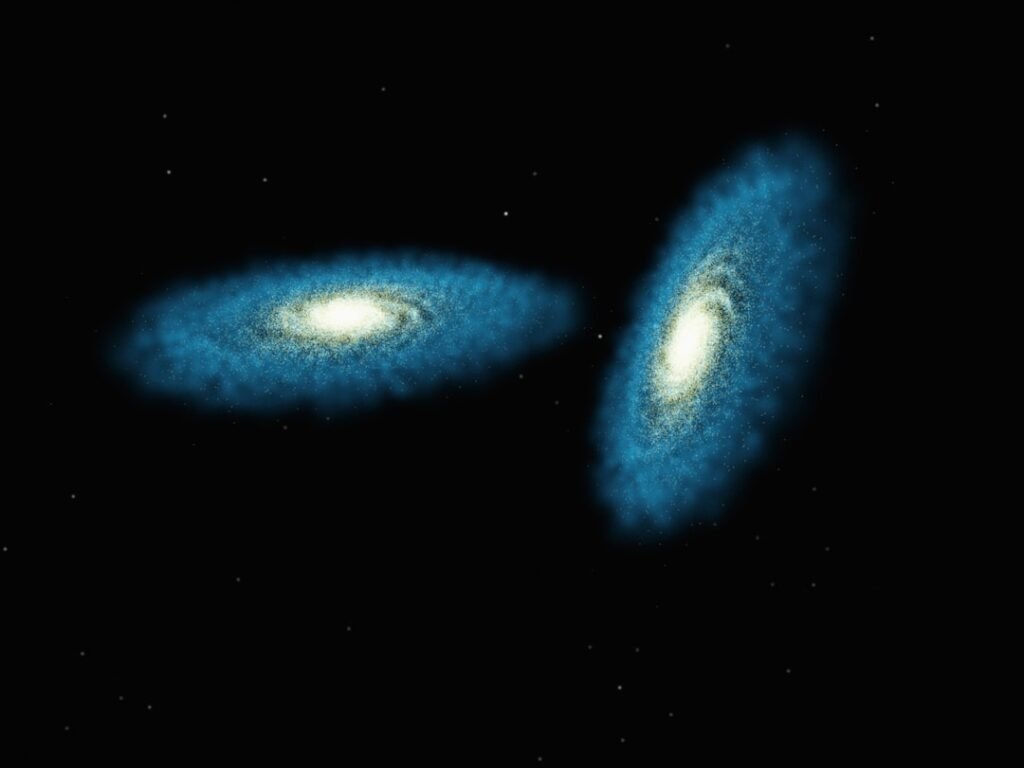
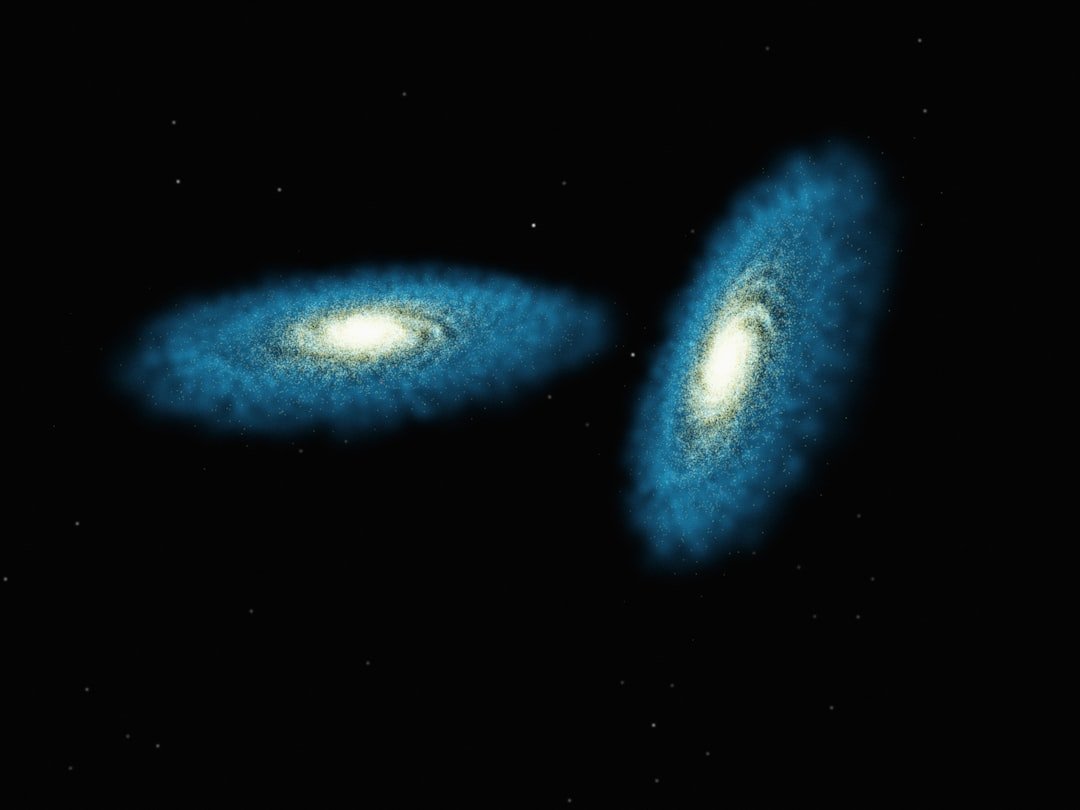
The Milky Way and Andromeda Galaxy exemplify gravity’s local victory. These spirals, about 2.5 million light-years apart, approach each other at high speed. Simulations predicted a merger in roughly 5 billion years.[1]
During the event, Andromeda would dominate Earth’s night sky before the galaxies blend into one. Gravity ensures their paths converge despite the broader expansion. Such mergers reshape galaxies, fueling star formation.[1]
Emerging Doubts from Recent Research
A 2025 study challenged the straightforward merger timeline. Published in Nature Astronomy, it highlighted disruptions from other Local Group members like the Triangulum Galaxy. These interactions could alter trajectories.[1]
Researchers emphasized that merger outcomes hinge on gravitational strength versus expansion. As one explanation noted, galaxies merge when their pull exceeds cosmic stretch. Ongoing observations refine these predictions.[1]
- Expansion drives distant galaxies apart universally.
- Gravity binds local groups like the Milky Way’s neighborhood.
- Mergers occur where attraction prevails over recession.
- Future collisions, such as Milky Way-Andromeda, illustrate this balance.
- New models account for multi-galaxy dynamics.
Key Takeaways
- Gravity triumphs over expansion within bound structures.
- Galaxy mergers fuel cosmic evolution.
- Predictions evolve with advanced simulations.
Galaxy mergers reveal the universe’s dual nature: relentless expansion punctuated by gravity’s intimate bonds. This cosmic dance shapes our cosmic future. What do you think about the Milky Way’s impending encounter? Tell us in the comments.