
Chemistry rarely throws a genuine curveball. Most discoveries feel like incremental steps, small refinements on things we already understood pretty well. This one is different. Scientists have synthesized a molecule with a twisted, half-Möbius structure that behaves in ways chemists have simply never documented before, and the implications are genuinely exciting.
It sounds like something from a science fiction novel, honestly. A molecule that twists through space in a way that defies conventional molecular geometry, carrying rare electronic properties that shouldn’t, by standard rules, exist. So let’s dive in.
What Exactly Is a Half-Möbius Molecule?
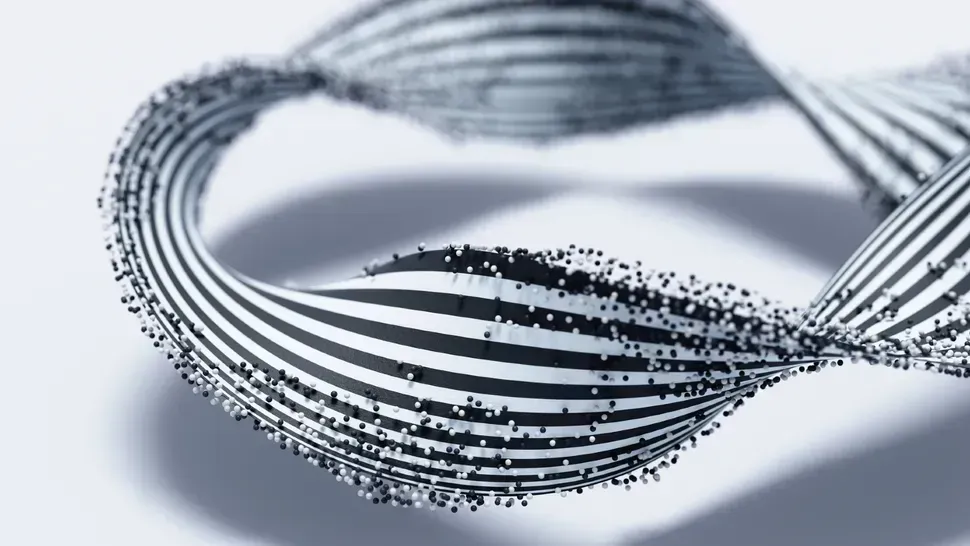
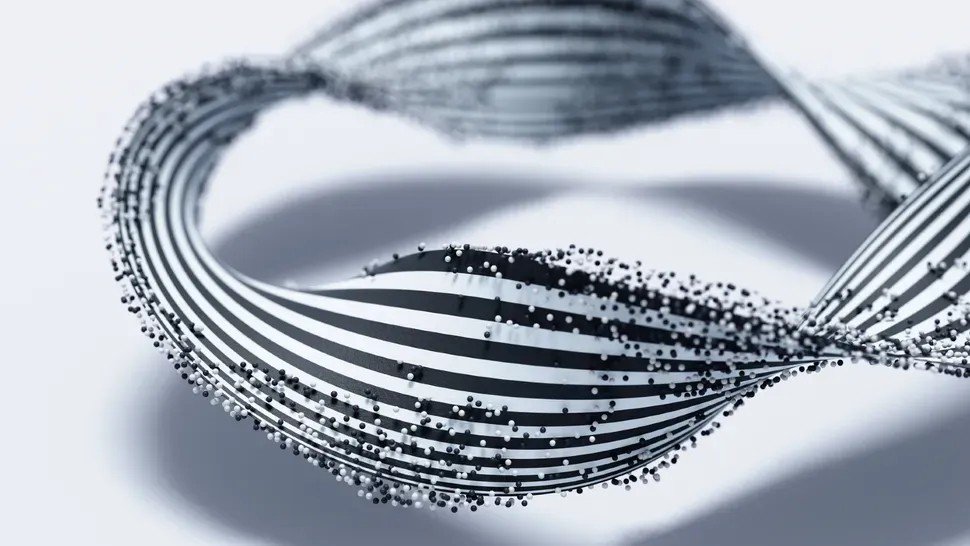
Most people know the Möbius strip as that mind-bending loop of paper with only one side and one edge. It’s a classic from a high school math class, simple but deeply strange. Now imagine applying that same twisted topology not to a strip of paper, but to the electron pathways inside an actual molecule.
A full Möbius molecule would complete a full topological twist within its ring structure. This new molecule does something subtler and, in many ways, more surprising. It achieves only half of that twist, landing it in a structural category that chemists had theorized but never actually held in their hands before. It’s a bit like finding the first real-world example of a creature that scientists had only sketched out in theory.
How the Molecule Was Built
Creating this kind of structure isn’t something that happens by accident in a lab. The synthesis required precise, deliberate chemical engineering. Researchers had to design a molecular ring, specifically a porphyrin-based system, that could maintain this unusual twisted conformation without simply collapsing back into a more energetically comfortable, flat shape.
Porphyrins are fascinating molecules in their own right. They’re the same family of compounds found in hemoglobin, the thing that carries oxygen in your blood. Using this scaffold, researchers were able to lock the half-Möbius twist into place and actually confirm its structure using advanced crystallographic methods. The fact that it stayed stable long enough to study is itself a small miracle of chemistry.
The Rare Electronic Properties That Shocked Researchers
Here’s the thing that really makes this discovery stand out. The molecule’s unusual topology produces electronic properties that have genuinely never been observed in a molecular system before. The way electrons move through the twisted ring is fundamentally different from anything in the existing chemical literature.
Aromaticity, which is essentially the special stability certain ring-shaped molecules gain from their electron arrangements, behaves in a completely unexpected way here. In flat or even standard Möbius molecules, the rules are relatively well understood. In this half-Möbius system, those rules appear to break down, or at least bend dramatically. It’s like discovering that gravity works slightly differently in one very specific corner of a room.
Why Topology in Chemistry Actually Matters
Let’s be real: topology sounds like an abstract concept better suited to a mathematics seminar than a chemistry lab. Most people think of molecules as static, geometric shapes, like little ball-and-stick models you’d build in school. The truth is far more dynamic.
The shape and twist of a molecule directly influences how it reacts, how it conducts electricity, and how it interacts with biological systems. Topological chemistry is an emerging field that explores exactly these kinds of structural curiosities. This half-Möbius discovery suggests that there’s a whole category of twisted molecular architectures still waiting to be explored, each with potentially unique and exploitable properties. Think of it as unlocking a new drawer in a cabinet you thought you already knew everything about.
Connections to Möbius Aromaticity and Prior Research
The concept of Möbius aromaticity has actually been floating around in theoretical chemistry since the 1960s. It was first proposed as a counterpart to the well-established rules governing aromatic stability in flat ring systems. For decades, it remained largely a theoretical curiosity.
Real Möbius aromatic molecules were only confirmed experimentally in the early 2000s, which was itself a major milestone. This new half-Möbius system pushes even further beyond that frontier. It doesn’t fit neatly into either the classical aromatic model or the full Möbius aromatic model, and that ambiguity is precisely what makes it so scientifically valuable. Sometimes the most useful discoveries are the ones that refuse to be categorized.
Potential Applications and Future Possibilities
Honestly, it’s too early to talk about concrete applications with any real certainty. But the scientific community is clearly paying attention for good reason. Molecules with unusual electronic properties are prime candidates for roles in next-generation electronics, particularly in areas like molecular conductors or organic semiconductors.
There’s also genuine interest in what twisted aromatic systems might do in biological or photochemical contexts. Light-harvesting applications, molecular machines, and even drug design all rely on fine-tuned electronic behavior. A molecule that sits in a previously unexplored electronic territory is essentially a new tool that nobody has had access to before. Whether it becomes a practical tool or remains a profound theoretical landmark, it absolutely opens doors.
What This Discovery Says About the State of Chemistry Today
It’s easy to assume that chemistry, as a science, has mapped most of its territory. We’ve had the periodic table for over 150 years, after all. Discoveries like this serve as a healthy reminder that molecular space is effectively infinite and that fundamental surprises are still absolutely possible.
The synthesis of a stable, characterizable half-Möbius molecule is not a minor footnote. It represents the experimental confirmation of a structural class that existed only in theoretical imagination. It’s humbling, in the best possible way. Science keeps doing this, just when you think the map is complete, someone discovers an entirely new continent hiding in the margins.
Conclusion: Chemistry Just Got a Little More Wonderfully Weird
This discovery is one of those rare moments in science that genuinely shifts perspective. It’s not just about one unusual molecule. It’s about the realization that our understanding of molecular structure, topology, and electron behavior still has vast unexplored regions. The half-Möbius molecule doesn’t just push a boundary, it reveals that the boundary was further out than anyone expected.
I think what makes this so compelling is how it combines deep theoretical chemistry with something almost poetic. A twist in space, a loop that isn’t quite a loop, carrying electronic behavior no one has catalogued before. Chemistry, at its best, is as strange and beautiful as anything in nature. What do you think? Does a twisted molecule that breaks the rules make you see the molecular world differently? Drop your thoughts in the comments.