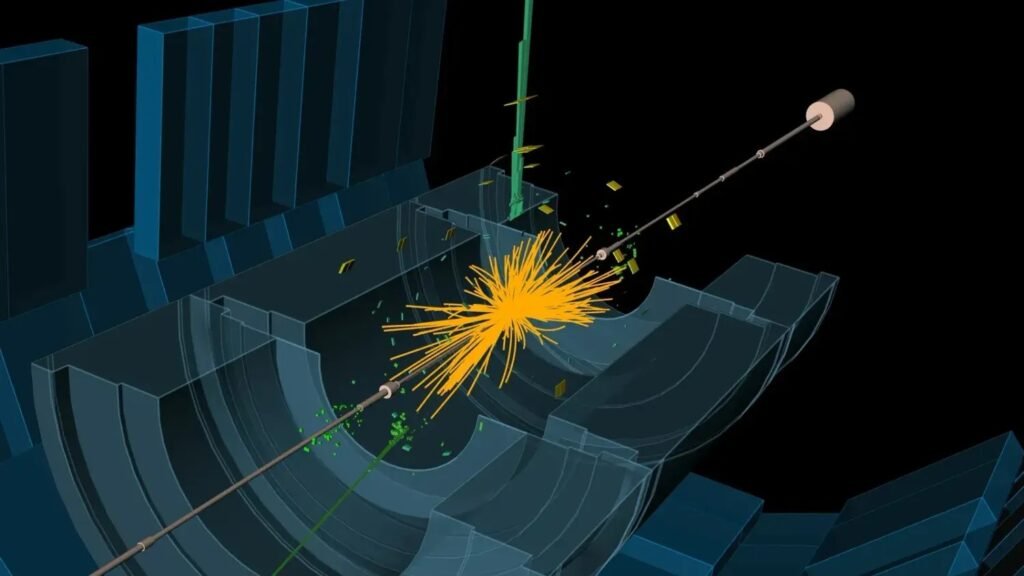

Physics just made headlines again. Not with a theory, not with a simulation – with raw, jaw-dropping experimental reality. CERN’s Large Hadron Collider has pushed proton beam energy to levels never before achieved in human history, and the implications are, honestly, staggering.
This isn’t just another incremental upgrade buried in a technical report somewhere. This is the kind of milestone that makes particle physicists lose sleep – in the best possible way. Something genuinely new may be lurking in the data, and the whole scientific world is watching. Let’s dive in.
A Record That Rewrites the Rulebook
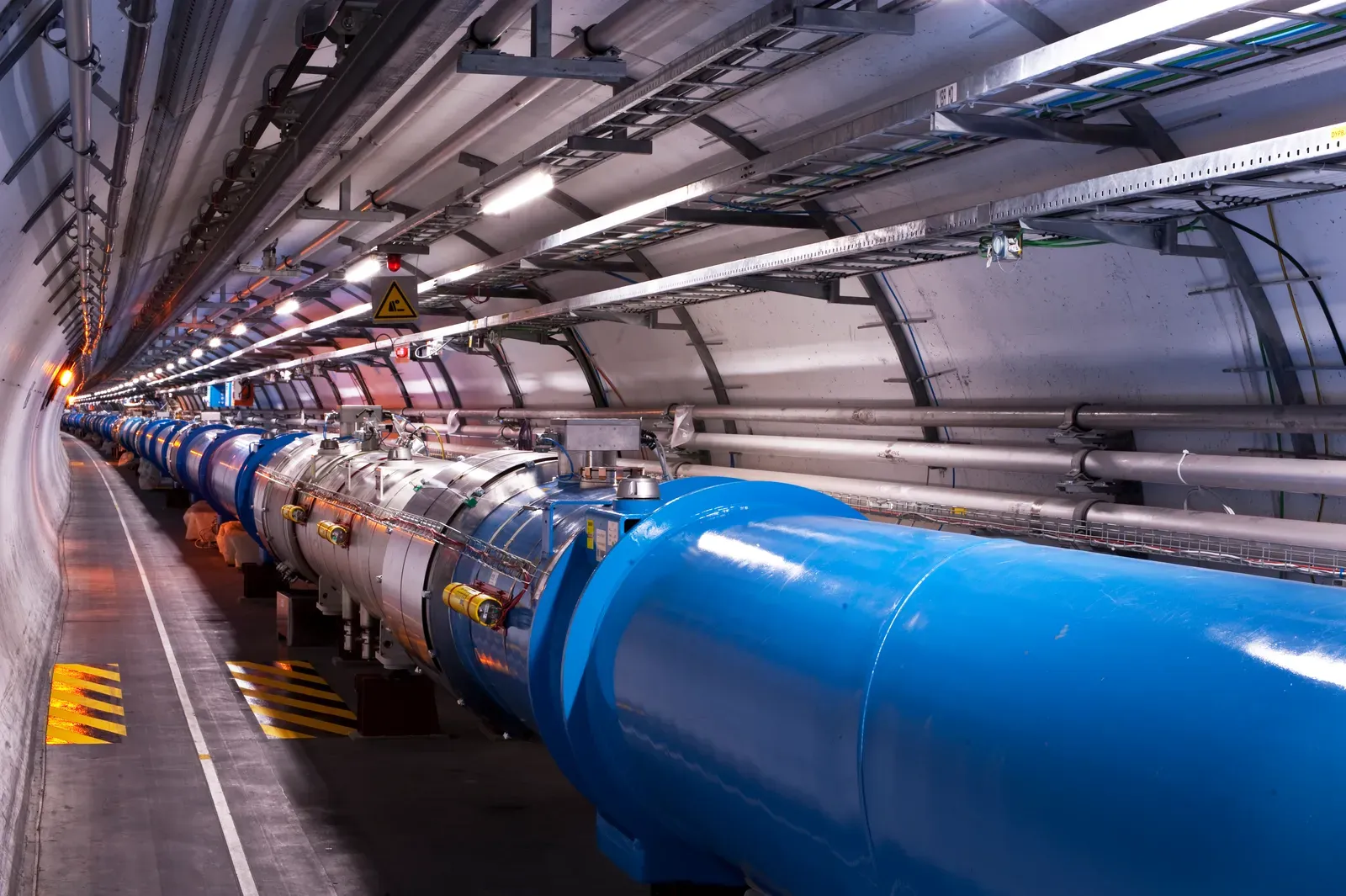
Here’s the thing about the Large Hadron Collider – it already held the world record for the highest-energy particle collisions ever achieved. Now it’s broken its own record. During a recent run at CERN’s facility near Geneva, the LHC achieved proton beam energies of 6.8 teraelectronvolts per beam, pushing the total collision energy to an extraordinary 13.6 teraelectronvolts.
To put that in perspective, imagine two freight trains hurtling toward each other at nearly the speed of light, each packed with more energy than you could possibly calculate on a napkin. The LHC essentially does something like that – but with particles far smaller than atoms, billions of times per second.
This record was reached as part of Run 3, the current operational phase of the collider that began in 2022 after years of upgrades and maintenance. Scientists didn’t just flip a switch and call it a day. Getting stable, high-energy beams running reliably at this scale involves staggeringly complex magnetic and cryogenic systems operating at temperatures colder than outer space.
Why Proton Energy Matters More Than You Might Think
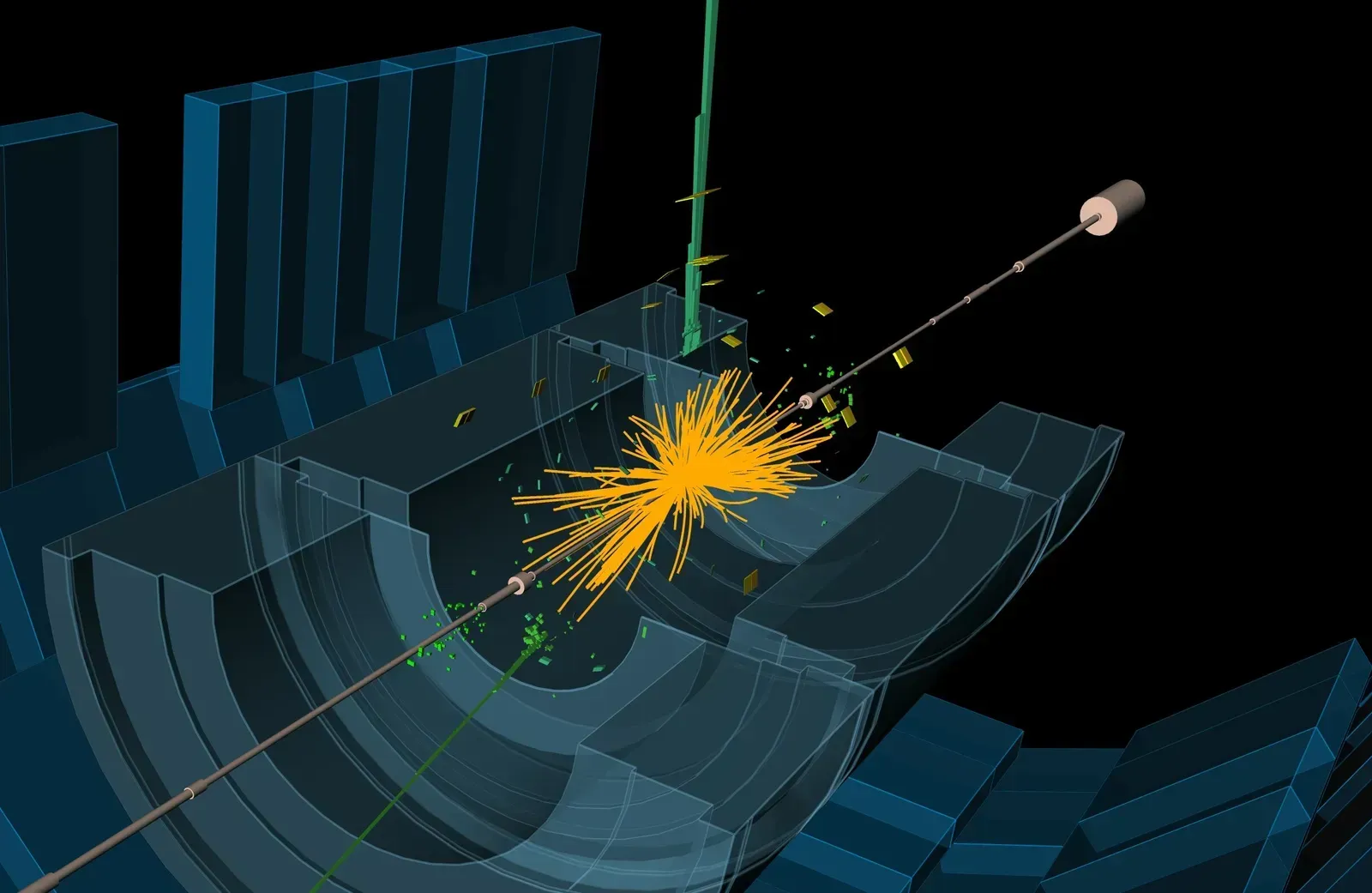
It’s easy to hear the words “teraelectronvolts” and completely zone out. I get it. It sounds abstract. But the energy of a particle collision directly determines what physics you can actually observe. Higher energy means heavier, rarer particles can be produced – particles that may have never been detected before and that could unlock entirely new chapters in our understanding of the universe.
Think of it like trying to crack open a walnut. More energy means a bigger hammer. Except in this case, the “walnut” is the fabric of reality itself, and what’s inside might completely reshape physics as we know it. The Standard Model of particle physics, as brilliant as it is, leaves enormous unanswered questions – dark matter, matter-antimatter asymmetry, the nature of the Higgs boson’s role – and higher collision energy is one of the most powerful tools researchers have to probe those mysteries.
What CERN’s Scientists Are Actually Looking For
With this record energy now achieved, the LHC’s detectors – including ATLAS, CMS, ALICE, and LHCb – are collecting collision data at an unprecedented rate. Researchers are particularly focused on studying the Higgs boson in greater detail. Since its discovery in 2012, scientists have known the Higgs exists, but they still have a lot to learn about how it behaves and whether it behaves exactly as the Standard Model predicts.
Beyond the Higgs, there’s genuine hope that something completely unexpected might show up. Physics has a wonderful history of surprises. When researchers go looking for one thing, they sometimes find something even more fascinating hiding in the noise. That possibility is exactly what drives the people working twelve-hour shifts monitoring these detectors.
CERN is also investigating quark-gluon plasma – a state of matter that existed microseconds after the Big Bang. It sounds like science fiction, but it’s very real science. Understanding it could tell us something profound about how the universe transitioned from a hot, dense soup of particles into the structured cosmos we observe today.
The Engineering Marvel Behind the Numbers
Let’s be real – the LHC is one of the most extraordinary machines ever built by human hands. It stretches roughly 27 kilometers in circumference, buried about 100 meters beneath the French-Swiss border. More than 1,200 superconducting dipole magnets guide the proton beams around this enormous ring, and they must be cooled to approximately minus 271 degrees Celsius to function. That’s colder than the void of deep space.
Achieving the new energy record required careful tuning of these magnetic fields and precise control over how beams are injected and accelerated through the LHC’s chain of smaller accelerators before they even reach the main ring. The people who make this work every day don’t get nearly enough credit. What they’re doing is, without exaggeration, one of the most technically demanding feats in all of science.
Run 3 and the Road Ahead for the LHC
Run 3 of the LHC is expected to continue delivering data through 2026, and the data haul is already surpassing what was collected during the entire previous operational period. Scientists expect to collect more proton-proton collision data in Run 3 than in Runs 1 and 2 combined. That’s an almost absurd volume of information, and the analysis of it will likely continue well into the next decade.
After Run 3 concludes, the collider will undergo a significant upgrade known as the High-Luminosity LHC, or HL-LHC. This version aims to dramatically increase the number of collisions per second – not necessarily pushing energy even higher, but increasing the sheer quantity of collisions, which gives researchers much better statistical precision in their measurements. It’s the difference between hearing a whisper once and hearing it a thousand times until you’re absolutely certain what was said.
What This Means for Physics Beyond the Standard Model
The Standard Model has been called the most successful theory in all of science, and it absolutely deserves that reputation. It predicted the existence of particles before they were ever found and describes fundamental forces with incredible accuracy. Yet it’s also widely acknowledged to be incomplete. It doesn’t account for gravity at quantum scales, it offers no satisfying explanation for dark matter, and it doesn’t explain why there’s more matter than antimatter in the universe.
Many physicists are cautiously optimistic – maybe more than cautiously – that the LHC’s new energy regime could finally produce hints of what lies beyond the Standard Model. Supersymmetric particles, extra dimensions, new force-carrying bosons – these are all possibilities that become more testable as energy increases. It’s hard to say for sure what’s out there, but the probability of discovering something truly paradigm-shifting grows with every collision event recorded at this new record energy.
A Pivotal Moment in the History of Human Knowledge
There’s something genuinely moving about what CERN is doing. Thousands of scientists from over a hundred countries are working together, pointing the most powerful machine ever constructed at the smallest things that exist, asking the biggest questions humans have ever dared to ask. That’s remarkable by any measure.
This new energy record isn’t just a number on a chart. It represents the outer edge of humanity’s current ability to probe the nature of reality. Every collision recorded at 13.6 teraelectronvolts is a tiny window into conditions that haven’t existed naturally since the very first moments after the Big Bang. The data flowing through CERN’s systems right now might already contain the answer to questions we’ve been asking for decades – we just haven’t finished reading it yet.
Conclusion: The Universe Is Still Full of Surprises
Honestly, moments like this remind me why science is worth caring about. Not because it’s useful – though it certainly is – but because it’s an expression of genuine human curiosity at its absolute best. The LHC breaking its own energy record isn’t a footnote. It’s a milestone on the longest, most fascinating road humanity has ever walked.
The physics community is now sitting on a mountain of new data, with better tools than ever and an energy frontier that was unimaginable just twenty years ago. What they find – or don’t find – will shape physics for generations. So here’s a thought worth sitting with: what if the most important discovery in the history of science is already hiding in that data right now, waiting to be found? What do you think could be lurking in the collisions? Tell us in the comments below.