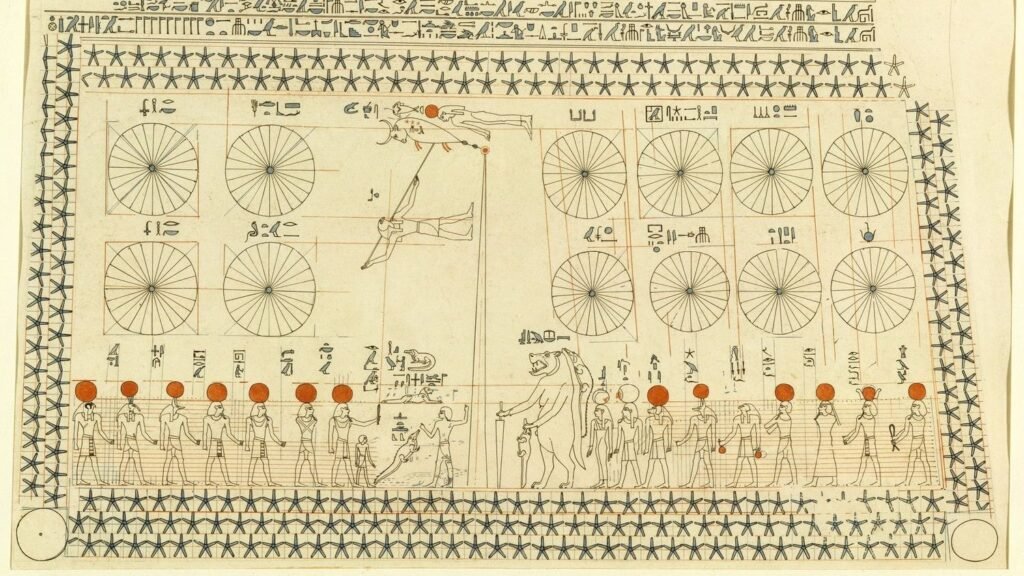

Imagine spending two thousand years searching for something that was there all along, just buried beneath someone else’s handwriting. That is essentially the story of humanity’s oldest known star map, a breathtaking scientific document that was literally scraped away, overwritten, and forgotten somewhere in the deserts of Egypt. It sounds like the plot of a thriller, but this is real, and what researchers have uncovered in early 2026 may be one of the most significant discoveries in the history of science.
The man at the center of it all is Hipparchus, a Greek astronomer who lived roughly two thousand years ago and apparently understood the heavens far better than most people give him credit for. His legendary star catalog had been considered lost, known only through secondhand references in other ancient texts. Then, tucked inside a medieval religious manuscript, it showed back up. Be prepared to have your sense of history turned completely upside down.
The Man Who First Mapped the Stars
Most people have never heard of Hipparchus, yet the case could easily be made that he is one of the most important scientists who ever lived. Around 2,150 years ago, the father of astronomy had not only figured out how equinoxes occur, invented a scale of stellar magnitude, observed planets, discovered a nova, and made cosmic predictions that were eerily accurate – he also created what is thought to be the first star catalog to ever exist.
Historically referred to as the “father of scientific astronomy,” Hipparchus (circa 190 B.C. to 120 B.C.) spent much of his later years making astronomical observations from the island of Rhodes. Historical texts credit him with a number of impressive scientific advances, such as accurately modeling the motions of the moon, inventing a brightness scale to measure the stars, further developing trigonometry, and possibly inventing the astrolabe. Honestly, the list of his achievements is staggering when you consider he had no telescope, no computer, and no digital tools of any kind.
Hipparchus’s star catalog is the oldest known attempt to document the positions of as many objects in the night sky as possible, and it was the first time that two coordinates were used to pinpoint each object’s location. Think of it like the ancient world’s version of Google Maps for the sky. His masterpiece, a comprehensive catalog completed around 129 BCE, contained at least 850 stars, each meticulously mapped with coordinates based on latitude and longitude. This was the first known instance in which stars were recorded using rigorous mathematical methods, marking a definitive leap in human knowledge.
How the Map Vanished for Over a Millennium
Here is where the story takes a genuinely heartbreaking turn. That original catalog is lost to time, and we know of it only thanks to the writings of later scientists such as Ptolemy, who created his own star catalog around 150 A.D. and attributed an earlier one to Hipparchus. For centuries, it existed in name only, like a ghost haunting the margins of astronomical history.
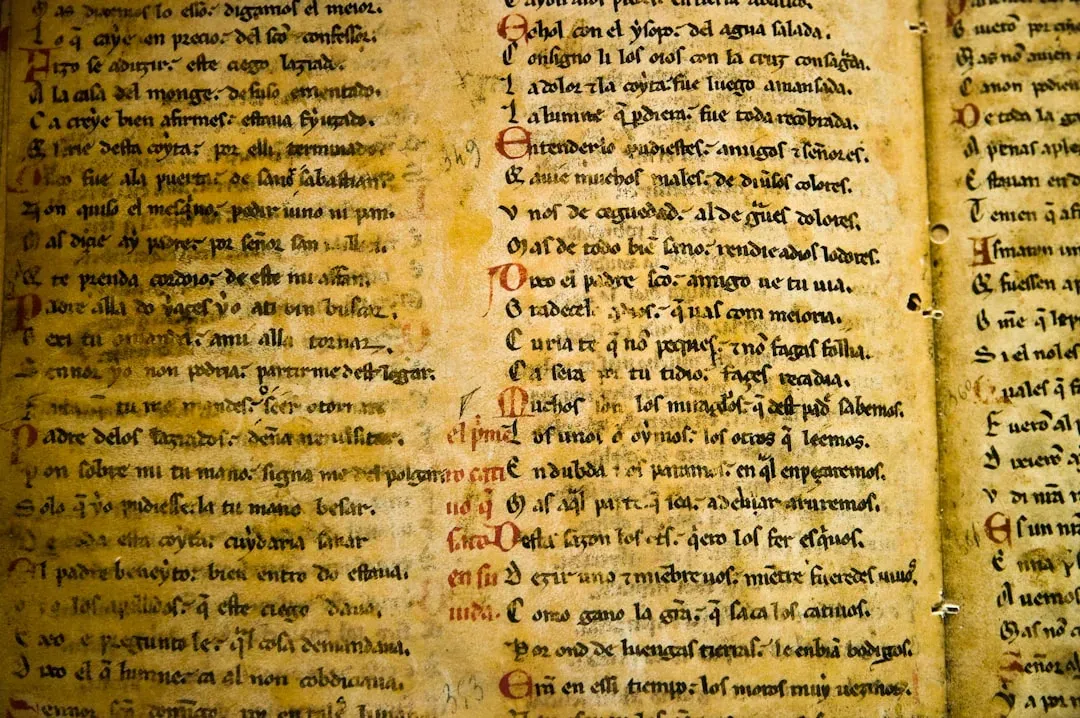
The survival of these fragments took a turn for the worse during the Middle Ages. Between the 9th and 11th centuries, monks at Saint Catherine’s Monastery on Egypt’s Sinai Peninsula, likely desperate for writing materials, scraped away the ancient astronomical text. At the time, parchment, made from animal skins, was both rare and expensive, so erasing and rewriting texts was common practice. It was a completely logical act for the time, even if it feels like an intellectual tragedy from where we stand today.
To reuse these precious pages, monks would soak them in liquid, often milk, then use pumice stones to scrape off the writing and finally sprinkle the material with flour to make it look white and new. The Codex Climaci Rescriptus is pieced together from at least ten different Greek and Aramaic manuscripts. Text from those manuscripts was erased and overwritten by monks with a Syriac translation of the religious works of Saint John Climacus of Sinai. Thousands of years of astronomical genius, layered beneath a devotional religious text. That is one of history’s great ironies.
The Codex Climaci Rescriptus and Its Hidden Secrets
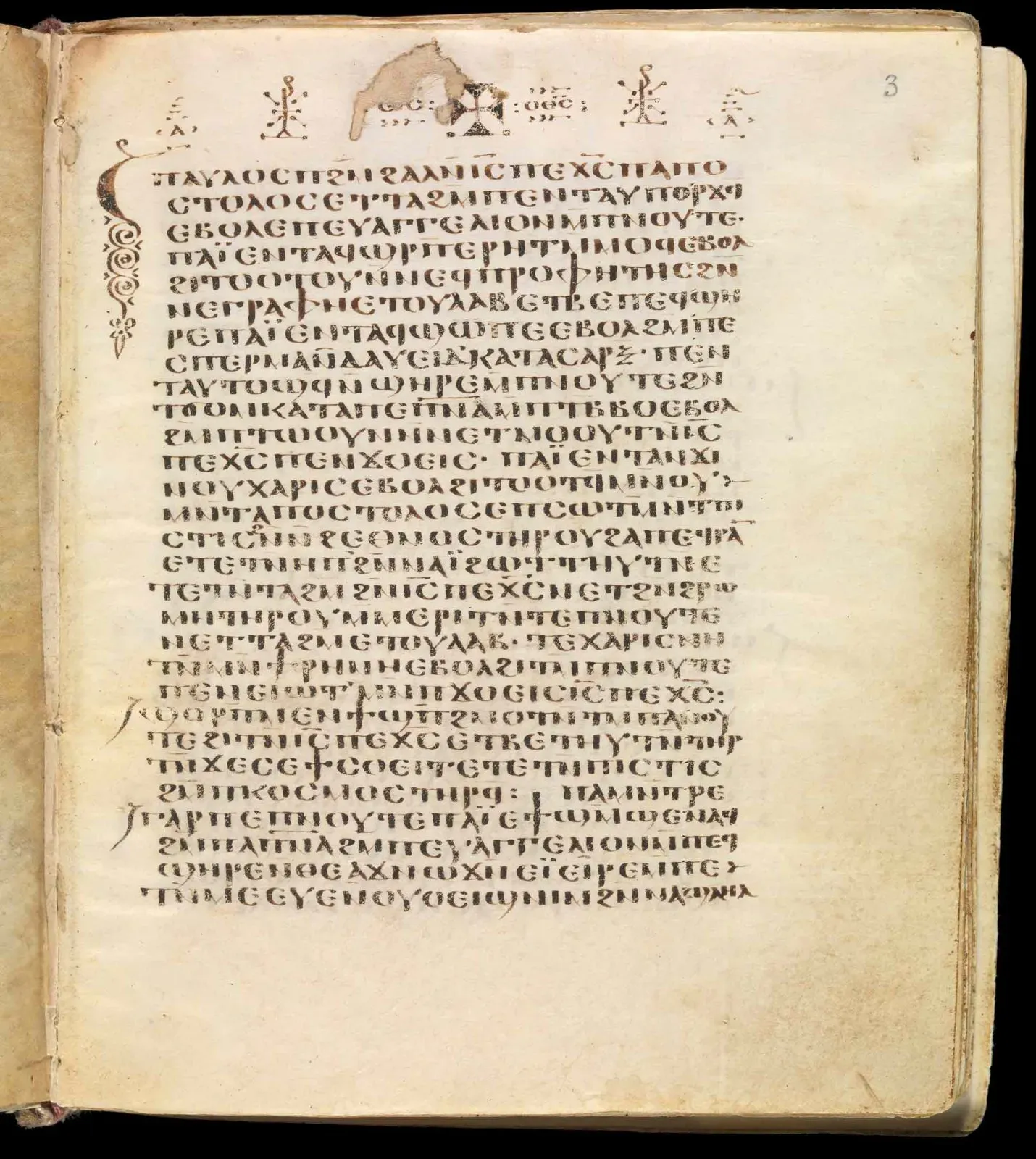
The document that sheltered this lost knowledge has quite a story of its own. The parchment being studied was from the Codex Climaci Rescriptus, a collection of ancient texts found in Sinai, Egypt, which date back to the sixth century. The collection is known as a palimpsest manuscript, which means that the parchment that was used to write on had been erased and re-used. Palimpsests are interesting to study because they often contain traces of the erased writing underneath the newer texts.
The term “palimpsest” comes from ancient Greek words meaning “scraped again” and denotes a manuscript that has had its words erased and written over. Such erasure was a common practice throughout history to repurpose expensive parchments, but it poses a unique challenge for scholars hoping to uncover lost texts. You can think of it a bit like a whiteboard that someone imperfectly erased. The ghostly remnants of the original writing were still there, just invisible to the naked eye.
The existence of earlier Greek writing on the parchment was first discovered in 2012 by a student named Jamie Klair, who was examining it as part of a summer assignment for biblical scholar Peter Williams at the University of Cambridge. Perplexed as to what these numbers might have represented, but suspecting they were the coordinates of celestial bodies, Williams sought a second opinion from French historian Victor Gysembergh. That moment of curiosity from a single student would set in motion one of science’s most exciting recent recoveries.
The Particle Accelerator That Brought the Stars Back to Life

This remarkable breakthrough was made possible thanks to the synchrotron at the SLAC National Accelerator Laboratory in Menlo Park, California. Operating in a similar way to the Large Hadron Collider, the machine emits extremely precise and powerful X-rays. I know it sounds crazy, but the same kind of technology used to probe the very fabric of matter was turned toward an ancient piece of animal skin sitting in a museum in Washington, D.C.
The research team used a synchrotron at the SLAC National Accelerator Laboratory in California, which accelerates charged particles to near the speed of light to produce intense X-ray beams. These beams penetrated the manuscript and reacted differently with inks used in different historical periods. Later inks contained higher levels of iron, while the older ink linked to Hipparchus left calcium-rich traces that researchers isolated using X-ray imaging.
To get the full picture, researchers shone SLAC’s focused and intense X-rays, far beyond visible light and which can be a million times as strong as those used in a dentist’s office, on the manuscript, taking precautions to avoid damaging the material. To ensure the safety of the fragile parchment, each 10-millisecond pulse of X-ray light hits a spot the width of a human hair. The level of precision here is genuinely astonishing. It is meticulous, almost surgical work.
What the Recovered Star Map Actually Revealed
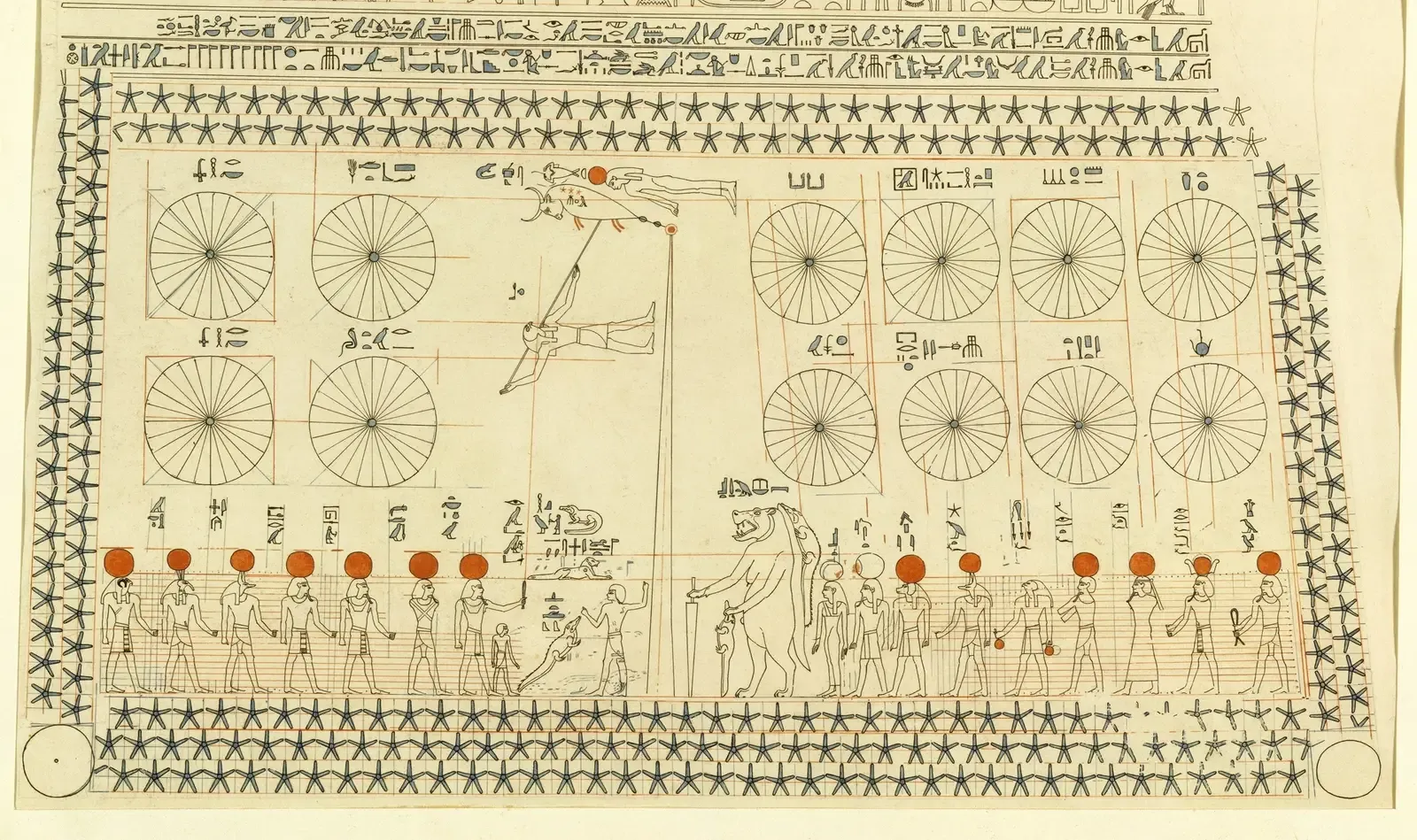
So what exactly did scientists find once the technology started doing its job? By Wednesday morning, the team had already identified the word for “Aquarius” and descriptions of “bright” stars within that constellation. These fragments include precise coordinates for stars within constellations such as Aquarius. The data confirmed Hipparchus as the source: the accuracy and the distinctive coordinate system match historical accounts of his methods.
The Cambridge researchers took Earth’s precession and worked the cycle backwards. They discovered the coordinates of the stars on the ancient star chart roughly matched the precessional angle of our planet around 129 BC, during the time Hipparchus was working on a star chart. Precession, by the way, refers to a slow wobble in Earth’s rotational axis that shifts the apparent position of stars over long periods of time. Matching those coordinates backward through time is a bit like carbon dating, but for the night sky.
Hipparchus did not simply draw stars; he measured their coordinates with a precision seemingly impossible for observations made with the naked eye. His work became the foundation upon which all modern astronomy is based. This rediscovered star catalog does more than fill a historical gap. It sheds light on the methods of observation developed in the ancient world and deepens our understanding of how early astronomers studied the heavens without telescopes or modern instruments.
The Bigger Picture: What This Means for Science History
Let’s be real – this discovery does not just thrill astronomers and classicists. It forces a broader rethink of what ancient people were actually capable of. Hipparchus’s accuracy proves that ancient science was much more advanced than we tend to think. The idea that pre-modern civilizations were fumbling in the dark, intellectually speaking, simply does not hold up when confronted with data like this.
The find also settles a long-running academic argument about a later, equally famous astronomer. According to Gysembergh, historians debated for years whether the Roman astronomer Ptolemy had plagiarized Hipparchus’s star catalog. Gysembergh said that by comparing the new data from the SLAC scans with Ptolemy’s preserved records, they can now prove that Ptolemy did not simply copy the work. By comparing the newly recovered coordinates, researchers found meaningful differences, suggesting that while Ptolemy built on his predecessor’s foundation, he did not simply copy Hipparchus line for line.
Going beyond even the surprise discovery of these ancient astronomical records, the SLAC team’s process reveals a promising new means by which researchers may be able to retrieve similar “lost” information from surviving ancient records, especially those kept on more rugged materials that were often reused throughout time. At present, only 11 of the approximately 200 pages contained in the codex have been scanned at the SLAC laboratory. The problem is that the pages of this manuscript are scattered across various collections and museums around the world. Now scientists need to coordinate their efforts to put this cosmic puzzle together.
Conclusion: A Map Written in Starlight, Recovered by Science
There is something deeply moving about this story. A man stood on a Greek island more than two thousand years ago, looked up at the night sky with nothing but his eyes and his extraordinary mind, and proceeded to map the stars with a precision that continues to astonish scientists in 2026. Then those records were scraped away, buried under religious text, and essentially erased from history. For over a thousand years, the map existed only as a rumor.
The manuscript survived physically, yet its original content disappeared beneath later writing for centuries. Without modern imaging tools, Hipparchus’s meticulous work might have remained hidden forever. Above all, the discovery demonstrates the extraordinary potential of modern science to revive texts once believed erased beyond recovery. The synchrotron, a machine built to push the frontiers of physics, ended up rescuing the oldest chapter of astronomy. It is the kind of beautiful, unexpected collision between past and present that makes science genuinely thrilling.
History, it turns out, does not always disappear. Sometimes it just waits, patiently, for the right technology to come along. What other lost knowledge might still be hiding beneath the surface of ancient manuscripts scattered around the world? That question alone should keep you up at night – in the best possible way. What do you think? Tell us in the comments.