Challenging the Timeline of Cosmic Growth (Image Credits: Cdn.mos.cms.futurecdn.net)
Astronomers using the James Webb Space Telescope have uncovered evidence that galaxies in the early universe developed far more quickly than previously thought, reshaping our understanding of cosmic evolution.
Challenging the Timeline of Cosmic Growth
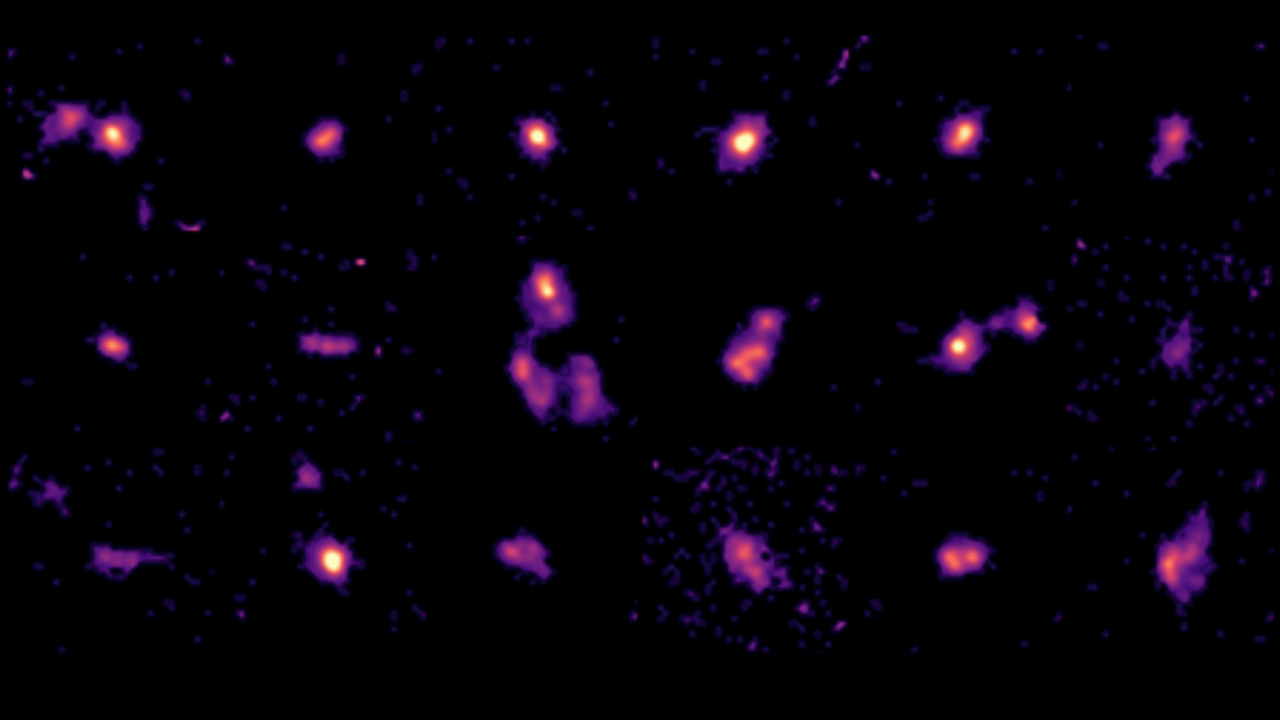
Researchers announced that observations from the James Webb Space Telescope revealed galaxies forming just hundreds of millions of years after the Big Bang that already exhibited traits of much older systems. These primordial galaxies appeared unusually massive and structured, suggesting they underwent rapid bursts of star formation and chemical enrichment. Such maturity in such young cosmic entities has left scientists grappling with fundamental questions about the universe’s infancy.
The discovery stems from detailed infrared imaging that peers through the dust and gas obscuring distant light. Traditional models predicted a slow, steady buildup of galactic mass over billions of years. However, these findings indicate that some galaxies achieved significant development in a fraction of that time, prompting a reevaluation of how gravity, dark matter, and initial conditions influenced early structure formation.
What Makes These Galaxies Seem So Grown-Up?
One striking aspect of the observations involves the galaxies’ brightness and composition. They host stars and elements that typically require extended periods to form, yet these structures existed when the universe was less than one billion years old. Scientists likened this phenomenon to witnessing toddlers behaving like adolescents, highlighting the unexpected acceleration in their evolutionary pace.
Further analysis showed elevated levels of heavy elements, products of multiple generations of stars exploding as supernovae. This rapid cycling of material implies efficient feedback mechanisms, where stellar deaths fueled new births at an accelerated rate. The James Webb Space Telescope’s sensitivity to faint, redshifted light allowed for the first clear views of these processes, revealing patterns that defy slower-growth simulations.
Implications for Our Understanding of the Universe
These revelations could upend long-held theories on galaxy formation. If early galaxies matured so swiftly, it might suggest variations in the cosmic web’s density or unexpected roles for supermassive black holes in kickstarting growth. Astronomers now face the task of refining computer models to account for these “precocious” systems.
Moreover, the findings open doors to studying the universe’s “dark ages,” the era before the first stars ignited. By observing these galaxies, researchers gain insights into the transition from a uniform plasma to a structured cosmos filled with diverse environments.
- Enhanced star formation rates in the first 500 million years.
- Increased presence of metals and dust, indicating quick enrichment.
- Compact sizes with dense cores, resembling modern elliptical galaxies.
- Potential links to larger-scale structures forming earlier than expected.
- Need for updated simulations incorporating faster feedback loops.
Looking Ahead: Future Observations and Mysteries
Teams plan to target more of these ancient galaxies with follow-up studies using the James Webb Space Telescope and ground-based observatories. Such efforts could clarify whether rapid aging was common or a rare occurrence driven by specific conditions. Collaboration with data from the Hubble Space Telescope will provide complementary visible-light views to build a fuller picture.
While the discoveries challenge existing paradigms, they also excite the field by highlighting gaps in our knowledge. Resolving these puzzles may require integrating new physics, such as modified dark energy influences or primordial fluctuations beyond standard inflation models.
Key Takeaways:
- Young galaxies show maturity equivalent to billions of years in mere hundreds of millions.
- This rapid evolution questions gradual growth models of the early universe.
- Future JWST missions will probe deeper into cosmic infancy for answers.
In the vast expanse of space, these findings remind us that the universe often surprises with its efficiency and complexity. As we continue to unravel these cosmic enigmas, what aspects of early galaxy formation intrigue you most? Share your thoughts in the comments below.