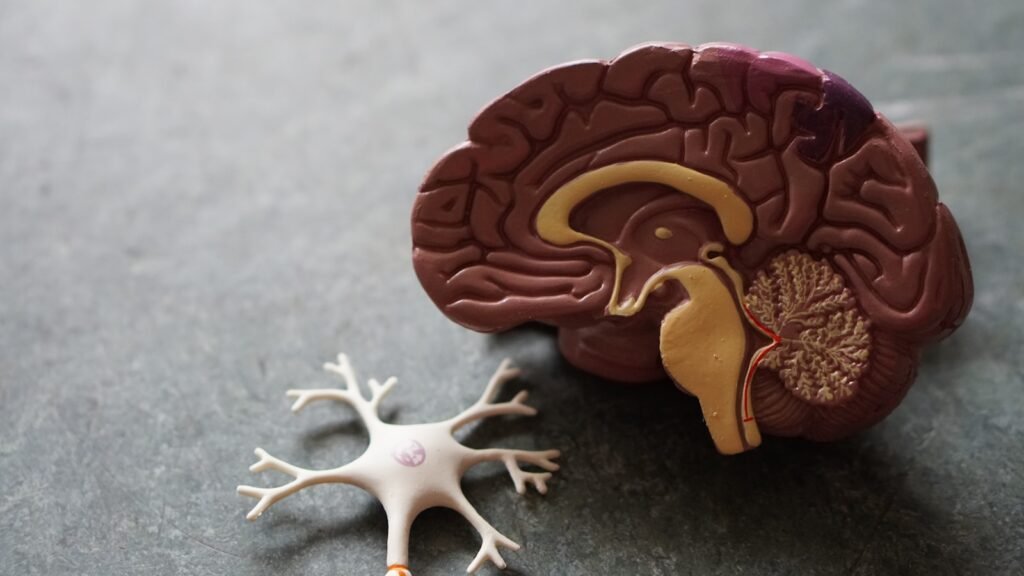

Somewhere between a brain cell firing and a person saying “I am,” there is a gap science still cannot fully explain, and that unsettling gap has a new contender: quantum physics. A small but serious group of researchers is now probing whether the strange rules that govern particles might also help give rise to conscious experience. Their tools are not philosophy seminars but anesthetic gases, super-cold photons, microtubules inside neurons, and exquisitely sensitive tests for quantum effects in the brain. The idea sounds outrageous, yet it is forcing neuroscientists and physicists to talk to one another in ways they mostly avoided for decades. Whether these experiments succeed or fail, they are dragging the mystery of consciousness into some of the strangest corners of modern physics.
From Neurons to “Neural Correlates” – And the Explanatory Gap That Wouldn’t Die

For most of the late twentieth century, mainstream neuroscience treated the brain as a staggeringly complex but ultimately classical machine: inputs go in, neurons fire, behavior and thoughts come out. Researchers mapped “neural correlates of consciousness,” showing which brain areas lit up when people recognized faces, felt pain, or reported inner images. It was impressive progress, and it remains the backbone of modern brain science and medicine. Yet even the most detailed scans and circuit diagrams seemed to leave something crucial untouched.
The stubborn question was not whether neurons were necessary for experience, but how electrical and chemical traffic in tissue could ever feel like anything from the inside. Some philosophers called this “the hard problem,” the leap from objective brain activity to subjective experience. Many neuroscientists argued that with enough detail the mystery would fade, that consciousness is just information processing running on wet hardware. Others, including a few bold physicists, wondered if something about the underlying physics of that hardware had been left out entirely.
The Quantum Temptation: When Weird Physics Meets the Mind

Quantum mechanics is famously strange: particles behave like waves, seem to exist in many states at once, and influence each other instantly across distance in ways that defy everyday intuition. In the lab, quantum effects show up constantly in atoms, molecules, and carefully isolated systems, but they are usually thought to wash out quickly in warm, wet environments like the brain. Despite that, the temptation to link quantum oddities with consciousness has been around for decades, not least because both are hard to picture and stubbornly resistant to simple explanations.
Most proposals tying the two together fizzled out or veered into speculation, often without concrete experiments attached. But a few ideas, especially those rooted in actual neurobiology, refused to go away. These attempts did not treat the brain as a generic quantum computer but asked whether specific structures inside neurons could support delicate quantum states. That is where microtubules, the tiny scaffolding rods that help cells keep their shape and move materials around, entered the story in a big way.
Inside the Neuron: Microtubules as Possible Quantum Engines

Microtubules crisscross every neuron like an internal skeleton, forming hollow cylinders built from repeating protein units. Traditionally, cell biologists saw them as structural workhorses, not as candidates for exotic computation. Then some physicists and anesthesiologists proposed that microtubules might harbor quantum states, with their orderly protein lattice enabling subtle interactions between neighboring units. In this view, consciousness might emerge not just from networks of neurons, but from quantum-level patterns within the cells themselves.
The proposal, often called orchestrated objective reduction, suggested that quantum superpositions inside microtubules could persist just long enough to influence when and how neurons fire. According to this picture, conscious moments would correspond to specific collapses of these quantum states, linking subjective awareness directly to the deep fabric of physical law. Critics argued that such quantum coherence should die almost instantly inside a warm brain, long before it could shape anything as slow as neuronal firing. The debate moved from philosophy into hard physics and molecular biology, demanding measurements rather than metaphors.
Pushing the Limits of Decoherence: Can Quantum States Survive in a Warm Brain?

The main technical objection to quantum consciousness theories is decoherence, the rapid loss of quantum superpositions when a system interacts with its environment. In a room-temperature brain packed with ions, water molecules, and constant electrical noise, maintaining fragile quantum states seems about as likely as keeping a soap bubble stable in a hurricane. To test this, physicists modeled how long quantum states in microtubules could last, often concluding they would vanish far too quickly to matter. These calculations fueled sharp critiques and pushed proponents to refine their ideas.
At the same time, advances in quantum biology complicated the story in an unexpected way. Experiments in photosynthetic complexes, bird navigation, and even smell suggested that certain biological systems might exploit quantum coherence for fleeting but functionally important intervals. These effects still operate on much shorter timescales than most brain processes, but they proved that warm, messy life can sometimes harness quantum tricks. That opened the door, at least a crack, to the possibility that evolution might have found similar routes in neural tissue, if only transiently and locally.
Anesthesia, Awareness, and Quantum Clues in the Operating Room

One of the most grounded testing grounds for these ideas comes from a very practical question: how does anesthesia switch consciousness off so reliably? Modern anesthetics are chemically diverse, yet many share an eerie ability to interfere with microtubule-related processes at certain concentrations. Some researchers noticed that changes in microtubule behavior seemed to line up with shifts in awareness more neatly than with traditional targets alone, such as specific membrane receptors. This did not prove a quantum link, but it hinted that the cell’s internal scaffolding might be more involved in consciousness than previously assumed.
To probe further, experiments have looked at how anesthetic gases affect the electrical and vibrational properties of microtubules in vitro. Others have tried to correlate subtle changes in brain oscillations under anesthesia with theoretical predictions from quantum-inspired models. So far, the results are suggestive rather than definitive, offering intriguing patterns but not the smoking gun skeptics demand. Still, anesthesiology has become one of the few medical fields where consciousness is manipulated daily in controlled settings, making it a natural arena for testing any serious physical theory of awareness, including quantum ones.
Bench Experiments: Watching Tiny Proteins for Quantum Behavior
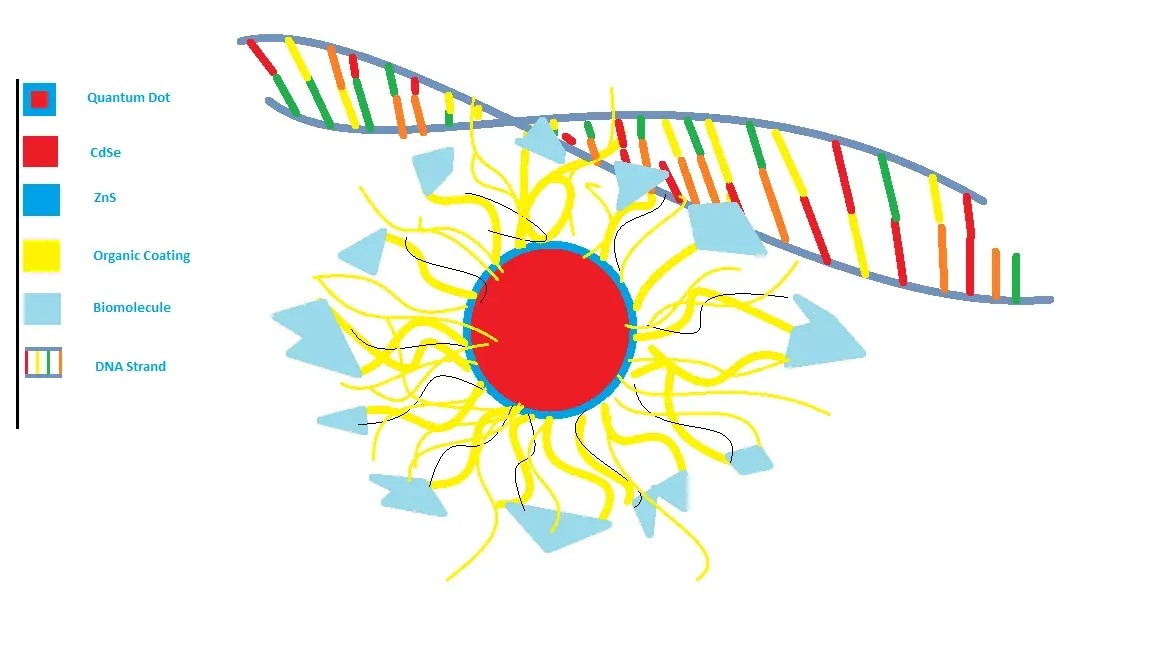
Beyond the operating room, several labs are now isolating microtubules and related proteins to hunt directly for quantum signatures. Using techniques borrowed from quantum optics and condensed matter physics, they shine carefully tuned light on microtubule samples and watch for signs of coherence, entanglement, or other non-classical behavior. Some groups report oscillations and resonance patterns that do not fit neatly into standard classical models, while others either fail to replicate these findings or interpret them more conservatively. The field is young, technically demanding, and prone to noise, both literal and conceptual.
At the same time, physicists working on quantum technologies have begun exploring artificial systems that mimic aspects of microtubule structure. By building nano-scale lattices and probing their quantum dynamics under controlled conditions, they hope to learn what kinds of architectures can best preserve coherence at higher temperatures. Any success there might feed back into biology, suggesting what to look for in living tissue. The risk, of course, is forcing a fit between tantalizing data and an attractive story, which is why many experimentalists insist on cautious language even when results look surprising.
What Is Really at Stake? Rethinking Mind, Matter, and Scientific Boundaries

It is tempting to treat the quantum consciousness debate as a sideshow, but the stakes reach far beyond one hypothesis. If consciousness can be fully explained by large-scale neural networks running on classical physics, then our minds are unimaginably intricate yet fundamentally familiar machines. That view fits comfortably with most current brain imaging, artificial intelligence research, and clinical neurology. It also suggests that building conscious-like systems in silicon might be a matter of scale and architecture, not of discovering new physics. Many scientists see this as the most parsimonious path.
If, on the other hand, consciousness turns out to rely on specific quantum processes woven into biology, the implications would be profound. It would mean that certain subjective aspects of mind are tied to the universe at a more fundamental level than previously thought, and that not every kind of information processing can host them. Such a finding would not make consciousness magical or mystical; it would make it more physical, not less. But it would force a rewrite of long-held assumptions about what counts as relevant physics in brain science, and it could draw new, sometimes uncomfortable boundaries between different kinds of minds, human, animal, and artificial alike.
Unanswered Questions and How Science Is Closing In
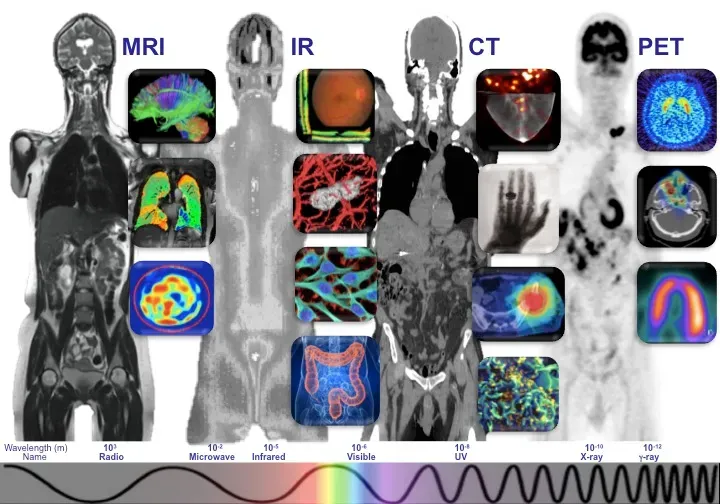
Right now, several critical questions remain unresolved, and they are finally being framed in ways that experiments can reach. Can any robust, replicable quantum coherence be demonstrated inside structures that closely mimic those in living neurons at physiological temperatures? Can researchers show, beyond suggestive correlation, that such coherence directly influences neuronal firing patterns or large-scale brain activity linked with conscious states? If not, many quantum-inspired models will quietly fade, surviving mainly as historical curiosities and cautionary tales about overextending analogies. If yes, then an entirely new chapter in both neuroscience and physics will open.
Either outcome would be progress, and that is the part often lost in the heat of online arguments. By pushing hard on the limits of decoherence, developing sensitive new instruments, and subjecting bold ideas to precise tests, scientists are enriching our understanding of both brains and quantum matter. Along the way, they are exposing how much we still do not know about the inner life of neurons, even before quantum effects enter the picture. In that sense, the real story is less about one theory winning and more about how the mystery of consciousness is driving an unusually adventurous collaboration across disciplines that once barely spoke to each other.
How Curious Minds Can Follow – Without Falling for Hype
For non-specialists, this area can feel like a minefield of overblown claims, yet it is exactly the kind of frontier where an engaged public can make a difference by demanding rigor over drama. One practical step is to pay attention to whether new stories about quantum consciousness point to peer-reviewed studies, specific experiments, and named research groups, rather than just repeating vague slogans. Another is to notice when scientists themselves emphasize limitations and uncertainty, which is usually a sign of seriousness, not weakness. Reading widely across neuroscience, physics, and philosophy can also help, because no single field owns this topic.
Curiosity can be turned into support in small, concrete ways: following university talks that are posted online, exploring open-access articles from major journals, or backing public institutions that fund careful, long-term research instead of quick, flashy results. Even simple conversations that resist easy answers help keep the cultural space open for honest exploration. After all, the question of what makes experience arise is not just a technical puzzle; it is about what kind of beings we are and how deeply we are entangled with the physical world. However the quantum story ultimately plays out, staying informed and skeptical without becoming cynical is one of the most powerful things any of us can do.
Suhail Ahmed is a passionate digital professional and nature enthusiast with over 8 years of experience in content strategy, SEO, web development, and digital operations. Alongside his freelance journey, Suhail actively contributes to nature and wildlife platforms like Discover Wildlife, where he channels his curiosity for the planet into engaging, educational storytelling.
With a strong background in managing digital ecosystems — from ecommerce stores and WordPress websites to social media and automation — Suhail merges technical precision with creative insight. His content reflects a rare balance: SEO-friendly yet deeply human, data-informed yet emotionally resonant.
Driven by a love for discovery and storytelling, Suhail believes in using digital platforms to amplify causes that matter — especially those protecting Earth’s biodiversity and inspiring sustainable living. Whether he’s managing online projects or crafting wildlife content, his goal remains the same: to inform, inspire, and leave a positive digital footprint.