
Every night, you close your eyes and disappear into a world that defies logic, bends time, and leaves you speechless when you wake. Some of those dreams feel so unsettlingly real that the line between what just happened and what you imagined completely dissolves. For centuries, people chalked it up to the restless mind doing its housekeeping.
Now, a scientist is suggesting something far more radical. What if those vivid, recurring dreams are not internal fictions conjured by your brain, but actual glimpses into parallel dimensions where another version of you is living out a completely different life? It sounds like the plot of a blockbuster film. Honestly, the science is a lot stranger. Let’s dive in.
The Scientist Behind the Theory: Meet Dr. David Leong

Dr. David Leong is an honorary professor at Charisma University in Turks and Caicos, and his central claim is that dreams are portals to alternate dimensions. That is not a casual observation from a fringe corner of the internet. He published it as a formal research hypothesis, and it has since captured serious public attention across the scientific and philosophical communities.
Leong is an academic specializing in metaphysics and epistemology, the study of distinguishing opinion from justified belief, and for him, this is not merely an interesting thought experiment but a serious possibility. Think of it this way: epistemology is essentially the science of knowing what counts as real knowledge. The fact that someone in that field is seriously entertaining the dream-dimension idea? That alone should make you pause.
What Exactly Is the Many-Worlds Interpretation and Why Does It Matter?
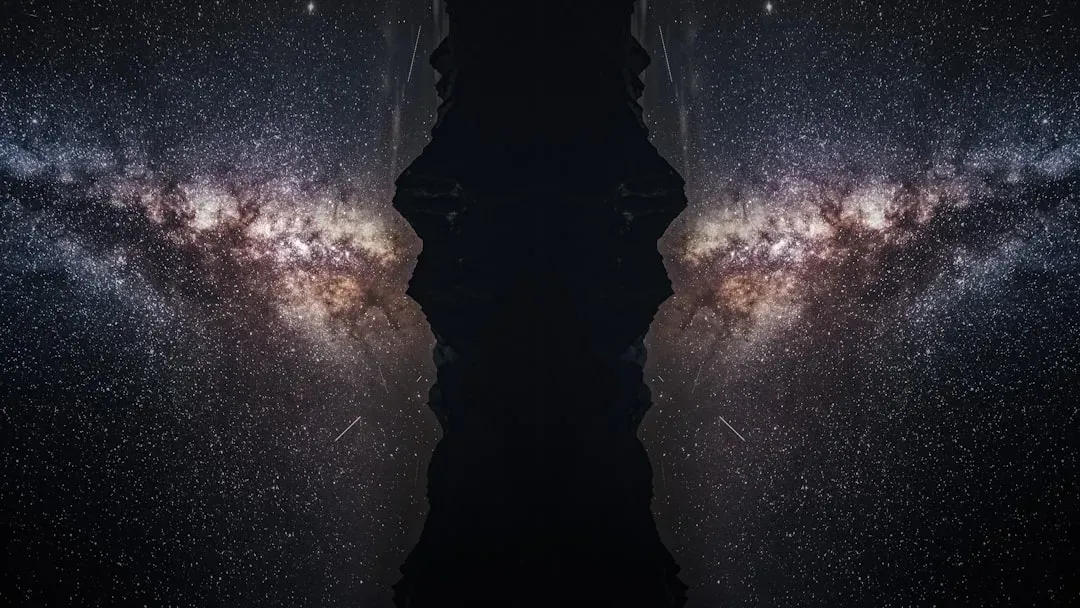
The Many-Worlds Interpretation of quantum theory basically states that every decision or event that occurs creates branching alternate dimensions, which in turn create an infinite number of parallel universes. Imagine every choice you have ever made spawning a new reality where you chose differently. Missed your bus this morning? Somewhere, there is a version of you who caught it, and that version’s life has already gone in a completely different direction.
Leong’s theory uses this interpretation of quantum theory to speculate that sleep limits both our physical senses and rational minds, and this gives our consciousness the ability to bypass the boundaries of space and time. It is a bold leap, no question. During sleep, a person’s consciousness is in the least contact with their logical brain, reality, and physical senses. That window, Leong argues, is when you slip through.
Local vs. Nonlocal Consciousness: The Core of the Hypothesis
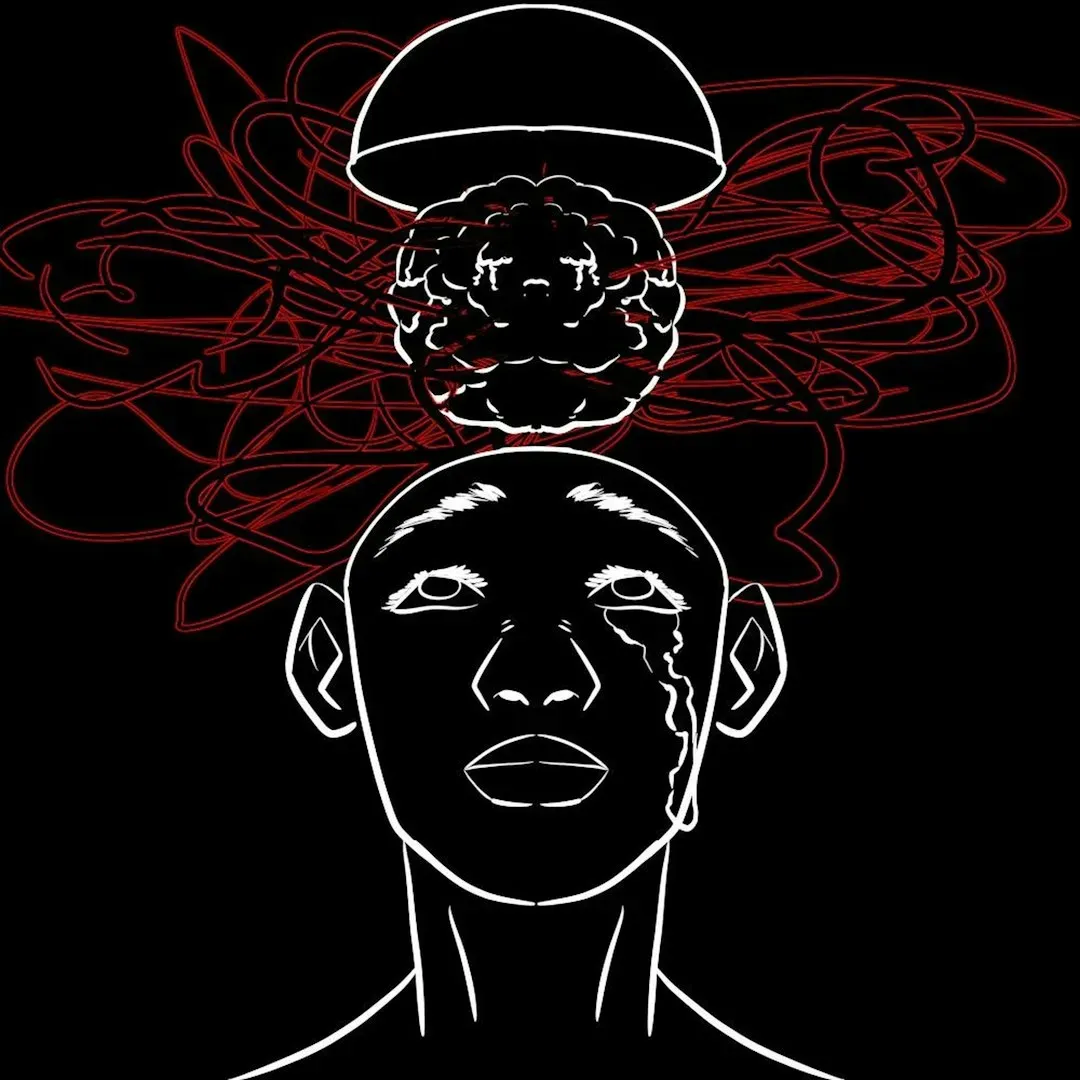
Leong has explored something he calls local and nonlocal consciousness. In his view, local consciousness is essentially your five senses, while nonlocal consciousness transcends those five senses and enables you to experience parallel realities. Think of local consciousness like a radio tuned to one station. Your waking life is that one channel. Sleep, according to Leong, is when the dial slips and you suddenly pick up a signal from somewhere entirely different.
Leong’s theory builds on the Nobel prize-winning research by physicists Alain Aspect and John F. Clauser, who challenged the belief that objects exist independently of observation, demonstrating that particles can instantly affect each other despite being separated by massive distances. This finding suggests that reality is not only interconnected, but is flexible. If particles can be entangled across vast distances, why not consciousness? It is a question worth sitting with.
Quantum Entanglement and the Dreaming Mind
It is possible that consciousness also experiences something like quantum entanglement, a phenomenon that suggests two particles can affect each other’s states irrespective of the distance between them. It might be possible that consciousness is also capable of affecting people across parallel universes. Here is where things get genuinely mind-bending. Your dreaming mind might not be isolated at all. It could be in communication with versions of itself that exist in branching realities, in a way that mirrors how entangled particles behave.
This leads to a reconceptualization of consciousness as a broader and more interconnected entity with the potential to navigate a multiverse of experiences. The research also adds that dreams can be a psychological tool to penetrate the collective unconscious, explore, and experience a shared human narrative that goes beyond the personal. That is actually a profound idea, and it echoes what philosophers have wrestled with for a very long time.
Recurring Dreams: Your Ticket to Another Reality?
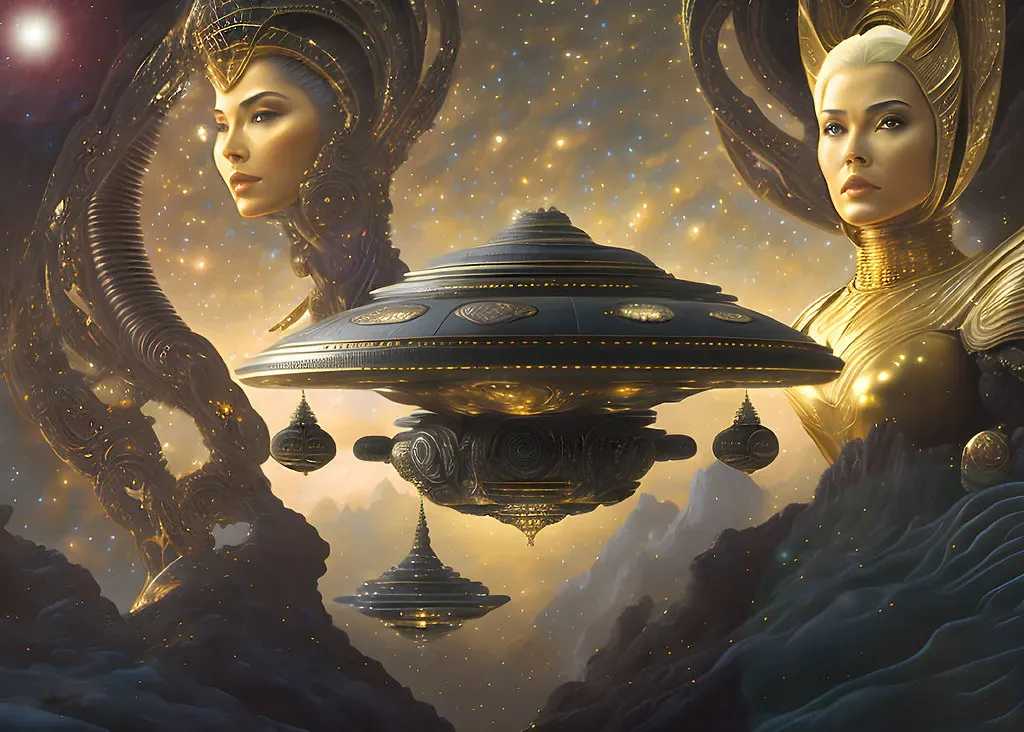
Leong suggests that recurring vivid dreams with strong emotions and memories are the ones that can probably take people to their alternate versions in parallel worlds. So not all dreams are created equal, according to this theory. The disjointed, chaotic nightmare where you show up to your old job in pajamas? That is probably just your brain processing stress. The dream you keep returning to, the one with the same streets, same faces, same heavy feeling in your chest? That one might be different.
The most surreal and incomprehensible dreams are likely the subconscious processing your life here on Earth. But if it feels like you are visiting the dream rather than imagining it, like a play with a beginning, middle, and end, you probably are visiting another world under Leong’s hypothesis. Pay attention to that distinction. Does your dream feel authored, like something being told to you? Or does it feel lived, like somewhere you actually went? That might be the single most important question to ask yourself at dawn.
What Modern Neuroscience Actually Says About Dreams and Consciousness
Lucid dreaming has long fascinated both scientists and dreamers. A new study with the largest dataset of its kind has identified distinct brain activity patterns that separate lucid dreaming from both REM sleep and wakefulness. The research reveals unique shifts in perception, memory, and self-awareness that occur during this rare conscious state within sleep. These findings challenge the traditional boundary between wakefulness and sleep, suggesting consciousness can emerge entirely from within the dream state.
Lucid dreaming allows conscious awareness and control of vivid dream states, though its rarity and instability make neuroscientific experimentation challenging. It is hard to say for sure how far the rabbit hole goes, but what neuroscience has confirmed is that the dreaming brain is doing something genuinely extraordinary. Findings shed light on how the brain generates self-referential awareness and volitional action even during sleep. That is remarkable on its own, quite independent of any multiverse theory.
Where Does Mainstream Science Actually Stand on This?

Concepts such as nonlocality are studied and are under constant scientific scrutiny, but no scientific studies currently state that dreams are portals to alternate dimensions. In fact, mainstream neuroscience and cognitive science have considered Leong’s hypothesis unscientific. Let’s be real: that is a significant caveat. The hypothesis is bold and genuinely fascinating, but it sits well outside established consensus. Science moves carefully, and that is its strength.
There are many theories as to what the purpose of dreams is. Some state they serve biological purposes for survival, while others argue they are a tool for organizing daily experiences. Sigmund Freud himself said dreams were more likely linked to the subconscious rather than being cosmic phenomena. There is no empirical evidence that confirms a person can actually travel to alternate realities through dreams. Still, it is worth remembering that absence of evidence is not always evidence of absence. The universe has surprised us before.
Conclusion: Should You Take This Seriously?

Here is the thing. You do not have to choose between hard science and open curiosity. The honest position is that we genuinely do not fully understand consciousness, and that humility alone deserves a certain kind of wonder. Like many theories about dreams, there is no way to prove this is the case. Given how much we still do not understand about the nature of consciousness, quantum mechanics, and even reality itself, we may never know for sure what the truth actually is.
For now, there is no way to prove whether the proposed hypothesis is right. However, recurring dreams with vivid imagery and strong emotional resonance may warrant further examination, as they could potentially offer clues about experiences in alternate realities. So the next time you wake from a dream that felt more like a destination than a fantasy, maybe don’t reach for your phone right away. Lie still for a moment. Try to remember the details. You might have just been somewhere else entirely.
What do you think? Could your dreams be more than just your brain talking to itself? Share your thoughts in the comments below.