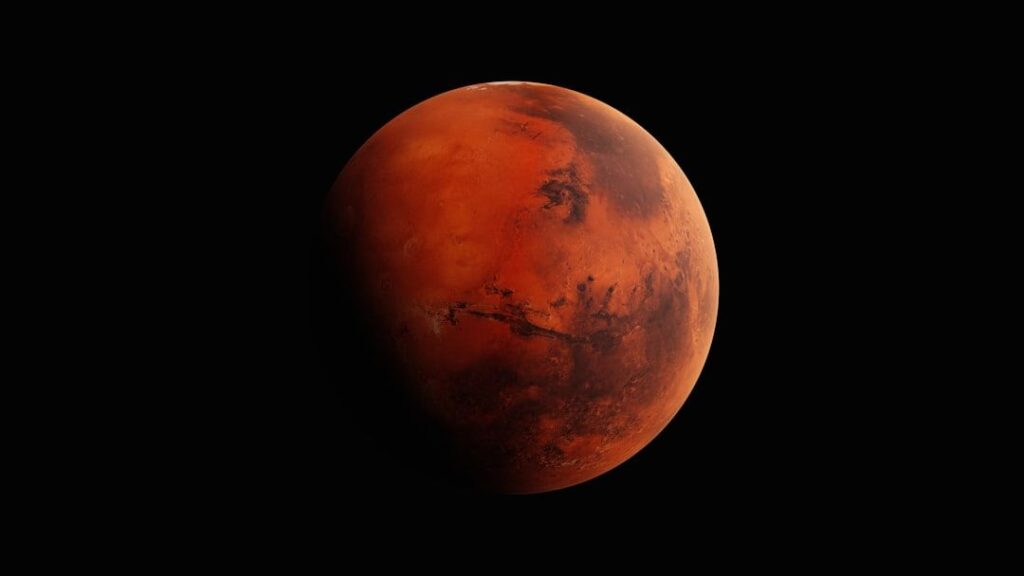
Imagine waking up one morning and realizing the way you thought space travel worked might be about to change. That is exactly the feeling you get when you start digging into a new idea: a potential shortcut to Mars that could, in theory, cut the journey time by roughly half. You are suddenly not just picturing astronauts spending many long, grinding months drifting through deep space, but a faster, smarter route that bends the rules of the road without breaking the laws of physics.
Right now, this is not a finished technology you can buy or a mission that is launching next Tuesday. What you are looking at is an emerging mix of orbital mechanics, new propulsion concepts, and clever trajectory design that, together, point toward one big possibility: getting humans to Mars far quicker than the classic slow spiral through space. If you stay grounded, keep your skepticism healthy, and follow the science, you can see why so many researchers are suddenly excited about the idea of a Mars “shortcut.”
The reality of getting to Mars today
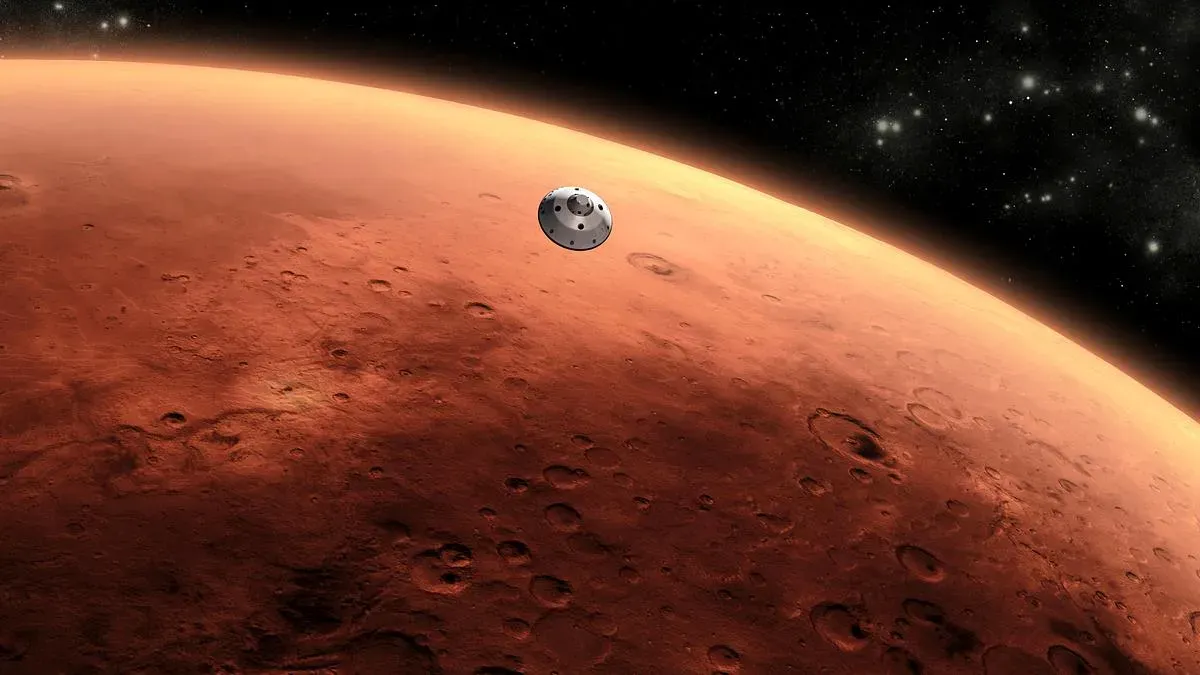
Before you fall in love with the shortcut, you need a clear picture of the long way around. With current chemical rockets and traditional Hohmann transfer orbits, a typical Mars journey takes about six to nine months, depending on how favorably Earth and Mars are aligned. You ride a well-defined, energy-efficient path that has been used for decades because it is predictable, relatively safe, and fuel-conscious, even if it feels painfully slow when you imagine being strapped into a cramped spacecraft the whole time.
On top of the long cruise, you deal with launch windows that only open roughly every twenty-six months, when Earth and Mars line up just right. If you miss that window, you wait – like missing a long-distance train that only comes every couple of years. This is the baseline you compare everything against: long durations, high radiation exposure, psychological strain, limited abort options, and enormous mission costs stretched out over time. Any shortcut worth taking has to beat that picture without introducing risks you cannot reasonably control.
What a “shortcut” to Mars actually means
When you hear shortcut, you might picture a literal tunnel in space or some sci‑fi portal, but that is not what scientists and engineers mean. In practice, a Mars shortcut is about finding a trajectory and propulsion approach that lets you either travel much faster along a similar distance or exploit gravitational and orbital dynamics more cleverly so that you shave a big chunk off the calendar. You are still obeying Newton and Einstein; you are just playing the game more strategically.
Think of it like driving to a distant city: you can stick to the slow but fuel‑efficient highway, or you can take an express route that uses more power but gets you there quicker, or even cut diagonally across using a well-chosen set of roads others ignore. In spaceflight terms, that might mean high‑thrust burns at the right moments, continuous low‑thrust propulsion, or jumping onto dynamic pathways shaped by the gravity of the Sun and planets. The “shortcut” lives in the math of these orbits, not in a magic hole through space.
The accidental insight: revisiting known physics with fresh eyes

The most surprising breakthroughs often do not come from brand‑new physics; they come from someone noticing something different in equations you already thought you understood. You can easily picture a researcher running trajectory simulations for a completely different mission – say, an asteroid rendezvous or cargo resupply – and realizing that certain combinations of thrust, timing, and orbital geometry yield Mars arrival times far shorter than the usual textbook route. The trick is not discovering a new law but connecting familiar ones in an unfamiliar way.
If you have ever solved a puzzle by rotating it ninety degrees and suddenly seeing the pattern, you know the feeling. In spaceflight, that “rotation” might be re‑optimizing for time instead of fuel, or assuming more powerful electric propulsion than earlier studies allowed, or allowing gravitational assists in places previous planners ignored. The shortcut idea likely grew from this kind of fresh look: same gravity, same Sun, same Mars, but a new objective function – get there faster, even if you pay a different price in complexity or energy.
Advanced propulsion: your ticket to a faster route
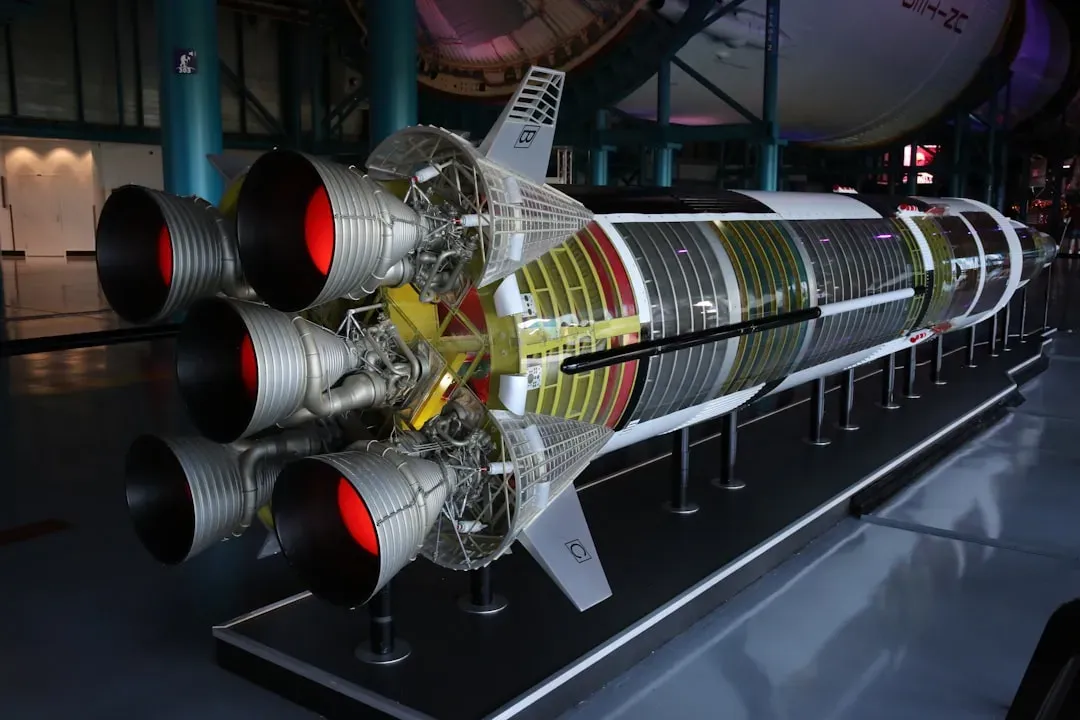
To genuinely cut Mars travel time in half, you almost certainly need more than a clever path; you need better engines. You are moving away from pure chemical propulsion, which delivers big, short bursts of thrust, toward advanced systems like nuclear thermal propulsion, nuclear electric propulsion, or high‑power solar electric thrusters. These technologies promise a higher specific impulse, which is a fancy way of saying you squeeze more push out of each unit of propellant.
When you combine sustained or higher‑performance thrust with a well‑chosen trajectory, you can accelerate longer, brake more efficiently, and avoid coasting for endless months. Instead of throwing a stone and hoping its initial speed carries it far enough, you are driving a car with a continuous engine that can speed up, adjust course, and decelerate with much more freedom. This is where the realistic version of the shortcut lives: in engines you can actually build and test on the ground, then marry to aggressive but still physically sensible flight plans.
Orbital highways and gravitational backroads
Space is not empty in the way your intuition suggests; it is full of invisible highways carved by gravity and motion. You are dealing with what mathematicians call dynamical systems – intricate webs of stable and unstable paths connecting different orbits around planets and the Sun. If you map them carefully, you discover routes that act like cosmic conveyor belts, sometimes slower but incredibly fuel‑efficient, other times surprisingly direct if you time your entry correctly.
In a Mars shortcut scenario, you might exploit regions near Lagrange points – places where gravitational pulls balance out – or hitch subtle rides on the gravitational field of Earth, the Moon, or even Venus to adjust your speed and direction. It is like using a series of gently sloped ramps instead of a single brutal hill. This approach does not require imaginary wormholes; it just asks you to accept that the three‑body and four‑body problem is richer than the simple two‑body orbits you learn first, and that within that richness, faster doorways can exist if you are bold enough to step through them.
Cutting time means cutting risk – mostly
Spending half as long in deep space is not only about convenience; it is about survival. If you can reduce the time you spend bathing in cosmic radiation and solar particles, you lower the cumulative dose your body absorbs, which is one of the biggest health risks on a Mars mission. You also cut the period during which hardware can slowly degrade, consumables can run low, and psychological stress can compound for the crew. Shorter trips mean fewer rolls of the cosmic dice.
But you also have to accept new risks that come with higher speed and more complex trajectories. You might hit Mars’ sphere of influence at a much higher relative velocity, which demands stronger heat shields, more powerful braking maneuvers, or new aerocapture techniques. Your navigation margins may shrink, leaving less room for error if a thruster misfires or a sensor glitches. In other words, when you chase the shortcut, you are trading chronic, long-duration risks for more acute, high‑energy ones, and you need to be honest with yourself about where you are more comfortable placing that bet.
Right now, ideas about slashing Mars travel time in half are at the stage where you can get excited, but you should stay sober. Researchers can run simulations, publish performance estimates, and even prototype parts of the propulsion systems, but until you see integrated flight tests, everything sits in the zone between promising and proven. That does not make it hype; it just means you are watching the early chapters of a longer story, not the final triumphant page.
As you evaluate these claims, it helps to remember how slowly big space technologies usually move from paper to practice. Even concepts that are completely consistent with well‑tested physics can take decades to become operational, especially when human lives are involved. So while you can reasonably expect faster Mars missions in the coming decades if funding and political will hold, you should treat any talk of an imminent, guaranteed shortcut with a healthy dose of caution and a long memory of how space history actually unfolds.
What this could mean for you and future explorers
If a reliable shortcut to Mars becomes practical, it changes the way you think about the Red Planet. Suddenly, a crewed mission stops feeling like a one‑off, heroic expedition that happens once in a generation and starts to look more like a repeatable expedition schedule. Shorter travel times mean you can send crews more often, rotate people more safely, and respond more flexibly to emergencies or opportunities, like a newly discovered resource deposit or an unexpected dust storm.
For you personally, even if you never leave Earth, it reshapes your relationship with space exploration. You are no longer just watching distant, multi‑year dramas unfold at a glacial pace; you are following a transportation system that begins to feel closer to a very slow but understandable airline network. It opens the door to more science, more technology spinoffs, and a deeper sense that Mars is not an unreachable dream but a place humans genuinely move between in a way that starts to resemble a frontier rather than a rare pilgrimage.
How you can think critically without losing the wonder

When you hear about a scientist stumbling onto a possible shortcut to Mars, it is tempting to either dismiss it as hype or swallow it whole as a promise. You do not have to do either. You can keep your sense of wonder alive while asking grounding questions: What propulsion technology does this rely on? Is it built on established physics? Has anything like this been tested in space, even at smaller scale? How do experts outside the original team react when they review the math?
If you get into the habit of looking for those details, you protect yourself from being misled while still allowing yourself to feel excited about real progress. You start to see the difference between a wild fantasy and an ambitious but plausible plan. And you put yourself in the right mindset to appreciate the story for what it is: a sign that human ingenuity is still finding new paths through old equations, still nudging the edge of what is practical, and still reaching, step by step, for a world that once lived only in the realm of science fiction.
Conclusion: a shorter road to a long-held dream
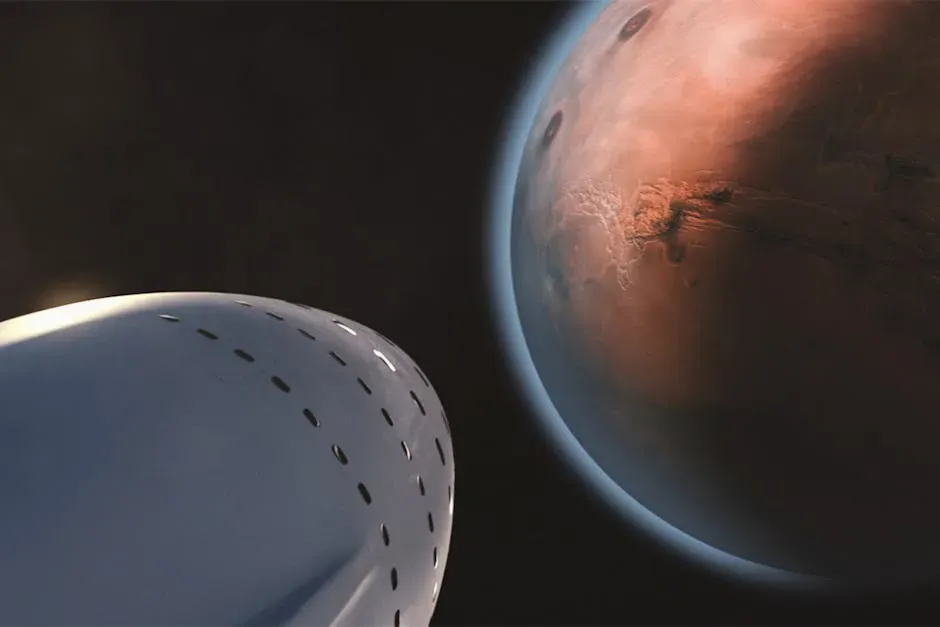
In the end, the idea of a shortcut to Mars that cuts travel time in half is less about a magical loophole in the universe and more about you reimagining what is possible with the tools you already have. By revisiting trajectories, pushing propulsion technology forward, and accepting new trade‑offs between time, energy, and risk, you open the door to missions that feel more humanly manageable and scientifically rich. The journey is still hard, still dangerous, and still expensive – but it becomes a little less distant, a little more tangible.
As you watch this story unfold over the coming years, you can hold two thoughts at once: stay skeptical of grand promises on unrealistic timelines, and stay open to the real possibility that Mars will come within reach faster than past generations expected. The shortcut, if it proves out, will not just bend a path through space; it will bend your sense of where humanity can reasonably go within a single lifetime. When you picture the first settlers stepping onto Martian soil, can you imagine them having arrived after a journey that felt more like a long voyage than an exile in the void?