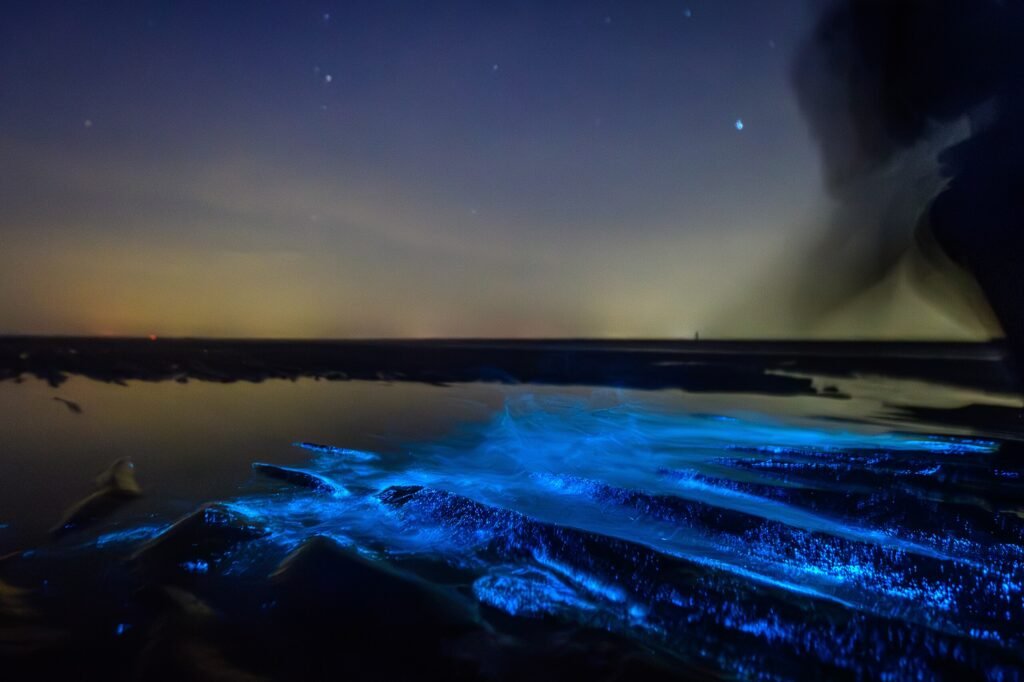

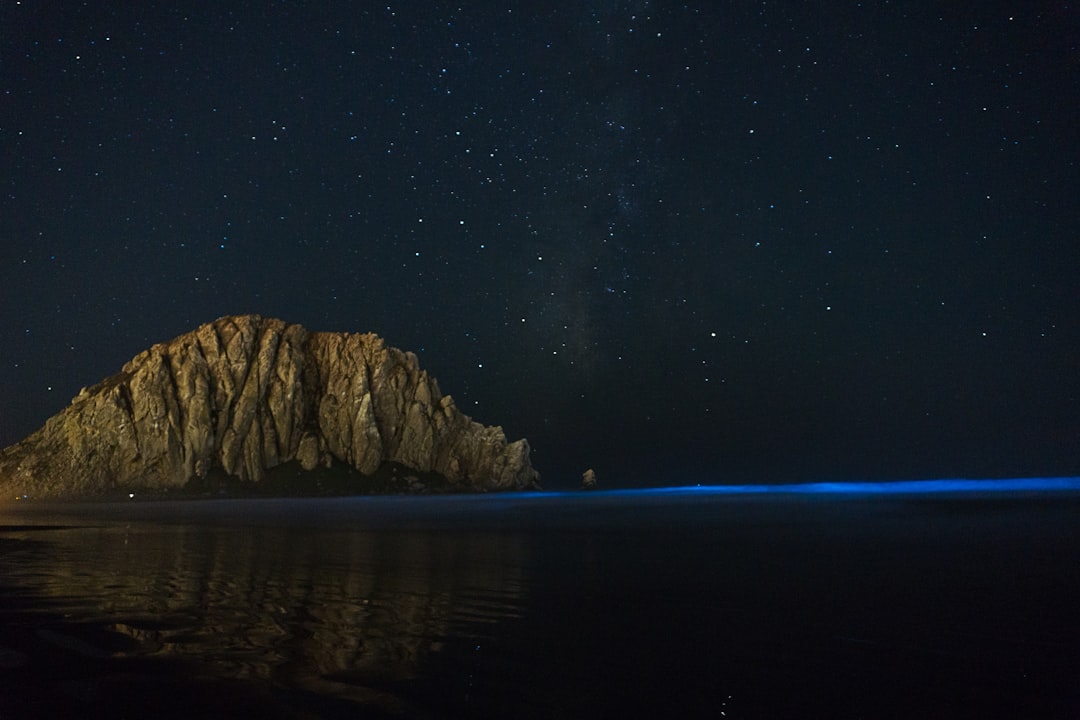
On some moonless nights, the sea doesn’t go dark – it glows. For centuries, sailors traded stories of vast “milky seas,” swaths of water shining like frosted glass, and science could only shrug. Now, satellites are catching these nocturnal displays in the act, turning rumor into data-rich reality. Low-light sensors are tracing luminous blooms the size of small countries, revealing when and where they form, how long they last, and how they move with currents. With each new detection, a once-mythic phenomenon steps into the measurable world, pointing to fresh insights about life, climate, and the changing ocean.
The Hidden Clues
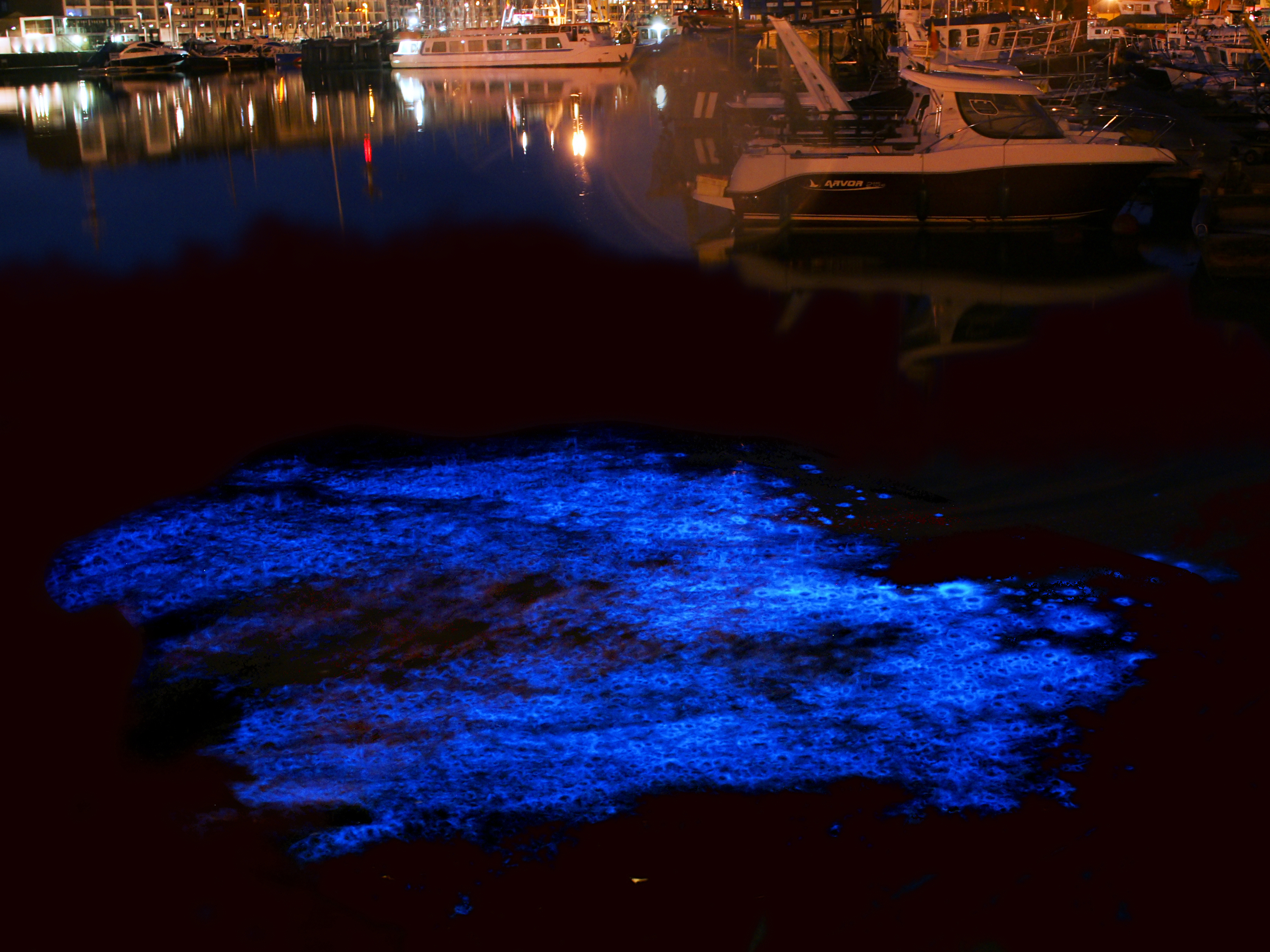
Picture an ocean bright enough to read by, with no moon in the sky and no ship lights in sight – just a steady, ghostly sheen stretching to the horizon. That eerie glow usually springs from luminous bacteria that switch on en masse, like a city flicking the grid at dusk. Unlike the quick sparks from wave-jostled plankton, these microbial communities can radiate continuously, creating a uniform, milk-white brightness. , that constancy is a gift because satellites are far better at catching a steady signal than a fleeting flash.
What first seemed like scattered anecdotes turns out to be a pattern hiding in plain sight. Glows often assemble in warm, relatively calm waters where organic matter accumulates and bacteria thrive. They ride eddies, converge along fronts, and unfold over nights or even weeks. The brightness ebbs and flows, but the outlines hold long enough for sensors to trace their evolving footprints across the sea.
From Ancient Tools to Modern Science
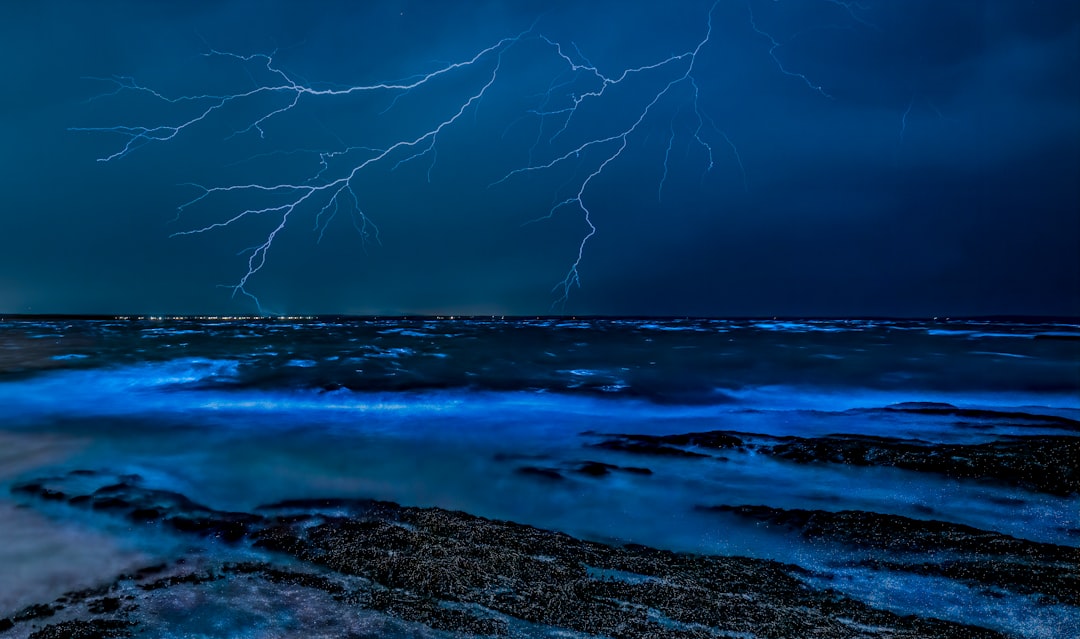
Mariners once relied on their eyes and logbooks to testify that the ocean could shine, and those notes were easy to doubt on shore. The modern era changed that with satellites built to see city lights, auroras, and fires – and, as it turns out, oceans that glow. Low-light imagers orbiting Earth each night collect radiances faint enough to be drowned by moonlight, so analysts work best during new-moon windows. By layering multiple nights and subtracting background airglow, researchers can coax the ocean’s own light out of a noisy sky.
It’s a detective story told in pixels and patience. Clusters of bright water that persist, drift with currents, and match sea-surface temperature and chlorophyll patterns are flagged as candidates. Reports from ships – when available – add precious ground truth, confirming that the glow isn’t a sensor artifact. With that triangulation, the myths become maps.
Eyes in the Night: How Satellites See the Glow
The key instrument is a night-vision workhorse: a visible-light detector sensitive to radiances thousands of times dimmer than city streets. It scans the globe in sweeping swaths, building nightly mosaics where clouds, moonlight, and coastal light pollution are filtered out. Analysts then track whether a luminous patch holds together through successive overpasses, an indicator that biology – not a passing cloud gap – is responsible. The result is a time-lapse of the glow, frame by frame, night by night.
Because these sensors are so sensitive, context is everything. Sea-surface temperatures help identify warm, stratified layers that favor bacterial growth. Ocean-color measurements taken by daytime satellites reveal where plankton blooms may seed the feast of organic matter. Together, they create a layered portrait of where a glow might ignite – and why it might persist.
Mapping the Giants: What the Data Reveal
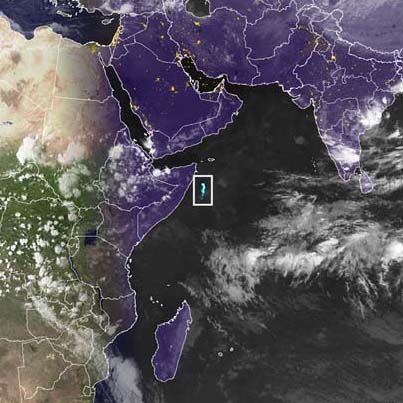
Recent satellite detections have sketched luminous seas sprawling across tens of thousands of square kilometers, sometimes ballooning toward the area of a small country. Some events cluster in the tropical Indian Ocean and around the Maritime Continent, where monsoons and currents corral nutrients and organic debris. The outlines shift like slow-breathing lungs, pulsing as eddies stir and stretch the glow. In a few cases, the luminous footprint has held together for multiple weeks, offering a rare laboratory for studying microbial light at a planetary scale.
Scale matters because it hints at the engine behind the glow. Continuous, basin-scale light points to specialized bacteria reaching overwhelming numbers, using chemical signaling to switch on together. Their light doesn’t just stun observers – it signals a vigorous microbial party fueled by decaying organic matter and calm surface layers. The maps also capture where the party ends, as wind events or mixing snuff the glow like rain on embers.
Why It Matters
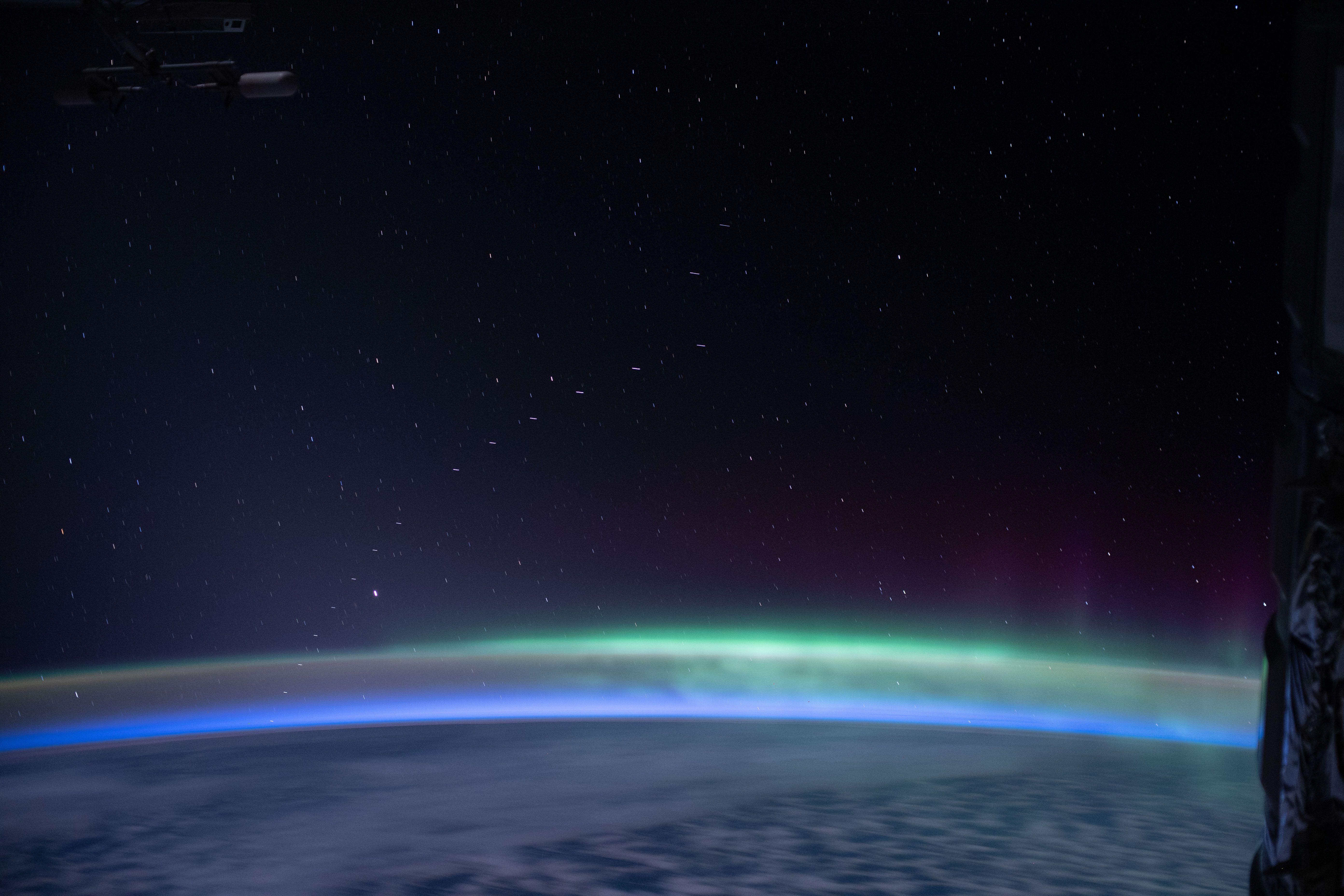
These sightings are more than curiosities; they offer a new lens on the ocean’s invisible life and the carbon it cycles. Traditional sampling – nets, bottles, ship transects – can miss rare, far-flung events that flicker into and out of existence between expeditions. Satellites flip the script by scanning nightly for the improbable, then guiding ships to the right patch of water before the glow dissolves. That improves efficiency, reduces blind searching, and ties together physical and biological data in near real time.
There’s also a broader scientific payoff. Luminous bacteria respond to the ocean’s chemistry and structure, so their mass glow becomes an index of conditions we usually infer indirectly. When researchers overlay these night-lights with temperature, chlorophyll, and current fields, they can test ideas about stratification, productivity, and organic matter pathways at scales no cruise could ever afford. In that sense, the glow is both a phenomenon and a proxy.
Climate, Fisheries, and the Night Ocean
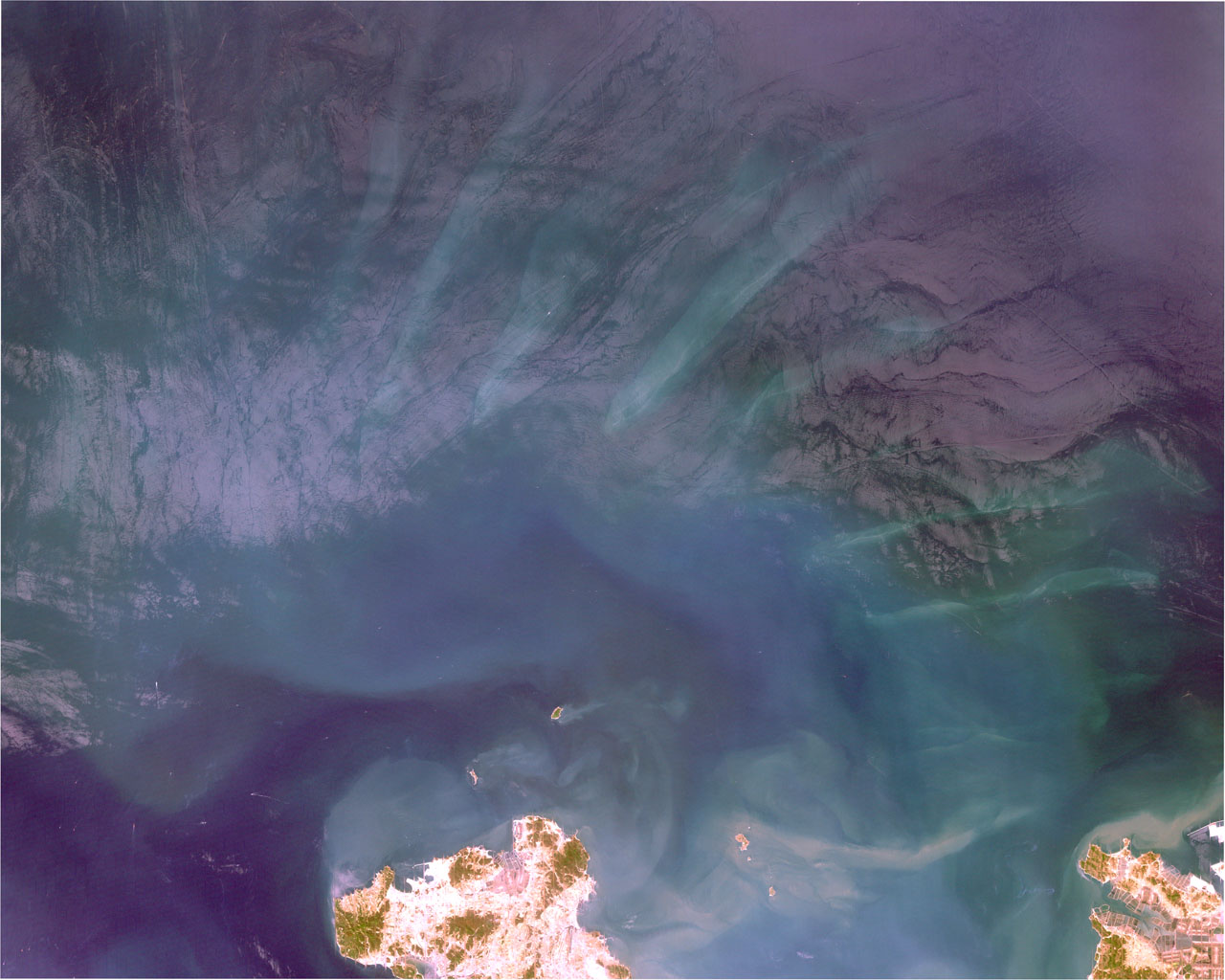
Warming seas, shifting monsoons, and altered current patterns may nudge where and how often these glowing giants appear. Longer stratified seasons can trap organic matter near the surface, feeding bacteria that love calm layers and warmth. Changes in plankton communities – driven by heat and nutrients – could tip the balance toward more bacterial fuel or shift the timing of blooms. If luminous seas become more frequent or change venues, that’s a climate signal worth listening to.
For coastal nations and fishers, the stakes are practical as well as poetic. Bioluminescent blooms can intersect with fisheries hotspots and shipping lanes, adding a new variable to already complex forecasts. Nighttime satellites can flag unusual conditions in remote waters where patrols are sparse and ship reports are rare. Even if most glows are harmless, they reveal ecosystems in flux, and that knowledge can inform management before surprises show up at the dock.
The Human Dimension: Encounters and Evidence
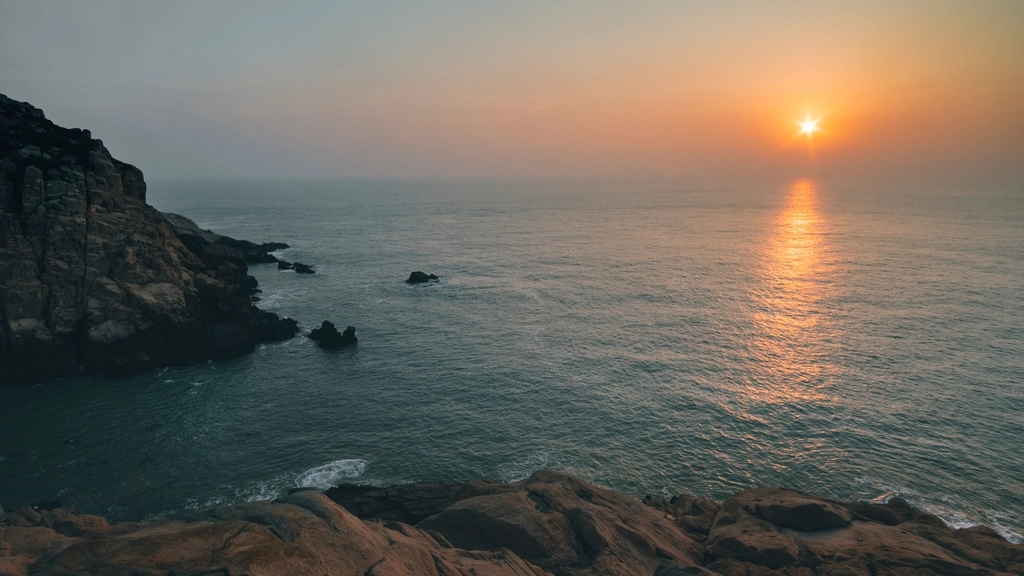
Talk to anyone who has crossed a glowing sea and you’ll hear about the surreal calm it induces – the way the horizon dissolves and the wake cuts a white ribbon through the dark. Those experiences, once dismissed as tall tales, now serve as breadcrumbs that align with orbital detections. When sailors note dates, positions, and sky conditions, their logs become invaluable metadata for scientists stitching together the narrative. The partnership is old-school observation meeting new-school surveillance.
Even small details from the deck help rule in – or out – a satellite candidate. Was there a moon? Did the glow look uniform or respond to waves? How far from the coast and known city lights was the vessel? Those specifics anchor the pixelated story to water and wind, building confidence that the glow was real and not a trick of the sensor.
The Future Landscape
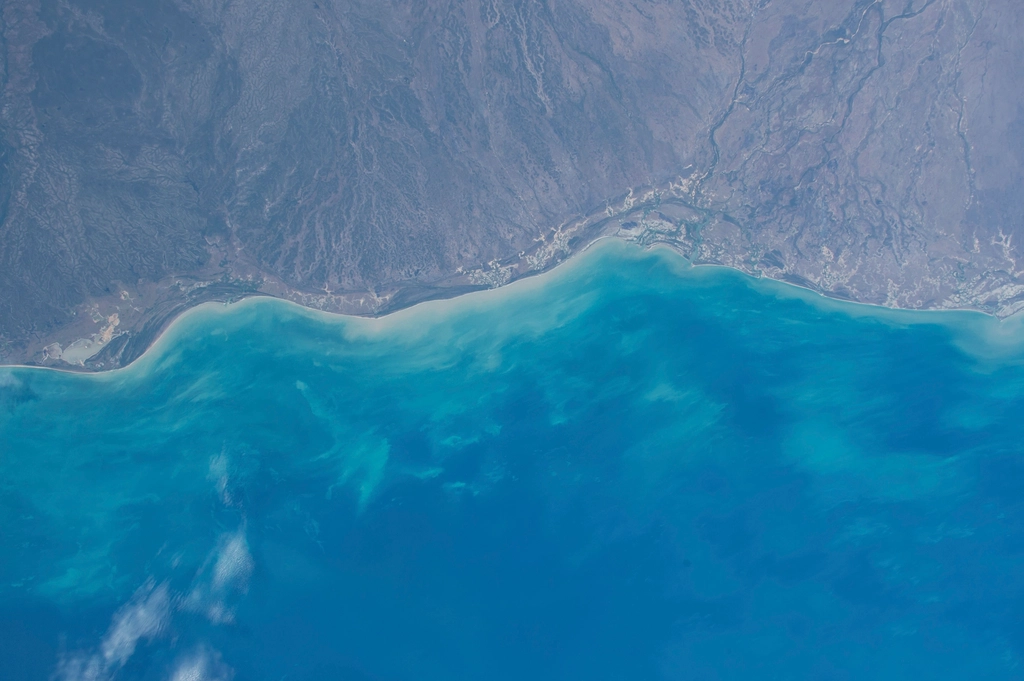
Next-generation satellites promise sharper, cleaner pictures of the night ocean, pairing ultra-sensitive detectors with better calibration and faster data delivery. As more platforms carry low-light imagers, revisit times will shorten, letting scientists watch glows evolve hour by hour instead of day by day. Hyperspectral daytime sensors add another dimension, parsing ocean color to infer plankton types and organic matter that could prime a nocturnal glow. Combined with autonomous floats and drones, that stack of tools can chase the light without waiting for a research ship.
The hard problems are as much logistical as technical. Clouds will always blot out views, and the faintness of the signal demands careful filtering to avoid false alarms. Data volume and processing time challenge teams who want timely alerts for vessels in the field. Still, the path is clear: more eyes, smarter algorithms, tighter links between satellites and ships, and a growing record that can reveal trends against the backdrop of a warming ocean.
What You Can Do Now
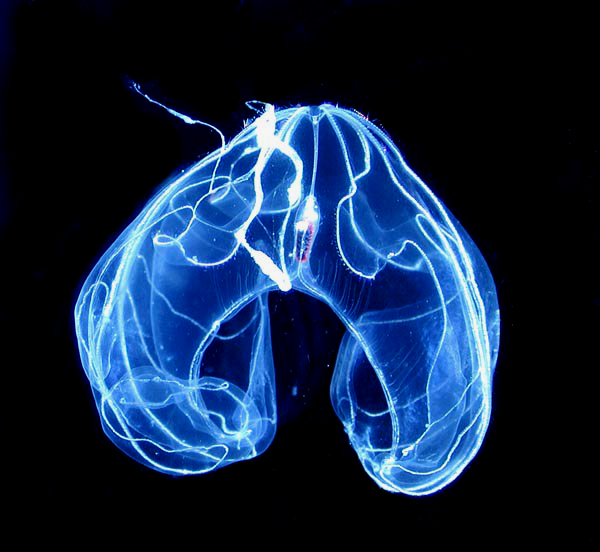
If you spend time on the water – especially at night – treat your observations as data. Note the date, time, sky brightness, location, water temperature if you can, and the character of any glow you see. Share those details with marine science programs that collect bioluminescence reports; your log could validate a satellite detection and trigger follow-up sampling. Even casual coastal walks can help, because nearshore blooms are easier to document and compare with orbital maps.
For everyone else, supporting ocean literacy is a powerful step. Back organizations that expand ocean monitoring, from community science groups to national observing networks. Encourage policies that sustain long-term satellite programs and open data access, because the night ocean won’t reveal itself without patient watching. The sea has always told stories in light; now we finally have the means to listen, one glowing map at a time.
Suhail Ahmed is a passionate digital professional and nature enthusiast with over 8 years of experience in content strategy, SEO, web development, and digital operations. Alongside his freelance journey, Suhail actively contributes to nature and wildlife platforms like Discover Wildlife, where he channels his curiosity for the planet into engaging, educational storytelling.
With a strong background in managing digital ecosystems — from ecommerce stores and WordPress websites to social media and automation — Suhail merges technical precision with creative insight. His content reflects a rare balance: SEO-friendly yet deeply human, data-informed yet emotionally resonant.
Driven by a love for discovery and storytelling, Suhail believes in using digital platforms to amplify causes that matter — especially those protecting Earth’s biodiversity and inspiring sustainable living. Whether he’s managing online projects or crafting wildlife content, his goal remains the same: to inform, inspire, and leave a positive digital footprint.