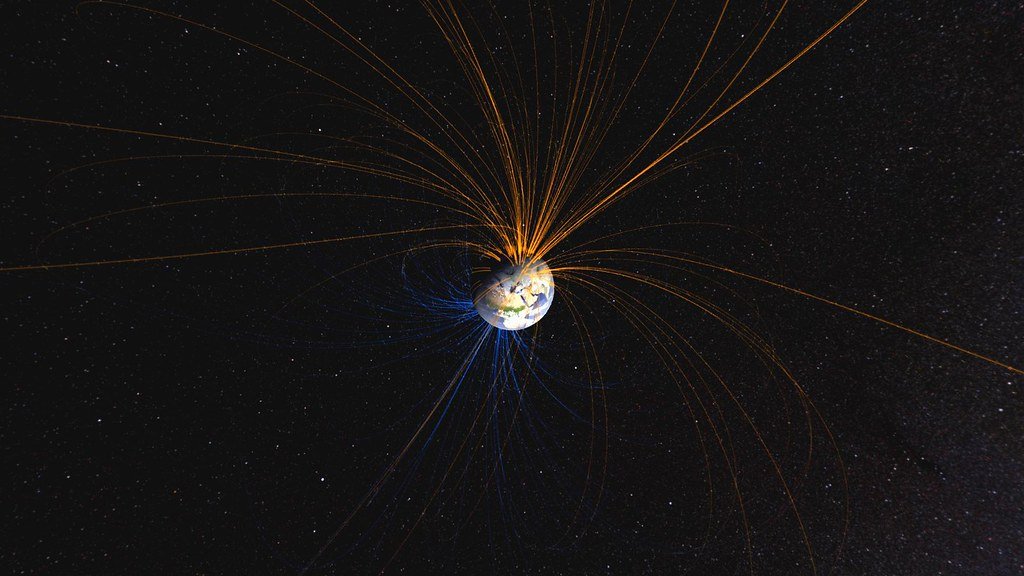

The idea that ancient temples, pyramids, and cathedrals might be whispering mathematical secrets across millennia sounds like something out of a thriller, but it is increasingly a topic serious researchers are willing to examine with fresh eyes. From the pyramids at Giza to the stone circles of Europe and the intricate floor plans of medieval mosques, recurring patterns and ratios hint at a shared architectural language that may not have been fully understood until modern mathematics caught up. At the same time, skeptics warn that humans are pattern-hunting machines, capable of “finding” meaning where none was intentionally put. Caught between those two poles is a fascinating scientific frontier: can we distinguish symbolic numerology from genuine engineering intent? And if a hidden code really does run through some of humanity’s most iconic structures, what might that reveal about how ancient builders understood space, nature, and even life itself?
The Hidden Clues in Stone and Space
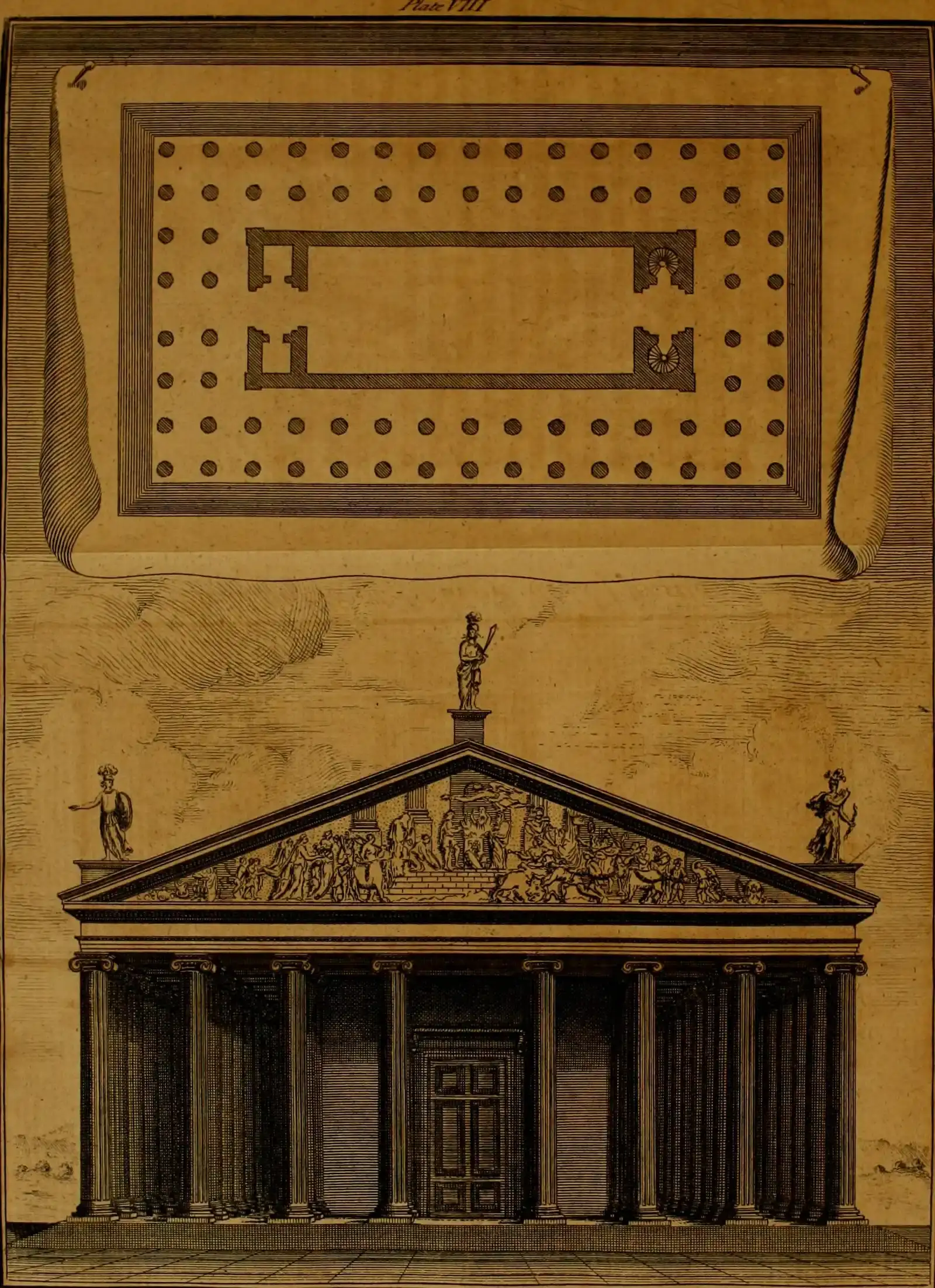
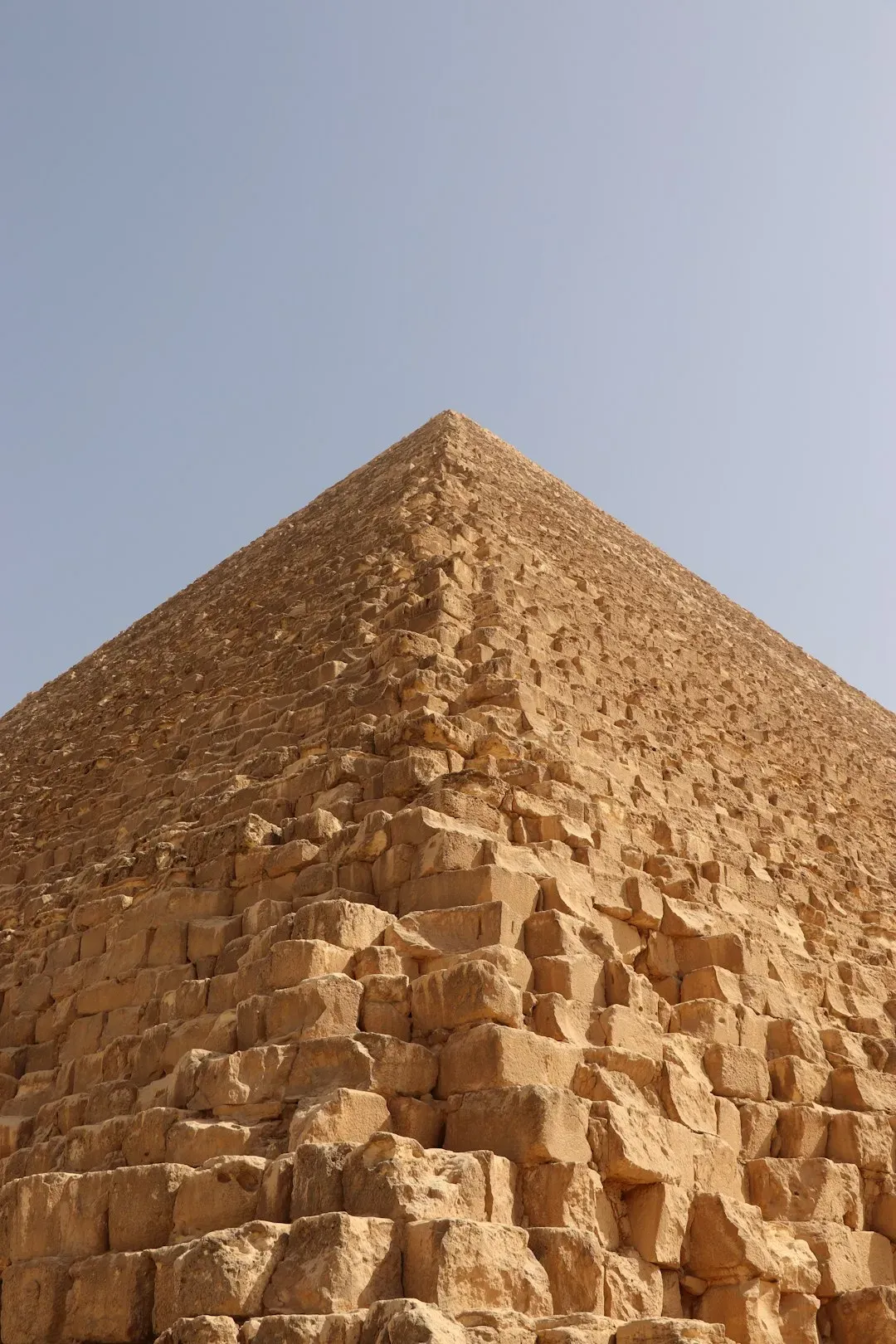
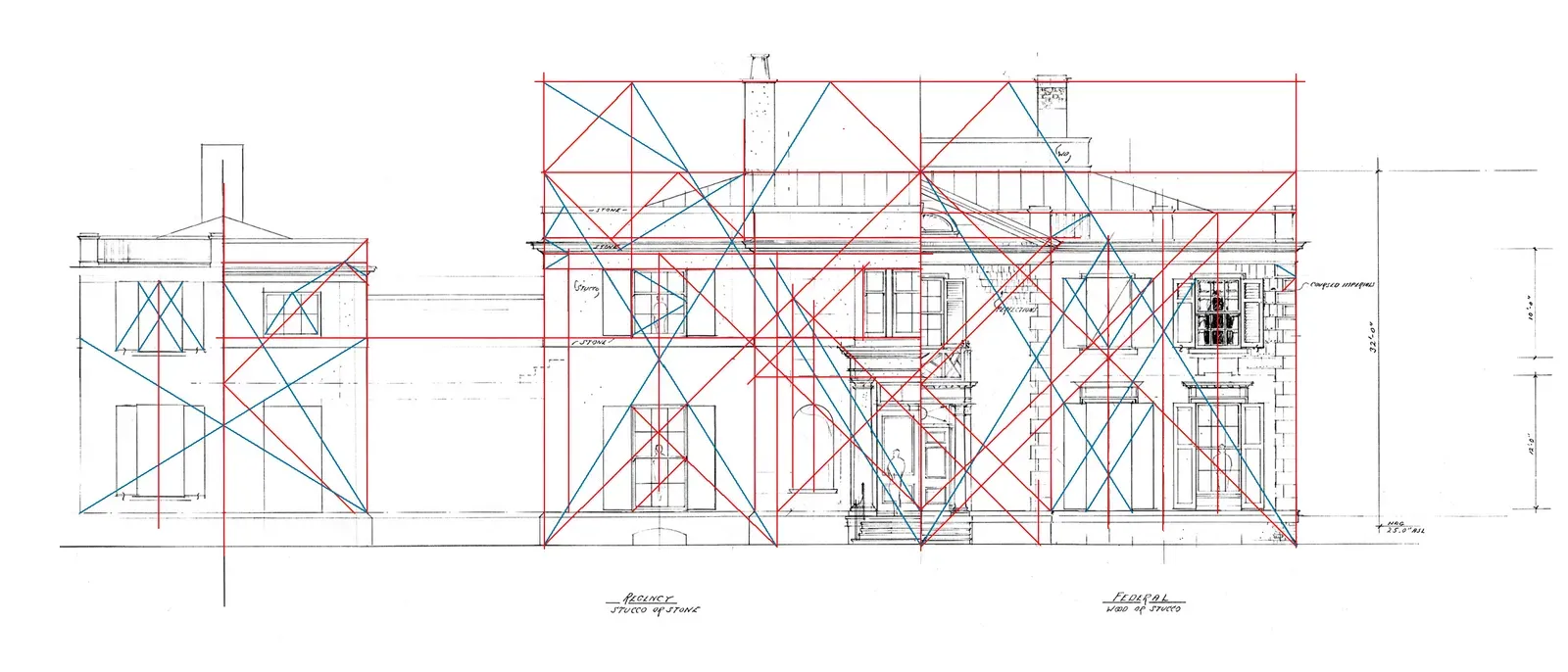
Walk into an ancient temple or cathedral and your body reacts before your brain can catch up – your eyes are drawn upward, your steps slow, and a quiet sense of order settles in. That emotional response, some researchers argue, is not an accident but the result of careful geometric planning meant to shape how people move and feel inside a space. Archaeologists and architectural historians have documented recurring patterns of proportions in structures from widely separated cultures, such as layouts based on simple ratios of one-to-two, two-to-three, or three-to-five. These are not esoteric numbers pulled from mystic texts; they are exactly the kinds of whole-number relationships that make buildings stable and visually pleasing. When such ratios appear in load-bearing walls, column spacing, and courtyards, they start to look less like coincidence and more like deliberate design tools.
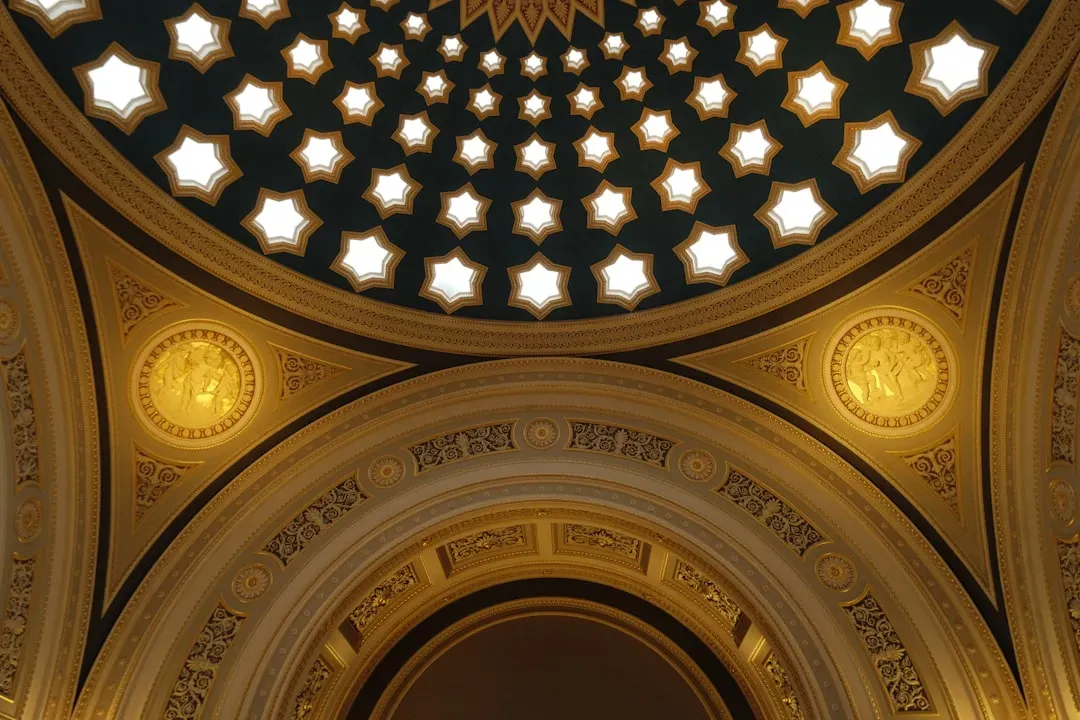
There are also more subtle clues that hint at a shared underlying logic, if not a single universal code. In Mesoamerican pyramids, for example, staircases and terraces often align not only with cardinal directions, but also with key dates in the solar year, suggesting an interplay between geometry and astronomy. In Islamic architecture, repeating star patterns and interlocking polygons form complex tilings that mathematicians today recognize as near-perfect demonstrations of symmetry groups. Even in prehistoric stone circles, alignments with solstices and lunar cycles show that geometry on the ground was tied to geometry in the sky. Whether these builders thought in terms of “sacred geometry” as we use the term today is uncertain, but they clearly treated shape, direction, and proportion as more than just practical choices.
From Ancient Tools to Modern Science
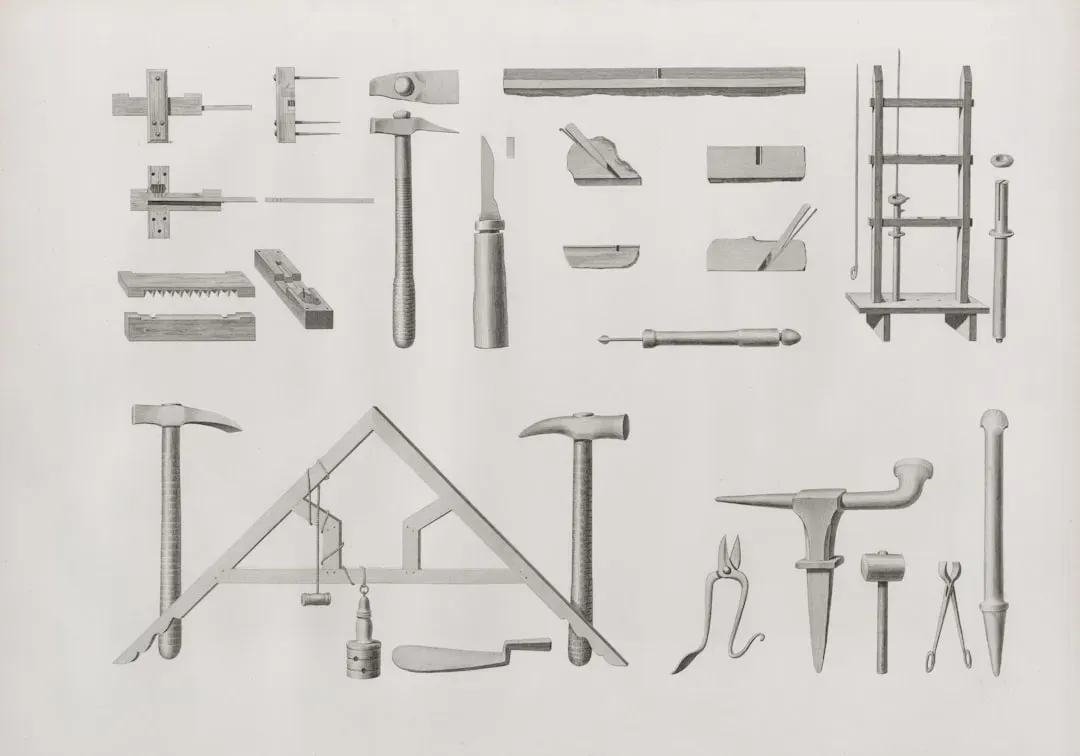
The tools ancient architects used were deceptively simple: cords, stakes, sighting rods, and perhaps a few well-worn rules of thumb passed down through guilds or priestly castes. With such modest equipment, they laid out right angles, bisected lines, and created surprisingly precise circles and polygons long before modern surveying instruments existed. Experimental archaeologists have shown that with a rope knotted at regular intervals, one can mark off Pythagorean triangles, divide courtyards proportionally, and even approximate more complex curves. This means builders did not need written formulas to embed sophisticated geometry into their designs; they needed reliable construction rituals that produced consistent shapes. Over generations, those rituals could evolve into highly tuned, geometry-rich traditions.
Modern science has amplified our ability to detect and measure these patterns with a level of precision ancient observers could never have imagined. High-resolution laser scanning, drone-based photogrammetry, and satellite imagery now allow researchers to reconstruct entire sites in digital three-dimensional space. Once those models exist, algorithms can comb through them, testing for repeated ratios and alignments that might be invisible to the naked eye on the ground. Some projects have found unexpected regularities in how distances between key points relate to each other, hinting at underlying modular systems. Others have debunked popular myths by showing that supposed “perfect” alignments or ratios fall outside realistic error margins, reminding us that not every striking claim of hidden geometry survives careful measurement.
Where Sacred Geometry Meets Nature
One reason the idea of a hidden geometric code feels so compelling is that nature itself seems to run on patterns that look almost architectural. Spiral shells, branching trees, honeycomb hives, and even the arrangement of seeds in a sunflower all follow mathematical rules that scientists can describe with concepts like logarithmic spirals, fractals, and efficient packing. When ancient architects echoed some of these patterns in their designs – spiral ramps, radiating colonnades, or hexagonal floor tiles – they may have been trying to mirror the underlying order they saw in the world around them. In that sense, sacred geometry becomes less about mystical symbols and more about an intuitive attempt to harmonize buildings with the larger environment. The temple or cathedral stands not as an isolated object but as a carefully tuned instrument inside a bigger symphony of forms.
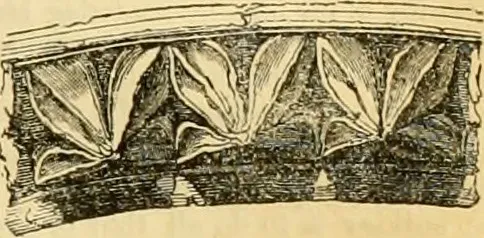
Biologists studying pattern formation in organisms have, somewhat unexpectedly, joined the conversation. As they model how cells self-organize into tissues or how coral reefs grow into complex branching structures, they are uncovering rules that parallel geometric principles used by builders. Some marine invertebrates build skeletons that look uncannily like miniature domes, buttresses, or lattice shells, designed by evolution rather than human hands. The deep sea, in particular, is full of life forms that seem to carve pure geometry into flesh and mineral, from glass sponges that grow near-perfect lattice towers to radiolarians with intricate polyhedral skeletons. When you see those organisms side by side with stone tracery in a Gothic window or carved rosettes in a temple ceiling, the line between biology and architecture starts to blur.
Inside the Numbers: Patterns, Ratios, and Skepticism
One of the most controversial ideas in this field is that certain numbers or ratios, like the so-called golden ratio, were consciously and widely used as a sacred blueprint by ancient architects. Enthusiasts claim to find this proportion in everything from the Parthenon to Egyptian pyramids and medieval cathedrals, arguing that it encodes some universal aesthetic truth. Detailed re-measurements, however, often show that the fits are much looser than those claims suggest, and that simpler, more practical ratios do just as well at explaining the layouts. Statistically, if you test enough dimensions, you are likely to find at least one that roughly matches any number you want. This is where scientific skepticism becomes essential, forcing researchers to ask whether patterns are robust, widespread, and consistent with what we know about the tools and knowledge of the time.
To separate signal from noise, some teams now apply methods borrowed from ecology and data science. They compare the measured proportions of real buildings to those of randomized, simulated ones to see whether the real structures show a stronger clustering around specific ratios than would occur by chance. When that clustering appears across multiple independent sites and cultures, it strengthens the case that certain design rules were consciously used. At the same time, robust negative results – cases where no special pattern emerges – are just as important, because they puncture romantic but unfounded stories. In reality, the ancient world likely contained both: builders who leaned heavily on codified geometry and others who worked more by feel, tradition, and the demands of local materials.
Why It Matters: A New Lens on Human Intelligence
This is not just an argument about pretty math in old buildings; it is a window into how human intelligence evolved to understand and reshape the world. If ancient architects embedded repeatable geometric codes in their work, that suggests they developed powerful, practical systems of knowledge long before formal mathematics was written down. It blurs the neat timeline many of us learned in school, where abstract math supposedly comes first and engineering follows. Instead, hands-on builders may have discovered relationships, ratios, and alignments through trial, error, and success, and only later did philosophers and mathematicians find names and proofs for them. In that way, a cathedral nave or temple courtyard can be read as a kind of stone textbook, recording insights that might otherwise have vanished with the builders themselves.
There is also a more emotional, even unsettling, implication: if a shared geometric language really does run through architecture from distant civilizations, our species might be more cognitively unified than our fractured histories suggest. The same brains that now design quantum sensors and deep-sea submersibles once laid out sun temples and ritual plazas with ropes and pegs, guided by many of the same intuitions about balance, symmetry, and rhythm. Recognizing that continuity can nudge us to respect older ways of knowing, instead of dismissing them as primitive. It can also sharpen our awareness of how much knowledge we may still be overlooking in unexcavated sites, coastal ruins now submerged, and fragile structures being lost to climate change.
Global Perspectives and Deep Time

Looking globally, there is growing interest in comparing geometric design traditions across regions that historically had little or no contact with each other. Researchers examine whether stepped pyramids in Mesoamerica and terraced temple platforms in Southeast Asia share structural logics because they solve similar engineering problems, or because certain forms simply feel “right” to the human brain. They also look at indigenous architecture – longhouses, stilt villages, circular compounds – that has often been treated as less sophisticated, and ask new questions about hidden proportional systems. When villagers describe how they measure out spaces using body parts, shadows, or seasonal markers, those vernacular methods sometimes map surprisingly well onto formal geometric constructions. What once seemed like intuitive guesswork turns out to be repeatable, testable practice.
Deep time adds another wrinkle. Sea-level rise after the last ice age likely drowned coastal settlements whose geometric layouts we may never fully recover. Underwater archaeology has begun to map submerged structures that could shift our sense of when and where complex building traditions first emerged. In parallel, satellite surveys are revealing buried foundations beneath forests and farmlands, tracing out invisible grids and radial plans with eerie clarity. Each discovery broadens the sample size for testing claims about sacred geometry, turning a handful of famous monuments into part of a much larger dataset. As that dataset grows, our stories about a few exceptional cultures may give way to a more nuanced picture in which many societies, across continents, experimented with geometric order in parallel.
The Future Landscape: Algorithms, AI, and Living Geometry
Paradoxically, some of the most promising tools for studying ancient geometric codes are the same technologies now driving cutting-edge architecture and design. Artificial intelligence systems can scan thousands of site plans, elevations, and 3D models, hunting for recurring proportional relationships and alignments that would take human researchers years to catalog. These systems can also generate simulated “alternative histories” of buildings, testing how different geometric rules would have affected stability, light, and crowd flow. Meanwhile, structural engineers are using biomimicry – copying forms from bones, shells, and coral – to create lighter, stronger buildings whose load paths echo the branching patterns seen in nature. The feedback loop tightens: modern geometry helps us decode ancient forms, and ancient solutions inspire new designs.
At the same time, there is a growing interest in what might be called living geometry: buildings that respond dynamically to environmental inputs the way organisms do. Adaptive facades that open and close like petals, support structures that redistribute loads like growing trees, and underwater habitats shaped to encourage coral growth all draw on spatial logics that feel strangely close to sacred geometry. If future cities float, burrow, or even partially grow themselves from bioengineered materials, their designers may intentionally weave in patterns that resonate with human perception at multiple scales. Whether or not one believes in mystical meanings behind specific ratios, the idea that geometry can tune our emotional and biological responses to space is becoming a testable scientific hypothesis rather than a purely philosophical claim.
Call to Action: Reading the Patterns Around You
You do not need a laser scanner or a math degree to start engaging with this emerging picture of geometry as a bridge between past and present. The next time you step into a favorite building – a local library, a church, a mosque, or even a subway station – pause and look for the invisible grid under your feet and over your head. Notice how columns line up, how windows repeat, how your eye follows certain rhythms and avoids others. That simple act of paying attention turns everyday spaces into field sites where you can test your own sensitivity to proportion and pattern. It is a small but powerful way to reconnect personal experience with the broader questions scientists are asking.
If you want to go further, you can support projects that document and preserve at-risk historical sites, especially those threatened by sea-level rise, development, or conflict. Many organizations now share open-access datasets of site scans and floor plans that curious amateurs and students can explore. Teachers can bring these ideas into classrooms by having students map the geometry of local buildings or compare natural patterns – like shells and leaves – to nearby architecture. And for anyone simply fascinated by the idea of a hidden code in stone, the most important step is to keep your curiosity alive and skeptical at the same time. The world is already full of patterns; the real challenge is learning to tell which ones truly matter.
Suhail Ahmed is a passionate digital professional and nature enthusiast with over 8 years of experience in content strategy, SEO, web development, and digital operations. Alongside his freelance journey, Suhail actively contributes to nature and wildlife platforms like Discover Wildlife, where he channels his curiosity for the planet into engaging, educational storytelling.
With a strong background in managing digital ecosystems — from ecommerce stores and WordPress websites to social media and automation — Suhail merges technical precision with creative insight. His content reflects a rare balance: SEO-friendly yet deeply human, data-informed yet emotionally resonant.
Driven by a love for discovery and storytelling, Suhail believes in using digital platforms to amplify causes that matter — especially those protecting Earth’s biodiversity and inspiring sustainable living. Whether he’s managing online projects or crafting wildlife content, his goal remains the same: to inform, inspire, and leave a positive digital footprint.