
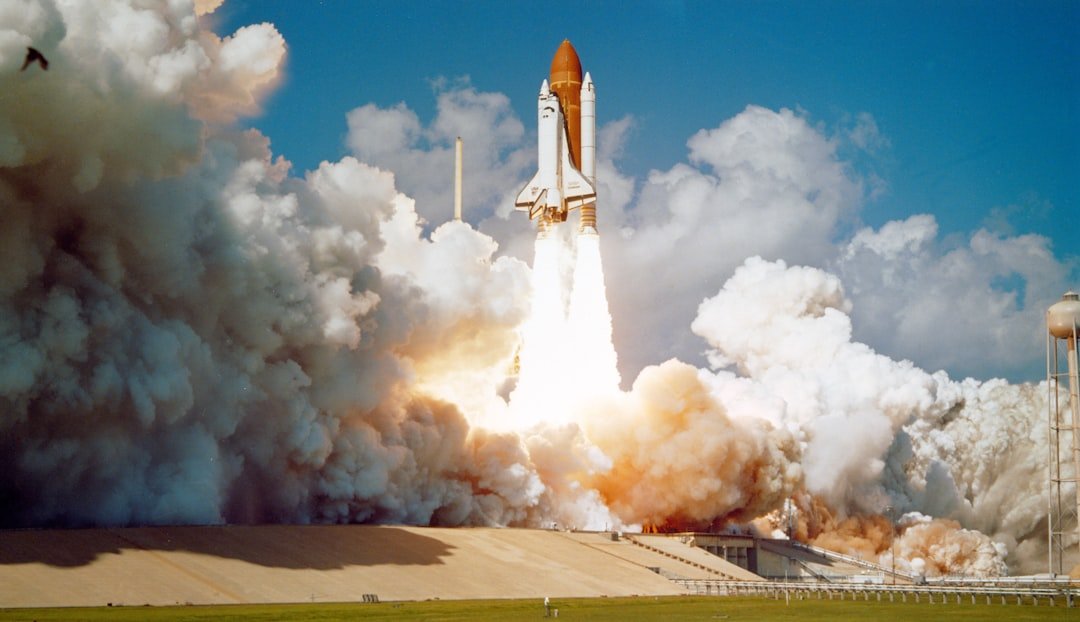
Propulsion Power Redefined (Image Credits: Unsplash)
Moscow – Engineers at Rosatom’s Troitsk Institute have introduced a magnetoplasma accelerator designed to transform interplanetary travel. This plasma-based engine promises to deliver humans to Mars in just one month for a one-way journey, a stark improvement over the eight months required by traditional chemical rockets. The breakthrough highlights Russia’s push into advanced propulsion amid global competition.[1]
Propulsion Power Redefined
The engine achieves a specific impulse of up to 100 kilometers per second, far surpassing typical values of 30 to 50 kilometers per second in other advanced systems. This measure of efficiency allows the thruster to accelerate propellant – ionized gas – using powerful magnetic fields, generating thrust without the heavy fuel loads of chemical alternatives. Rosatom describes the performance as unmatched by any existing technology.[1]
At 300 kilowatts of power output, the device ionizes hydrogen particles and propels them at extraordinary speeds. Such capabilities could make long-duration spaceflights more feasible by reducing exposure to radiation and microgravity effects. Development at the Troitsk Institute builds on decades of plasma research, positioning this as a potential game-changer for deep space ventures.
Global Race in Plasma Technology
NASA has explored similar concepts, including the Pulse Plasma Rocket and Variable Specific Impulse Magnetoplasma Rocket, which target Mars trips of 45 to 60 days. These American efforts emphasize shielded fast transits to protect crews from cosmic rays. Meanwhile, China’s Xi’an Aerospace Propulsion Institute works on a high-thrust magnetic plasma thruster, with hopes of deployment in the coming years.[1]
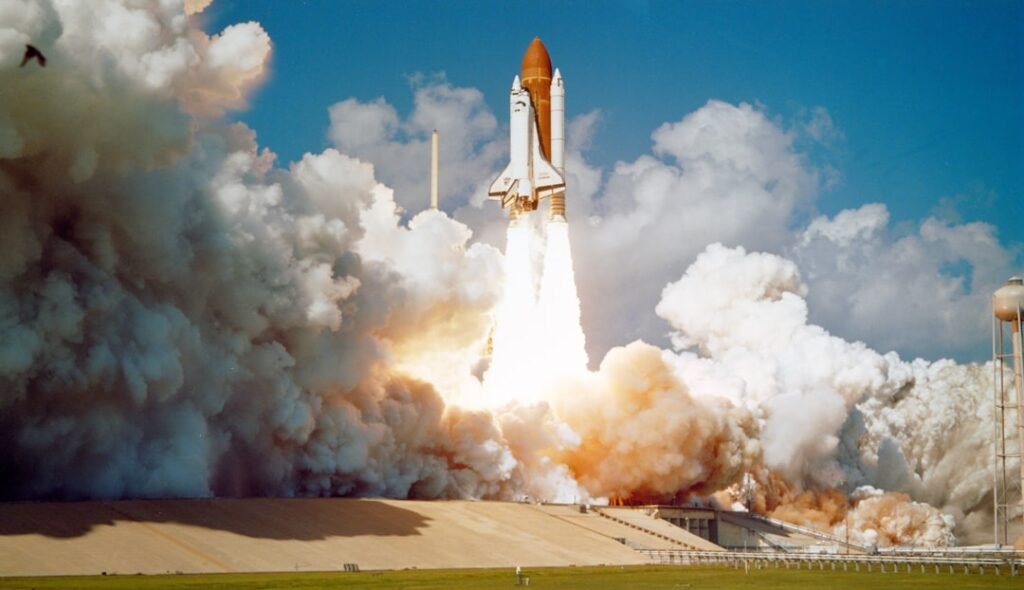
Traditional chemical rockets, by contrast, rely on massive fuel consumption for short bursts of power. They demand precise planetary alignments every 26 months for efficient launches. Plasma systems offer continuous low-thrust operation, enabling steadier acceleration over vast distances.
| Technology | Specific Impulse (km/s) | Estimated Mars Trip |
|---|---|---|
| Chemical Rockets | ~4 | 8 months |
| NASA Plasma Concepts | 30-50 | 45-60 days |
| Russian Magnetoplasma | 100 | 30 days |
From Prototype to Launchpad
Officials unveiled the engine in February 2025, with a flight-ready prototype slated for 2030. Rosatom, a state corporation known for nuclear energy and quantum computing, leads the effort through its Troitsk facility. Yet challenges persist in Russia’s space sector, as RSC Energia’s head Igor Maltsev noted in 2025: “We need to stop lying to ourselves and others about the state of affairs.”[1]
Industry observers question whether the timeline holds amid financial strains and technical hurdles. Scaling power systems for crewed missions remains a key obstacle. Still, steady progress in ground tests fuels optimism for integration into larger spacecraft.
Vision for Interplanetary Frontiers
Faster Mars journeys could enable more frequent missions, sustaining human presence on the Red Planet. Reduced travel times minimize physiological risks, paving the way for permanent outposts. Plasma propulsion might extend to other targets, like asteroids or Jupiter’s moons, accelerating solar system exploration.[1]
The technology’s versatility even draws interest for Earth-bound applications, such as advanced aircraft engines researched at Wuhan University. As nations invest heavily, plasma thrusters signal a shift from brute-force rocketry to elegant efficiency.
Key Takeaways
- Russia’s engine boasts 100 km/s specific impulse, unmatched currently.
- Targets 30-day Mars trips versus 8 months for chemical rockets.
- Flight-ready version planned for 2030 amid industry challenges.
This plasma innovation could usher in an era of routine deep-space travel, shrinking the cosmos for humanity. What do you think about Russia’s bold timeline? Tell us in the comments.