

A Legacy of Displacement Fuels Change (Image Credits: Imgs.mongabay.com)
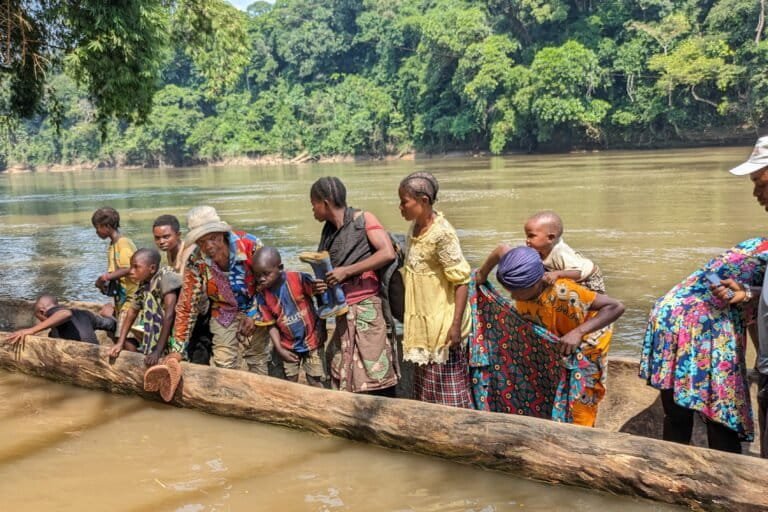
In the heart of the Democratic Republic of Congo, local communities are transforming historical grievances into a groundbreaking conservation effort spanning one million hectares of rainforest.
A Legacy of Displacement Fuels Change
Families like that of conservationist Dominique Bikaba endured forced relocation decades ago when authorities established Kahuzi-Biega National Park in the 1970s. This displacement severed deep ties to ancestral lands rich in biodiversity. Bikaba, now a leading advocate for gorilla protection, channels this past into a more equitable approach to stewardship. His work emphasizes community involvement over top-down exclusion. Such initiatives address long-standing inequities while safeguarding vital ecosystems.
The Congo Basin, the world’s second-largest tropical rainforest, supports unparalleled species diversity. It harbors gorillas, elephants, and countless other species essential to global carbon storage. Community-led projects now aim to reconnect people with these forests. By granting formal rights to traditional territories, these efforts prevent further evictions and promote sustainable use. Early successes demonstrate how inclusion strengthens conservation outcomes.
Building the Corridor Through Collective Action
Organizations like Strong Roots facilitate the registration of customary lands as community forestry concessions. This process requires communities to develop environmental management plans that outline sustainable practices. To date, 23 such concessions cover nearly 600,000 hectares around Kahuzi-Biega. Participants map boundaries, monitor resources, and enforce rules collectively. This piecemeal expansion gradually links protected areas into a continuous corridor.
The strategy integrates conservation with livelihoods. Communities harvest timber selectively, cultivate crops without clearing vast swaths, and develop ecotourism opportunities. Training programs equip locals with skills in reforestation and wildlife monitoring. These steps not only preserve habitats but also generate income. The corridor’s design allows animal migration, vital for species like forest elephants facing fragmented ranges.
Navigating Obstacles in a Volatile Region
Eastern Democratic Republic of Congo grapples with ongoing armed conflict, which hampers progress. Insurgents and resource exploitation threaten the corridor’s integrity. Despite this, communities persist, forming alliances to deter illegal logging and poaching. International partners provide technical support and funding to bolster security measures. Resilience shines through as villagers patrol their concessions despite risks.
Broader challenges include weak land tenure systems and external pressures like mining interests. Yet, the project counters these by formalizing community rights under national law. Success stories from similar efforts in the region inspire expansion. Advocates highlight how peacebuilding elements, such as dialogue forums, reduce tensions. Steady advancement proves that local ownership can endure amid adversity.
Broader Implications for Congo Basin Conservation
This corridor exemplifies a shift toward inclusive models across the Congo Basin, which spans six countries and sequesters massive carbon volumes. It aligns with global goals to protect 30% of land by 2030. By involving over 75 million basin residents, such projects ensure cultural survival alongside biodiversity. Elephants and apes benefit from restored connectivity, reducing extinction risks.
- Enhanced habitat linkage for migratory species.
- Sustainable income from non-timber forest products.
- Empowerment of indigenous knowledge in management.
- Reduction in human-wildlife conflicts through zoning.
- Foundation for climate resilience in vulnerable areas.
Experts note that community-driven conservation yields higher compliance rates than state-only approaches. The initiative also rectifies colonial-era park creations that ignored local rights. As the corridor grows, it could influence policy nationwide.
Key Takeaways
- Communities have secured nearly 600,000 hectares through 23 concessions, targeting one million total.
- The project addresses historical displacements by prioritizing local stewardship.
- Despite conflict, it promotes biodiversity while supporting sustainable livelihoods.
This community-forged corridor stands as a beacon of hope for the Congo Basin’s future, blending justice with environmental protection. As efforts expand, they underscore the power of grassroots action in preserving our planet’s lungs. What role do you see for global support in such initiatives? Share your thoughts in the comments.
Jan loves Wildlife and Animals and is one of the founders of Animals Around The Globe. He holds an MSc in Finance & Economics and is a passionate PADI Open Water Diver. His favorite animals are Mountain Gorillas, Tigers, and Great White Sharks. He lived in South Africa, Germany, the USA, Ireland, Italy, China, and Australia. Before AATG, Jan worked for Google, Axel Springer, BMW and others.