
It’s one of those questions that keeps you up at night if you let it sink in deep enough. Not “what’s for dinner” or “did I pay the electricity bill” – but the real existential heavyweight: how does all of this end? The stars, the galaxies, the atoms themselves. Everything.
Scientists have actually been working on this for decades, and the answers they’ve arrived at are equal parts terrifying, fascinating, and strangely beautiful. There are competing theories, cosmic timelines that stretch so far into the future that our brains simply can’t process the numbers, and some genuinely mind-bending physics at play. So let’s dive in – because the end of the universe is one story worth knowing from start to finish.
We Already Know the Universe Isn’t Permanent – And That Changes Everything
Here’s something that should probably get more attention in daily life: the universe is not in a steady state. It’s expanding, and not just gently – it’s accelerating. Scientists confirmed this in the late 1990s, and it essentially rewrote the long-term future of everything we know. The culprit behind this acceleration is what physicists call dark energy, a mysterious force that makes up roughly about two thirds of everything in the universe.
What makes this so strange is that we don’t fully understand what dark energy actually is. It’s not dark in a literal sense – it’s just invisible and baffling. Think of it like a pressure valve in the fabric of space that keeps cranking open wider and wider. The more the universe expands, the lonelier and colder everything gets. That detail alone sets the stage for every theory about the ultimate fate of the cosmos.
The Big Freeze: The Most Likely End of Everything
Of all the doomsday scenarios for the universe, the Big Freeze – sometimes called Heat Death – is the one most cosmologists currently consider the most probable. The idea is straightforward but chilling. As the universe continues expanding, galaxies drift apart. Stars burn out. Over incomprehensibly long timescales, all usable energy dissipates until everything reaches the same temperature, just barely above absolute zero.
At that point, nothing meaningful can happen anymore. No reactions, no movement, no information processing of any kind. Honestly, it’s less like an explosion and more like a cosmic shrug – the universe simply runs out of things to do. The timeline for this? We’re talking numbers so absurdly large that even calling them “astronomical” is an understatement. A googol years – that’s a one followed by a hundred zeros – is somewhere in the ballpark. By that point, even black holes will have evaporated.
The Big Rip: When Space Itself Tears Apart
If dark energy doesn’t stay constant but instead grows stronger over time, things get far more dramatic. The Big Rip theory proposes that the expansion of the universe would eventually accelerate so fast that it overwhelms every force holding matter together. First, galaxy clusters would shred apart. Then individual galaxies. Then solar systems, planets, molecules, and finally even atoms themselves.
It’s hard to say for sure whether this is how things will play out, but the math allows for it depending on the specific behavior of dark energy. In the final fractions of a second before the Big Rip, the fabric of space-time would tear itself into pieces at the subatomic level. It sounds like something out of science fiction, but it’s based on genuine theoretical physics. Let’s be real – that’s one of the most violent endings imaginable.
The Big Crunch and the Big Bounce: Could It All Start Over?
Before dark energy’s accelerating expansion became accepted science, many physicists believed the universe might eventually reverse course. Gravity, they thought, could win the long game – pulling everything back together into an unimaginably dense point, a mirror image of the Big Bang but in reverse. This scenario is called the Big Crunch.
Here’s the thing though: some theorists didn’t stop there. A subset of cosmologists have proposed that a Big Crunch could trigger another Big Bang, starting an entirely new universe. This is the Big Bounce theory – a cyclical cosmos that endlessly expands, collapses, and is reborn. It’s a strangely comforting idea, almost like the universe breathing in and out forever. With current observational data suggesting continued acceleration, the Big Crunch seems unlikely – but “unlikely” in cosmology is never quite the same as “impossible.”
Black Holes: The Last Survivors
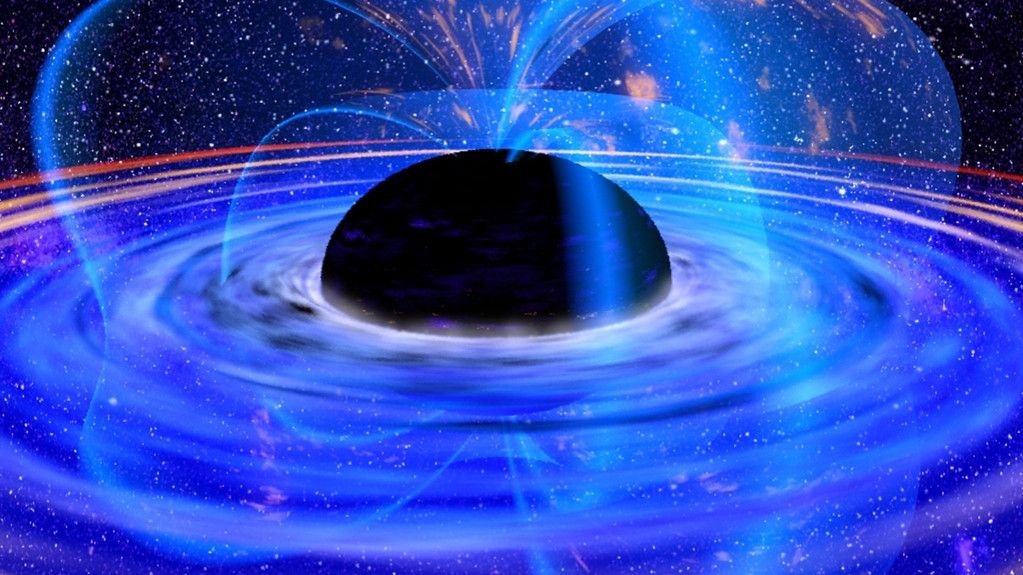
Long after the last star has burned out, the universe won’t be entirely empty. Black holes will remain. These gravitational giants outlast everything else, quietly consuming whatever drifts near them across timescales that dwarf even stellar lifetimes. For an enormous stretch of what we might loosely call “time,” the universe will essentially be a cold, dark graveyard punctuated by these silent giants.
Even they don’t last forever, though. Physicist Stephen Hawking theorized that black holes slowly lose mass over enormous timescales through a process known as Hawking radiation – tiny quantum leakages that gradually cause a black hole to evaporate. The largest black holes might persist for something like ten to the power of a hundred years. When the last one finally vanishes in a faint burst of radiation, the universe crosses into true emptiness. No matter, no energy gradients, nothing. Just a vast, flat, uniform void stretching in every direction for eternity.
What Quantum Physics Adds to the Picture
Just when you think the story is settled, quantum mechanics throws in a wild card. There’s a concept called vacuum decay – sometimes called the false vacuum hypothesis – that suggests the universe as we experience it might not be in its lowest possible energy state. If that’s true, it means a quantum bubble of true vacuum could theoretically nucleate somewhere in the universe and expand outward at the speed of light.
Everything it touches would be instantly restructured at the most fundamental level – different physical constants, different laws of physics, no possibility of warning, no survival. I know it sounds crazy, but this isn’t fringe science. It’s a legitimate topic of discussion among particle physicists, particularly following observations tied to the Higgs boson field. The comforting caveat is that if it happens, nobody would ever see it coming. Not a great comfort, admittedly, but it’s something.
What All of This Actually Means for Us
The universe has been around for roughly about fourteen billion years. The timescales we’re discussing for its end make that number look like a blink. The Sun itself will expand into a red giant in about five billion years, long before any of these cosmic endgames come into play. On a human scale, we’re nowhere near the end of anything.
Still, there’s something profound about sitting with these ideas. Every theory about the universe’s death also tells us something about what it means to exist inside something so vast and so temporary. Some people find that depressing. Honestly, I find it clarifying. The cosmos has a story, a beginning, a middle, and eventually an end – and somehow we’re conscious beings alive in the middle chapters, able to ask questions about the whole arc. That’s not nothing. That’s extraordinary.
Conclusion: The Most Important Story No One Talks About Enough
The fate of the universe isn’t just an abstract physics exercise. It’s the ultimate context for everything human beings have ever built, thought, loved, or created. Whether it ends in the slow freeze of Heat Death, the violent tearing of a Big Rip, or something stranger still that we haven’t fully imagined yet, the universe will one day reach its final chapter.
What strikes me most is how much agreement there already is among scientists on the broad strokes, even if the exact mechanism remains uncertain. The Big Freeze remains the leading candidate. Dark energy remains the defining force shaping the long-term future. These aren’t just philosophical musings – they’re evidence-based conclusions drawn from real observations of a real, changing cosmos. Does it change how you think about your own tiny, precious slice of it? It probably should.