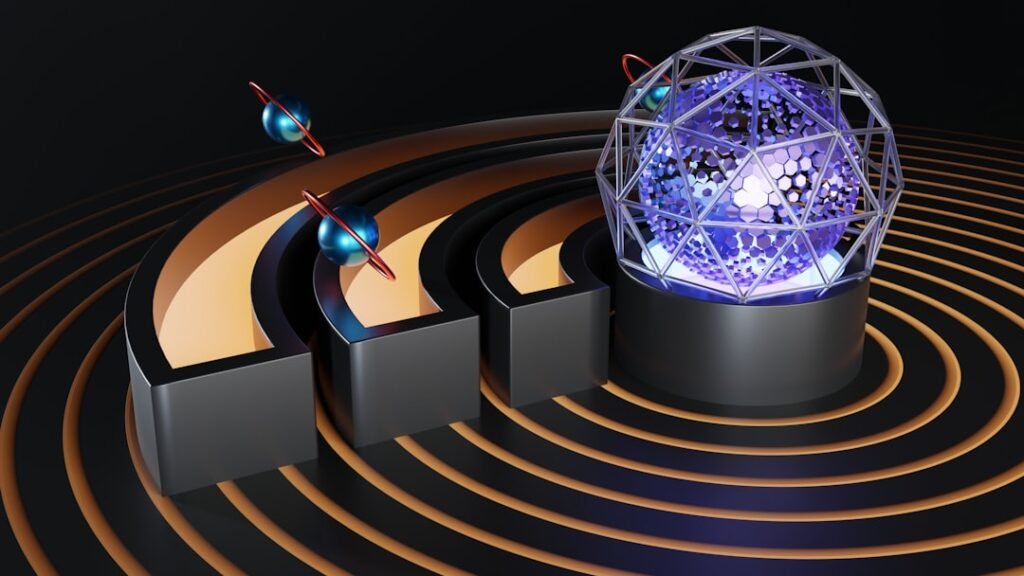

Elusive Targets in Cosmic Centers (Image Credits: Unsplash)
Astronomers have proposed a novel technique that harnesses warped starlight to detect elusive pairs of supermassive black holes orbiting each other in distant galaxies.[1][2]
Elusive Targets in Cosmic Centers
Supermassive black hole binaries form when galaxies collide and merge, leaving their central behemoths to spiral toward each other. These pairs, each millions to billions of times the sun’s mass, prove difficult to spot. Current methods struggle to identify them until they emit detectable gravitational waves near merger.[3]
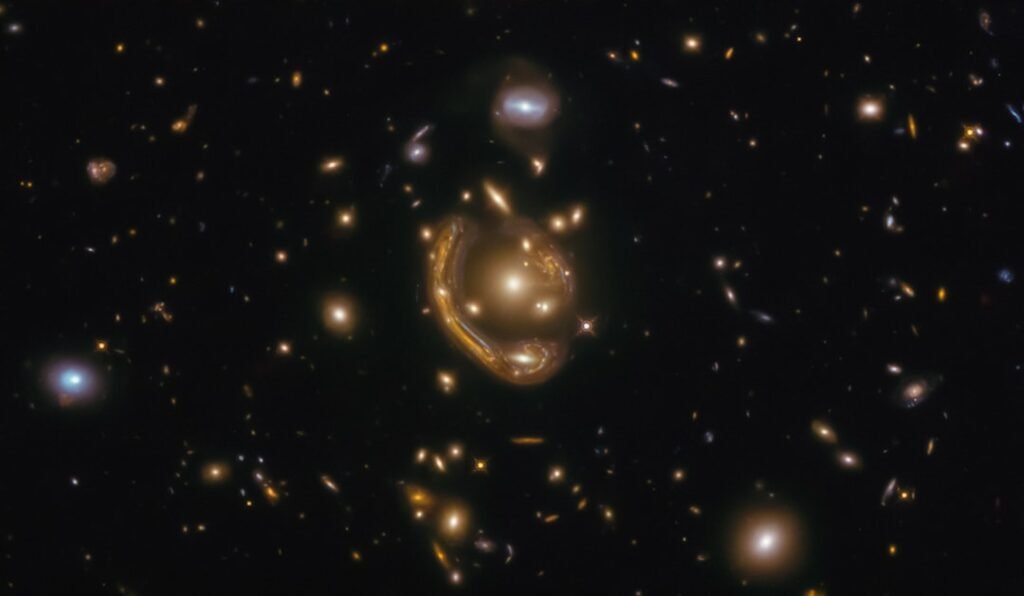
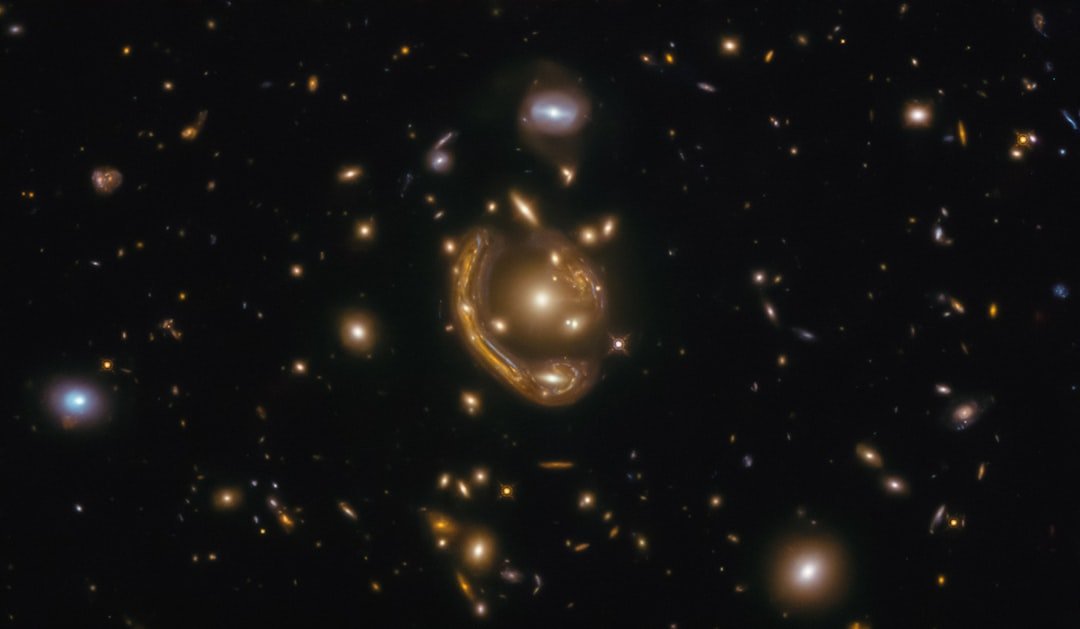
Researchers now suggest gravitational lensing offers a way forward. As these black holes orbit, they bend spacetime and amplify light from stars in their host galaxy. The result: bursts of extraordinarily bright starlight that repeat in patterns unique to binaries.[1]
This approach could reveal binaries years before space-based detectors like LISA pick up their gravitational signals. Hanxi Wang, a Ph.D. student at the University of Oxford who led the study, highlighted the potential: “This leads to repeating bursts of starlight, which provide a clear and distinctive signature of a supermassive black hole binary.”[2]
Gravitational Lensing: Black Holes as Cosmic Telescopes
Supermassive black holes naturally lens light due to their immense gravity. A single black hole magnifies background stars only during rare, precise alignments. Such events remain fleeting and hard to catch.[1]
Binaries change the game. The orbiting pair creates a diamond-shaped caustic curve – a region of extreme magnification. As the black holes circle their common center of mass, this caustic rotates and shifts, sweeping across more stars and boosting amplification chances dramatically.
Miguel Zumalacárregui from the Max Planck Institute for Gravitational Physics explained, “Supermassive black holes act as natural telescopes. Because of their enormous mass and compact size, they strongly bend passing light.”[3]
Quasiperiodic Bursts Reveal Orbital Secrets
The magic lies in the binary’s evolution. Energy loss through gravitational waves causes the orbit to shrink and speed up. This inspiral warps the caustic over time, producing quasiperiodic flashes from the same stars.
Timing between bursts – potentially every few years for massive pairs – encodes details like black hole masses, separation, and orbital decay. Different binaries would show varied frequencies, offering snapshots of merger stages across the universe.[1]
- Single black hole: Static lens, rare one-off magnifications.
- Binary pair: Dynamic caustic, repeated sweeps over stars.
- Inspiral effect: Changing flash frequency and peak brightness.
- Observational signature: Quasiperiodic bursts lasting days to weeks.
- Detection edge: Visible years before gravitational wave peaks.
Telescopes Poised for the Hunt
Wide-field surveys stand ready to scan for these signals. The Vera C. Rubin Observatory and Nancy Grace Roman Space Telescope promise the sky coverage and sensitivity needed. They could spot flashes from binaries millions of light-years away.
Bence Kocsis, professor at Oxford and co-author, noted the excitement: “The prospect of identifying inspiraling supermassive black hole binaries years before future space-based gravitational wave detectors come online is extremely exciting.”[2] Success would enable multi-messenger astronomy, combining light and waves to probe gravity and black hole physics in new regimes. The study appeared in Physical Review Letters.[1]
Key Takeaways
- Binary black holes produce repeating starlight flashes via dynamic gravitational lensing.
- Caustic curves amplify light far more effectively than single lenses.
- Upcoming telescopes like Rubin and Roman could detect them soon.
This breakthrough turns invisible cosmic dances into observable light shows, potentially rewriting our map of galactic cores. What do you think about these stellar beacons? Tell us in the comments.