
In 1914, a self-taught mathematician from India sent a letter to Cambridge that still sends ripples through physics today. Srinivasa Ramanujan’s strange, almost otherworldly formulas for the number π looked like pure mathematical art at the time – beautiful, fragile, and seemingly detached from reality. A century later, those same formulas are turning up in the heart of black hole physics, quantum field theory, and string theory, like hidden signatures etched into the fabric of the universe. The mystery is no longer just how Ramanujan found them, but why the universe appears to obey rules he glimpsed with nothing more than paper, ink, and intuition.
The Hidden Clues in Ramanujan’s π Formulas
Imagine writing down a string of symbols in a notebook and, decades later, physicists discover that the universe behaves according to those very symbols. That is roughly what happened with some of Ramanujan’s formulas for π, which involve dazzling infinite series and products that converge with shocking speed. One of his most famous results produces digits of π so efficiently that it later became the backbone of record-breaking computations, long before supercomputers were even conceived. Yet the bizarre structure of these formulas – full of factorials, roots, and nested patterns – looked more like poetic improvisation than tools of physical theory.
What makes them so tantalizing to modern physicists is that similar mathematical forms appear in quantum field theory and string theory when researchers calculate particle interactions or the entropy of black holes. The same kinds of modular functions and special series that Ramanujan played with now emerge as the language of curved spacetime and quantum fluctuations. It is as if his work encoded a catalogue of useful building blocks for future physics, even though he had no formal training in these subjects. The obvious but unsettling question is whether his intuition tapped into structures that are somehow built into reality itself.
From Temple Notebook to Quantum Vacuum
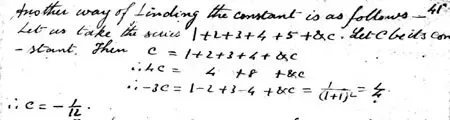
Ramanujan grew up far from the great observatories and laboratories of Europe, working largely in isolation in southern India. He filled notebooks with identities involving π, partitions, and modular forms that he claimed came to him in flashes of insight. To many of his contemporaries, these notes seemed disconnected from the tangible world of telescopes, orbits, and spectra. Mathematics, in that era, was often treated like an abstract cathedral, standing apart from the messy universe it tried to describe.
Fast-forward to late twentieth-century physics, and the story changes dramatically. When physicists began probing quantum fields – the invisible “sea” underlying particles – they found that the sums and series needed to tame infinite energies often resembled the modular forms studied by Ramanujan. Calculations of vacuum energy, Casimir forces, and thermal properties of fields on curved spaces all started to echo his work. In black hole thermodynamics, formulas for entropy and microstates involve functions that live in the same mathematical neighborhood as Ramanujan’s discoveries. The gap between his temple notebook and the quantum vacuum suddenly looked much narrower than anyone had suspected.
Quantum Physics, π, and the Texture of Reality
Quantum mechanics already asks us to accept that the universe is stitched together from probabilities, waves, and discrete quanta. At very small scales, energy comes in packets, and particles behave less like marbles and more like ripples in a field. In this strange regime, π turns up not only in the geometry of circles but in integrals describing wavefunctions, tunneling probabilities, and even the spread of quantum uncertainty. Whenever physicists integrate over all possible paths or configurations, π tends to appear as a silent accountant, making sure the numbers balance.
Ramanujan’s π formulas add a new twist to this story by linking π to special functions and series that show up in quantum field theory and string theory. For instance, modular forms – objects deeply connected to some of his work – arise when physicists study how fields behave under transformations of space and time at tiny scales. In certain quantum models, these functions help classify possible states of a system, almost like barcodes for quantum configurations. When a mathematical object recurs in such different contexts, from abstract number theory to particle physics, it strengthens the suspicion that we are brushing against something fundamental about the structure of reality.
Black Holes, String Theory, and Ramanujan’s Shadow
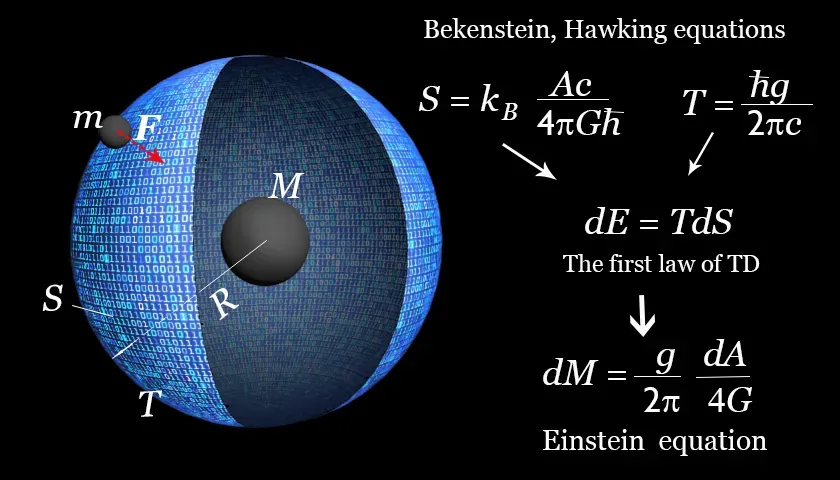
Black holes, the most extreme objects in the universe, act like truth serums for theoretical physics: if your equations survive near a black hole, they are probably onto something real. In the late twentieth and early twenty-first centuries, attempts to understand black hole entropy and information pushed physicists into the realm of string theory and higher-dimensional geometry. There, they encountered modular functions and q-series that looked strikingly similar to those cataloged by Ramanujan in his notebooks. These mathematical tools became essential for counting the microscopic states that give a black hole its entropy.
String theory itself, with its vibrating loops and extended objects, tends to generate partition functions that are naturally expressed using modular forms. In some models, the number of allowed vibrational patterns – the quantum “notes” of the universe – grows in ways captured by formulas reminiscent of Ramanujan’s work. While it would be an exaggeration to say his π formulas alone explain black holes, they clearly live in the same ecosystem of ideas. The coincidence feels less like a curiosity and more like a hint that deep mathematics and deep physics are converging along lines he traced before the relevant experiments even existed.
Why It Matters: A New Map Between Numbers and Nature
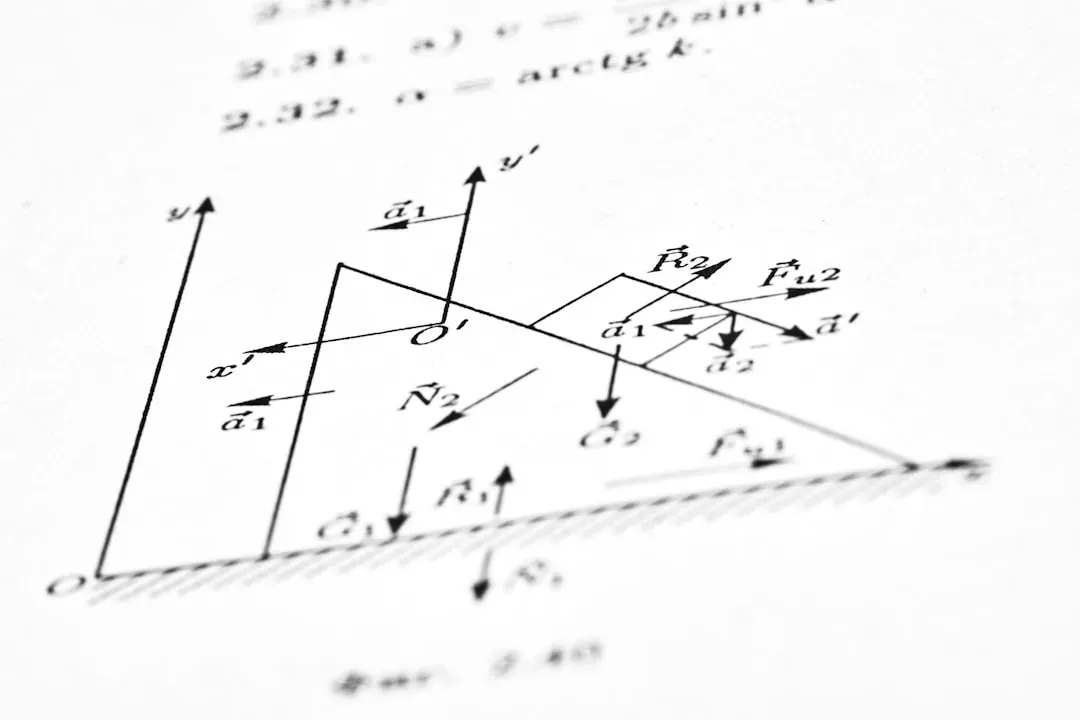
It is fair to ask why any of this should matter beyond the thrill of intellectual connections. The answer lies in the way mathematics often anticipates physics, like a map drawn before explorers set foot on the land. Historically, concepts such as complex numbers, non-Euclidean geometry, and group theory all seemed abstract at first, then became crucial in describing electromagnetism, relativity, and particle physics. Ramanujan’s π formulas, together with his broader work on modular forms and partitions, look increasingly like another such advance warning.
Compared with more straightforward trigonometric formulas for π that students learn in school, Ramanujan’s series probe much deeper structures. Traditional formulas approximate π through geometry or calculus; his instead tap into hidden symmetries and arithmetic patterns. This difference matters because modern physics is less about simple shapes and more about symmetries, invariances, and topological features. By revealing where those patterns live in pure numbers, Ramanujan’s work offers physicists a richer toolkit for modeling spacetime, quantum fields, and perhaps even the early universe. In a world where new experimental data are hard-won and expensive, a powerful mathematical shortcut can be transformative.
The Future Landscape: From Quantum Computers to Cosmic Predictions

Looking ahead, the most intriguing role for Ramanujan-style mathematics may lie in technologies that are just now taking shape. Quantum computing, for example, relies on careful manipulation of quantum states in high-dimensional spaces, where the same modular structures appear. Algorithms that simulate quantum fields, model exotic materials, or optimize error correction might benefit from identities inspired by his π formulas. If you think of quantum information as a landscape, Ramanujan’s work offers unexpected shortcuts through the hills.
On the cosmology front, efforts to link quantum gravity with observations of the early universe could also draw on similar mathematics. As telescopes map the cosmic microwave background and the distribution of galaxies with increasing precision, theorists need models that predict subtle patterns in the data. Functions related to Ramanujan’s territory already show up in some approaches to inflationary cosmology and string-inspired models of the early universe. Future surveys may effectively be testing whether the universe follows the same deep arithmetic rhythms that he sketched a century ago. The stakes are high: confirming such links would tighten the bond between pure number theory and the cosmos in a way that once sounded like science fiction.
Human Insight, Intuition, and the Limits of Algorithms
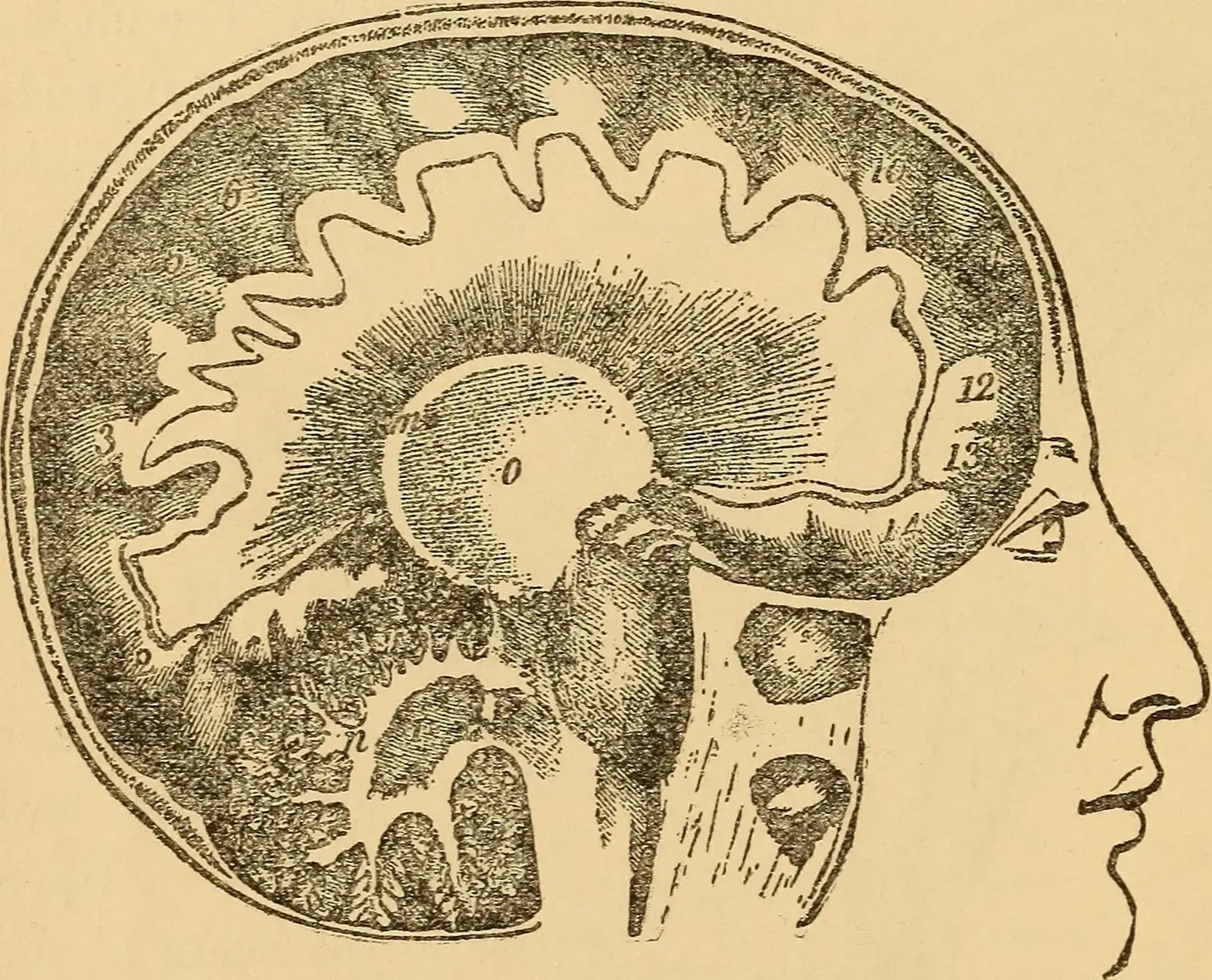
There is also a human story here, and it raises uncomfortable questions for our algorithm-driven age. Ramanujan produced an astonishing volume of correct, highly nontrivial formulas with minimal formal proof and no access to computers. He relied on intuition, pattern recognition, and a kind of internal sense for which expressions “felt” true. In contrast, modern science increasingly leans on automated theorem provers, symbolic software, and machine learning to explore complicated mathematical landscapes. Yet many of the most powerful insights still begin with a hunch in a human mind.
When physicists see Ramanujan’s fingerprints in quantum and gravitational problems, they are reminded that raw insight can sometimes leap ahead of formal theory and experiment. This is not an argument against computation, but a reminder that creativity and intuition remain essential in navigating unknown scientific terrain. In a way, his life suggests that the universe might reward unusual ways of seeing patterns, even when they defy the standard training pipeline. As we build more sophisticated tools to search through mathematical structures, a key challenge will be to preserve that spark of human curiosity. After all, many of the paths our machines now explore were first carved out by individuals working alone with pencil and paper.
How Readers Can Engage With This Emerging Story

Engaging with this unfolding connection between Ramanujan’s mathematics and fundamental physics does not require a PhD or the ability to decode dense equations. At a basic level, simply paying attention to how often ideas from pure math later find real-world applications can change the way you read science news. When you see headlines about black holes, quantum computers, or new particle discoveries, it is worth asking what mathematical frameworks are quietly supporting those breakthroughs. You might be surprised by how often the story loops back to ideas once considered esoteric or useless.
For those who want to go a step further, there are accessible books, lectures, and online courses on topics like π, number theory, and the history of modern physics that open these ideas without requiring advanced backgrounds. Supporting science communication, public lectures at local universities, and math circles for students helps cultivate the next generation of minds who might see such patterns in new ways. Even small actions – sharing an article, attending a talk, or encouraging a curious teenager – help maintain a culture that values deep, sometimes abstract inquiry. In a universe where a clerk from Chennai can anticipate the mathematics of black holes, nurturing that curiosity is not a luxury; it might be one of our best tools for understanding where we come from and where we are headed.
Suhail Ahmed is a passionate digital professional and nature enthusiast with over 8 years of experience in content strategy, SEO, web development, and digital operations. Alongside his freelance journey, Suhail actively contributes to nature and wildlife platforms like Discover Wildlife, where he channels his curiosity for the planet into engaging, educational storytelling.
With a strong background in managing digital ecosystems — from ecommerce stores and WordPress websites to social media and automation — Suhail merges technical precision with creative insight. His content reflects a rare balance: SEO-friendly yet deeply human, data-informed yet emotionally resonant.
Driven by a love for discovery and storytelling, Suhail believes in using digital platforms to amplify causes that matter — especially those protecting Earth’s biodiversity and inspiring sustainable living. Whether he’s managing online projects or crafting wildlife content, his goal remains the same: to inform, inspire, and leave a positive digital footprint.