
Walk into the world of quantum physics and you quickly realize something almost unsettling: the simple act of looking can change what you’re looking at. That sounds like science fiction, or maybe a spiritual metaphor, but it’s actually grounded in some of the most precise experiments ever done. For more than a century, physicists have been wrestling with an idea that seems to punch a hole right through our common sense: at the smallest scales, reality doesn’t behave like solid, fixed stuff. It behaves more like a set of possibilities that only become definite when something interacts with them.
That “something” is often called an observation, and it has triggered endless debates, misconceptions, and wild interpretations. Does human consciousness literally create reality? Are we living in some kind of cosmic video game that only renders what we look at? The truth is we don’t need to go that far to be amazed. The real story, as modern physics understands it in 2026, is already astonishing enough: when you get down to the level of atoms and particles, observation doesn’t just reveal reality, it helps shape which version of reality actually shows up.
The Double-Slit Experiment: Where the Weirdness Begins
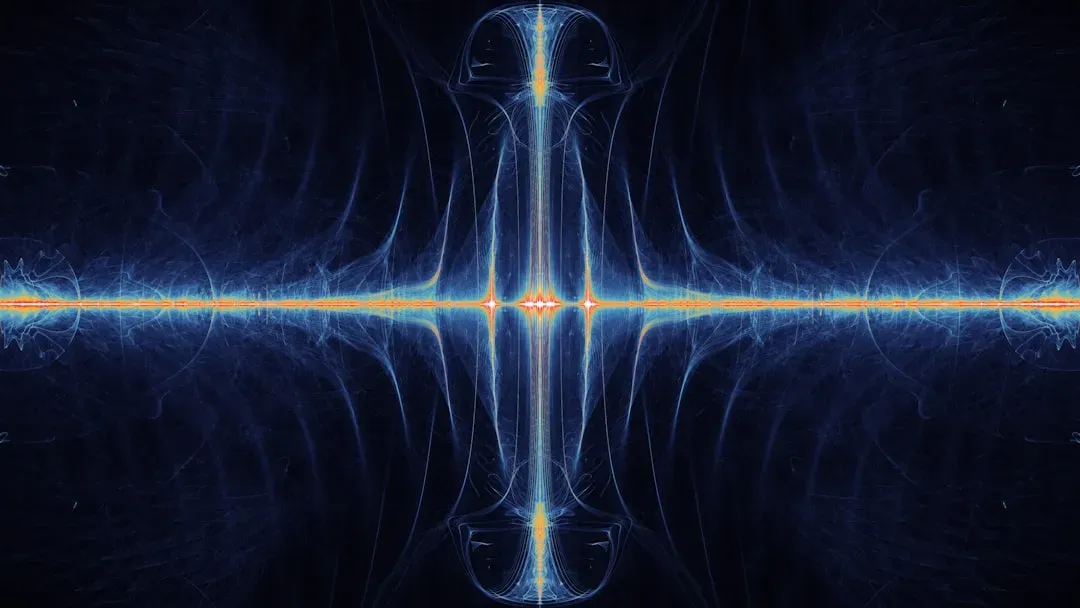
Imagine you’re throwing tiny balls at a wall with two vertical slits in it and watching how they splatter on a screen behind the wall. With everyday objects, you’d expect two clusters to appear, one behind each slit. But when scientists send particles like electrons or photons through two slits, something astonishing happens: if you don’t watch which slit they go through, the impact pattern on the screen looks like waves interfering, not like little bullets hitting two zones. The particles somehow behave like ripples on water, overlapping and creating bright and dark bands.
Now here’s the kicker: if you set up a detector to check which slit each particle passes through, that beautiful interference pattern disappears. Instead, you get two boring bands, exactly like you’d expect from tiny bullets. It’s as if the particles “know” they’re being watched and stop acting like waves of possibilities. In very simple terms, when you observe which path the particle takes, the act of measuring forces it to pick one concrete state instead of existing in a spread-out blur of options. The experiment has been repeated and refined countless times, and the weirdness stubbornly remains.
Wavefunctions and Superposition: Reality as Possibility
To make sense of this, quantum theory uses something called a wavefunction, a mathematical object that encodes all the possible states a particle can be in. Before you measure it, an electron near an atom, for instance, doesn’t have a single exact location. Instead, it exists in a superposition – a blend of many possible positions, like a cloud of “maybes” rather than a single “here.” That cloud is described by the wavefunction, which evolves smoothly according to precise equations until a measurement happens.
When you finally measure, the wavefunction appears to “collapse” to a definite outcome: this spot on the screen, that energy level in the atom, this path through the slit. In that sense, observation doesn’t just passively reveal reality; it selects one outcome from a set of possibilities allowed by the wavefunction. The unsettling part is that the theory is incredibly accurate, yet it doesn’t really tell us what the wavefunction “is” in a physical sense. Is it a real thing? Is it just a tool for predicting probabilities? We still don’t fully agree, even as we use it daily in technologies like lasers, semiconductors, and MRI machines.
What “Observation” Really Means: Not Just Human Eyes

When people hear that “observation changes reality,” it’s easy to imagine that your awareness alone is bending the universe, like something out of a self-help book. But in quantum physics, “observation” is much more down-to-earth: it means interaction with a measuring device or environment that can record or distinguish between different outcomes. A Geiger counter clicking, a sensor lighting up, a molecule bumping into another – these all count as observations. Human consciousness can be involved, but it isn’t required for the basic physics.
In the double-slit experiment, the interference pattern collapses the moment information about the path is created, even if no person ever looks at the data. The key is that the system becomes entangled with the measuring device, making the different possibilities no longer able to interfere with each other. So yes, observation affects reality at the quantum level, but not in a mystical, mind-over-matter way. It’s more about how delicate quantum states get disrupted when they interact with the larger, messier world around them, which quickly pushes them into more classical, familiar behavior.
Decoherence: How Quantum Strangeness Fades into Everyday Life
If particles can exist in superpositions, you might wonder why you never see a coffee mug in a blur of different positions at once. The concept of decoherence helps bridge that gap between the quantum and everyday worlds. Quantum systems are incredibly sensitive, and when they interact with their environment – air molecules, light, heat, anything – their delicate superpositions tend to break down. The environment essentially “measures” them constantly, forcing them into more classical states long before our senses come into play.
Decoherence doesn’t solve every philosophical puzzle, but it explains why quantum effects are usually hidden from our daily experience. A single electron can stay in a superposition if you isolate it carefully, but a cat made of trillions of particles is bombarded with interactions every moment, so any bizarre quantum mixtures vanish almost instantly. In that sense, what we call reality is strongly shaped by the fact that we live in a noisy, interacting universe where most quantum weirdness is washed out before we can notice it.
Delayed-Choice and Quantum Eraser Experiments: Messing with Time

Just when you think quantum physics can’t get stranger, along come delayed-choice and quantum eraser experiments. In these setups, scientists decide whether to measure the path information of particles after they have already passed through the slits, and sometimes even after they’ve hit the screen. Incredibly, the results still line up as if the particles “knew” in advance whether their path would be observed or erased. If the path information is erased, you get an interference pattern; if it’s preserved, the pattern disappears.
It’s tempting to say the future is changing the past here, but that’s not really what’s happening. Instead, the experiments show that quantum events can’t always be described as having definite properties at all times, independent of how we choose to measure them. The outcomes depend on the whole experimental setup, not on a simple story of particles marching through space with pre-existing traits. These experiments deepen the sense that reality at the quantum level is not a fixed movie playing out frame by frame but something more subtle, where possibilities and information are tightly intertwined.
Does Consciousness Create Reality? Clearing Up a Popular Myth

Because quantum theory talks about measurement and observation, it’s often pulled into discussions about consciousness, spirituality, and manifestation. Some interpretations from the early days of quantum mechanics did lean heavily on the role of the observer, and this has been stretched into the claim that human thoughts directly create physical reality. As appealing as that sounds, modern physics doesn’t require consciousness to make sense of experiments. Particles and measuring devices interact and produce definite outcomes whether or not a human mind is paying attention.
That doesn’t mean the connection between mind and reality is boring; it just means we should be careful not to mix testable physics with wishful thinking. Quantum mechanics certainly challenges our naive picture of a fully objective, observer-independent world. But when scientists talk about observation changing reality, they’re usually talking about physical interactions and information, not positive thinking shaping lottery numbers. The real mystery is deep enough without extra decoration: at a fundamental level, what becomes real appears to depend on how and what can, in principle, be known about a system.
From Quantum Weirdness to Real-World Technology

For all its philosophical shock value, quantum physics isn’t just a mind game; it’s the backbone of a lot of technology we rely on. The way electrons behave in quantum states underpins transistors, which are the building blocks of every computer and smartphone. Lasers work because atoms are pushed into specific quantum energy levels and then nudged to release light in a tightly controlled way. Even GPS depends on corrections predicted by both quantum mechanics and relativity to stay accurate enough for navigation to function properly.
More recently, quantum ideas about superposition and entanglement are being turned into tools rather than just curiosities. Quantum computers use qubits that can exist in combinations of states, promising to solve certain problems far faster than classical machines. Quantum cryptography exploits the fact that measuring a quantum system disturbs it, allowing the creation of communication channels where eavesdropping can, in principle, always be detected. In all of these cases, the same unsettling fact holds: observation isn’t neutral. It leaves fingerprints on the systems we touch, and clever engineers are learning how to use that to our advantage.
What It All Means for Our Picture of Reality

When you step back from the equations and experiments, a clear message emerges: at the deepest levels we can probe, reality doesn’t seem to be a rigid, pre-written script. Instead, it looks more like a set of structured possibilities, with observation and interaction helping to decide which storyline actually plays out. That doesn’t mean “anything goes,” because quantum probabilities are strictly governed by precise laws. But it does mean that the old idea of a universe made of tiny billiard balls following a single, predetermined path has been replaced by something far more nuanced and frankly stranger.
Personally, I find that a little unsettling and a lot inspiring. It suggests that the world is more flexible and less mechanical than we once thought, yet still beautifully lawful and reliable enough to build technologies and make predictions. Observation, in the quantum sense, reminds us that we’re not just passive spectators in a fixed theater; we’re part of the ongoing unfolding of events, especially at the microscopic level. In a universe where looking can help shape what is, the boundary between “out there” and “in here” feels thinner than we once imagined, and that’s a thought that tends to linger long after you close the physics book.