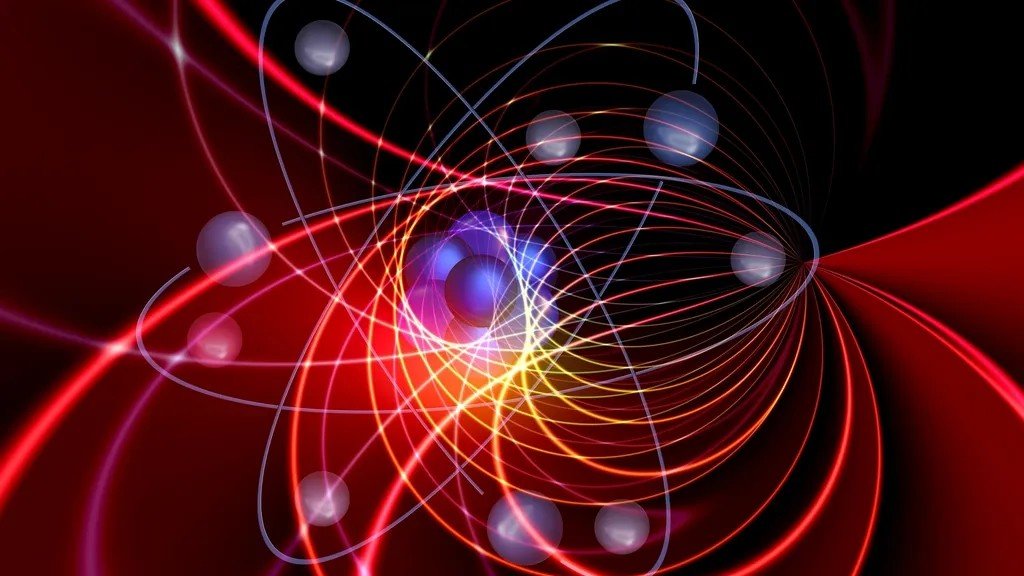

Walk into any quiet room, look around, and ask yourself a slightly unsettling question: is what you see actually there in the way you think it is? According to quantum physics, the honest answer is: not really. The world of everyday objects is a kind of comforting illusion, a polished user interface hiding a chaotic, probabilistic, and deeply weird engine humming underneath.
When I first read about this, it felt a bit like finding out that the floor I’d been standing on my whole life was actually a trampoline. Still solid enough to hold me, but secretly flexible and bizarre when you look closely. Quantum physics doesn’t just tweak a few details of reality; it forces us to rethink what “real,” “solid,” and even “cause and effect” actually mean.
The Double-Slit Experiment: When Particles Refuse To Behave
Imagine firing tiny bullets, one at a time, through a pair of narrow slits in a wall and letting them hit a screen behind it. Common sense says you’d see two neat bands build up on the screen, one behind each slit. But when physicists did this with electrons and photons, they found something shocking: even when the particles went through one by one, they built up a pattern that looked like waves interfering with each other, as if each particle somehow went through both slits at once.
Things get even stranger when you try to “catch them in the act.” The moment you add a detector to see which slit a particle goes through, the wave-like interference pattern disappears and you get the neat, sensible two-band pattern you’d expect. It’s as if the particle changes its behavior the instant you decide to watch. This experiment, repeated and refined for more than a century, is one of the clearest hints that reality is not a simple picture of tiny billiard balls bouncing around in a predictable way.
Superposition: Objects That Are Here, There, And Nowhere In Particular
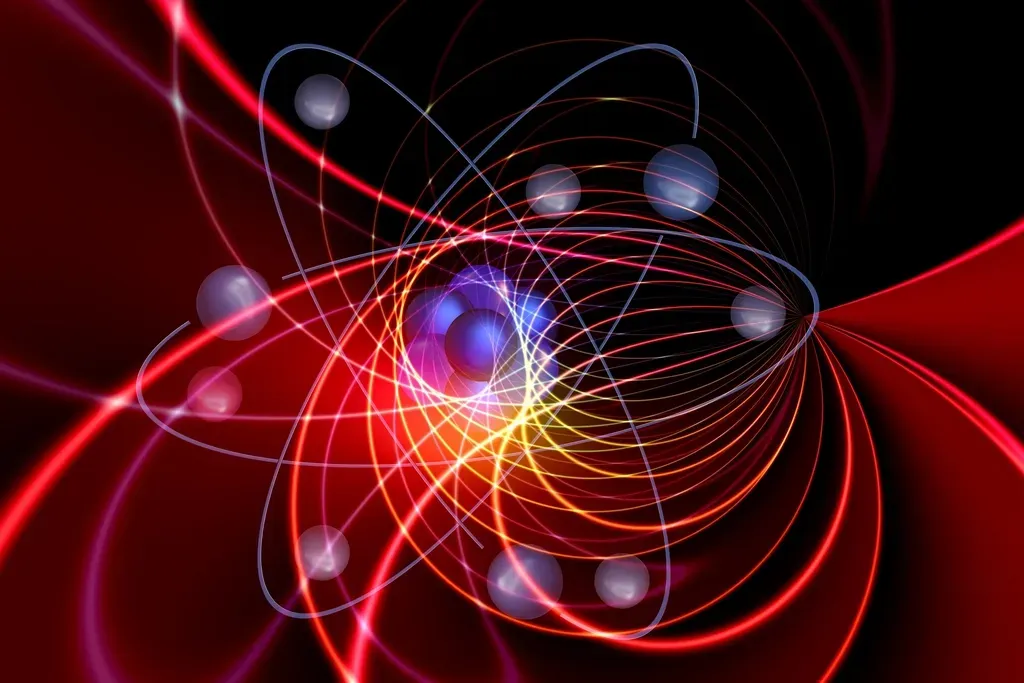
Superposition is the idea that, at the quantum level, particles don’t have a single definite state until they’re measured. Instead, they exist in a blend of possibilities, like a chord of notes played at once rather than a single tone. An electron around an atom isn’t orbiting it in a neat little path; it’s better described as a cloud of potential locations, each with a certain likelihood of being found if you look.
One famous thought experiment imagines a cat in a box whose fate depends on a quantum event. Until you open the box, the cat is not strictly alive or dead in the usual sense; the system is in a superposition of both outcomes. It’s an absurd scenario on purpose, highlighting the collision between the fuzzy quantum rules and our crisp everyday experience. The wild part is that superposition isn’t just theory: experiments have put large molecules, and even tiny mechanical objects, into detectable superpositions, nudging that weirdness further up toward our human scale.
Entanglement: Spooky Connections Across Space
Quantum entanglement happens when particles become linked so that their properties are correlated, no matter how far apart they are. Change the state of one, and the other’s state is instantly constrained, even if they’re separated by light-years. This isn’t ordinary communication, and it doesn’t send signals faster than light, but it does seem to reveal a deep, shared reality that doesn’t care about distance in the way we do.
For decades, people argued about whether this was just a math trick or a sign that our picture of reality was incomplete. Careful experiments, especially in the last couple of decades, have repeatedly shown that entanglement is real and that local hidden-variable explanations don’t fully cut it. In plain terms, the universe appears more interconnected and less locally “separate” than classical physics suggests. It’s like discovering that two coins flipped on opposite sides of the planet always conspire to land in related ways, in a manner no simple common-cause story can completely explain.
Is Reality Made Of Information? The Quantum Bit Perspective
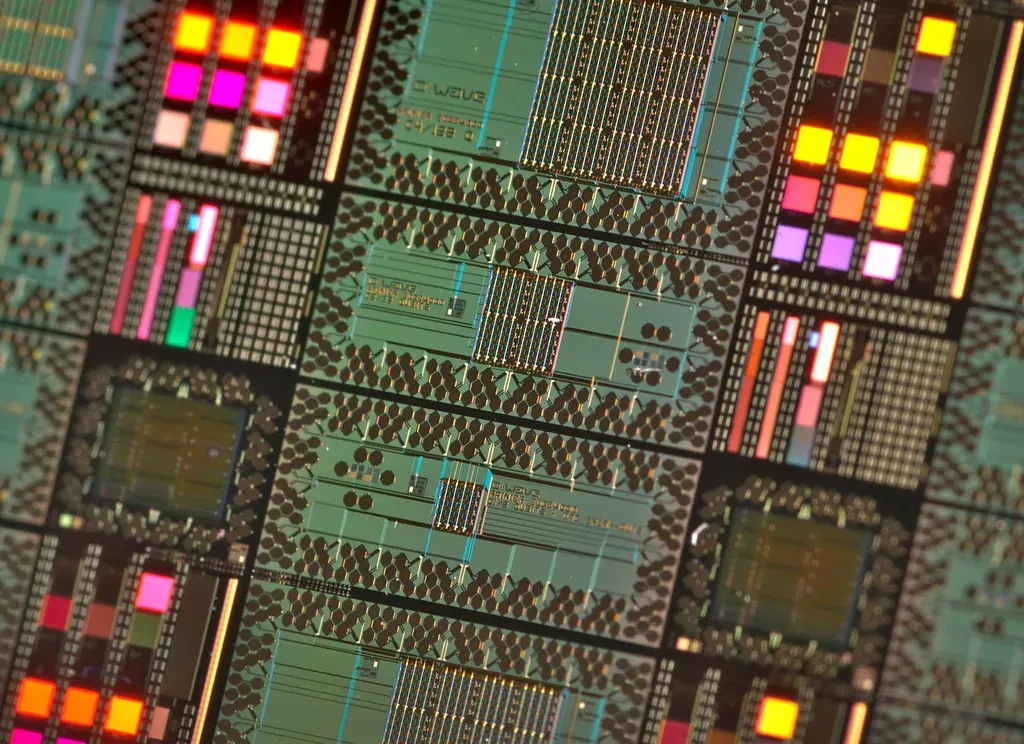
Modern quantum theory has pushed many physicists to think of reality not as made of tiny hard particles, but as made of information. A quantum bit, or qubit, can be in a superposition of zero and one, holding more possibility than a classical bit. When you measure it, you extract a definite outcome, but before that, it’s better thought of as a structured set of probabilities and relationships rather than a fixed thing.
Some researchers argue that the fundamental stuff of the universe might be closer to abstract information and correlations than to solid objects. This view underlies quantum computing, where entanglement and superposition can be used to solve certain problems in radically fewer steps than any classical computer. Whether or not you buy the idea that reality is “made” of information, it’s hard to ignore how naturally information-based language fits quantum phenomena. It’s as if the universe is less like a machine made of gears and more like a vast, evolving computation.
The Measurement Problem: Does Observation Create Reality?
One of the most unsettling questions in quantum physics is: what exactly counts as a “measurement,” and why does it make possibilities snap into a single outcome? Before you measure a quantum system, it’s in a superposition of many possible states. After measurement, you always get a specific result. The theory describes this change with a special rule, but it doesn’t clearly explain what physically causes it or why an observer seems to play a crucial role.
Different interpretations try to make sense of this in very different ways. Some say the wave function never really collapses and that all possible outcomes happen in parallel branches of reality. Others insist there is an underlying deterministic layer we simply haven’t uncovered yet, or that consciousness itself somehow matters. None of these camps has decisive experimental proof over the others. The measurement problem sits there like an itch we can’t scratch, a reminder that even our best theory of the microscopic world is, in some important sense, still unfinished.
Many Worlds, Hidden Variables, And Other Wild Ideas
Because quantum mechanics works absurdly well at predicting experimental results, scientists don’t doubt its usefulness – but they do argue fiercely about what it means. The many-worlds picture claims that every quantum event causes the universe to split into branches, each containing a different outcome. In that view, there’s a version of you reading this sentence and another version who stopped halfway to check their messages, all equally real but forever separated.
Other approaches push back, suggesting there are hidden variables we don’t yet see that restore an underlying order, or that space and time themselves are emergent, built out of more primitive quantum relationships. Still others tinker with the basic equations, proposing that the wave function occasionally collapses spontaneously, with no need for observers. None of these interpretations changes the numerical predictions we test in the lab very much, which makes choosing between them tricky. It’s like having several completely different stories that all explain the same crime scene, with no extra clues to decide which one really happened.
From Quantum Weirdness To Everyday Life
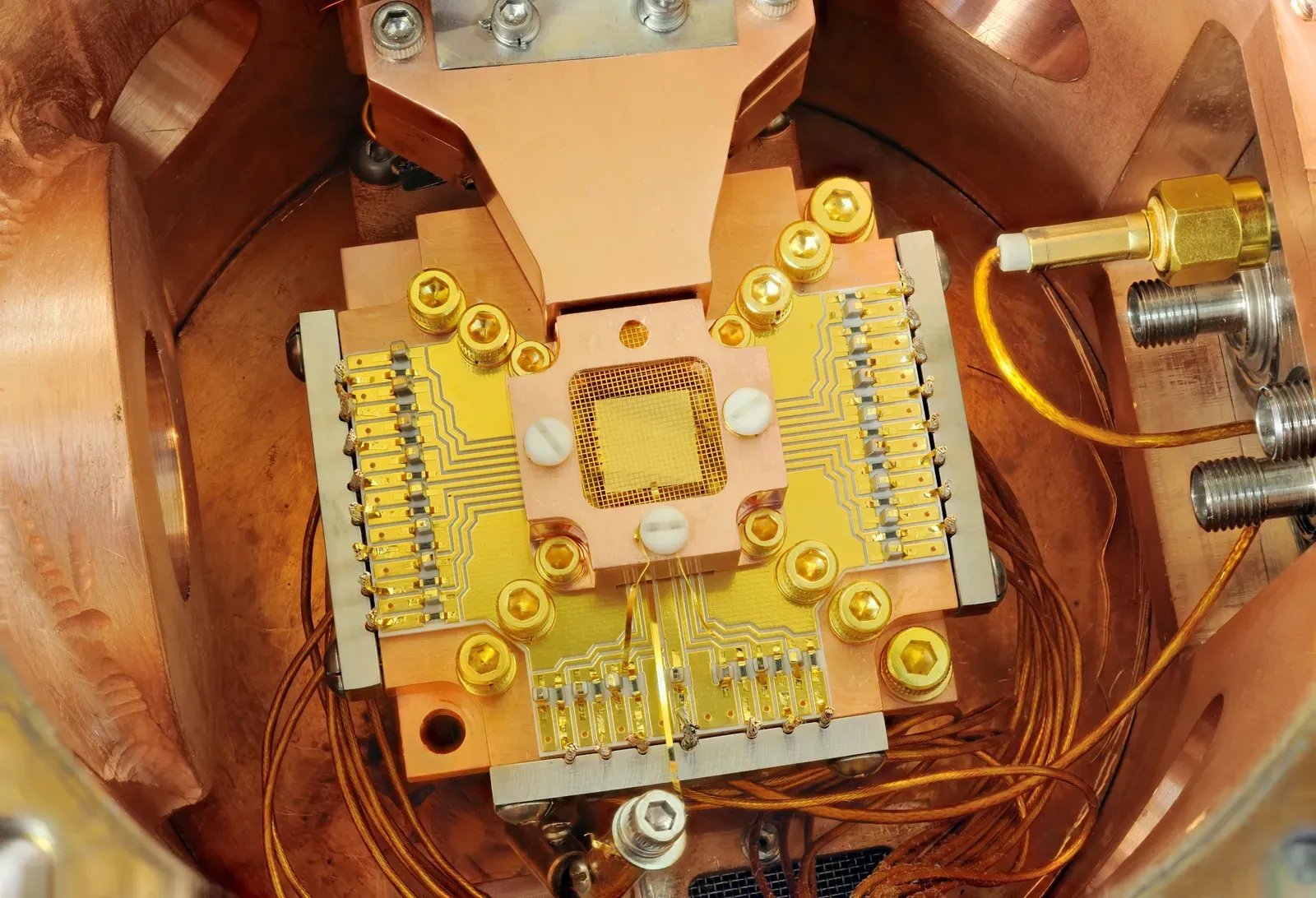
It’s tempting to think quantum strangeness lives only in high-tech labs and chalkboard equations, but it quietly shapes your daily life. The electronics in your phone, the lasers in your grocery store scanners, and the chips in your computer all rely on quantum principles like energy quantization and tunneling. Even the stability of the atoms in your body depends on quantum rules that prevent electrons from spiraling into the nucleus.
Looking ahead, quantum technologies are aiming to turn some of the weirdest effects into powerful tools: ultra-secure communication using entanglement, sensors so precise they could map tiny variations in gravity, and quantum computers that might crack certain problems classical machines would need centuries to solve. At the same time, the philosophical shock of quantum theory hasn’t worn off. It keeps nudging us toward a humbler view of ourselves, suggesting that our natural intuitions are not the final word on what’s real, but just a convenient story our brains tell so we can get through the day without breaking down in existential awe.